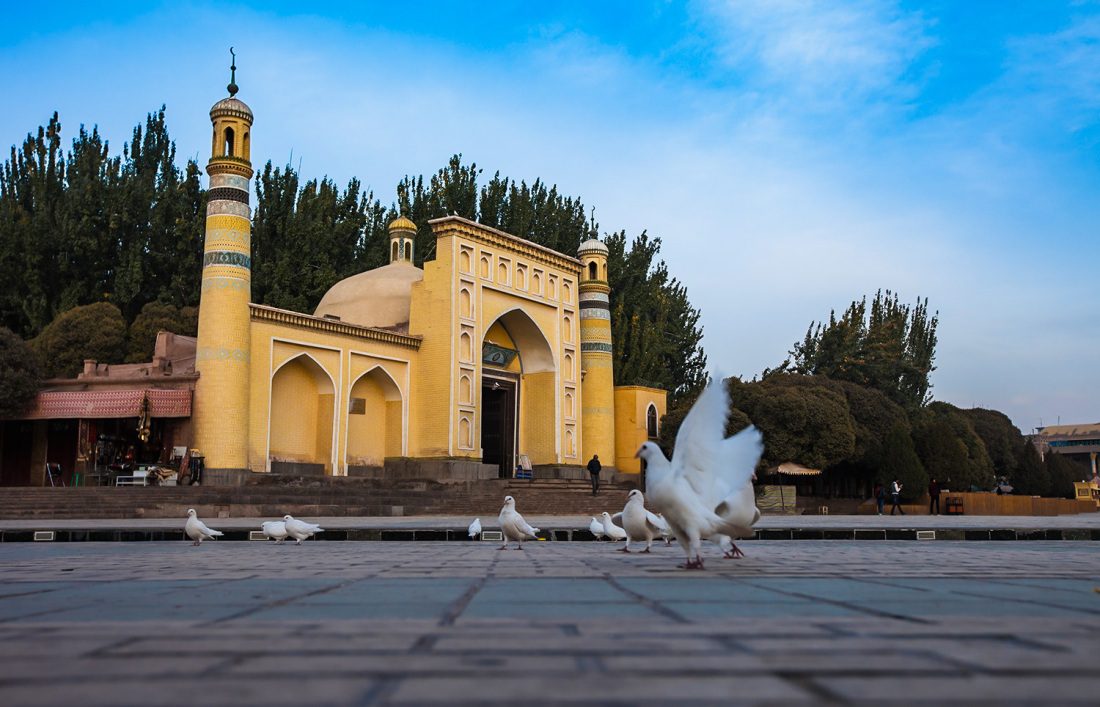
Id Kah Mosque
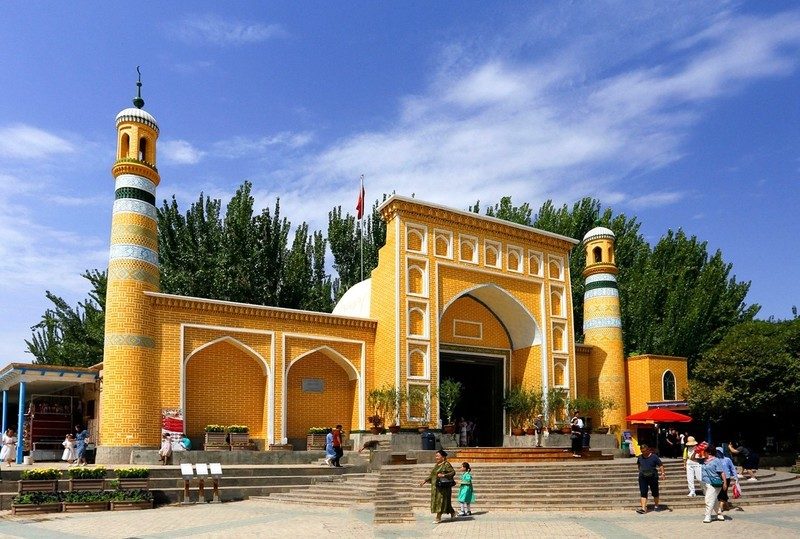
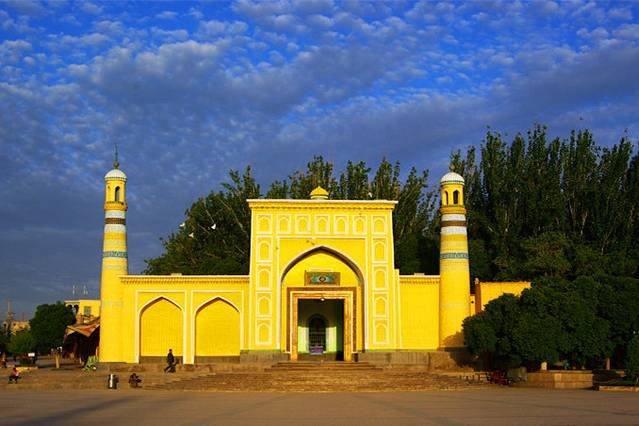
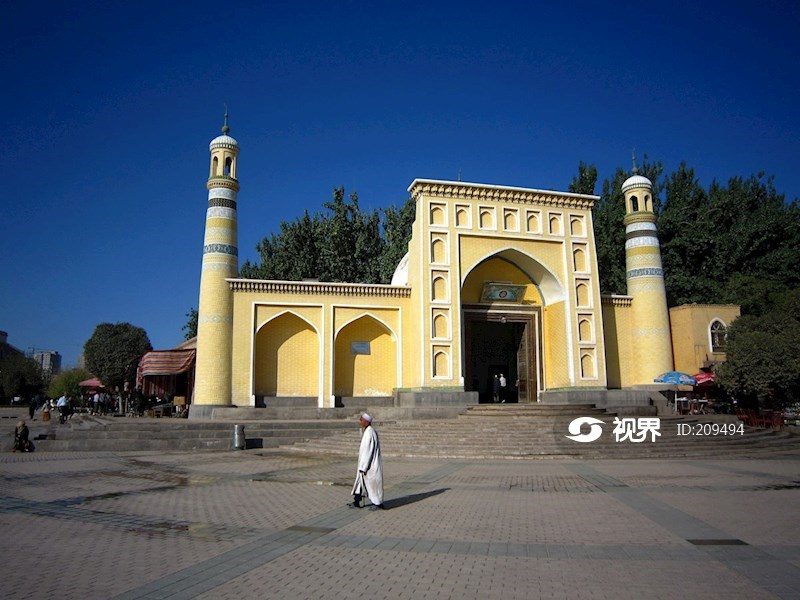
One of the largest mosques in China, founded in 1442, facing east at the heart of the Old City; its yellow-brick gateway and flanking minarets form the iconic portrait of Kashgar
Visitor info
- Opening hours
- 09:00-19:00 (closed to tourists during prayer times)
- Ticket
- approx. CNY 45 (outside prayer times)
Price is indicative — final quote on inquiry.
One of the largest mosques in China, founded in 1442, facing east at the heart of the Old City; its yellow-brick gateway and flanking minarets form the iconic portrait of Kashgar. On the morning of the Corban Festival (Eid al-Adha), after prayers attended by tens of thousands conclude, drums and music erupt on the square before the mosque as huge crowds dance the Sama dance in celebration—one of the most spectacular folk festival scenes in Xinjiang, and the mosque is also counted among the famous mosques of Central Asia. Dress modestly for visits; tourists are not admitted during prayer times.
Getting there: Center of the Old City
Photos
More in Kashgar
- Kashgar Ancient City (Old Town)
One of the largest surviving raw-earth architectural complexes in the world; the Uyghur-inhabited old town has carried on since Shule City of the Han dynasty
- Fragrant Concubine Garden (Apak Hoja Tomb)
The "Fragrant Concubine's Tomb" is in fact the family mausoleum of Apak Hoja, 17th-century leader of the Islamic White Mountain sect; built around 1670, its dome of green glazed bricks rises dozens of meters—the largest surviving domed mausoleum in Xinjiang
- Kashgar Prefecture Museum
Systematic displays trace the civilizational thread of the Kashgar region from prehistory through the Ming and Qing: Han-Tang documents and coins attest its status as a key town on the southern Silk Road, Gandhara-style Buddhist statues show traces of Hellenistic art spreading eastward, and Wei-Jin brick-chamber tomb artifacts and Silk Road ethnic costumes share the hall—a primer for understanding the "five ports…
- Pantuo City (Ban Chao Memorial Park)
The base camp of Eastern Han general Ban Chao in administering the Western Regions: from 73 CE onward Ban Chao ranged across the Western Regions with 36 men, garrisoning here for more than ten years
- East Bazaar (Central and West Asia International Trade Market)
One of the largest bazaars in Central Asia, with over 2,000 stalls displaying dried fruits, Atlas silk, Yengisar knives, copper pots, carpets, and medicinal herbs
- Gongmei Arts & Crafts Lane · Pottery Workshops
A handicraft lane in the Old City: the molded pottery of the Gaotai Dwellings is a national-level Uyghur intangible cultural heritage, and inheritor workshops still throw pots on the wheel and carve and glaze patterns