
Golden Temple (Taihe Palace)
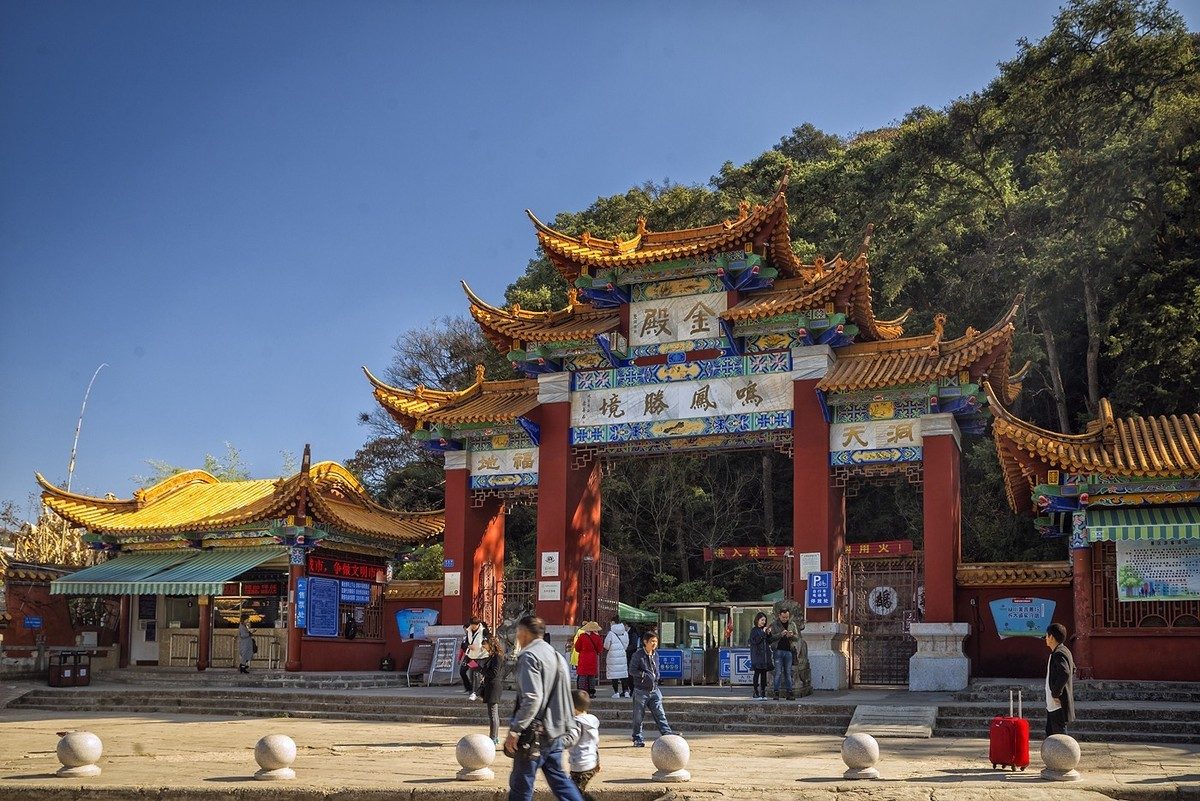
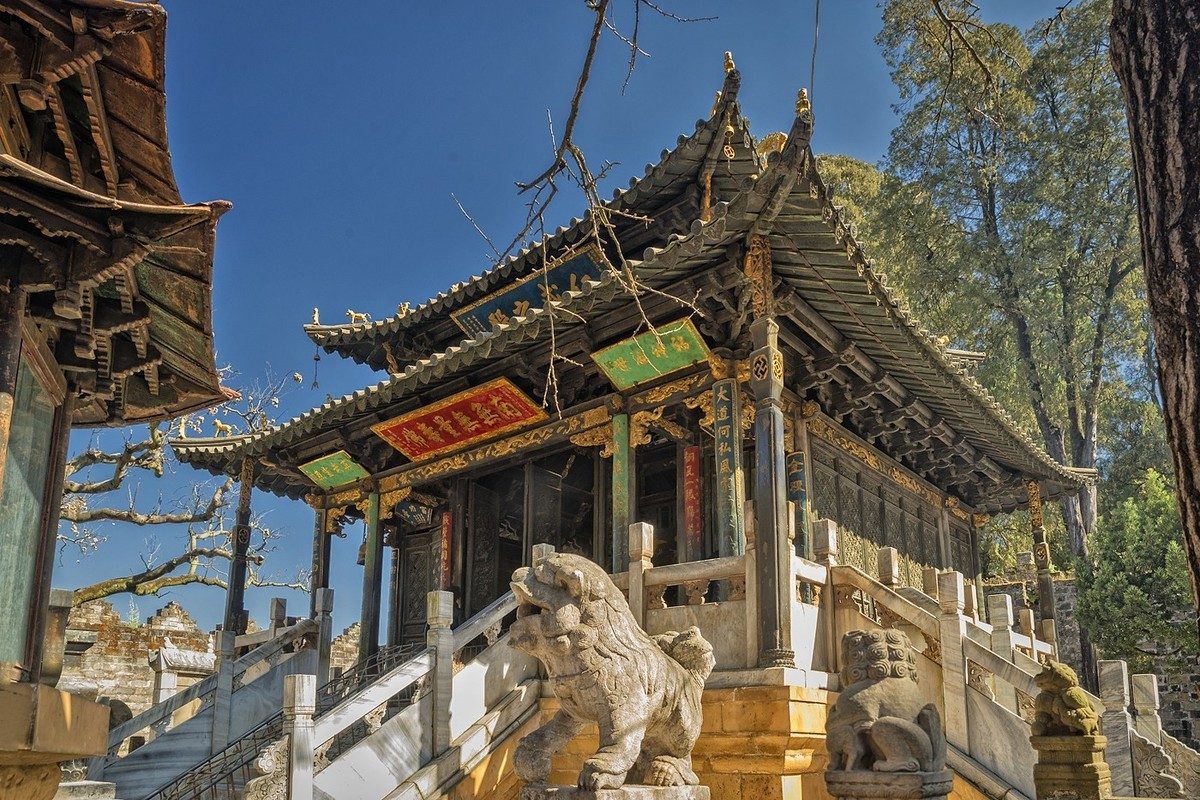
The core building of the Taoist Taihe Palace atop Mingfeng Hill north of the city; founded in the 30th year of the Ming Wanli reign by provincial governor Chen Yongbin, the present bronze hall was recast in the 10th year of the Qing Kangxi reign by Wu Sangui, Prince Who Pacifies the West; weighing over 250 tons, with beams, columns, dougong brackets, doors and windows all cast in bronze, it is China's largest surviving bronze hall, dazzling gold in the sun…
Visitor info
- Opening hours
- 08:00-17:30
- Ticket
- CNY 30
Price is indicative — final quote on inquiry.
The core building of the Taoist Taihe Palace atop Mingfeng Hill north of the city; founded in the 30th year of the Ming Wanli reign by provincial governor Chen Yongbin, the present bronze hall was recast in the 10th year of the Qing Kangxi reign by Wu Sangui, Prince Who Pacifies the West; weighing over 250 tons, with beams, columns, dougong brackets, doors and windows all cast in bronze, it is China's largest surviving bronze hall, dazzling gold in the sun — hence the name "Golden Temple". Inside are the great broadsword and the Seven-Star Sword Wu Sangui used (replicas on display); the Camellia Expo Garden on the hillside turns into a sea of camellias in winter, echoing Kunming's old saying that "Mingfeng Hill's camellias are the finest under heaven". From the summit you look out over Kunming's northern city — a regular weekend spot for locals to hike and pray for blessings.
Getting there: Bus / self-drive to Mingfeng Hill
Photos
More in Kunming
- Green Lake Park
A 'jade within the city' at the heart of Kunming's old town, also known as Nine Dragon Pool because 'nine springs emerge and gather into a pond'; Bamboo Island, Goldfish Island and Lianhua Chan Temple (initiated by Chen Can in the late Qing) on the lake are linked by causeways and bridges; with weeping willows and green water in all seasons, it is the starting point of everyday Kunming life and slow wandering through the old town
- Former Site of the Yunnan Military Academy (Jiangwutang)
A modern-style army school founded in 1909 in the late Qing, ranked together with the Tianjin and Northeast Jiangwutang as the three great military academies of the late Qing; its beige courtyard complex in the 'zouma zhuanjiaolou' style (linked corridors and corner towers) encloses the parade ground, making it one of China's best-preserved modern military academy sites
- Yunnan University (Huize Building)
Donglu University, founded in 1922 by Tang Jiyao, was one of the earliest modern institutions of higher learning in southwest China; the campus stands on the former site of the Ming-Qing Yunnan Gongyuan (provincial examination hall), where Zhigong Hall (the main hall of the examination cells) still survives
- Wenlin Street & Wenhua Lane
Back lanes right next to the west gate of Yunnan University, named 'Wenlin' in the Qing dynasty for their proximity to the Confucian Temple school; today a coffee street where Kunming's young people and international students gather, with dozens of independent cafés, craft-beer bars and second-hand bookshops lining the slope
- Kunming Old Street (Wenming Street Historic District)
The last contiguous stretch of old streets left in Kunming's urban area, the commercial hub of the provincial capital since the Ming and Qing dynasties; Wenming Street, Guanghua Street and Yongdao Street criss-cross in a grid, with rows of shops under grey-tiled pitched roofs
- Golden Horse and Jade Rooster Archways
Two street-spanning memorial archways first built in the Ming Xuande era; the east arch stands by the "Golden Horse" and the west arch near the "Jade Rooster" — the source of Kunming's ancient name "Golden Horse and Jade Rooster". A spiritual emblem of the city, they were destroyed in modern times and rebuilt to their original look in 1997.