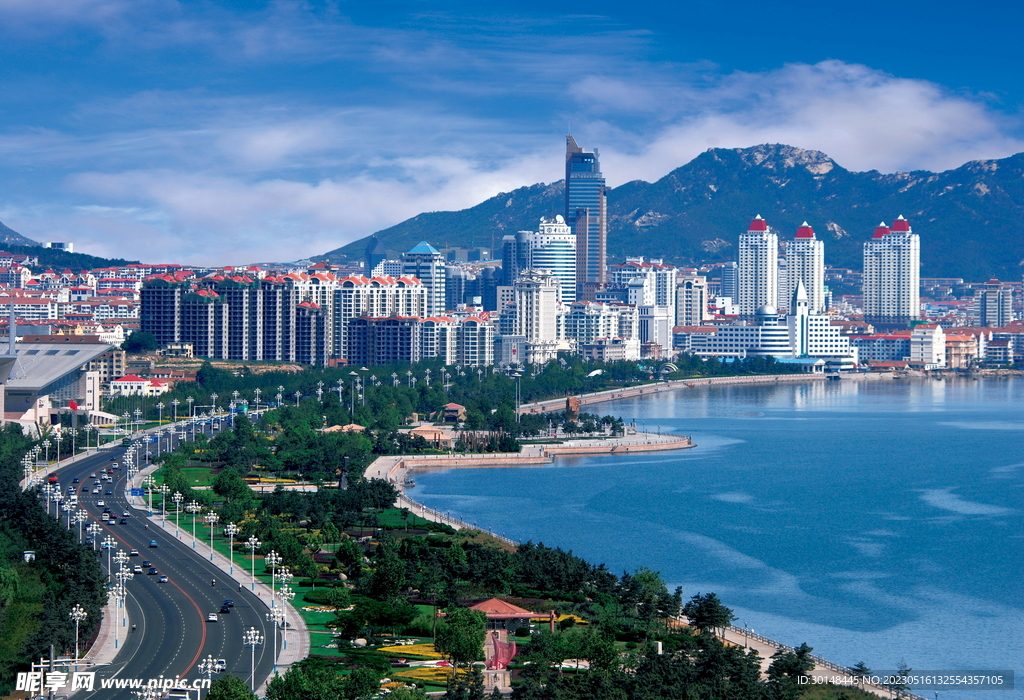
Liugong Island
National 5A-level scenic area and memorial site of the First Sino-Japanese War (1894-1895); the island preserves the Beiyang Fleet Admiral's Office (1888), the Naval Academy, the Iron Pier, and the East and West gun batteries, and houses the China Jiawu War Museum
Visitor info
- Opening hours
- 07:30-17:30
- Ticket
- CNY 122 (includes round-trip ferry)
Price is indicative — final quote on inquiry.
National 5A-level scenic area and memorial site of the First Sino-Japanese War; the island preserves the Beiyang Fleet Admiral's Office (1888), the Naval Academy, the Iron Pier, and the East and West gun batteries, and houses the China Jiawu War Museum. In 1888 (14th year of the Guangxu reign) the Beiyang Fleet was formed here, at one time a first-rate fleet in the Far East; in the 1895 Battle of Weihaiwei, Admiral Ding Ruchang died for his country and the fleet was wiped out, a painful lesson of modern Chinese history. Buildings from the British-leased period (1898-1930) also survive, and forests with an island-loop boardwalk let history and leisure coexist.
Getting there: Bus to the Tourist Wharf, then ferry
Photos
More in Weihai
- Dingyuan Warship Scenic Area
A 1:1 replica of the memorial ship Dingyuan, flagship of the Jiawu naval battle (First Sino-Japanese War); aboard, the command cabin and officers' quarters have been restored and Beiyang Fleet historical materials are displayed
- Huancui Tower Park
A landmark of Weihai's old town, said to date from the Ming dynasty and repeatedly destroyed and rebuilt over the centuries; the present tower can be climbed for sea views
- International Bathing Beach
Weihai's most famous free beach in the city area, where pine woods meet the sand; fine sand and clear water, lifeguards on duty during the summer swimming season, and a high density of guesthouses and cafes nearby
- Naxianghai Resort Area (Rongcheng)
Diamond Beach has fine sand and complete facilities; nearby Jiming Island became popular through a parent-child reality TV show
- Chengshantou (Rongcheng)
One of the easternmost points where the Chinese mainland reaches into the sea, hailed as 'China's Cape of Good Hope' and 'Cape of Good Luck'
- Chishan Scenic Area (Shidao, Rongcheng)
Centered on Fahua Temple, founded by Zhang Baogao, a Silla Korean of the Tang era: during the Tang Changqing era (9th century) Zhang Baogao built Fahua Temple here for communal Buddhist practice; the eminent Japanese monk Ennin stayed here while seeking Buddhist teachings in Tang China and recorded it in his travel diary — a thousand-year testament to Buddhist exchange among China, Korea, and Japan