First Pass Under Heaven (Shanhaiguan Ancient City)
Core of the national 5A-rated Shanhaiguan scenic area; the pass was built in the 14th year of the Hongwu reign of the Ming dynasty (1381) on the orders of Xu Da, Prince of Zhongshan, named for backing onto mountains and adjoining the sea, and is the first pass at the eastern starting point of the Ming Great Wall
Visitor info
- Opening hours
- 07:00-18:00
- Ticket
- CNY 50 in peak season
Price is indicative — final quote on inquiry.
Core of the national 5A-rated Shanhaiguan scenic area. The pass was built in the 14th year of the Hongwu reign of the Ming dynasty (1381) on the orders of Xu Da, Prince of Zhongshan, named for backing onto mountains and adjoining the sea, and is the first pass at the eastern starting point of the Ming Great Wall. The Zhendong Tower platform rises more than twelve meters; the giant 'First Pass Under Heaven' plaque is said to be the work of Ming jinshi scholar Xiao Xian, its vigorous brushwork making it a famous plaque through the ages. The military defense system formed by the pass city, barbican, Jingbian Tower and Muying Tower survives intact; in the 1644 Battle of Shanhai Pass, Li Zicheng faced off here against Wu Sangui and Dorgon, rewriting the course of the dynasty.
Getting there: Bus or taxi from Shanhaiguan Railway Station
Photos
More in Qinhuangdao
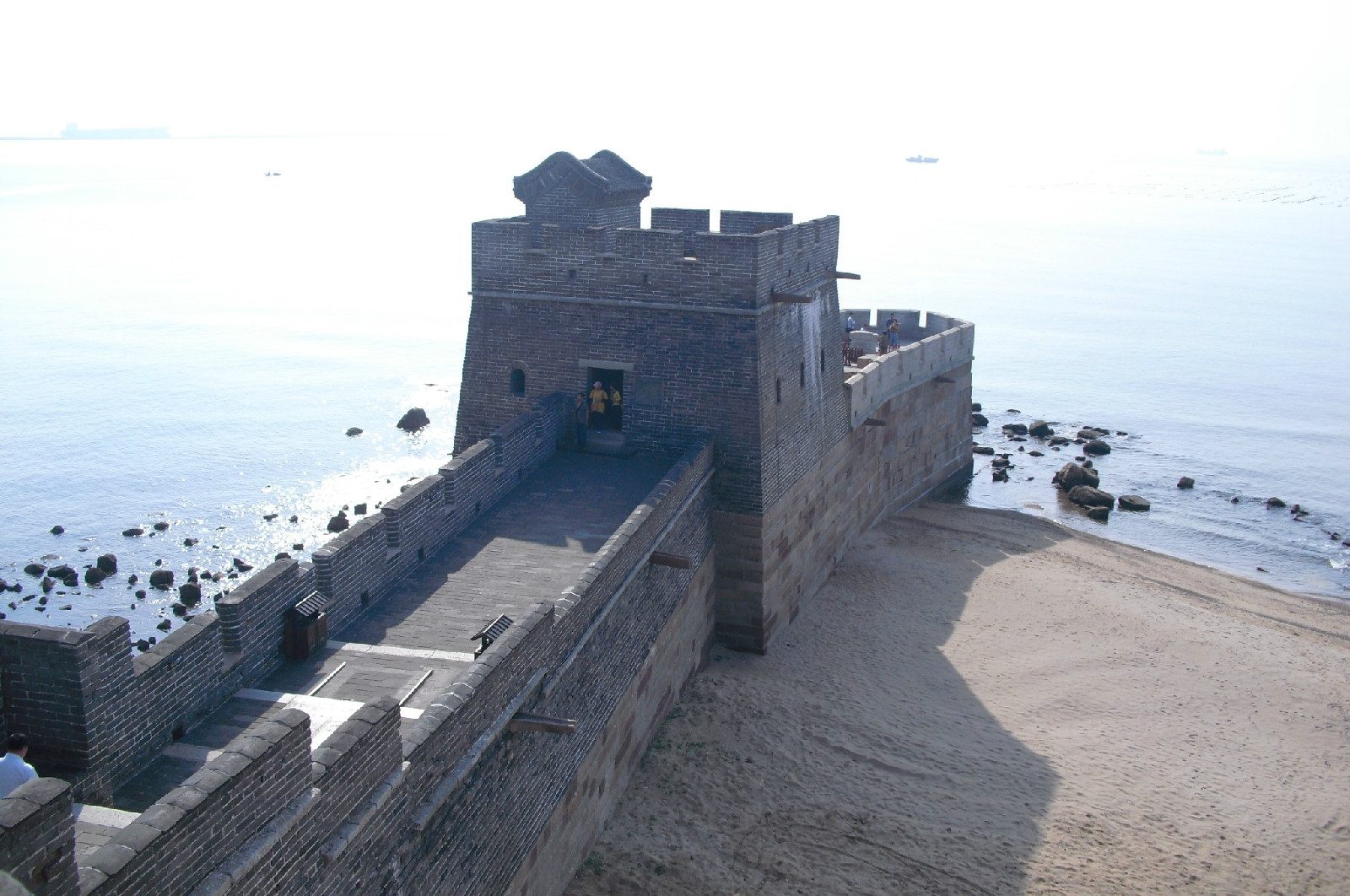
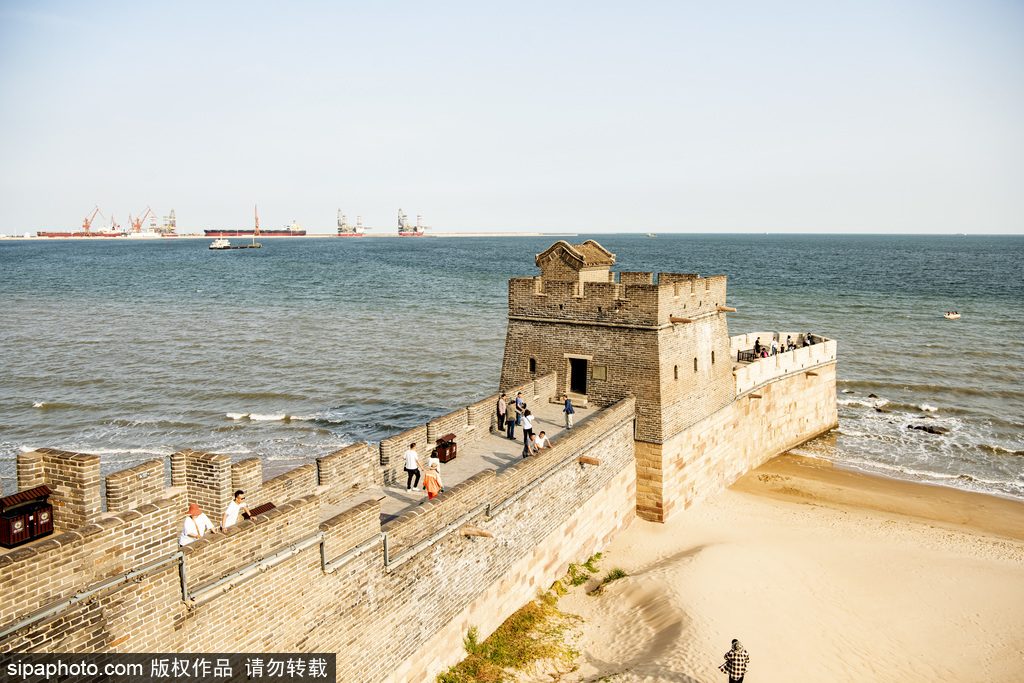
- Laolongtou (Old Dragon's Head)
The only section of the Ming Great Wall that reaches the sea; Qi Jiguang built the Stone City into the Sea in the Longqing reign (approx. 1571), extending the Great Wall into the Bohai Sea, and Chenghai Tower, perched on the wall for sea views, has long been a stop for literati
- Shanhaiguan Great Wall Museum
A specialist museum themed on Great Wall history, exhibiting the Wall's evolution, building techniques and military institutions; sand tables and excavated components give a vivid picture of the Nine Border Garrison Towns system, with Ming-dynasty weapons and inscribed steles as collection highlights
- Pigeon Nest Park (Geziwo Park)
Beidaihe's number-one spot for sunrise viewing and birdwatching; Yingjiao Pavilion (Eagle Cliff Pavilion) stands on a solitary cliff, and the vast tidal-flat wetlands are a node on the East Asian–Australasian Flyway, with tens of thousands of migratory birds stopping over in spring and autumn
- Laohushi Seaside Park (Tiger Rock)
Named for the giant rocks in the Zhonghaitan area that reach into the sea like a crouching tiger; one of Beidaihe's earliest developed bathing beaches, where Russian-language signs and crowds of Russian visitors have long been part of the streetscape
- Beidaihe Modern Villa Complex (Dongjing Road–Xijing Road Area)
In 1898, the 24th year of the Guangxu reign, the Qing government officially designated Beidaihe as a summer resort. Over the decades that followed, Chinese and foreign residents built hundreds of villas here, with British, Tudor, and Chinese courtyard styles mingling across the wooded slopes, forming the seaside character of one of modern China's most famous summer retreats.
- Biluota Sea Bar Park
A night park centered on Biluo Tower, a spiral observation tower rising over the sea, with the conch-shaped tower as the park's landmark.