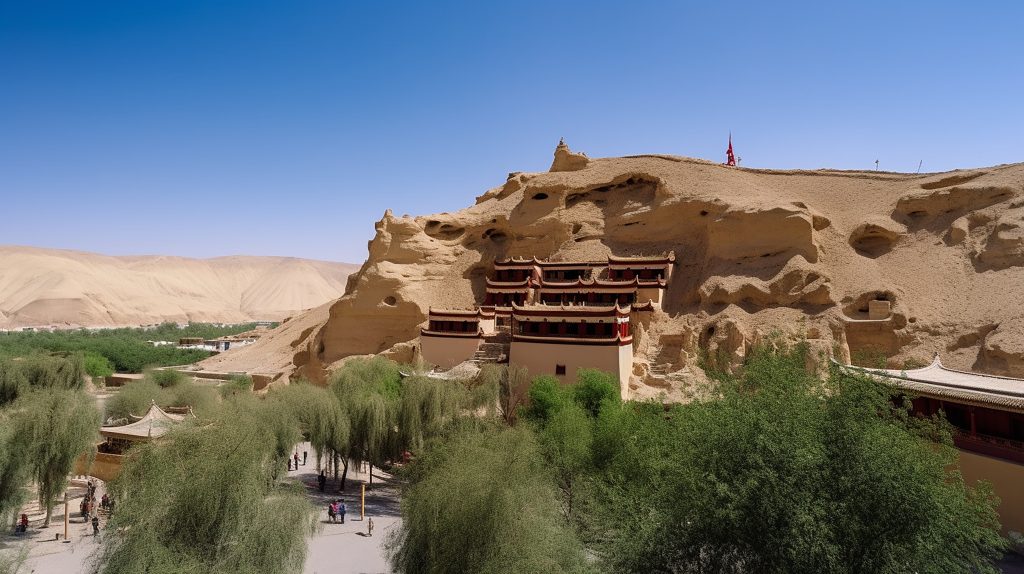
Yulin Grottoes
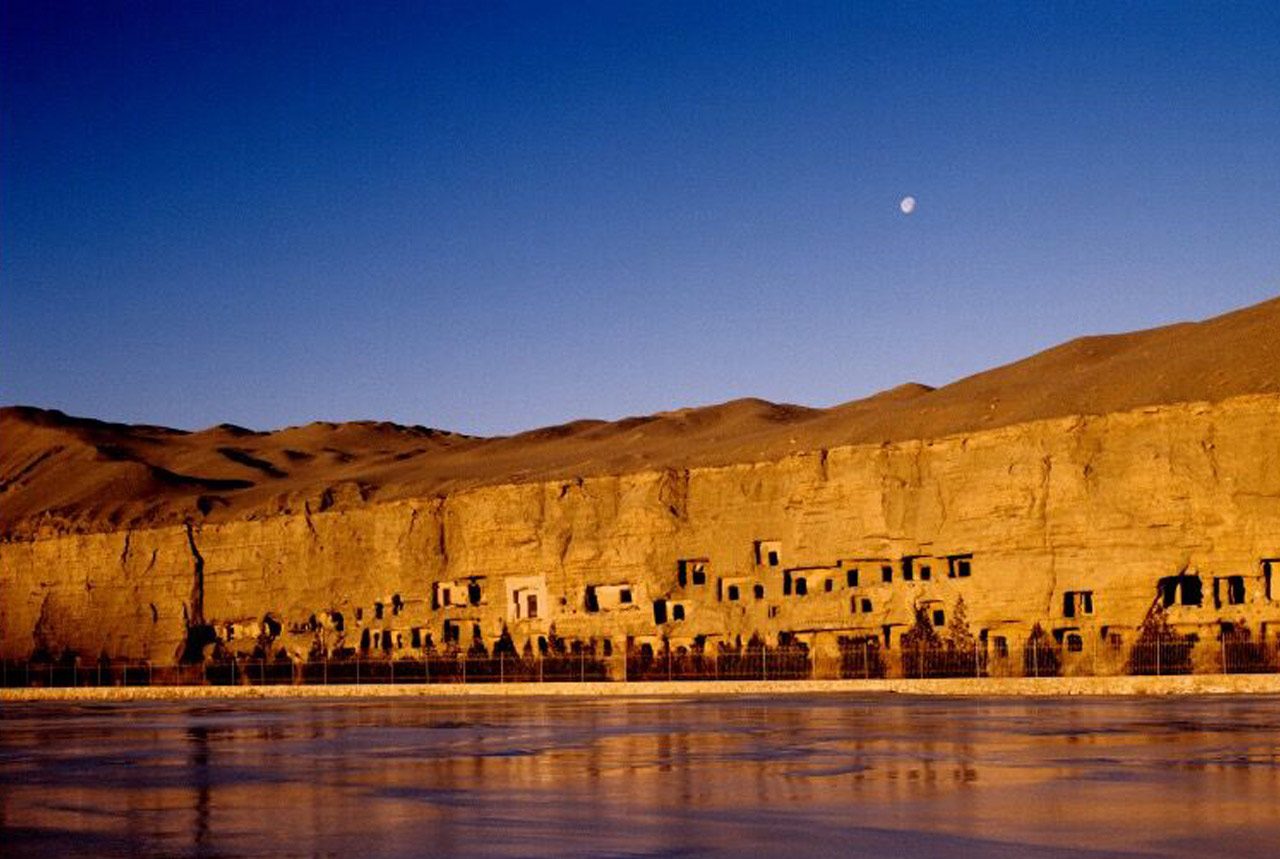
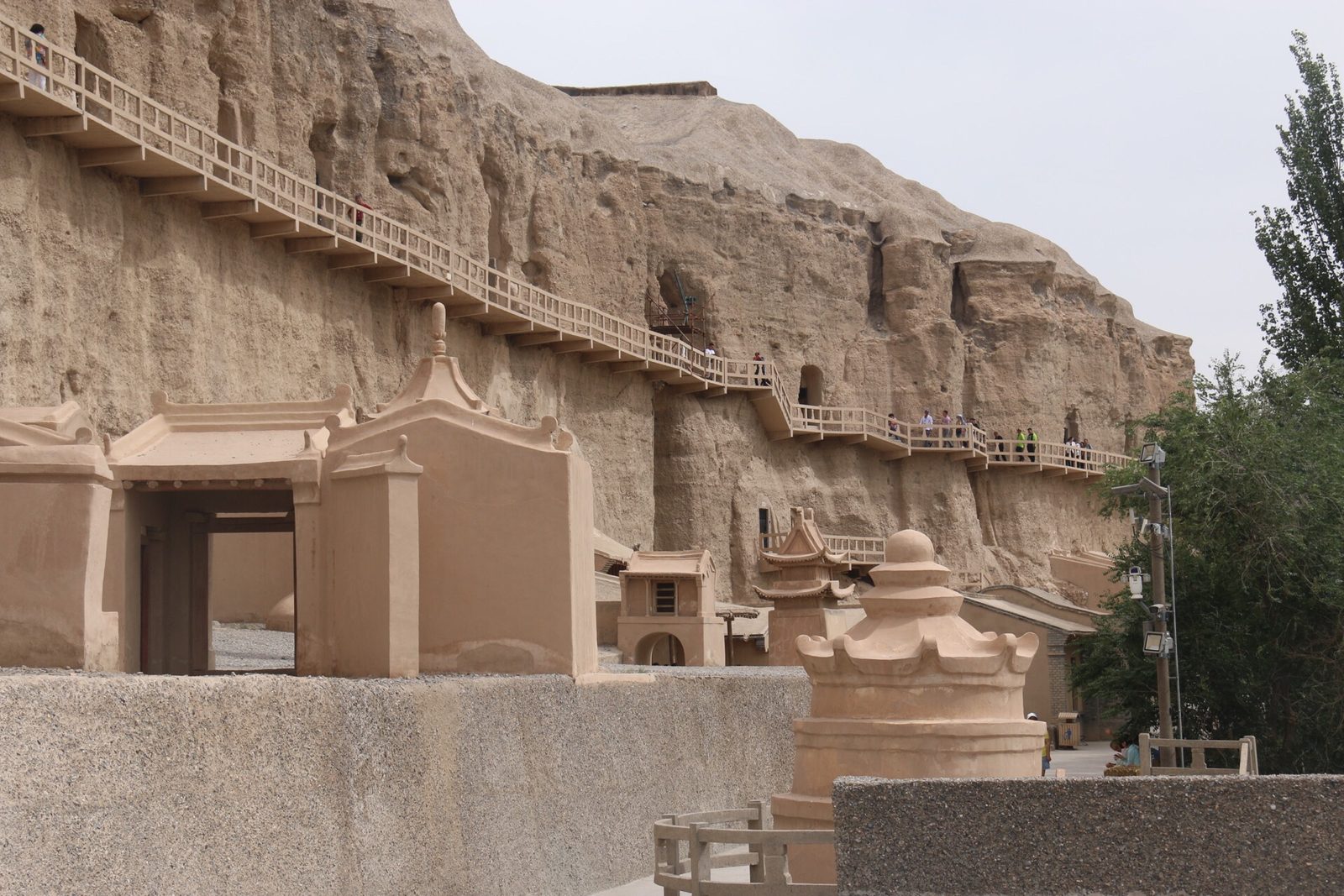
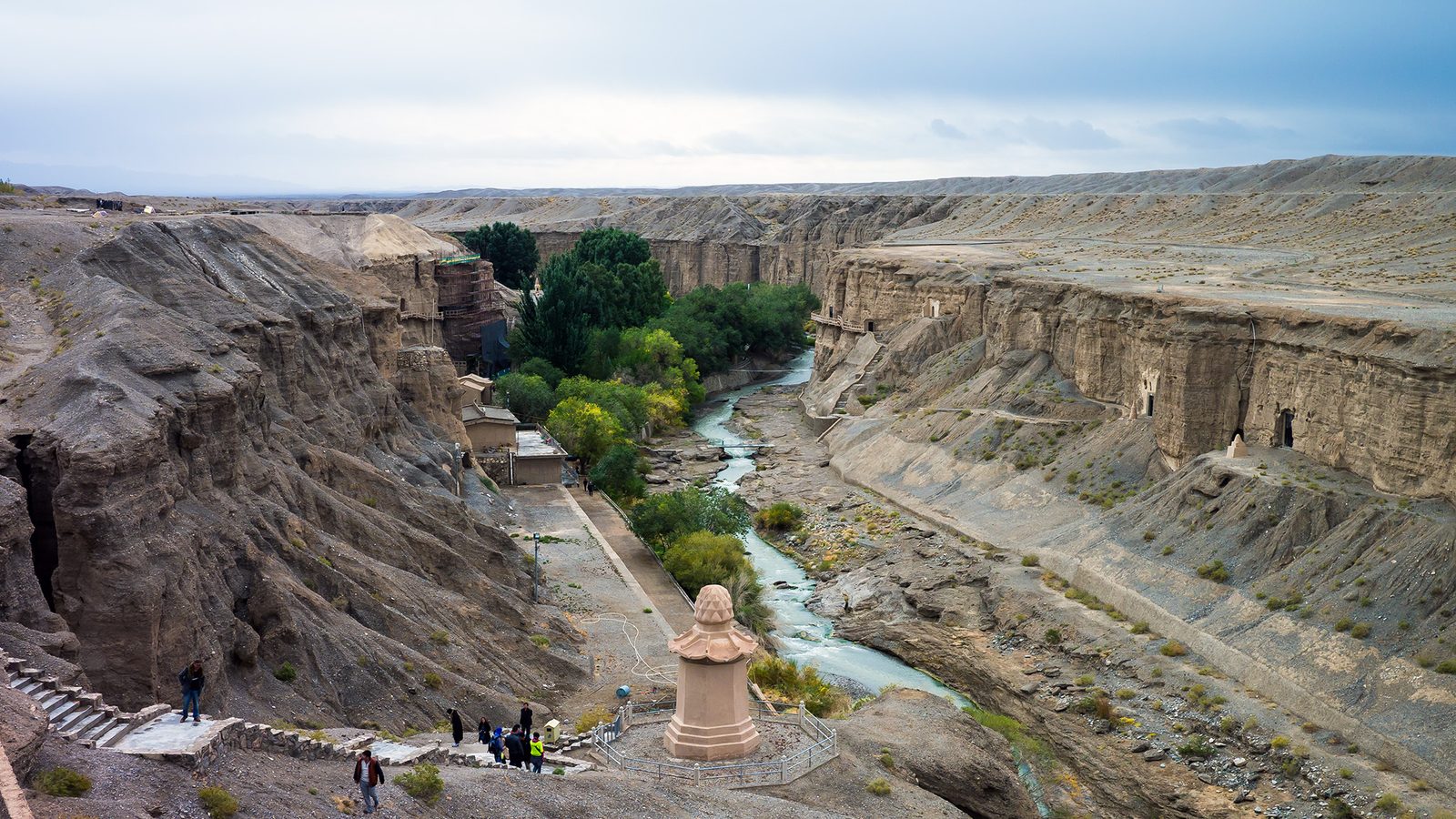
Located on both banks of the Yulin River valley in Guazhou County, named for the elm groves along the river; part of the Dunhuang grotto art system together with the Mogao Grottoes, known as their "sister grottoes"
Visitor info
- Opening hours
- 09:00-17:00
- Ticket
- approx. CNY 40
Price is indicative — final quote on inquiry.
Located on both banks of the Yulin River valley in Guazhou County, named for the elm groves along the river, the Yulin Grottoes belong to the Dunhuang grotto art system together with the Mogao Grottoes, hence their nickname "sister grottoes"; more than 40 caves from the Tang to Yuan dynasties survive. The complete, vividly colored Tang-era Amitayus Sutra tableau mural in Cave 25 is widely regarded as the finest Tang mural outside Dunhuang, and the Western Xia Water-Moon Guanyin blends Central Plains line drawing with Tibetan Buddhist flavor. On the same route, Suoyang City is the site of the Tang-era Guazhou city, and the "Son of the Earth" sculpture lies sleeping in the Gobi — together they form a one-day Guazhou itinerary of art and frontier history.
Getting there: Self-drive from Guazhou County (approx. 160 km)
Photos
More in Dunhuang
- Mogao Grottoes
Commonly known as the Thousand Buddha Caves, first carved in 366 AD (Jianyuan Year 2 of Former Qin) when monk Le Zun saw golden light over Mingsha Mountain; built over a millennium across more than ten dynasties—Northern Liang, Northern Wei, Sui-Tang, Five Dynasties, Song, Western Xia, Yuan—with 735 caves, 45,000 square meters of murals, and painted sculptures 200…
- Western Thousand Buddha Caves
Named for its location west of the Mogao Grottoes on cliffs beside the Dang River; Northern Wei caves carved as early as or contemporaneous with the Mogao Grottoes still survive, with more than 20 caves and niches remaining
- Dunhuang Academy History Exhibition Center
A specialized exhibition hall facing the Mogao Grottoes across the river, housing full-scale replicas of several representative caves (including classic caves not open to visitors) and displaying manuscripts and artifacts unearthed at Mogao
- Mingsha Mountain & Crescent Moon Spring
A millennia-old wonder of sand and spring coexisting — a crescent-shaped spring lake at the foot of Mingsha Mountain, embraced by surrounding dunes yet "the sand never encroaches on the spring"; recorded in Han and Tang documents, and in the Qing dynasty "Yuequan Xiaoché (Clear Dawn at Crescent Spring)" was listed among the Eight Scenic Sights of Dunhuang
- Shazhou Night Market
A night market in central Dunhuang, named after ancient Shazhou, open from dusk until late at night
- Yangguan Pass Scenic Area
A strategic gateway on the southern route of the Silk Road, established as a pass under Emperor Wu of Han; Wang Wei's verse "I urge you to drink one more cup of wine — west of Yang Pass you'll meet no old friends" made it immortal