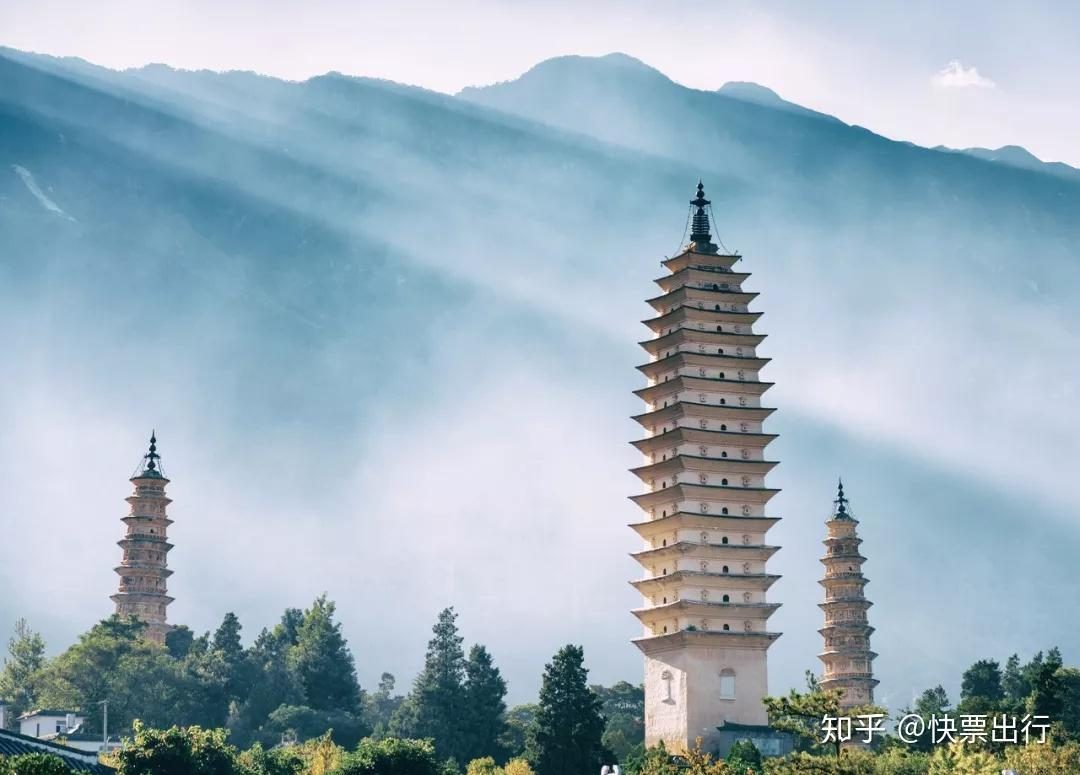
Three Pagodas of Chongsheng Temple
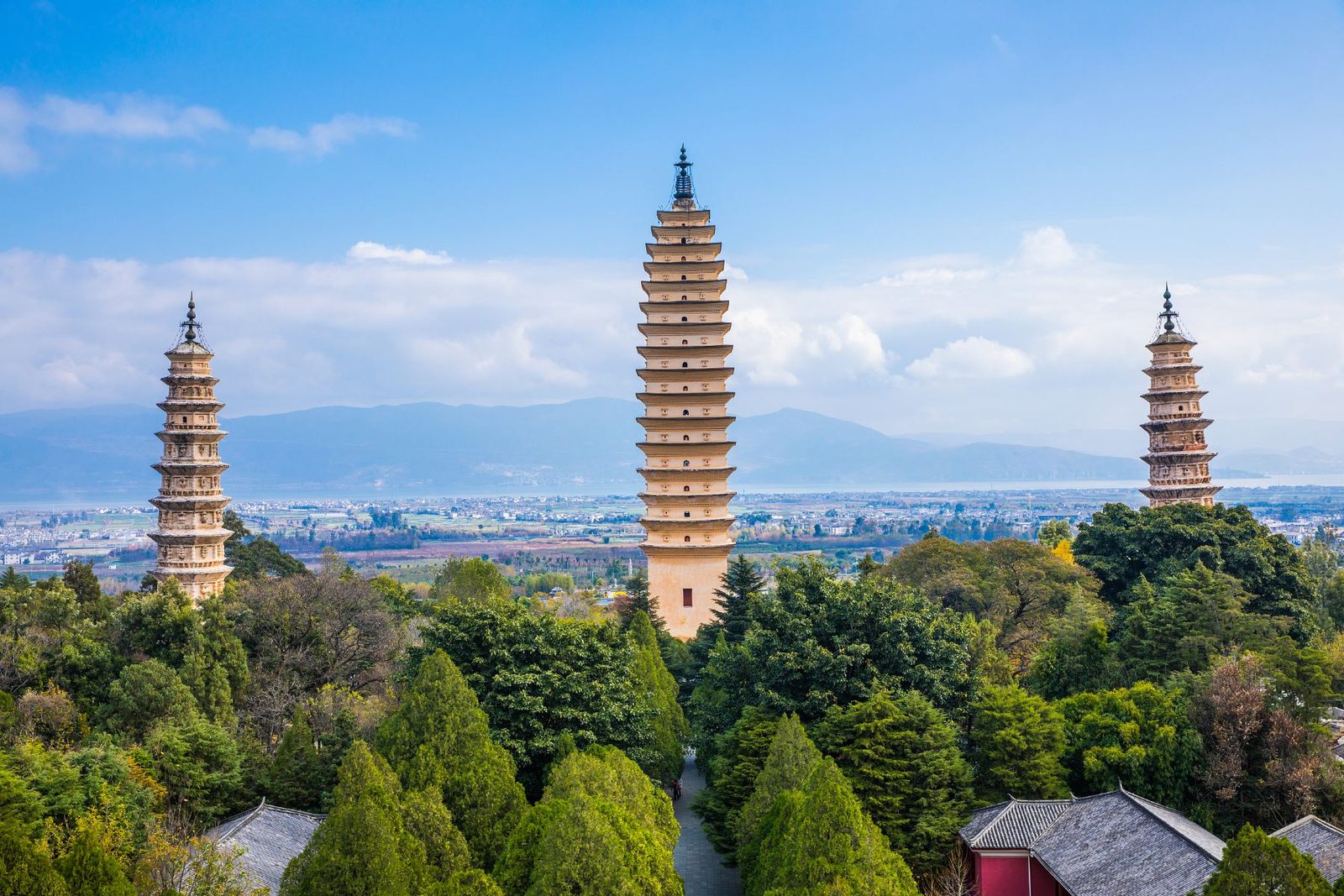
The surviving core of Chongsheng Temple, the royal monastery of the Dali Kingdom; the main Qianxun Pagoda was built during the reign of Quanfengyou of Nanzhao — a typical Tang-dynasty dense-eaved, hollow brick pagoda 69.13 m tall — with two smaller pagodas added in the Song dynasty on either side
Visitor info
- Opening hours
- 08:00-18:00
- Ticket
- CNY 75
Price is indicative — final quote on inquiry.
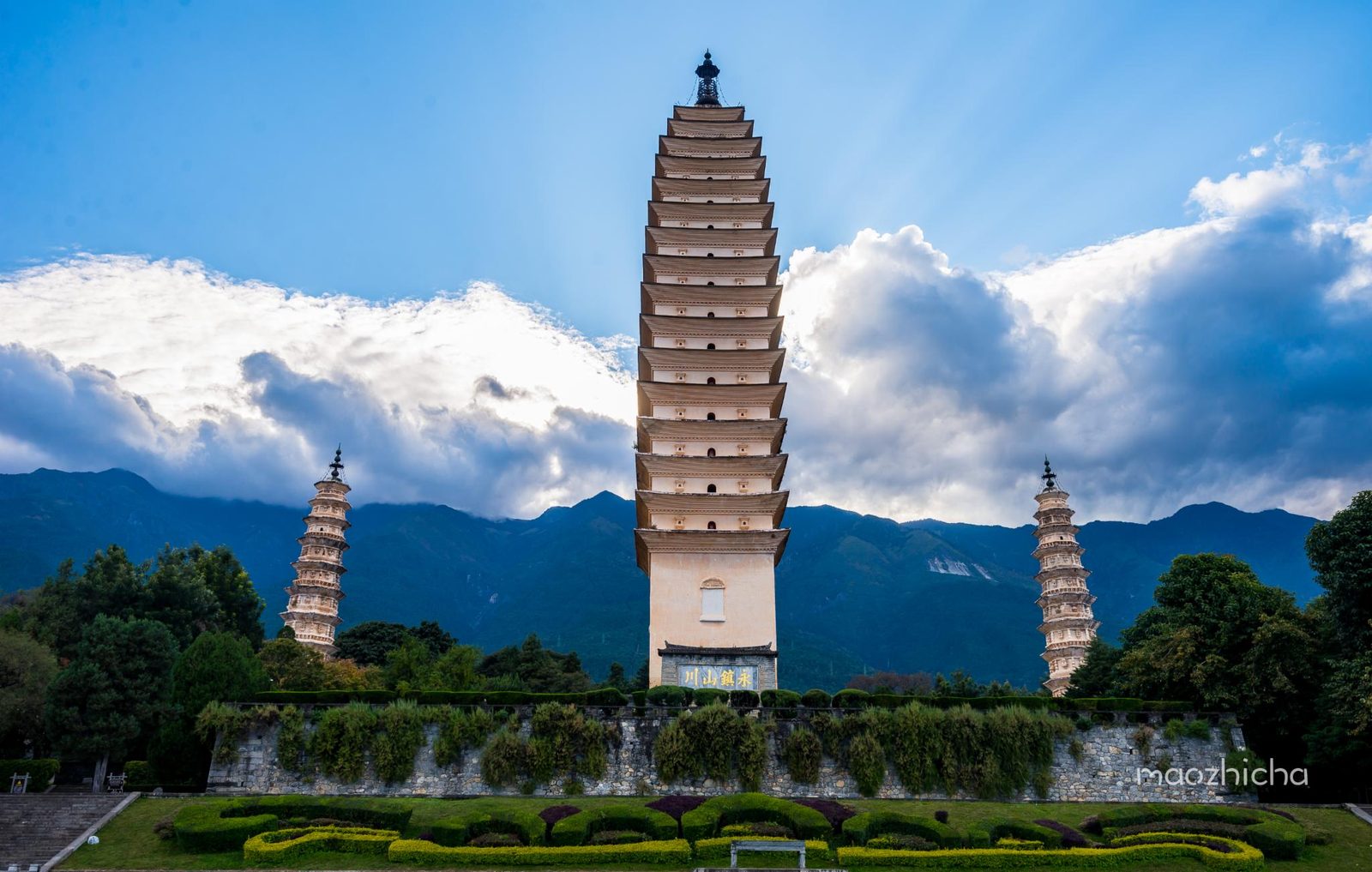
The surviving core of Chongsheng Temple, the royal monastery of the Dali Kingdom; the main Qianxun Pagoda was built during the reign of Quanfengyou of Nanzhao — a typical Tang-dynasty dense-eaved, hollow brick pagoda 69.13 m tall — with two smaller pagodas added in the Song dynasty on either side. Restoration in 1978 recovered more than 600 Nanzhao and Dali Kingdom artifacts from the pagoda tops, including the gilded Garuda, a national-treasure-level piece. The "Yongzhen Shanchuan (Forever Guarding Mountains and Rivers)" screen wall before the pagodas is a Ming dynasty relic; the Reflection Park, which frames the three pagodas against Cangshan, is the classic photo spot. Historical records say nine kings of the Dali Kingdom abdicated and became monks here — hence the epithet "Buddhist Kingdom of Subtle Fragrance".
Getting there: on foot from the north of the old town
Photos
More in Dali
- Dali Old Town
Ancient capital of both the Nanzhao Kingdom and the Dali Kingdom; the present square walled city was built in the 15th year of the Ming Hongwu era (1382) after Mu Ying and Lan Yu pacified Yunnan, with all four gate towers still standing; the layout of "a stream around Cangshan, Cangshan embracing the old town" endures to this day
- Cangshan Mountain (Diancangshan)
Nineteen peaks lining the west side of the Dali basin, with the main peak Malong at 4,122 m; every peak keeps snow and every stream flows into Erhai Lake; "Cangshan Snow" heads the four famous scenes of "wind, flowers, snow and moon", and the area is now a UNESCO Global Geopark
- Erhai Lake
Yunnan's second-largest plateau freshwater lake, named for its ear-like shape; the lake covers about 250 sq km, and "Erhai Moon" is one of the four famous scenes of "wind, flowers, snow and moon"
- Xizhou Ancient Town
The largest Bai ethnic market town on the west shore of Erhai Lake, famed since the Ming and Qing dynasties for the 'Xizhou merchant guild'; in the Republican era the four great families—Yan, Dong, Yin and Yang—ran tuocha tea and import-export trade reaching as far as Southeast Asia
- Shuanglang Ancient Town
A fishing village on the east shore of Erhai Lake, famed as the 'top town for Cangshan and lake views' and grown into an art enclave around the lake: dancer Yang Liping's Sun Palace and painter Zhao Qing's Qinglu 'Moon Palace' stand by the water, making it the birthplace of Erhai guesthouse aesthetics
- Caicun Village · Longkan Pier
A band of fishing villages on the west shore of Erhai Lake beside Dali Ancient Town; Longkan Pier was once a fishing dock and is now Erhai's top sunrise photo spot—morning light frames the silhouette of Cangshan Mountain against golden ripples on the lake