Chongwu Ancient City
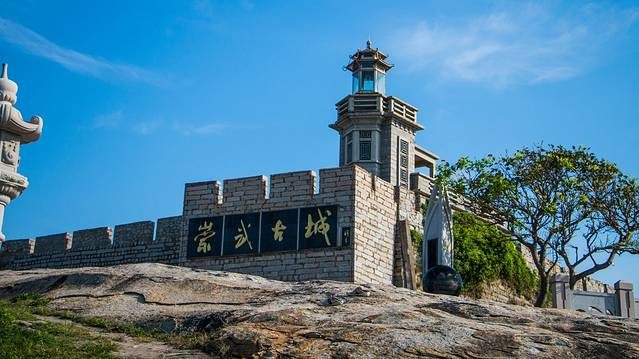
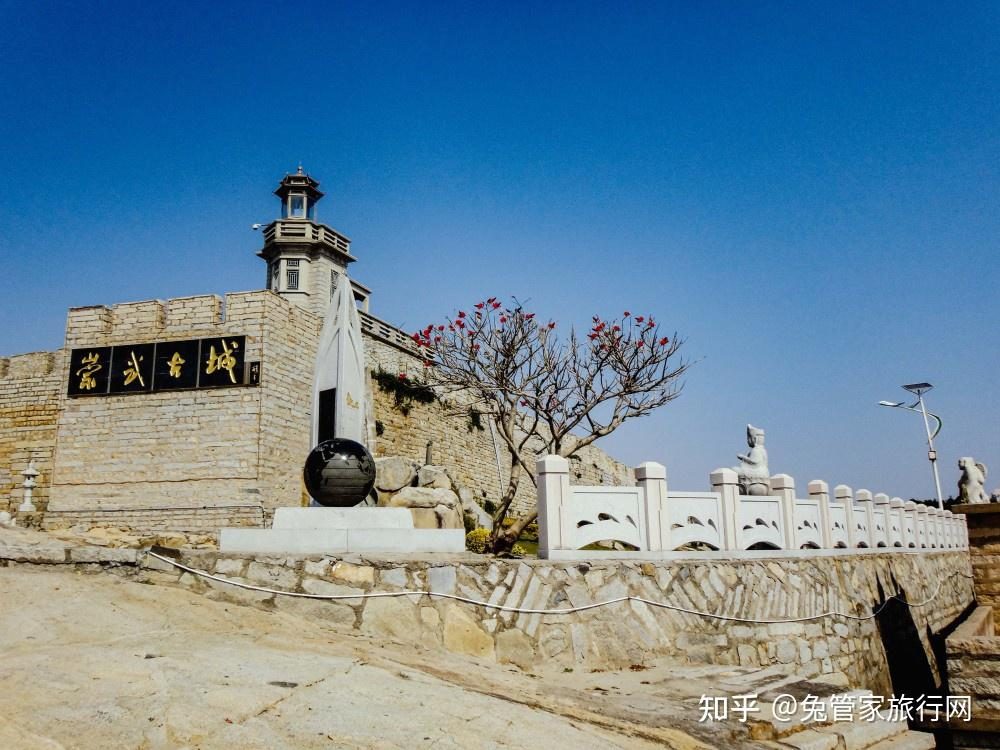
A stone fortress against Japanese pirates built in 1387 (the 20th year of the Ming Hongwu era) under Marquis Jiangxia, Zhou Dexing, constructed entirely of granite — the most complete surviving T-shaped stone-built ancient city in China, with battlements, sentry shelters and water gates well preserved
Visitor info
- Opening hours
- 07:30-18:00
- Ticket
- approx. CNY 45
Price is indicative — final quote on inquiry.
A stone fortress against Japanese pirates built in 1387 (the 20th year of the Ming Hongwu era) under Marquis Jiangxia, Zhou Dexing, constructed entirely of granite — the most complete surviving T-shaped stone-built ancient city in China, with battlements, sentry shelters and water gates well preserved; inside live the Hui'an women, who still wear the traditional dress of "yellow bamboo hats, floral headscarves and blue shirts"; the outfit — "feudal head, democratic belly, saving shirt, extravagant trousers" — is seen by folklorists as a living fossil of costume culture; at the Hui'an Women Photography Base in Dazuo Village, Hui'an women pose year-round in traditional work scenes, and Hui'an stone carving is listed as national-level intangible cultural heritage.
Getting there: self-drive from Hui'an County (approx. 50 km)
Photos

More in Quanzhou
- Kaiyuan Temple
Quanzhou's largest Buddhist temple, first built in the second year of the Tang Chuigong reign (686); legend holds that the temple was founded when its owner gave up his garden after a mulberry tree bloomed with white lotus flowers — hence the "Purple Clouds Covering the Ground" legend
- West Street
Quanzhou's earliest developed district, born with the founding of the city in the Tang Kaiyuan era; for 1,300 years it has remained the lively central axis of the old town
- Qingjing Mosque
One of China's oldest surviving mosques, founded in 1009 (the second year of the Dazhong Xiangfu reign, Northern Song) by Muslim merchant guilds from Arabia; its Arabic name was "Ashab Mosque". The granite-built gateway and the surviving pillars of the Fengtian altar still echo the style of the Great Mosque of Damascus in Syria.
- Tianhou Palace
One of the starting points from which the Mazu faith spread to the world: built in 1196 (the second year of the Qingyuan reign, Southern Song), it is one of the oldest Mazu temples still standing.
- Confucian Temple (Fuwenmiao)
Quanzhou's prefectural Confucian temple, first built in the Tang dynasty and rebuilt in the Southern Song; its Dacheng Hall is one of the largest surviving Confucian temple halls in Jiangnan (south of the Yangtze), with a double-eaved hip roof and Song-style dougong brackets well preserved.
- Tonghuai Guanyue Temple (Temple of Guan Yu and Yue Fei)
The busiest Guandi (Lord Guan) temple in southern Fujian by incense traffic; its Ming-dynasty complex consists of a front hall, the Sanyi Hall and a rear hall, with worshippers pouring in all day.