Quanzhou 泉州
Quanzhou city guide — sights, tickets and getting around.
Top things to do in Quanzhou
Ranked picks — headline sights first, with tickets and timing at a glance.
 1
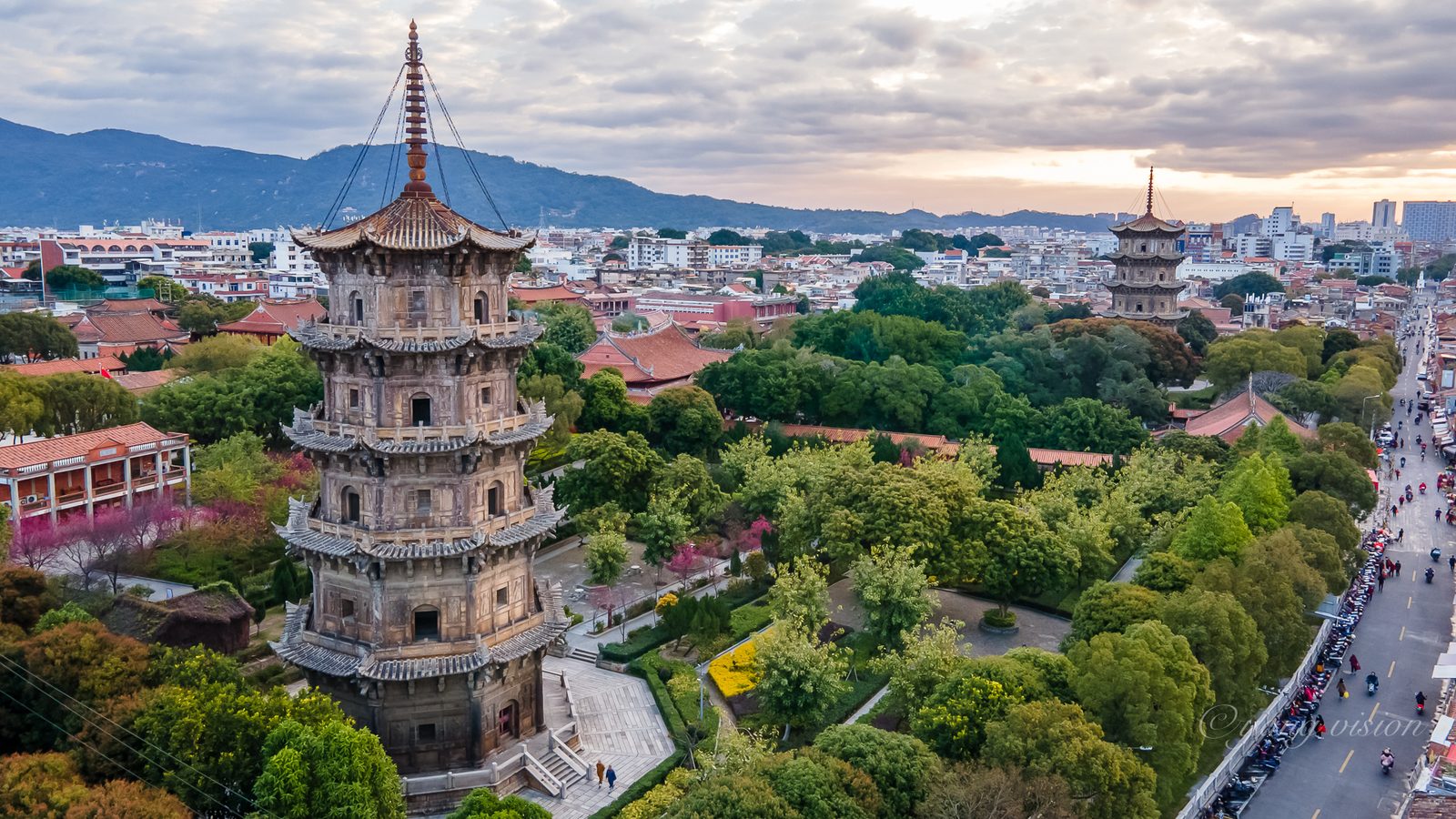
Kaiyuan Temple
AttractionQuanzhou's largest Buddhist temple, first built in the second year of the Tang Chuigong reign (686); legend holds that the temple was founded when its owner gave up his garden after a mulberry tree bloomed with white lotus flowers — hence the "Purple Clouds Covering the Ground" legend
 2
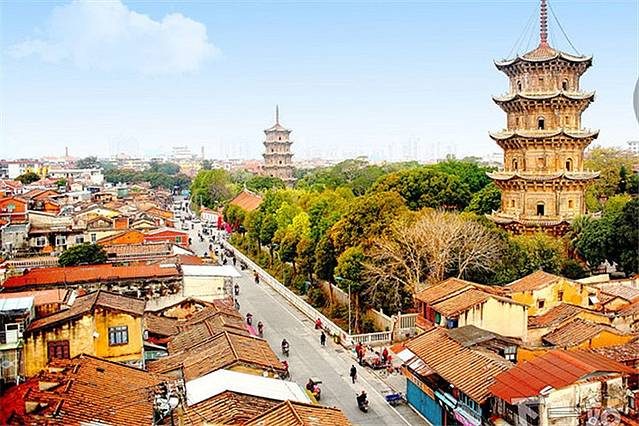
West Street
AttractionQuanzhou's earliest developed district, born with the founding of the city in the Tang Kaiyuan era; for 1,300 years it has remained the lively central axis of the old town
 3
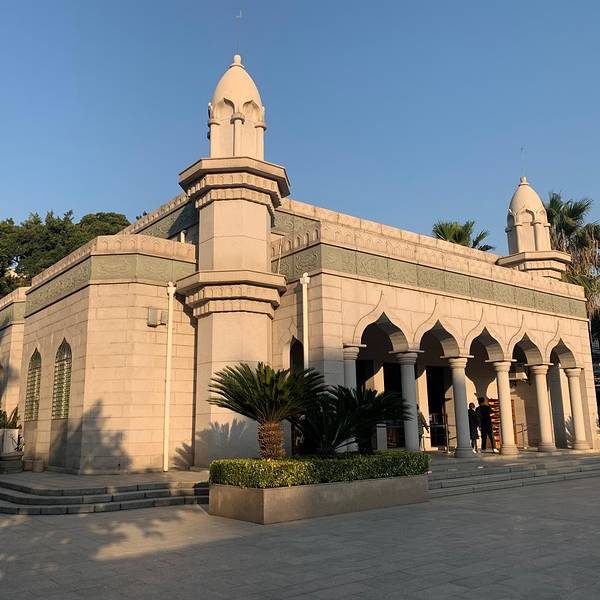
Qingjing Mosque
AttractionOne of China's oldest surviving mosques, founded in 1009 (the second year of the Dazhong Xiangfu reign, Northern Song) by Muslim merchant guilds from Arabia; its Arabic name was "Ashab Mosque". The granite-built gateway and the surviving pillars of the Fengtian altar still echo the style of the Great Mosque of Damascus in Syria.
 4
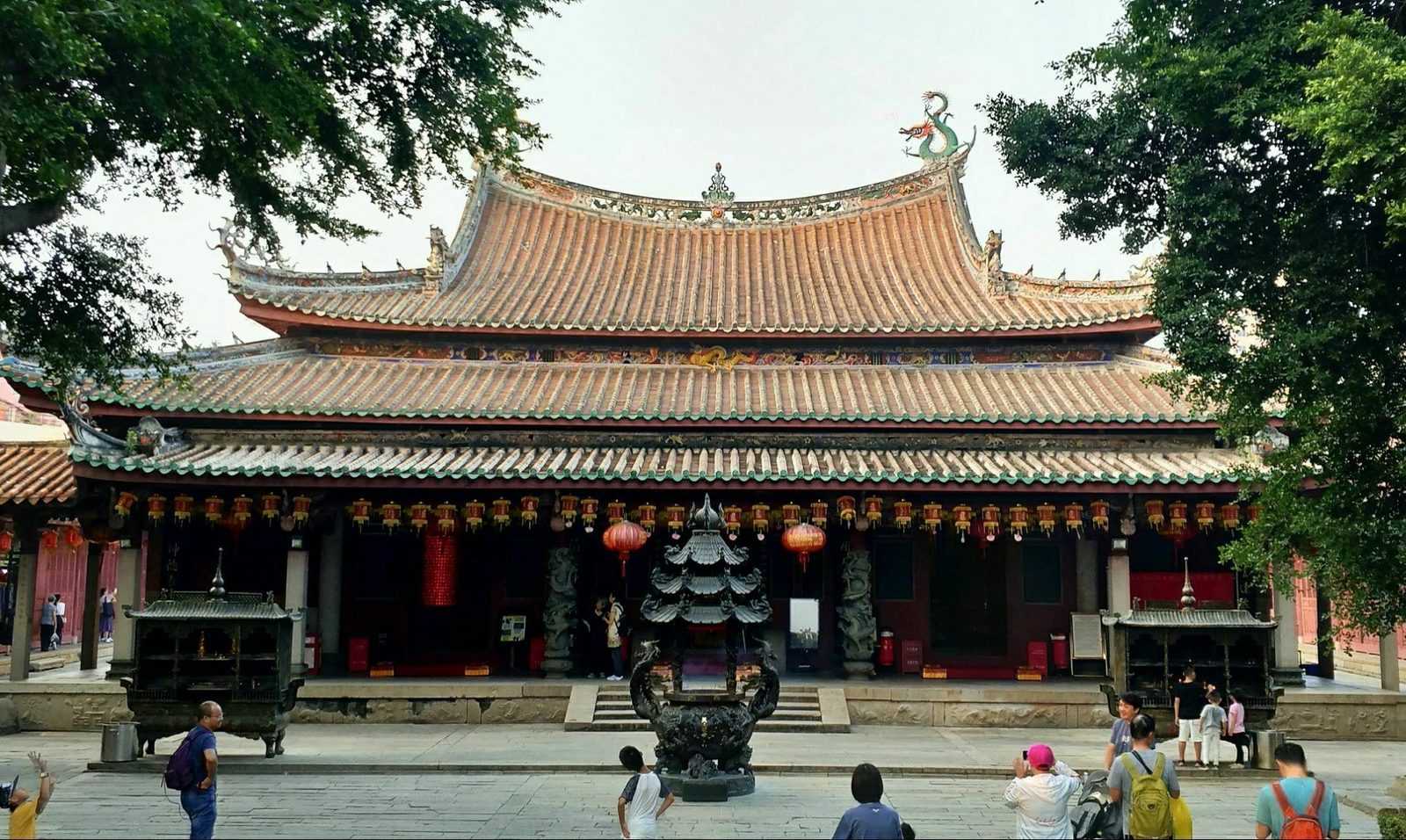
Tianhou Palace
AttractionOne of the starting points from which the Mazu faith spread to the world: built in 1196 (the second year of the Qingyuan reign, Southern Song), it is one of the oldest Mazu temples still standing.
 5
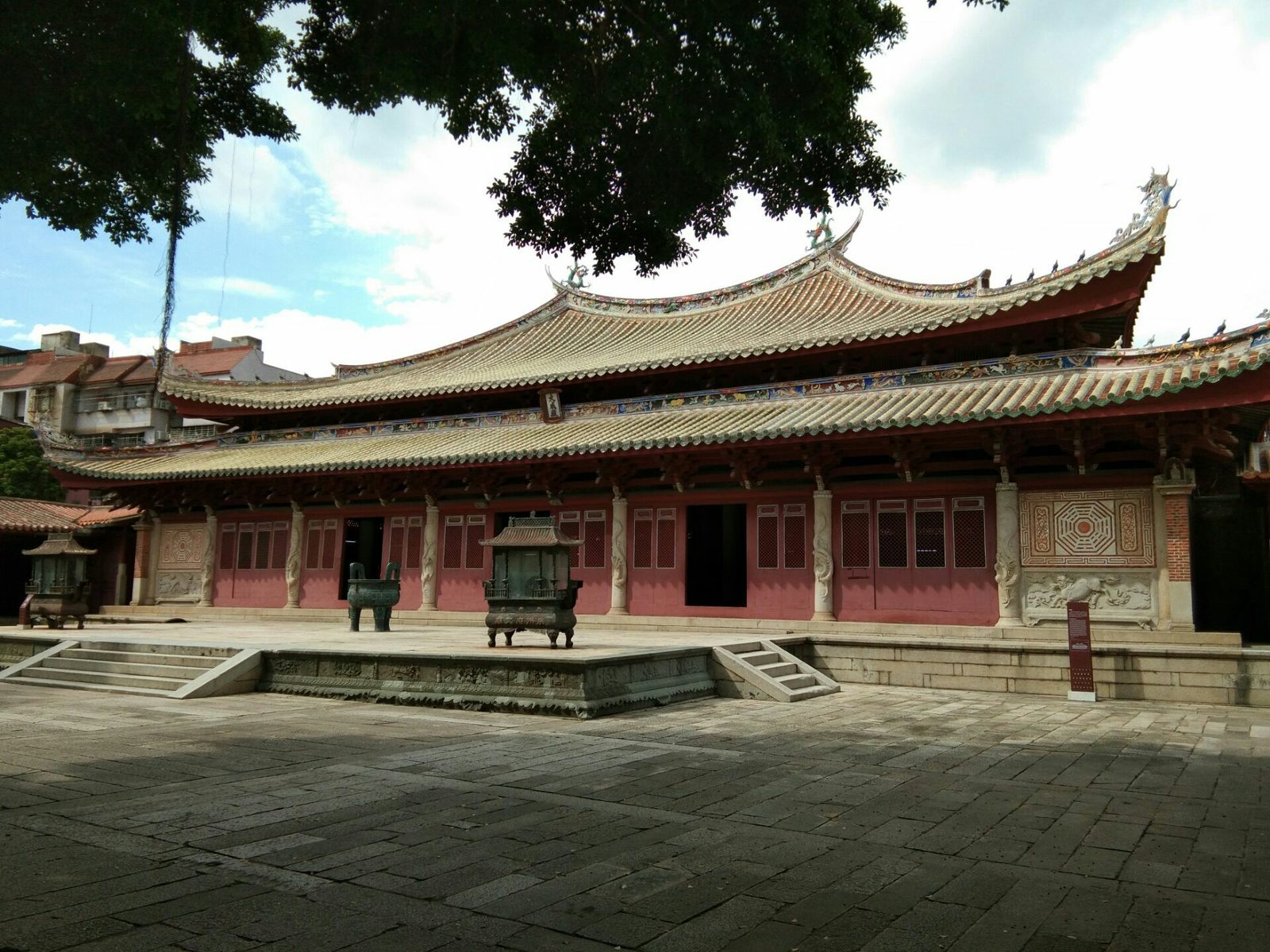
Confucian Temple (Fuwenmiao)
AttractionQuanzhou's prefectural Confucian temple, first built in the Tang dynasty and rebuilt in the Southern Song; its Dacheng Hall is one of the largest surviving Confucian temple halls in Jiangnan (south of the Yangtze), with a double-eaved hip roof and Song-style dougong brackets well preserved.
 6
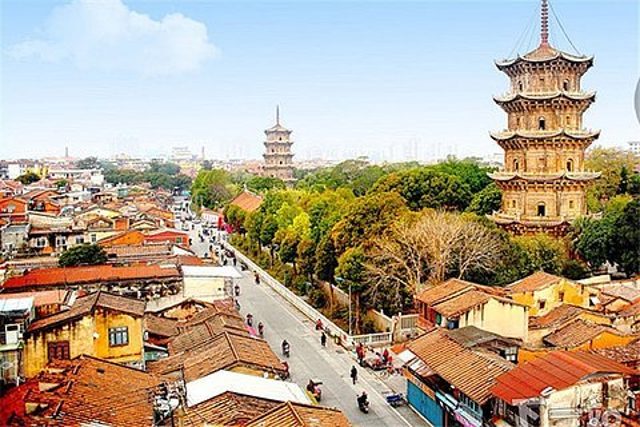
Tonghuai Guanyue Temple (Temple of Guan Yu and Yue Fei)
AttractionThe busiest Guandi (Lord Guan) temple in southern Fujian by incense traffic; its Ming-dynasty complex consists of a front hall, the Sanyi Hall and a rear hall, with worshippers pouring in all day.
 7
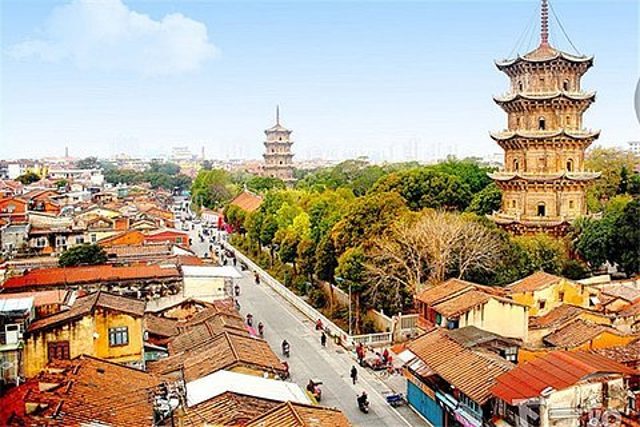
Chengtian Temple & Chongfu Temple
AttractionChengtian Temple, one of the three great monasteries of southern Fujian, was founded in the Five Dynasties period; its "Ten Scenes of Chengtian", such as "Moon Terrace Reflection" and "Evening Clouds over Yingshan", are scattered through the courtyards. The eminent modern monk Master Hongyi passed away here, and the temple houses a memorial hall dedicated to him.
 8
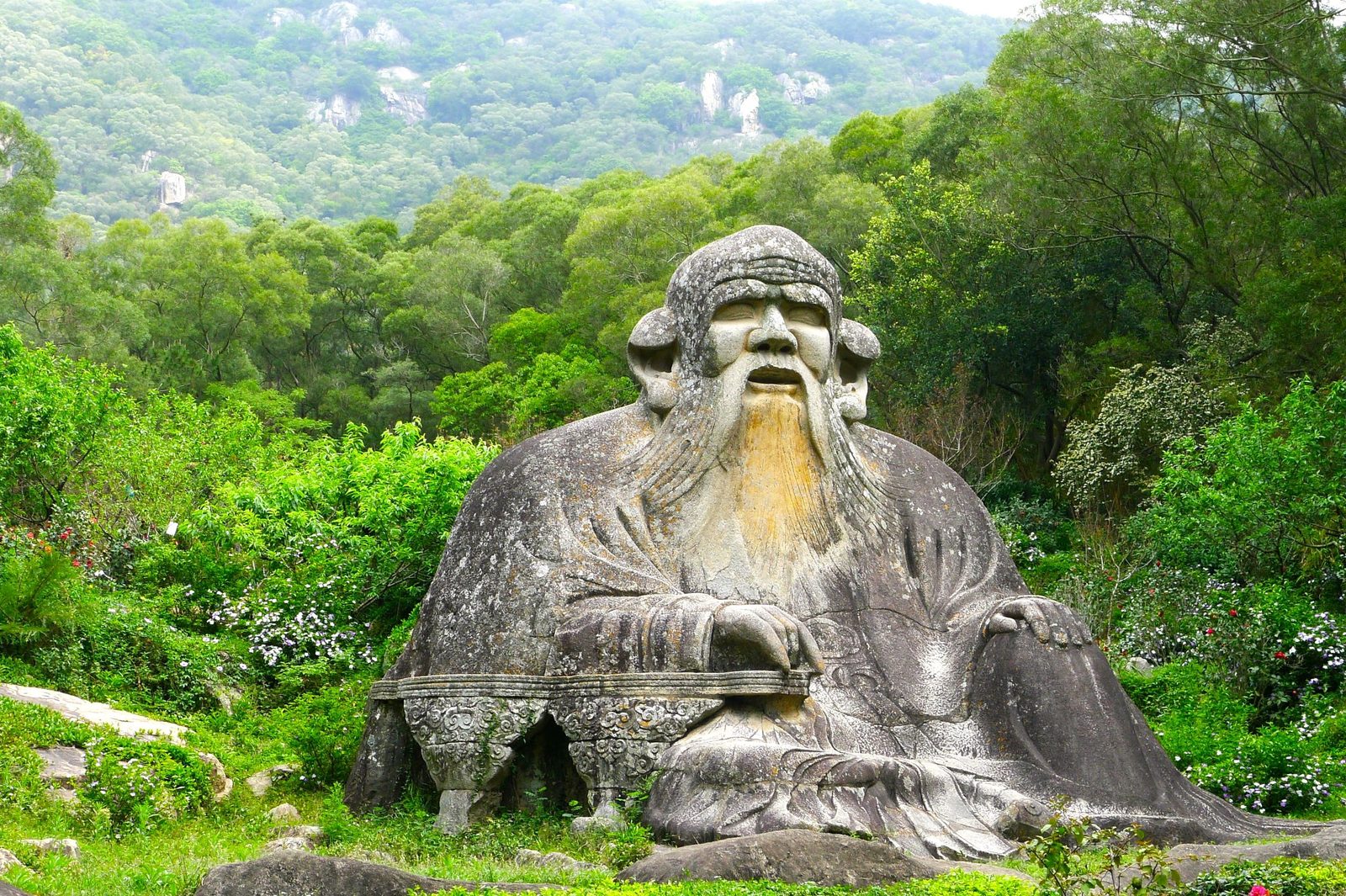
Mount Qingyuan
AttractionQuanzhou's "mother mountain" and a 5A-rated scenic area: halfway up, the Laojun Rock is a colossal Song-dynasty stone statue of seated Laozi, 5.6 m tall — the largest extant Taoist stone carving in China; the folk saying "touch Laojun's nose and live to 120" has made nose-touching a must-do ritual.
 9
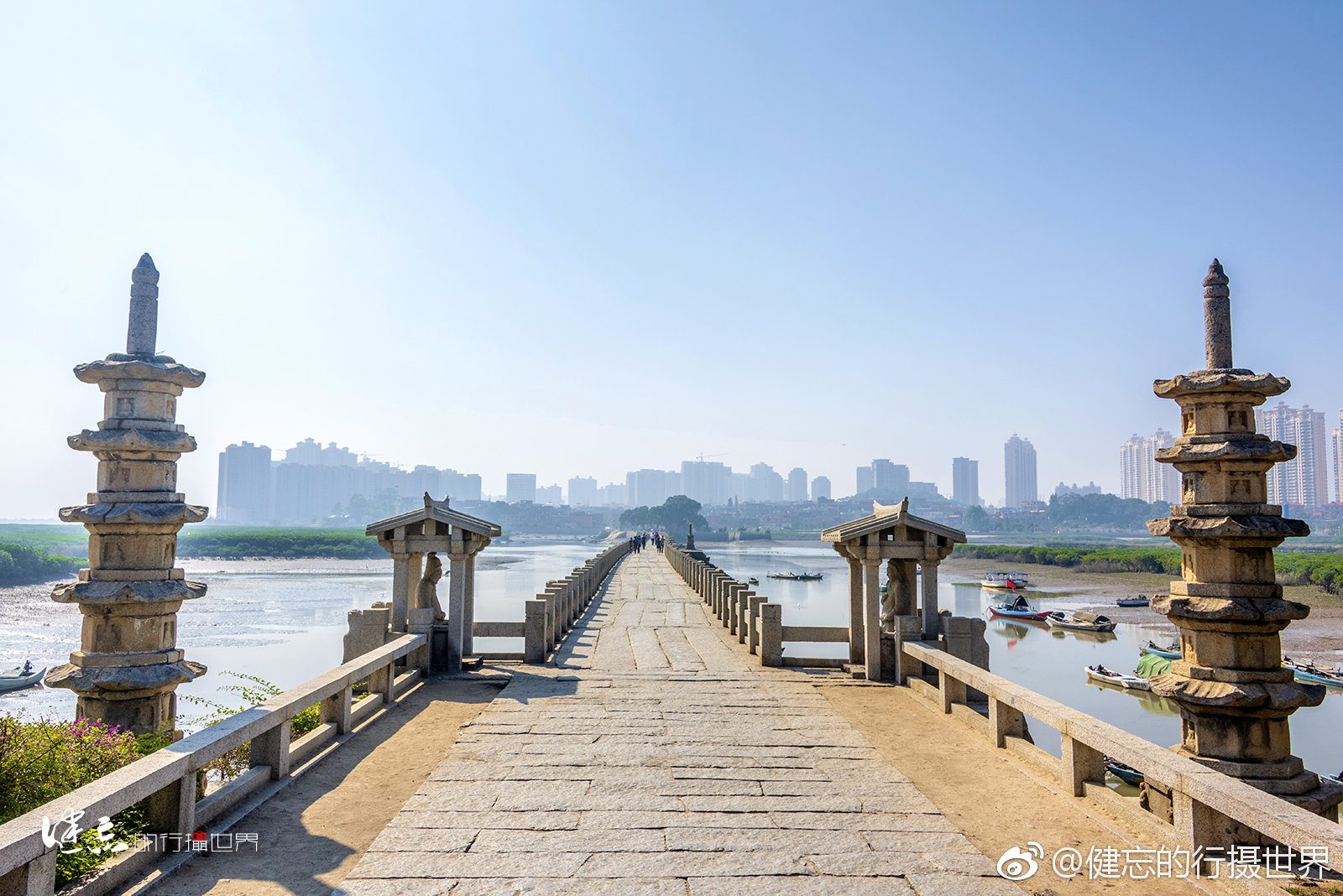
Luoyang Bridge
AttractionOriginally named Wanan Bridge, it was built under the direction of Quanzhou prefect Cai Xiang during the Huangyou to Jiayou reign periods of the Northern Song (1053–1059); it is China's earliest surviving cross-sea beam-style stone bridge, pioneering the "raft-type foundation" and the "oyster-solidification method"—breeding oysters on the bridge foundations to secure the piers, a pioneering feat in world bridge history…
 10
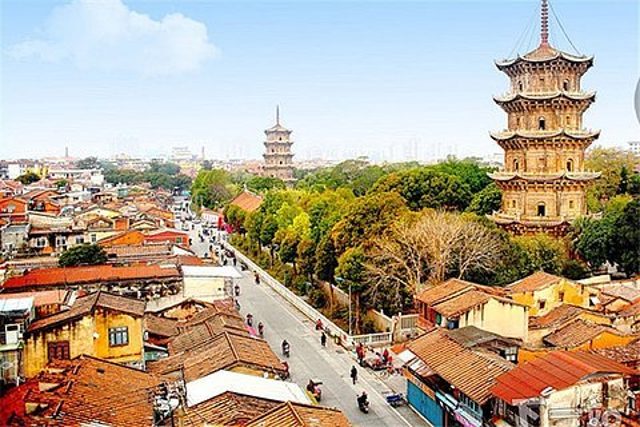
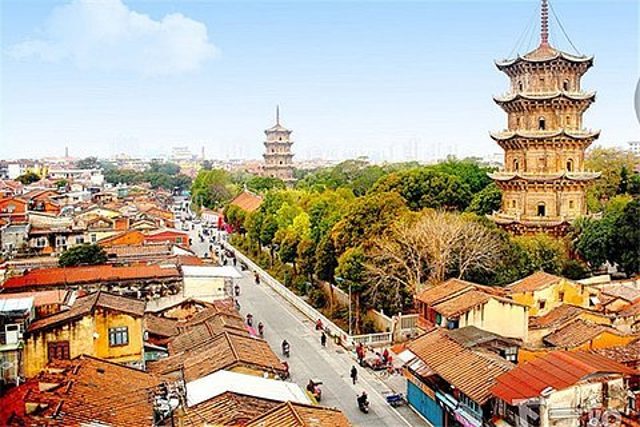
Zhenwu Temple · Liusheng Pagoda at Shihu · Gusao Pagoda (Sisters-in-law Pagoda)
AttractionZhenwu Temple is in Fashi Village, Donghai, Fengze District; in the Song dynasty it was where the port of Quanzhou made offerings to the sea god, and the Ming Jiajing-era stele reading "Tunhai" (Swallowing the Sea) captures in one phrase the sea god's power over the ocean—a surviving relic of the wind-praying and sea-worship rituals
 11
Jiuri Mountain Wind-Praying Inscriptions
AttractionA celebrated cultural mountain in Nan'an on Quanzhou's western outskirts, named for the Central Plains migrants who climbed it every Double Ninth Festival to ease their homesickness ever since the Western Jin dynasty
 12
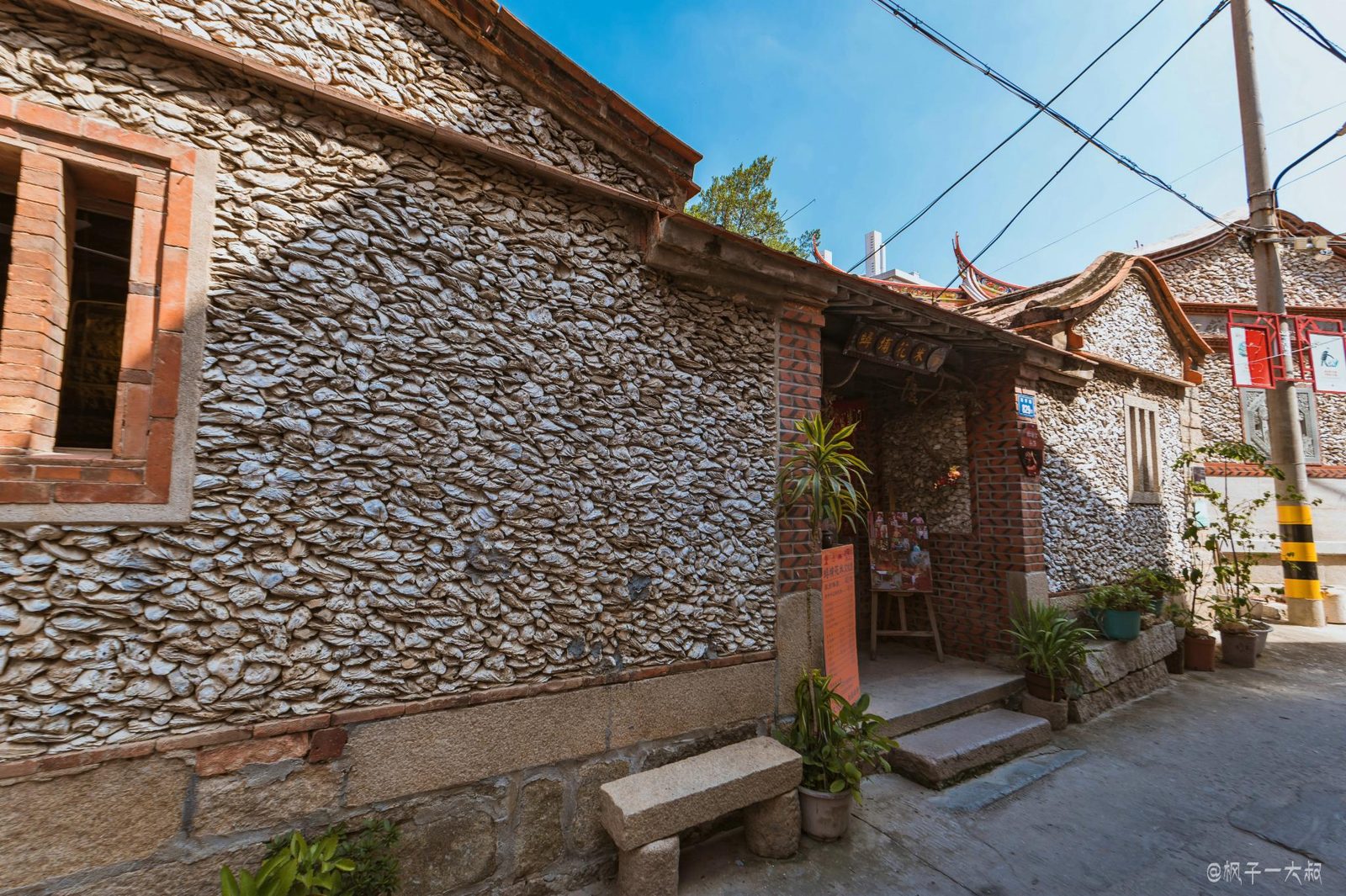
Xunpu Village
AttractionAn ancient fishing village on the shore of Quanzhou Bay: Xunpu women wear the "zanhua wei" (flower garland)—fresh flowers strung into a wreath and fixed with bone hairpins—which, together with the oyster-shell houses (homes with walls built of oyster shells), forms the village's two famed wonders
 13
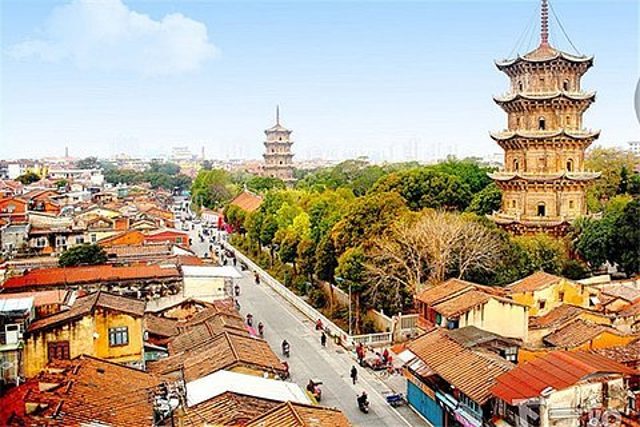
Southern Shaolin Temple
AttractionThe ruins of the Southern Shaolin Temple at the eastern foot of Qingyuan Mountain in Quanzhou, rebuilt on the site in 1992
 14
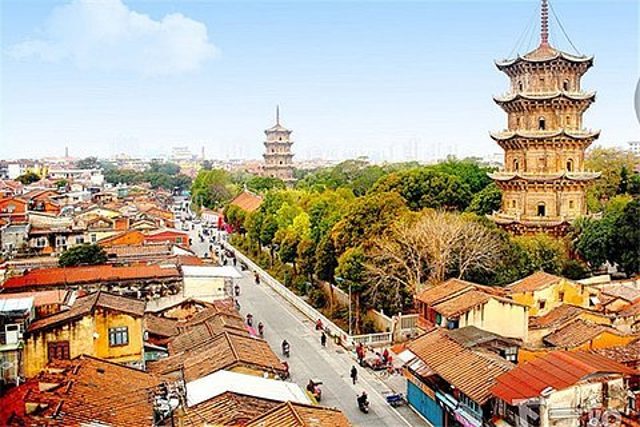
Quanzhou Overseas Communications History Museum
AttractionChina's only museum themed on the history of overseas communications: the remains of a Song-dynasty seagoing ship unearthed in 1974 at Houzhu Port in Quanzhou Bay are displayed here, and the watertight-bulkhead structure of this 13th-century ocean-going Fuchuan ship directly attests to the shipping capacity of the "greatest port of the East"
 15
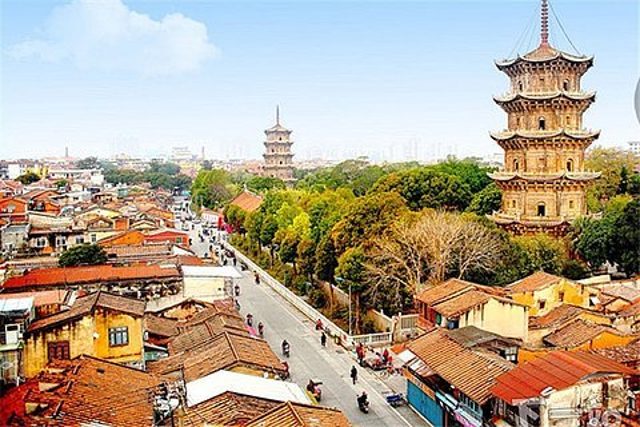
Quanzhou Intangible Cultural Heritage Museum · Puppet Theater
AttractionThe Quanzhou Intangible Cultural Heritage Museum systematically displays intangible-heritage categories such as lacquer-thread carving, Hui'an stone carving, Dehua porcelain, Nanyin music and puppetry
 16
Wudianshi Traditional Blocks
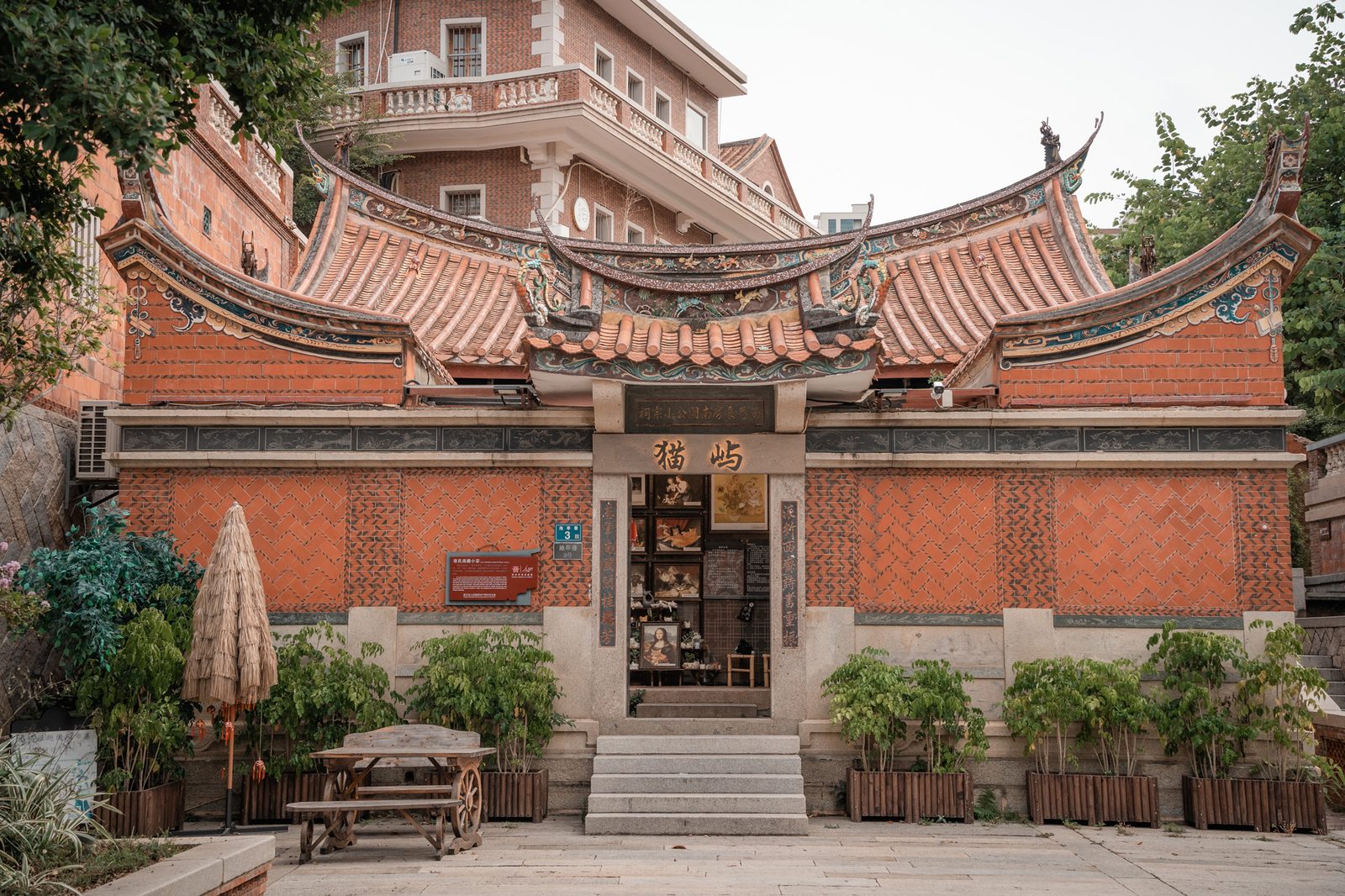
AttractionA protected district in Jinjiang's old town, named after the Tang dynasty's "five shops"; it gathers ancestral-hall complexes of the Cai and Zhuang clans and red-brick mansions like Chaobei Dacuo built in "gonghuangqi" (palace-imitation) style, a showcase of Minnan architectural vocabulary such as swallowtail ridges and brick-and-stone inlaid walls, known as the "Minnan Red-Brick Architecture Museum…"
 17
Shishi Golden Coast · Yongning Guard City
AttractionA golden seaside beach in Yongning Town, Shishi City, with fine sand and gentle slopes, known as the "No. 1 Golden Coast of Minnan"
 18
Chongwu Ancient City
AttractionA stone fortress against Japanese pirates built in 1387 (the 20th year of the Ming Hongwu era) under Marquis Jiangxia, Zhou Dexing, constructed entirely of granite — the most complete surviving T-shaped stone-built ancient city in China, with battlements, sentry shelters and water gates well preserved
 19
Anxi Tea Culture (Qingshuiyan)
AttractionChina's home of oolong tea and birthplace of Tieguanyin: the "Wang" and "Wei" legends of the Tieguanyin mother trees in Yaoyang Village, Xiping, from the Qing Yongzheng era are still told today
 20
Dehua Ceramics (Qudougong Kiln Site)
AttractionOne of China's three great ancient porcelain capitals, awarded the title "World Ceramics Capital" in 2008: its white porcelain has a body and glaze smooth as lard, and the Guanyin statues of Ming porcelain sage He Chaozong are hailed as the pinnacle of "China White" (Blanc de Chine), classed as national-treasure artifacts
 21
Yongchun (Niumulin · Dongguan Bridge)
AttractionNiumulin is the best-preserved primeval forest in southern Fujian (Minnan), known as the "Xishuangbanna of Minnan", with over a thousand species of vascular plants
 22
Meizhou Island (Mazu Ancestral Temple)
AttractionBirthplace of the Mazu faith: In the Song Dynasty, Lin Moniang of Meizhou rose from human to goddess; hundreds of millions of Mazu devotees worldwide revere the Meizhou Ancestral Temple as the ancestral home
Want a custom Quanzhou trip?
Tell us your dates — free draft plan within 24 hours.