
Gude Temple
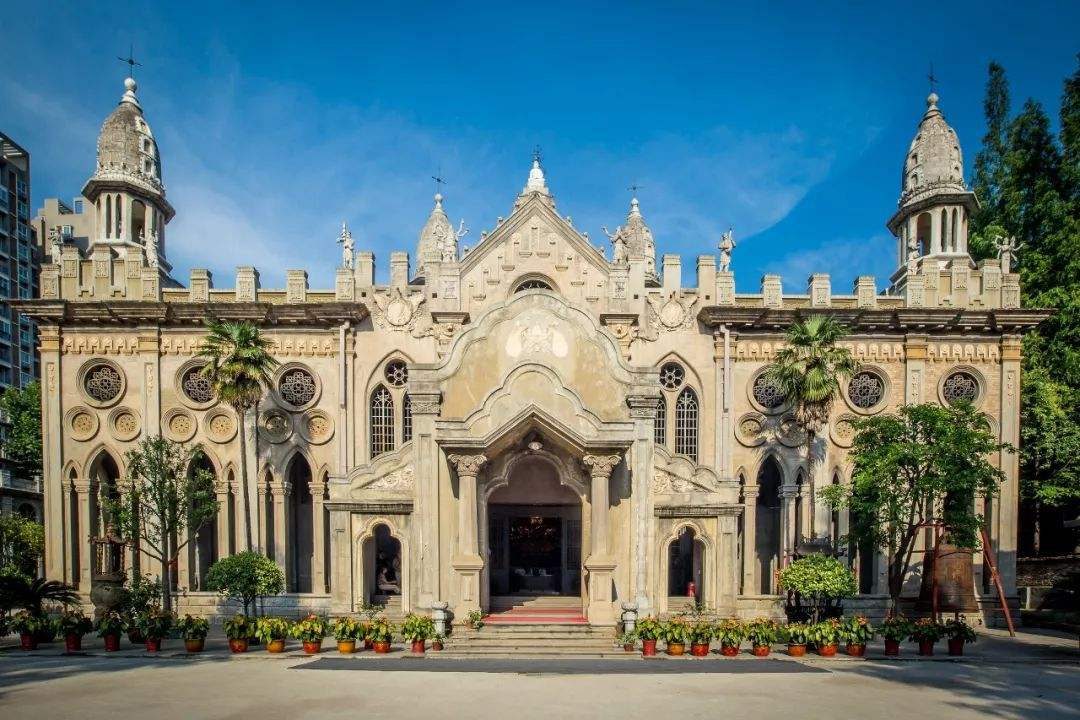
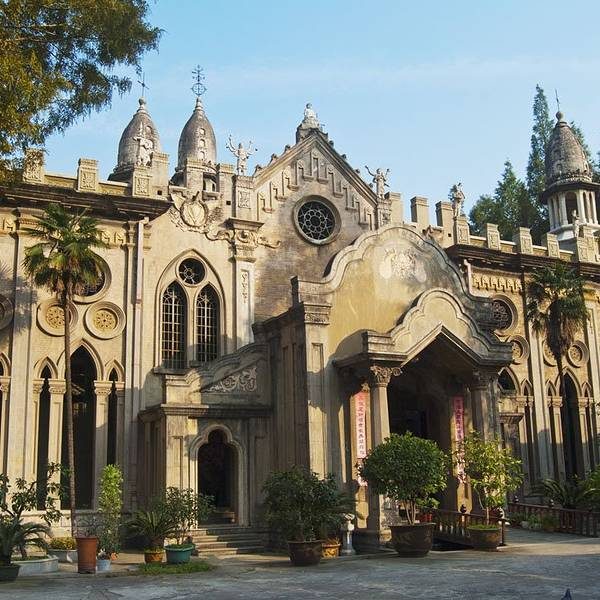
Built in 1877, “the most extraordinary temple of Chinese Buddhism” — Burmese Ananda style (a mix of Gothic pointed arches + Romanesque colonnades + Islamic domes, unique in China)
Visitor info
- Opening hours
- 07:00-17:00
- Ticket
- Free (incense voucher CNY 8)
Price is indicative — final quote on inquiry.
Built in 1877, “the most extraordinary temple of Chinese Buddhism” — Burmese Ananda style (Gothic pointed arches + Romanesque colonnades + Islamic domes in one mix, unique in China); nine spires cluster atop the Yuantong Hall. Founded in 1877, Gude Temple stands unrivaled among Chinese Buddhist temples for the “hybrid” architecture of its Yuantong Hall: the hall is based on the Burmese Ananda (Pallava) style, blended with Gothic pointed-arch windows, Romanesque colonnade arches and Islamic dome elements, with nine spires clustered at the top — unique among Chinese Buddhist temples, hence its title as “the most extraordinary temple of Chinese Buddhism”. The temple was founded through the vows of Wuhan lay Buddhists, was hugely popular during the Republican era, and Buddhist rites were held here during the War of Resistance for soldiers who died defending Wuhan; hidden deep in bustling city lanes, it was briefly occupied by a factory in the 1970s and restored around the turn of the century after appeals by heritage workers. Entry is free with only a CNY 8 incense voucher, and white pigeons in front of the hall framed against the exotic domes make an instant photo masterpiece — Wuhan's most famous off-the-beaten-track sight.
Getting there: Bus or taxi (Huangpu Road)
Photos
More in Wuhan
- Hubu Alley
Breakfast alley: hot dry noodles, doupi and fried doughsticks.
- Yellow Crane Tower
The most-quoted tower in Chinese poetry, overlooking the Yangtze.
- East Lake
Six times the size of West Lake; greenways, cherry trees and lakeside cycling.
- Hubei Provincial Museum
Home of the 2,400-year-old bells of Marquis Yi of Zeng.
- Yellow Crane Tower Park
"The First Tower of the Rivers and Mountains under Heaven" (a military watchtower built by Sun Quan in 223, the second year of Huangwu of Eastern Wu in the Three Kingdoms period; repeatedly destroyed and rebuilt—burned down in 1884, rebuilt on Snake Hill in 1985), main tower 51.4m with five tiers of flying eaves (golden gourd finial), Cui Hao's verse "The man of old has ridden away on a yellow crane"…
- Wuhan Yangtze River Bridge
Completed in 1957 as the "First Bridge over the Ten-Thousand-Li Yangtze" (Soviet-assisted design, road-rail dual use); "A flying bridge spans north and south, turning the natural moat into a thoroughfare" (Mao Zedong's ci poem)