Temple of the Six Banyan Trees
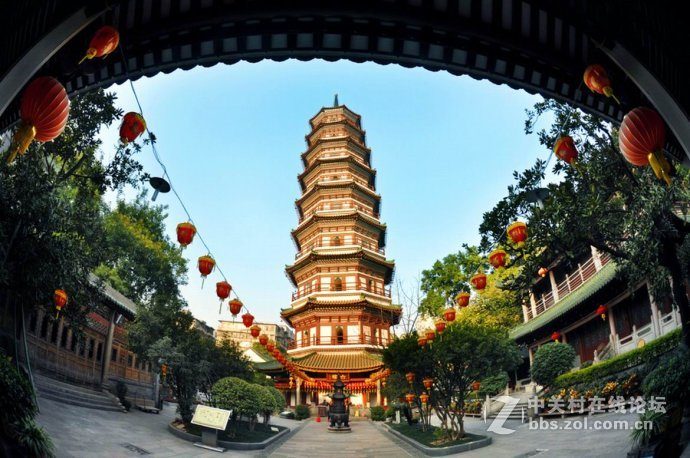
Founded in 537 (the 3rd year of Datong, Liang dynasty of the Southern Dynasties), it was named for the "Six Banyans" inscribed by Su Shi when he visited and saw six banyan trees: the Flower Pagoda, 57.6 m tall with its nine-story body and pointed finial, is a city landmark of thousand-year Guangzhou; the early-Tang writer Wang Bo, traveling south to Guangzhou, composed his famous "Inscription on the Sarira Pagoda of Baozhuangyan Temple in Guangzhou" about this pagoda…
Visitor info
- Opening hours
- 08:00-17:00
- Ticket
- Free
Price is indicative — final quote on inquiry.
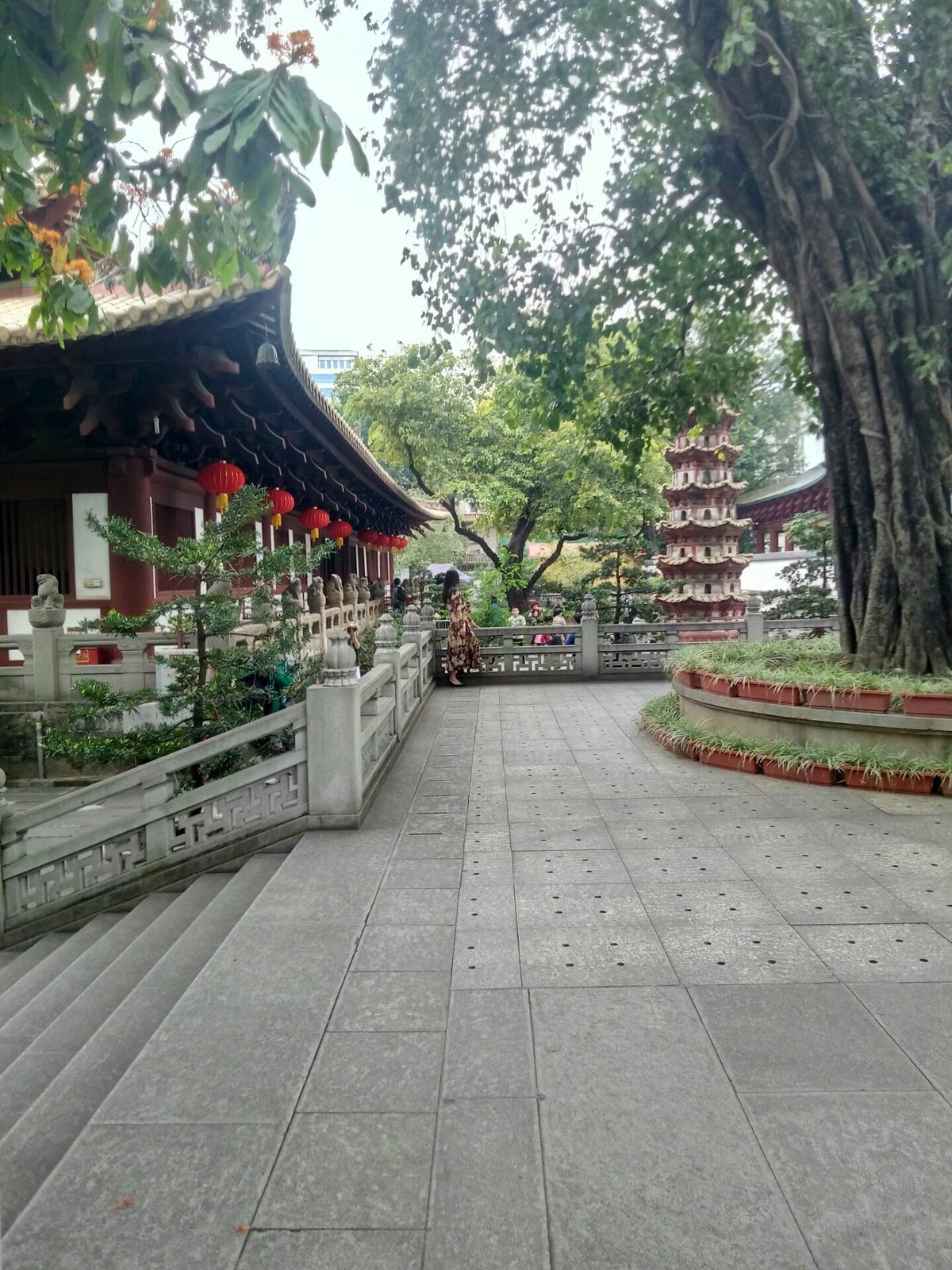
Founded in 537 (the 3rd year of Datong, Liang dynasty of the Southern Dynasties), the temple owes its name to the "Six Banyans" inscribed by Su Shi after seeing six banyan trees here: the Flower Pagoda, 57.6 m tall with a nine-story body and a pointed finial, has stood as a city landmark for a thousand years; the early-Tang writer Wang Bo, traveling south to Guangzhou, composed his famous "Inscription on the Sarira Pagoda of Baozhuangyan Temple in Guangzhou" in praise of this pagoda. The Mahavira Hall houses a Qing-dynasty cast-bronze Buddha, while the Burong (Replanted Banyan) Pavilion and the stele corridor preserve stone carvings from successive dynasties. Located in the Beijing Road shopping district and free to enter, it is a Zen oasis amid the bustle.
Getting there: Metro Line 1, Gongyuanqian Station
Photos
More in Guangzhou
- Canton Tower
The 'slim waist' twisting tower with a ferris wheel on top.
- Shamian Island
European trading concession with neoclassical facades along the Pearl River.
- Chen Clan Ancestral Hall
Lingnan architecture masterpiece with brick, wood and lime carvings.
- Baiyun Mountain
The city's green lung; cable car views over Guangzhou.
- Chen Clan Ancestral Hall (Chen Clan Academy)
A joint-clan ancestral hall and academy built 1888–1894 with funds pooled by Chen family clans from 72 counties of Guangdong, it is the largest and most lavishly decorated surviving ancestral-hall building in Lingnan: wood, brick and stone carving (the "three carvings"), ceramic and lime sculpture (the "two sculptures"), plus bronze and iron casting and colored painting, together known as the "…
- Yongqing Fang · Cantonese Opera Art Museum
A model of "micro-renewal" in the historic Enning Road district of Liwan (launched 2016): qilou arcade buildings and Xiguan mansions restored to their old look, now home to creative shops, cafes and intangible-heritage studios; the Bruce Lee ancestral home has a display in one of the alleys — old-street charm and youthful energy coexist.