Guangzhou 广州
Cantonese heartland: dim sum towers, colonial Shamian and the Pearl River.
- Best season
- Oct-Dec (dry and mild)
- Getting in
- CAN Baiyun; 8h direct from Europe
Why Guangzhou
The food capital: yum cha mornings, Shamian afternoons, tower lights at night.
Best season
Oct-Apr
Getting in
CAN airport; HSR hub for Shenzhen and Hong Kong
First-timer's route
- Day 1: Yum cha breakfast, Shamian Island morning, Chen Clan Ancestral Hall afternoon, Canton Tower and a Pearl River cruise at night
- Day 2: Yuexiu Park and the Five Rams statue, Beijing Road old town, another dim sum round because you're in the right city for it
- Day 3 (optional): Baiyun Mountain morning, Foshan day trip for the martial-arts and ceramics ancestry
Getting around
Metro Line 3 is the spine (and the crush — avoid rush hour with bags). The APM line hops the business district. Autumn and winter are the kind months; spring is the 'return of the south' humidity season.
Top things to do in Guangzhou
Ranked picks — headline sights first, with tickets and timing at a glance.
 1
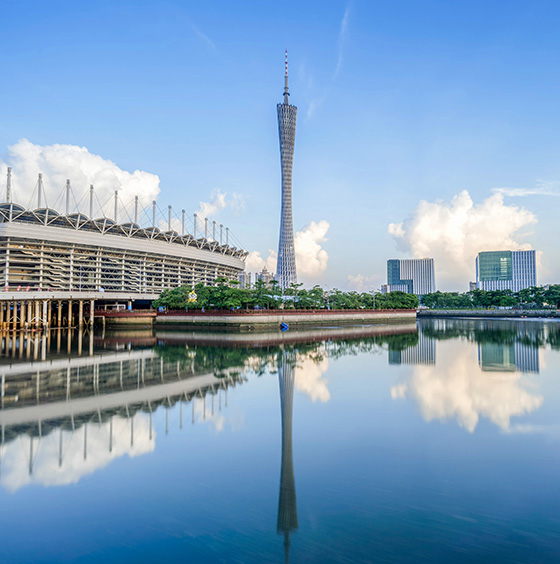
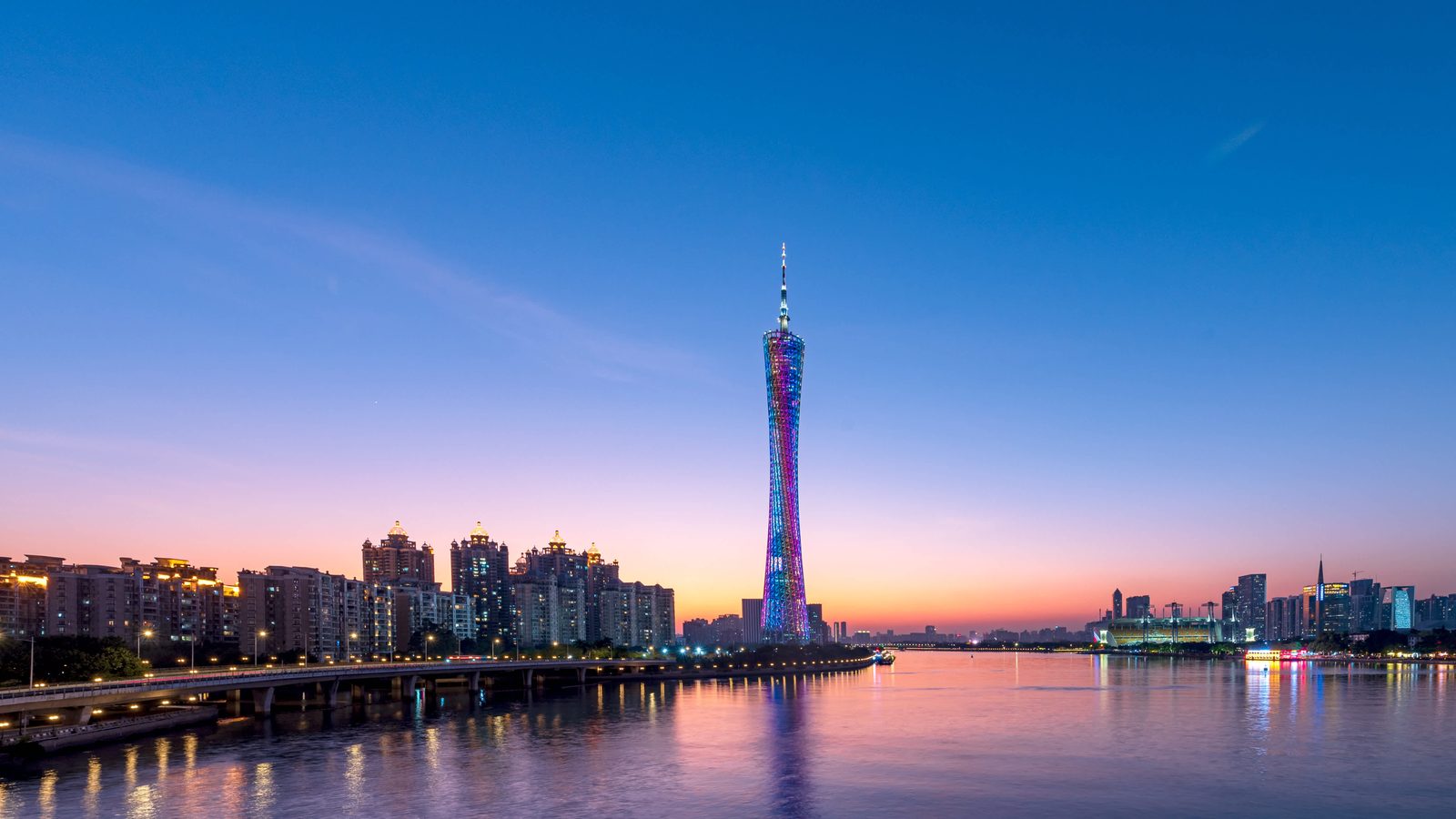
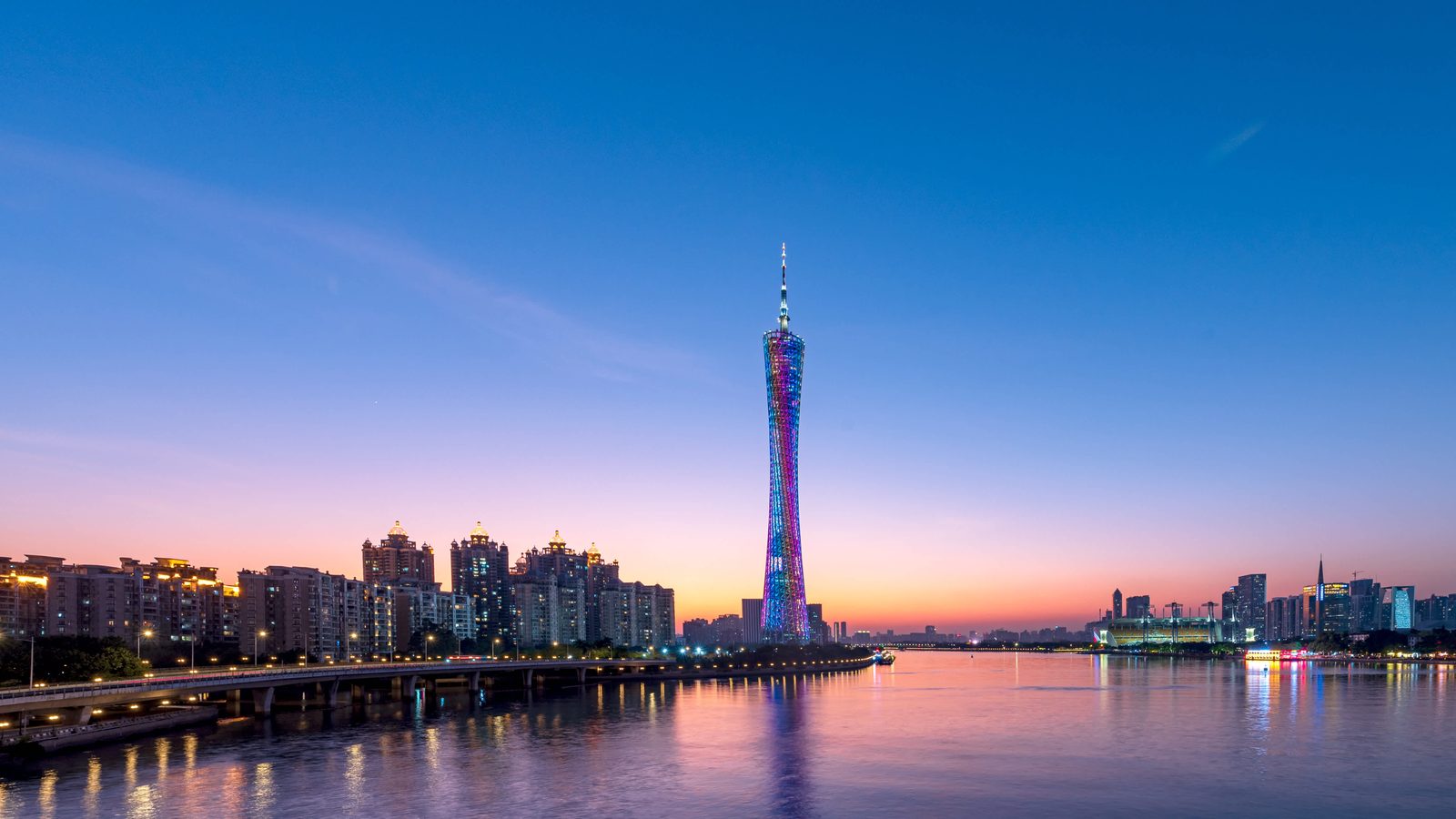
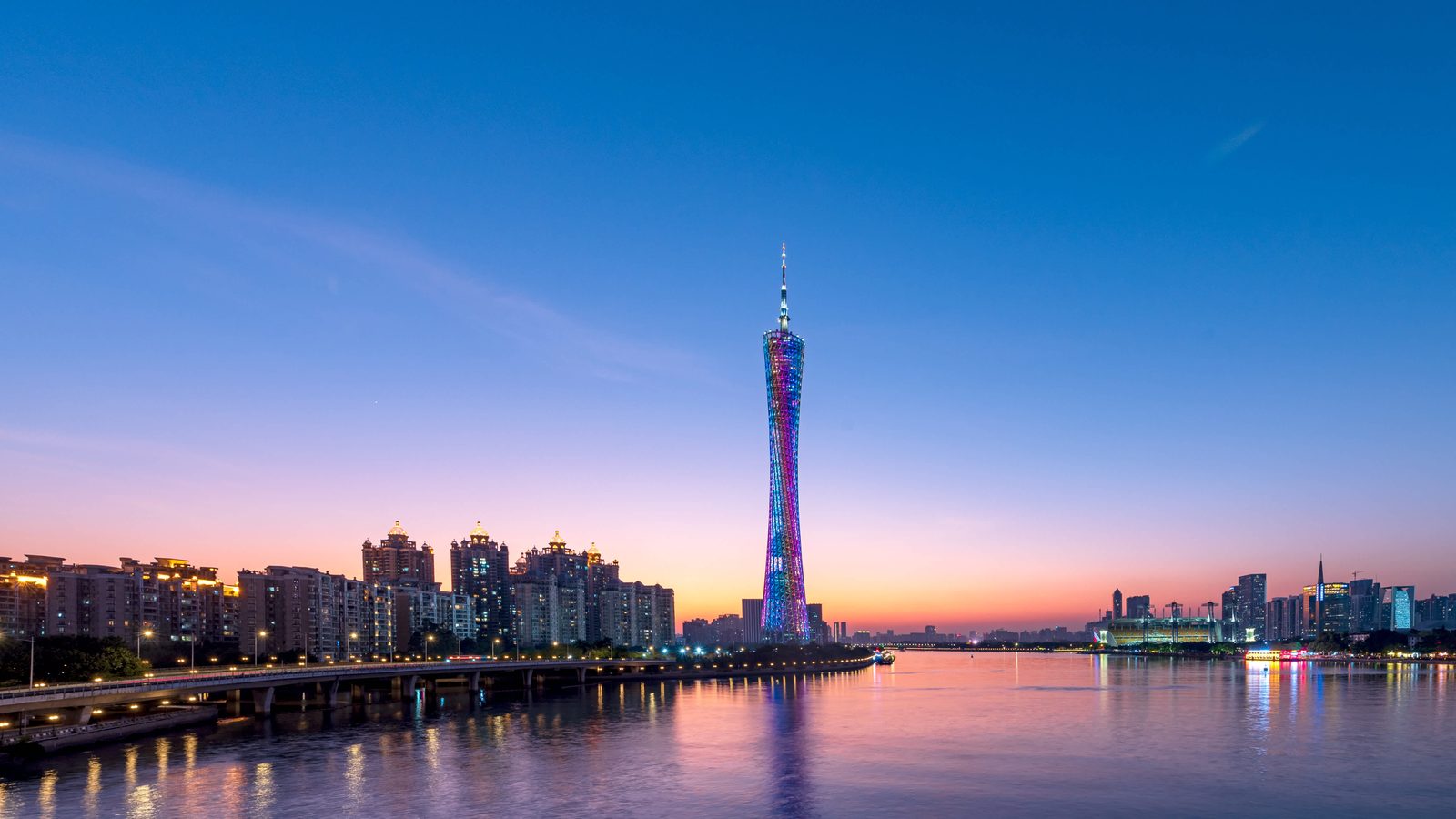
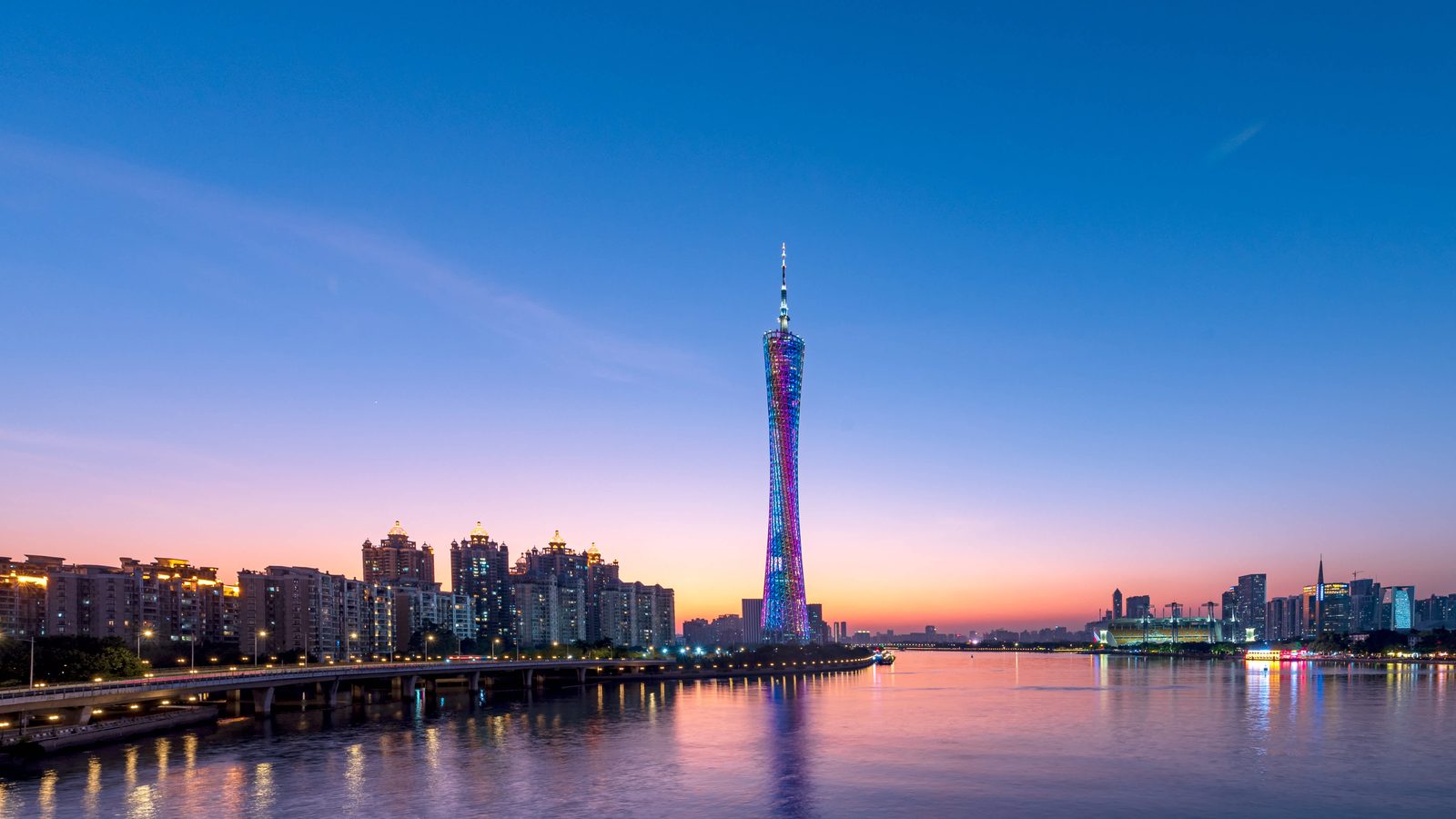
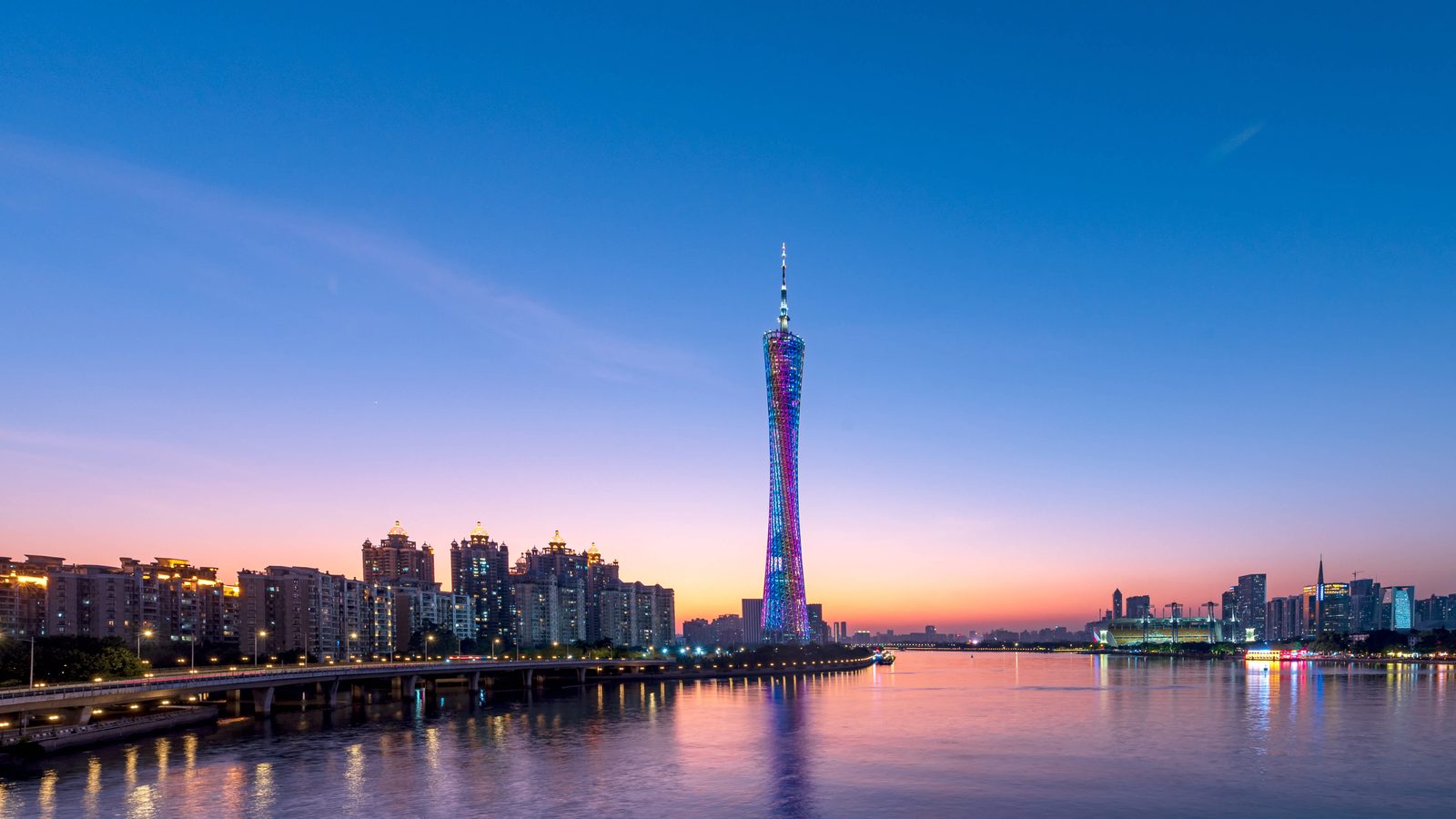
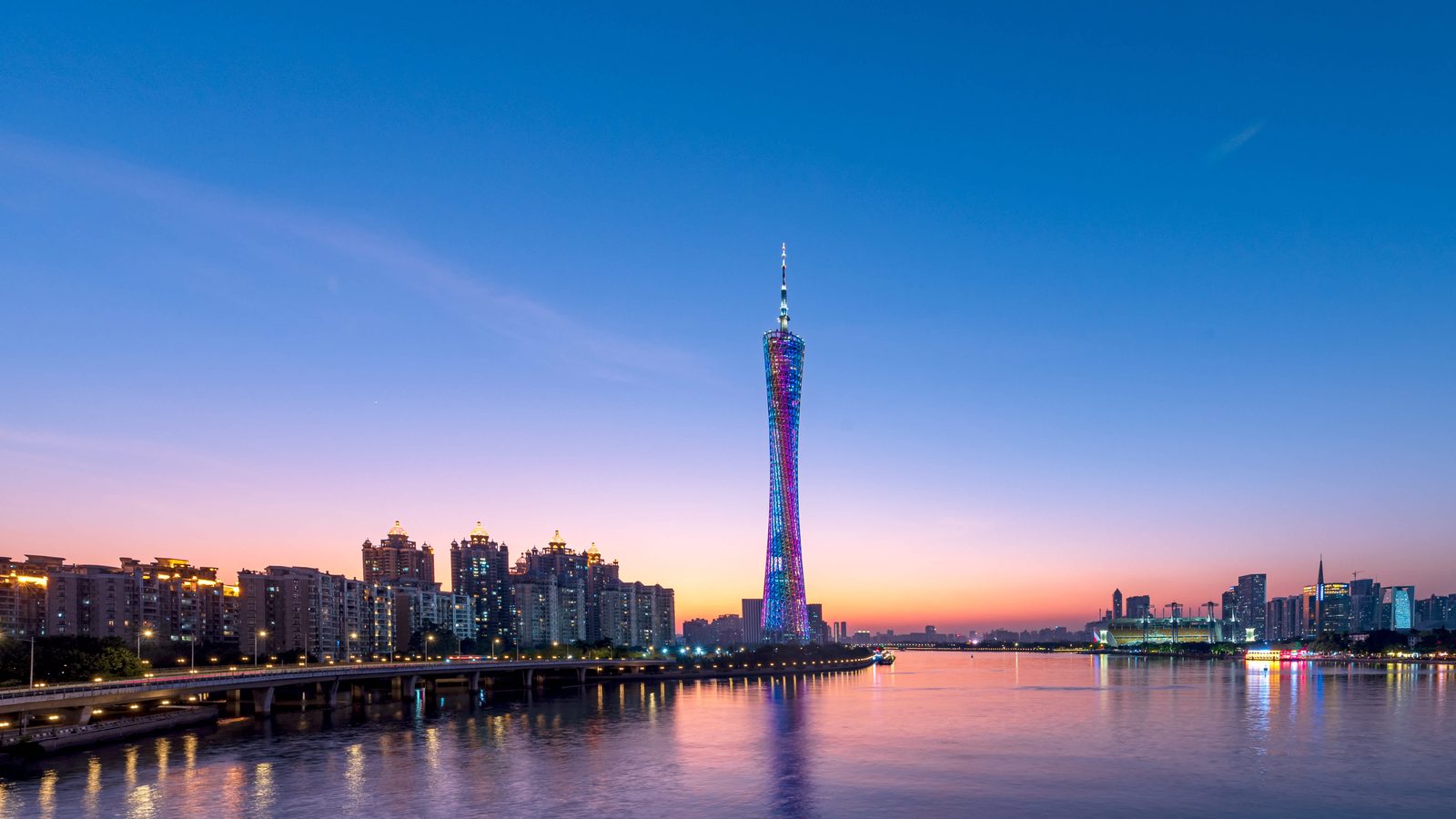
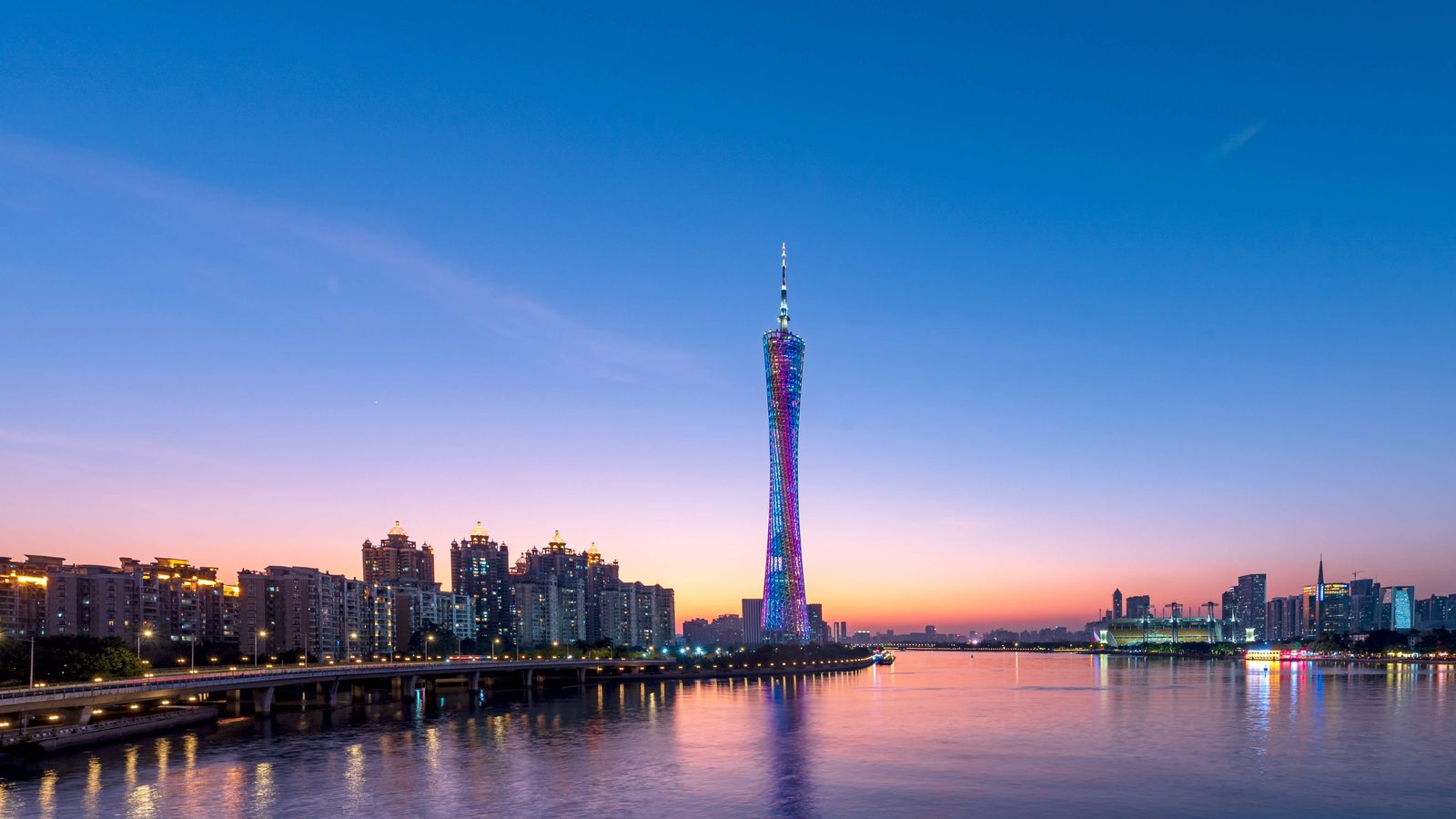
Canton Tower
AttractionThe 'slim waist' twisting tower with a ferris wheel on top.
 2
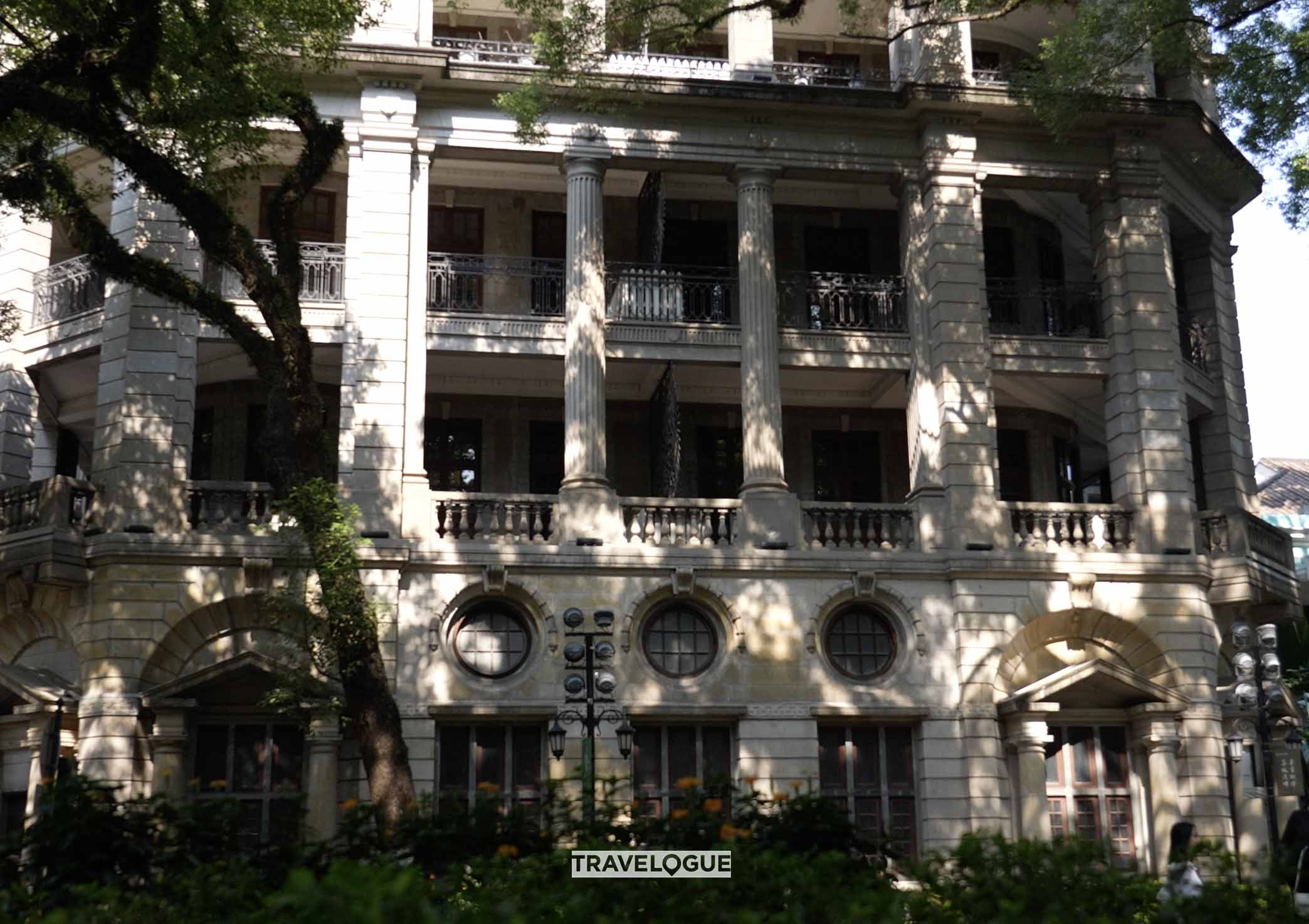
Shamian Island
AttractionEuropean trading concession with neoclassical facades along the Pearl River.
 3
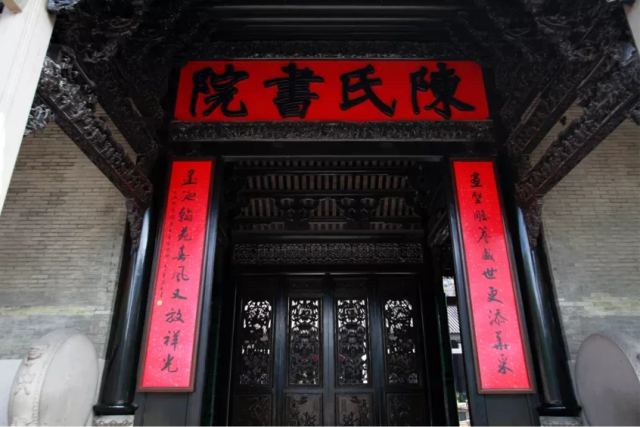
Chen Clan Ancestral Hall
AttractionLingnan architecture masterpiece with brick, wood and lime carvings.
 4
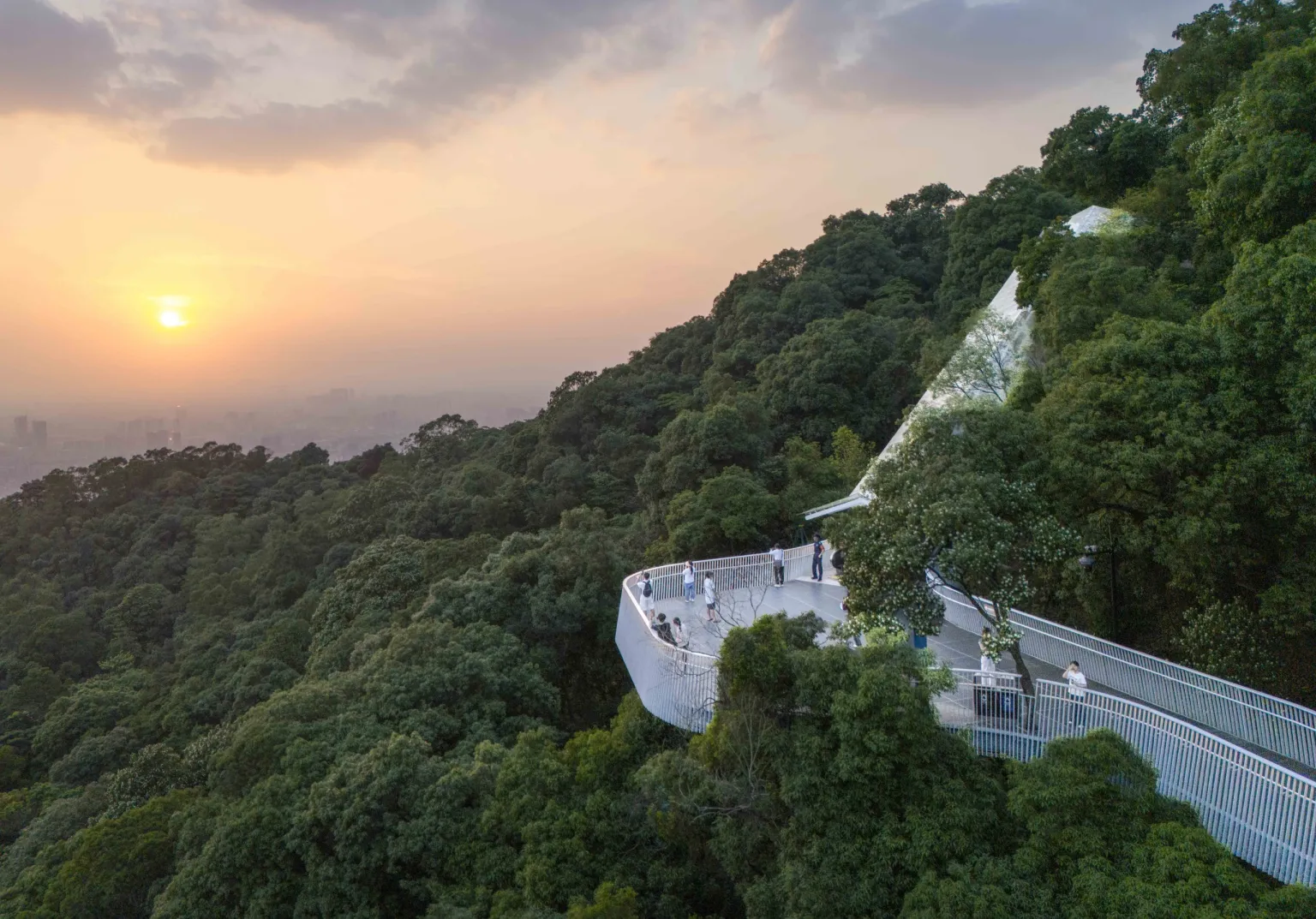
Baiyun Mountain
AttractionThe city's green lung; cable car views over Guangzhou.
 5
Chen Clan Ancestral Hall (Chen Clan Academy)
AttractionA joint-clan ancestral hall and academy built 1888–1894 with funds pooled by Chen family clans from 72 counties of Guangdong, it is the largest and most lavishly decorated surviving ancestral-hall building in Lingnan: wood, brick and stone carving (the "three carvings"), ceramic and lime sculpture (the "two sculptures"), plus bronze and iron casting and colored painting, together known as the "…
 6
Yongqing Fang · Cantonese Opera Art Museum
AttractionA model of "micro-renewal" in the historic Enning Road district of Liwan (launched 2016): qilou arcade buildings and Xiguan mansions restored to their old look, now home to creative shops, cafes and intangible-heritage studios; the Bruce Lee ancestral home has a display in one of the alleys — old-street charm and youthful energy coexist.
 7
Shangxiajiu Pedestrian Street
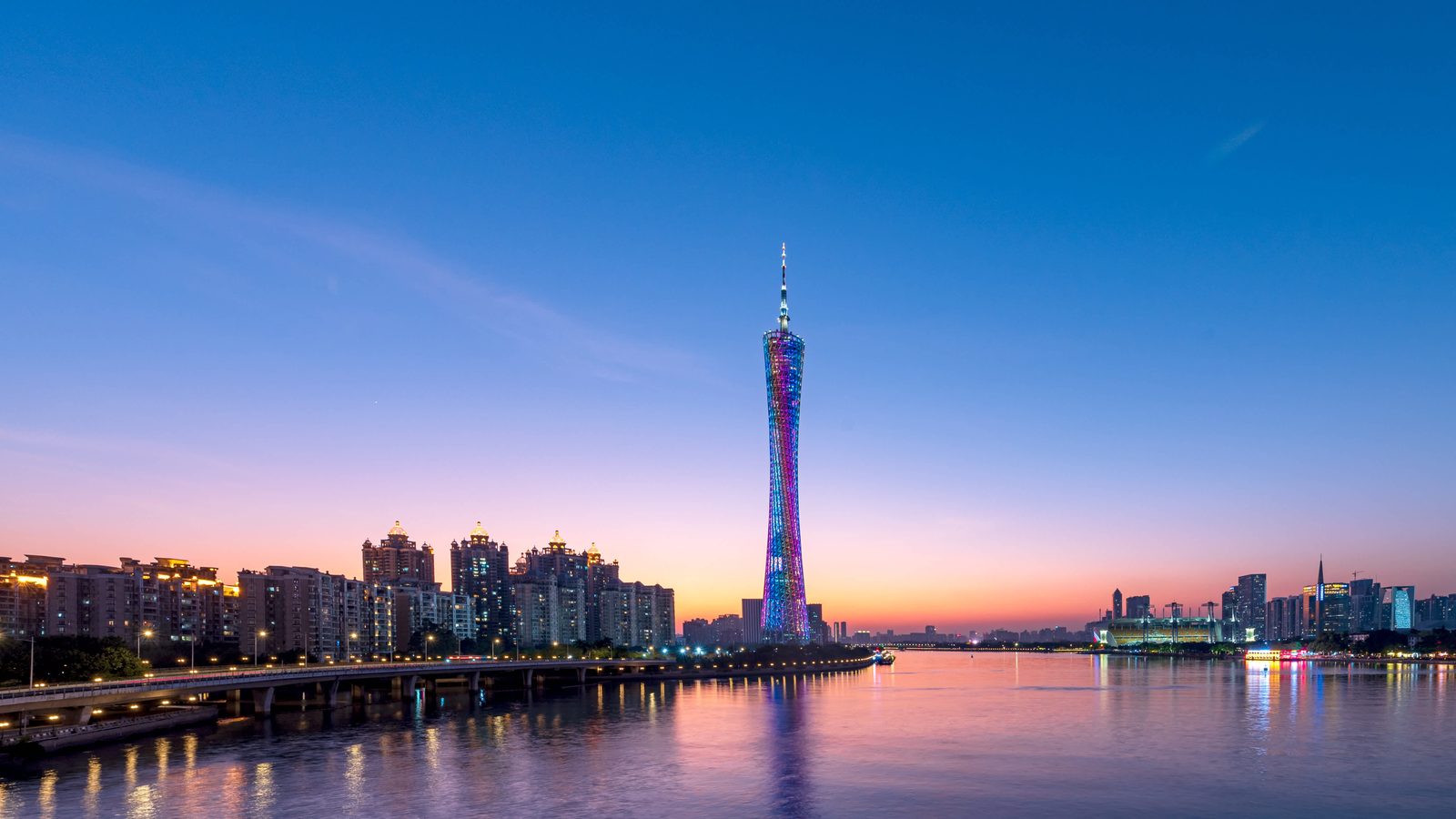
AttractionA qilou arcade commercial street formed of Shangjiu Road and Xiajiu Road, one of Guangzhou's earliest commercial pedestrian streets: qilou is a modern Lingnan building type combining shop and residence, with upper-floor arcades sheltering pedestrians from sun and rain, suited to Lingnan's hot, humid climate.
 8
Lizhiwan (Litchi Bay), Pantang
AttractionA Xiguan water town of "a bay of spring water green, lychees red on both banks": Lizhiwan Creek has been a famed Liwan sight since the Qing dynasty, when wealthy Xiguan merchants of the late Qing and early Republic built garden villas here (Xiao Huafang Zhai, the Small Painted Boat Studio, among them); before the 2010 Asian Games the culverted creek was uncovered again and the waterfront restored.
 9
Shamian Island
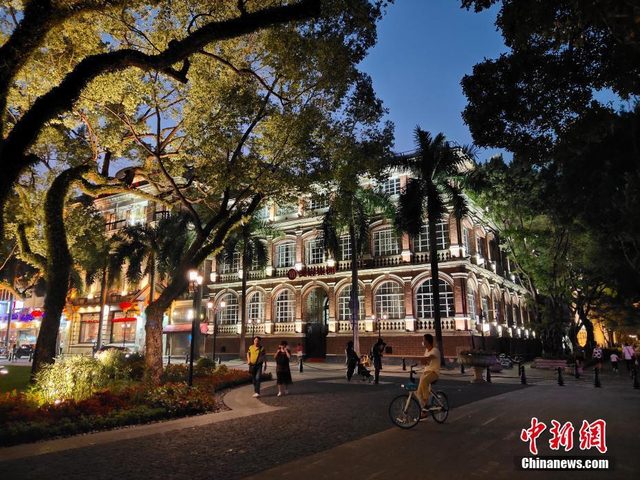
AttractionA small alluvial island in the Pearl River (approx. 0.3 sq km) that became a British and French concession after 1859; more than 150 European-style buildings survive here, with neo-Baroque, neoclassical and arcade-style structures such as the Our Lady of Lourdes Chapel, the former HSBC Building and the Customs House standing in contiguous blocks — an architectural specimen library of Guangzhou's modern history and concession era…
 10
Sacred Heart Cathedral (Shishi Cathedral)
AttractionAn all-stone Gothic cathedral begun in 1863 and completed in 1888 after 25 years of construction: one of only four all-stone Gothic churches in the world alongside Notre-Dame de Paris, and the largest stone-built Catholic church in the Far East
 11
Beijing Road Pedestrian Street
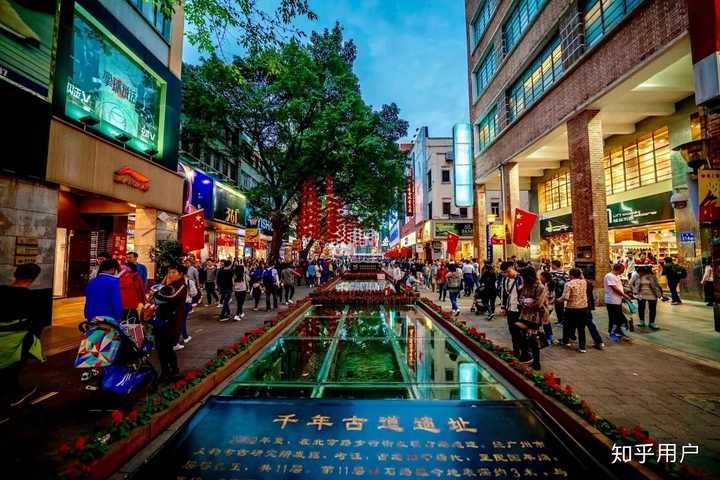
AttractionA commercial street on the city's central axis, continuously in use since the Song dynasty: the "Millennium Ancient Road Site", displayed under underground glass covers, layers Song and Ming road surfaces and gatehouse foundations one atop another — direct evidence that Guangzhou has stood on the same site for over 2,200 years
 12
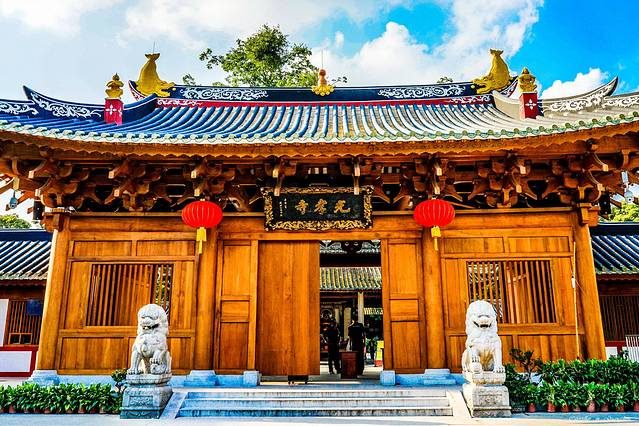
Temple of the Six Banyan Trees
AttractionFounded in 537 (the 3rd year of Datong, Liang dynasty of the Southern Dynasties), it was named for the "Six Banyans" inscribed by Su Shi when he visited and saw six banyan trees: the Flower Pagoda, 57.6 m tall with its nine-story body and pointed finial, is a city landmark of thousand-year Guangzhou; the early-Tang writer Wang Bo, traveling south to Guangzhou, composed his famous "Inscription on the Sarira Pagoda of Baozhuangyan Temple in Guangzhou" about this pagoda…
 13
Guangxiao Temple
Attraction"Before there was Yangcheng (Guangzhou), there was Guangxiao" — during the Three Kingdoms Wu period the scholar Yu Fan lived here in exile and lectured on the classics (Yu Fan Garden), and his residence was later donated as a temple, more than 1,700 years ago: the Sixth Patriarch Huineng was ordained here, and the "wind-and-banner debate" ("It is not the wind or banner that moves, but your mind") became a famous episode in Chinese Chan (Zen) history…
 14
Hualin Temple
AttractionThe site of "Xilai Chudi" (the Landing Place from the West), where the Indian monk Bodhidharma came ashore in Guangzhou during the Southern Dynasties: the Xilai Nunnery (Xilai An) was built here in the Shunzhi reign of the Qing dynasty and later expanded into Hualin Temple, with the Hall of Five Hundred Arhats added during the Kangxi reign
 15
Temple of the Five Immortals
AttractionThe legendary origin place of Guangzhou's nickname 'Goat City': legend has it that in the Zhou dynasty five immortals riding five-colored goats and carrying ears of grain—six from a single stem—descended on Chuting; after bestowing the grain as a blessing, the immortal goats turned to stone, giving Guangzhou its nicknames 'Goat City' and 'Ear-of-Grain City'
 16
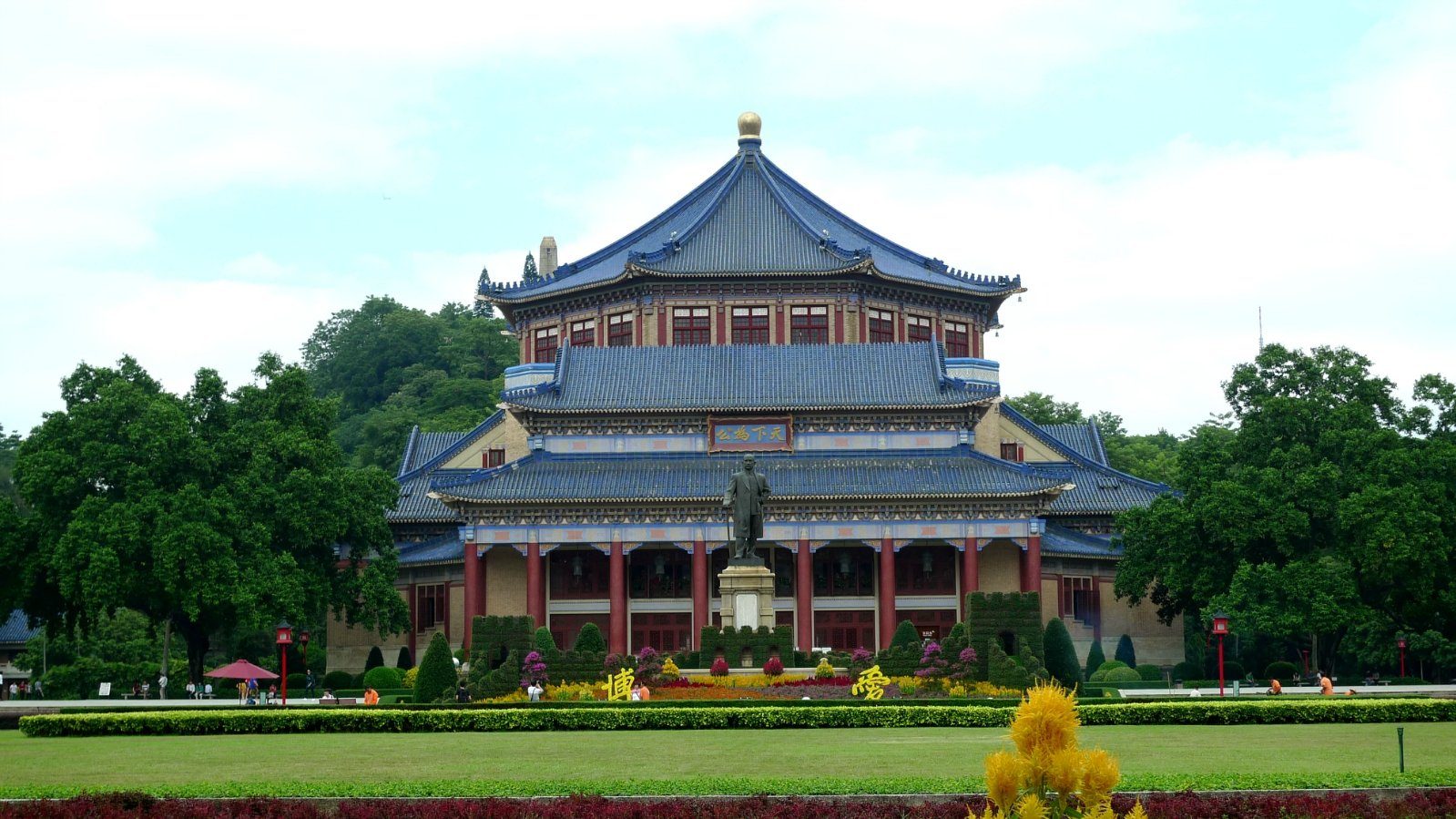
Sun Yat-sen Memorial Hall
AttractionA memorial hall for Sun Yat-sen begun in 1929 and completed in 1931, designed by Lü Yanzhi (architect of the Sun Yat-sen Mausoleum): an octagonal palace-style exterior with a blue glazed pyramidal roof, and inside a column-free steel-truss auditorium spanning 71 meters seating thousands—world-class spatial engineering for its time
 17
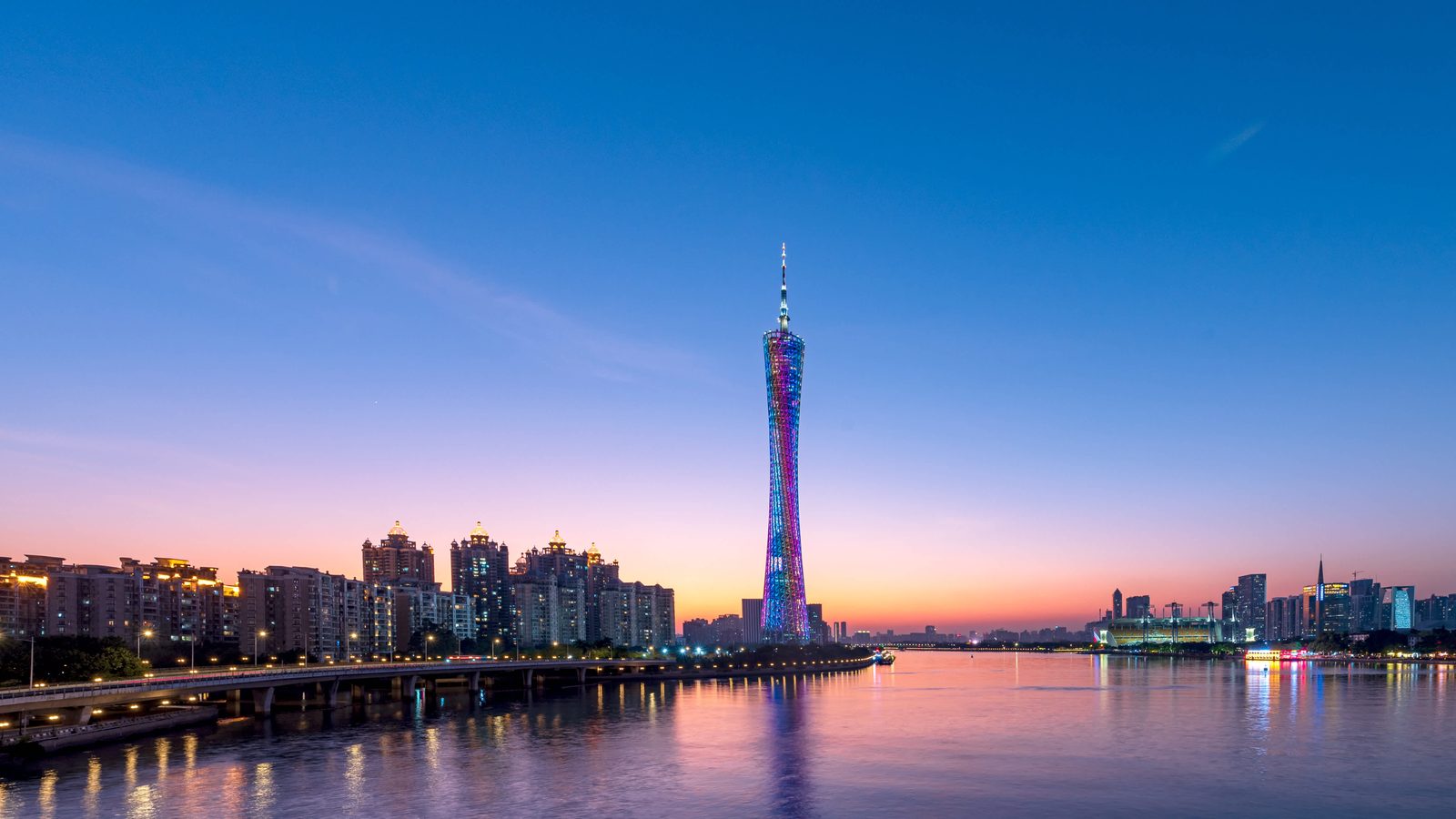
Huanghuagang Mausoleum of the 72 Martyrs
AttractionThe joint burial ground of the martyrs who fell in the Huanghuagang Uprising of April 27, 1911 (the 29th day of the third lunar month), entered through the stone archway inscribed 'Eternal Noble Spirit' in Sun Yat-sen's own hand: the Merit Arch is built of bluestone blocks symbolizing the martyrs' number, the Statue of Liberty at its top carries on Republican-era sculptural tradition, and along the tomb avenue…
 18
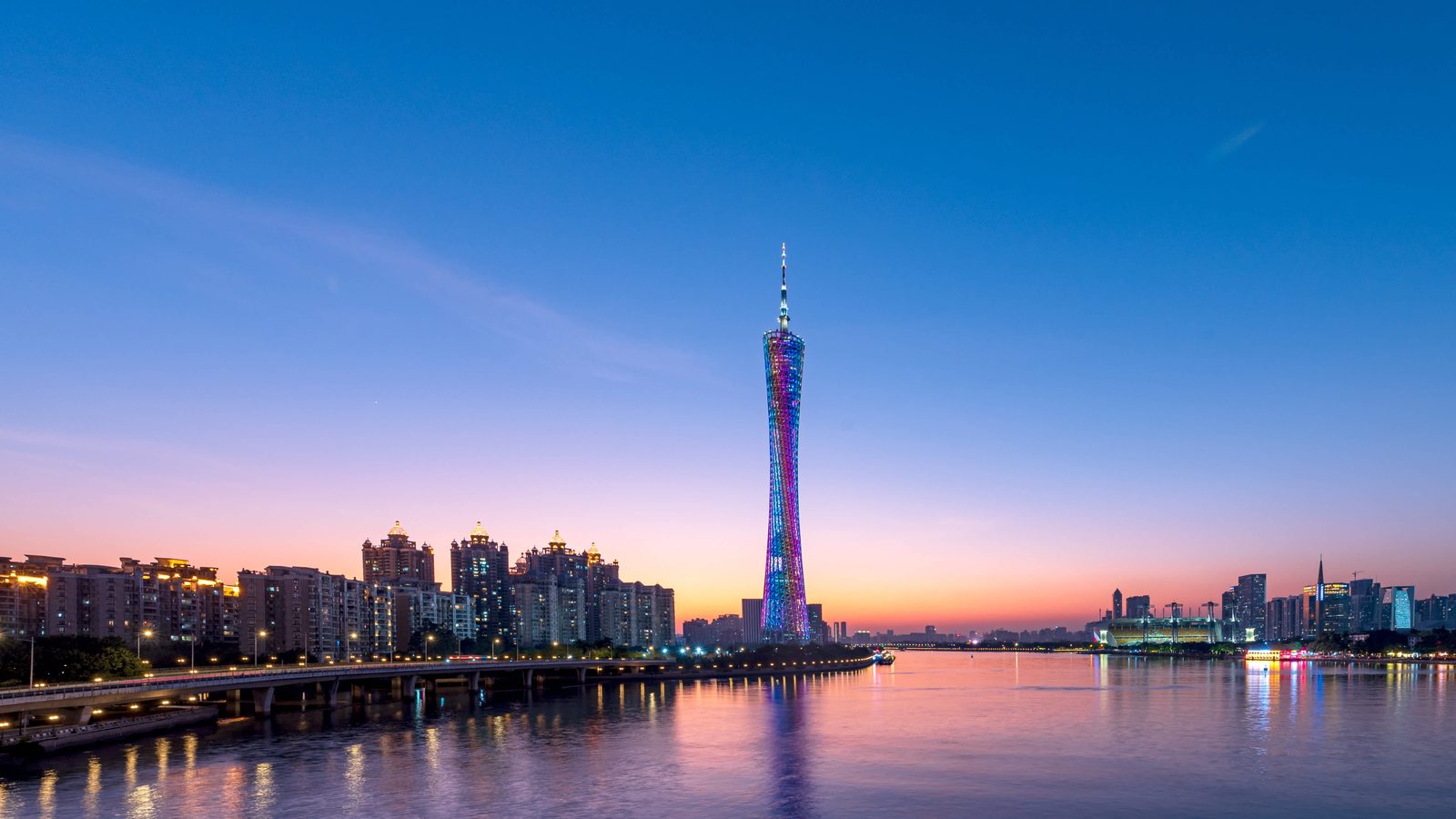
Site of the Whampoa Military Academy
AttractionThe military officer academy founded by Sun Yat-sen on Changzhou Island in 1924: its gate couplet 'Those seeking promotion and riches, go elsewhere; those clinging to life and fearing death, do not enter this gate' has been passed down. The Whampoa Military Academy was the cradle of military talent during the era of KMT–CCP cooperation and the Great Revolution, producing numerous famed generals of two countries
 19
Peasant Movement Institute (Former Site of the Peasant Movement Training Institute Run by Comrade Mao Zedong)
AttractionThe former site of the Peasant Movement Training Institute run by Comrade Mao Zedong, where the sixth session was held in 1926: built on the Confucian temple layout of the Ming-era Panyu Academy (built during the Hongwu reign), with red walls and yellow tiles, the Lingxing Gate and Pan Pond well preserved, and Dacheng Hall serving as classroom and exhibition space
 20
Sanyuanli Anti-British Struggle Site
AttractionSite of the 1841 Sanyuanli people's anti-British struggle: after British forces occupied Sifang Fort north of Guangzhou city and raided the villages, over ten thousand townspeople from Sanyuanli and more than a hundred surrounding villages ambushed the British at Niulangang (the 'Niulangang Victory'), a landmark event of the modern Chinese people's spontaneous resistance against foreign aggression…
 21
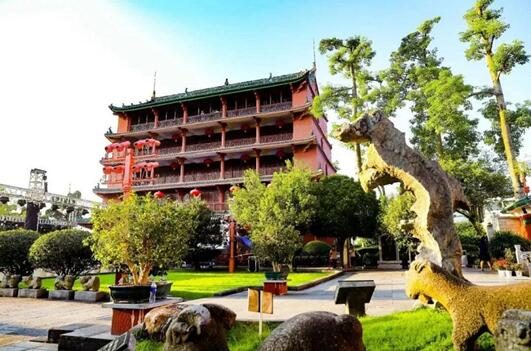
Zhenhai Tower (Guangzhou Museum)
AttractionA five-story tower built in 1388 (the 13th year of the Ming Hongwu reign), when Marquis of Yongjia Zhu Liangzu expanded Guangzhou's city walls, crowning the summit of Yuexiu Mountain and famed as the "Finest View of Lingnan": the vermilion-walled, green-tiled tower stands 28 meters tall as a symbol of Guangzhou's defense and the city itself; climbing it offers views over the Sun Yat-sen Memorial Monument and Yuexiu Park…
 22
Yuexiu Park
AttractionGuangzhou's largest comprehensive park; Yuexiu Mountain was the natural barrier guarding the old city's north: the Five Rams Sculpture (completed in 1960), drawn from the legend of "five immortals riding rams bearing rice ears," is the emblem of the "Goat City" and a must-visit photo spot
 23
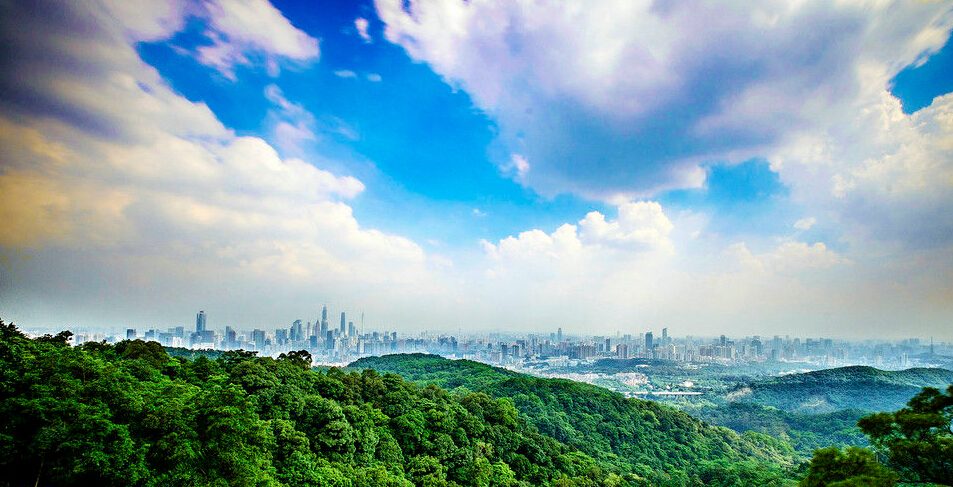
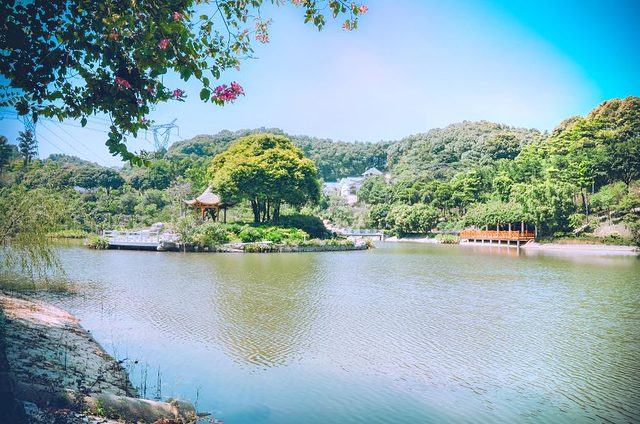
Baiyun Mountain
AttractionThe "Finest Scenery of the Goat City" and a famed mountain of southern Guangdong: more than 30 rolling peaks (main peak Moxing Ridge, 382 m above sea level) form the tallest green barrier in Guangzhou's urban area
 24
Maofeng Mountain
AttractionThe highest peak of Baiyun District (main peak 534.9 m, the tallest in Guangzhou's urban area): dense forest cover and clear mountain streams, the ancient Maofeng Temple halfway up keeps its incense burning, and the greenway around Tongluowan Reservoir is ideal for hiking and cycling
 25
Huolu Mountain
AttractionTianhe District's "urban green lung": a granite hill beside the South China Expressway, where giant boulders such as Zhutou Rock (Pig Head Rock) pile up in playful formations; from the summit you can gaze at the Zhujiang New Town skyline and Canton Tower—"watching Canton Tower (Xiaomanyao, 'Slim Waist') from Huolu Mountain" is a popular photo angle
 26
South China National Botanical Garden
AttractionFounded in 1929 as the CAS South China Botanical Garden and upgraded in 2022 to the South China National Botanical Garden, hailed as the "Green Gem of Southern China": the waterside palm landscape of Longdong Qilin is a garden classic, the greenhouse complex ranks among Asia's largest, and specialty gardens such as Magnolia Garden, Fern Garden and Ginger Garden…
 27
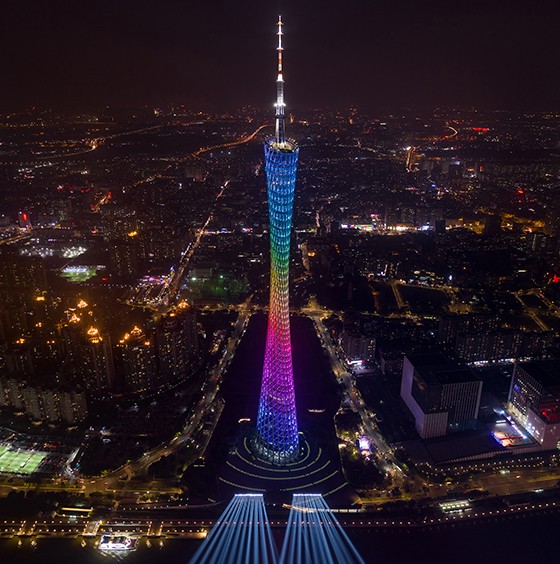
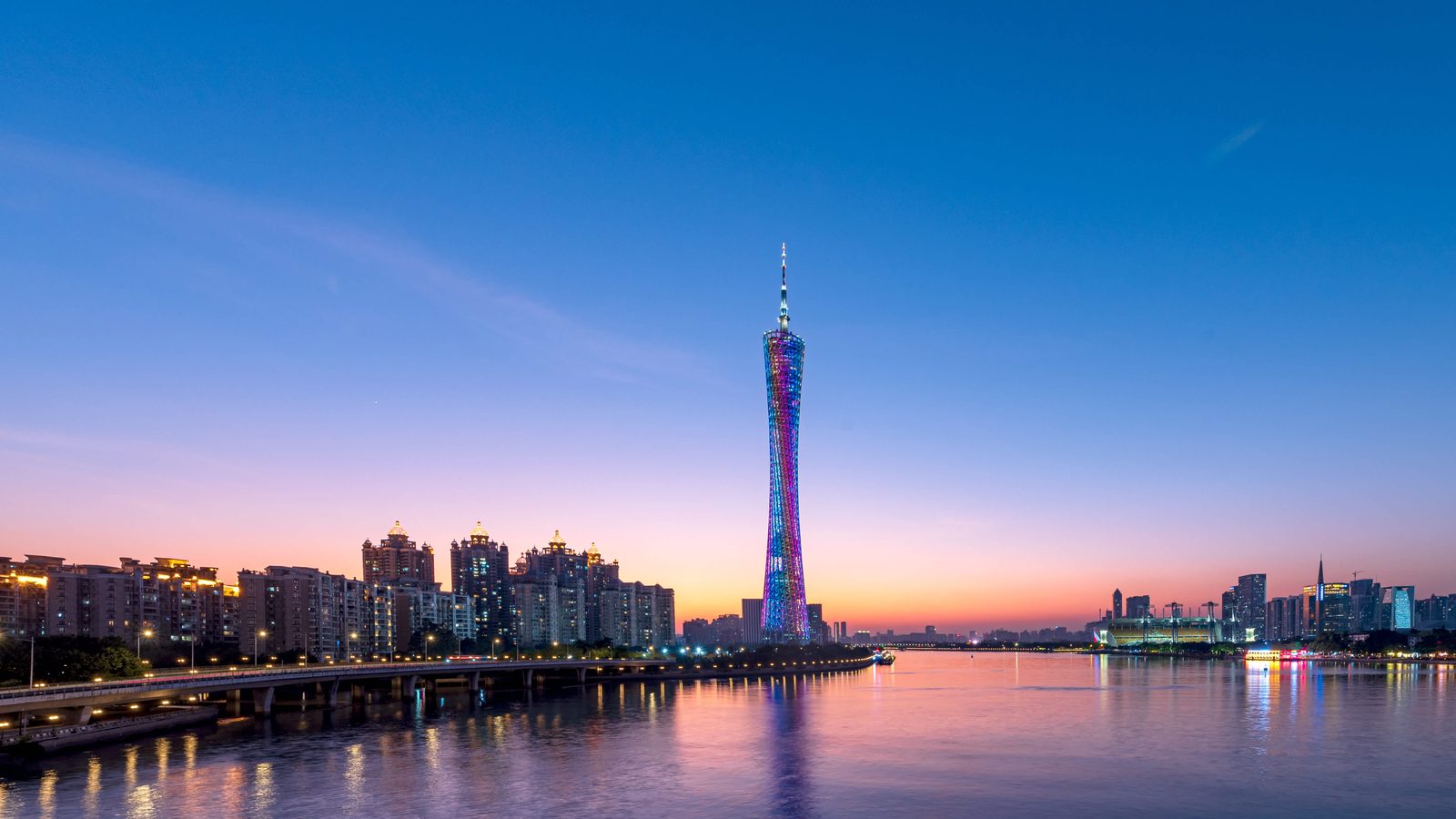
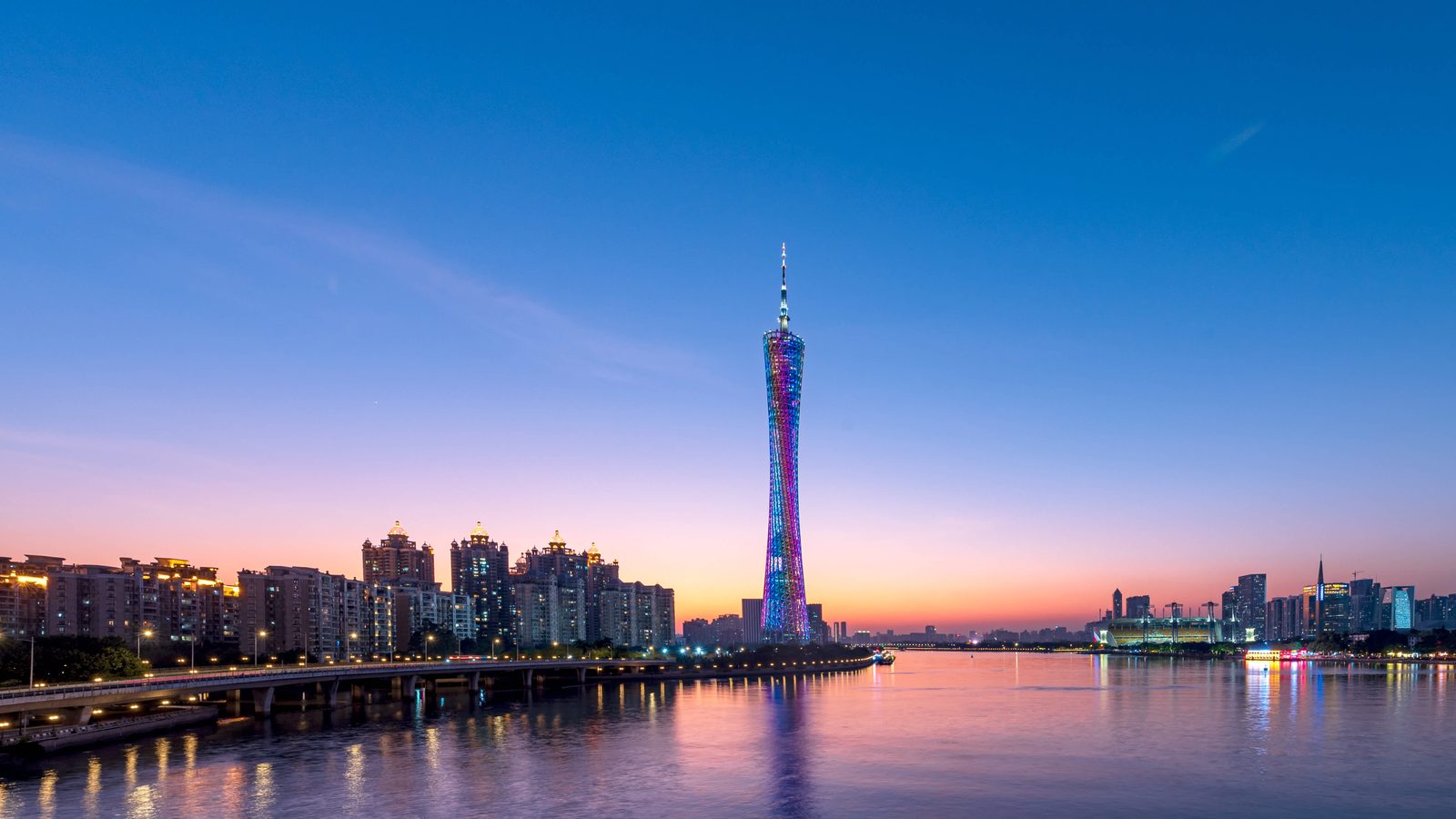
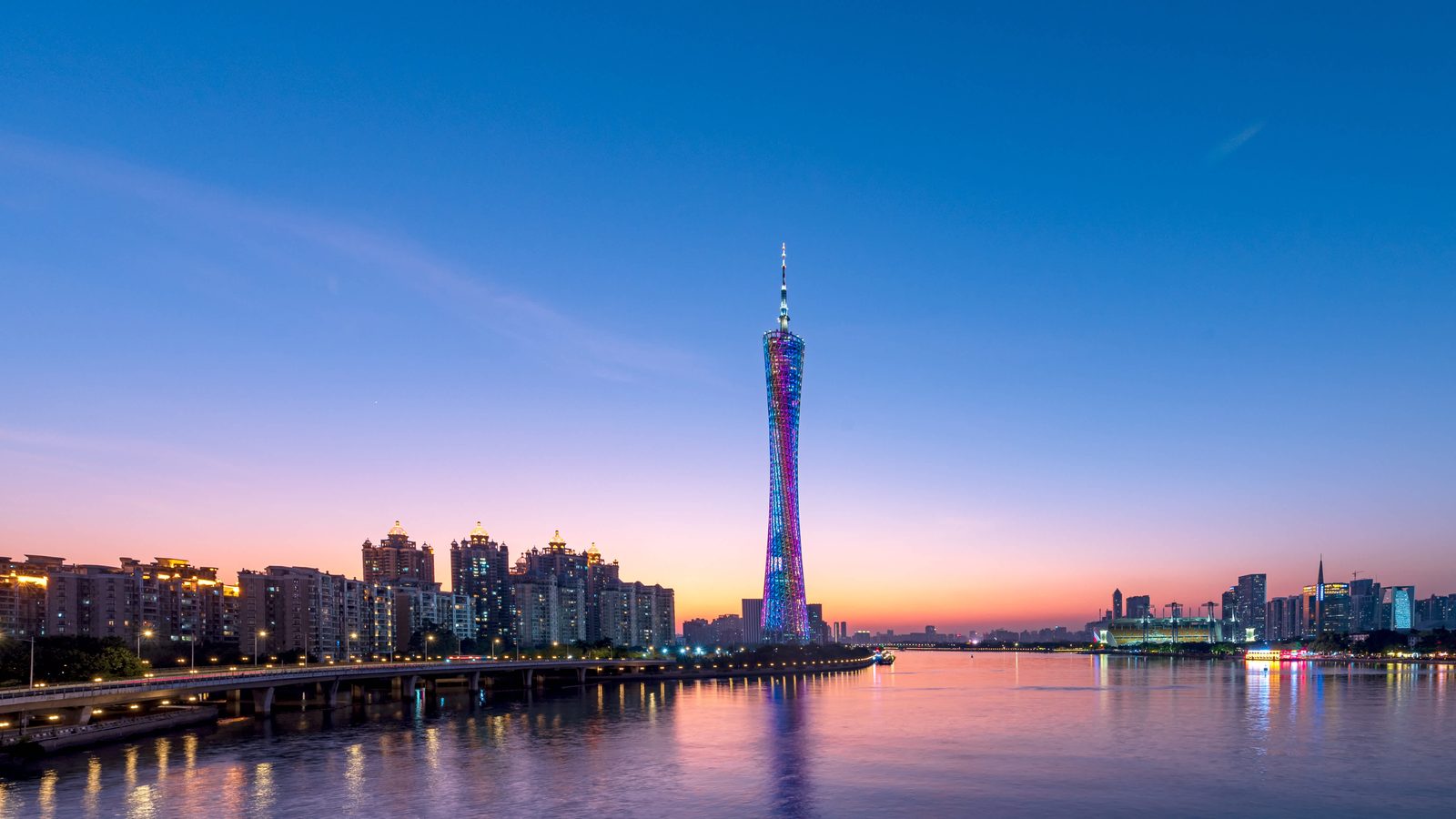
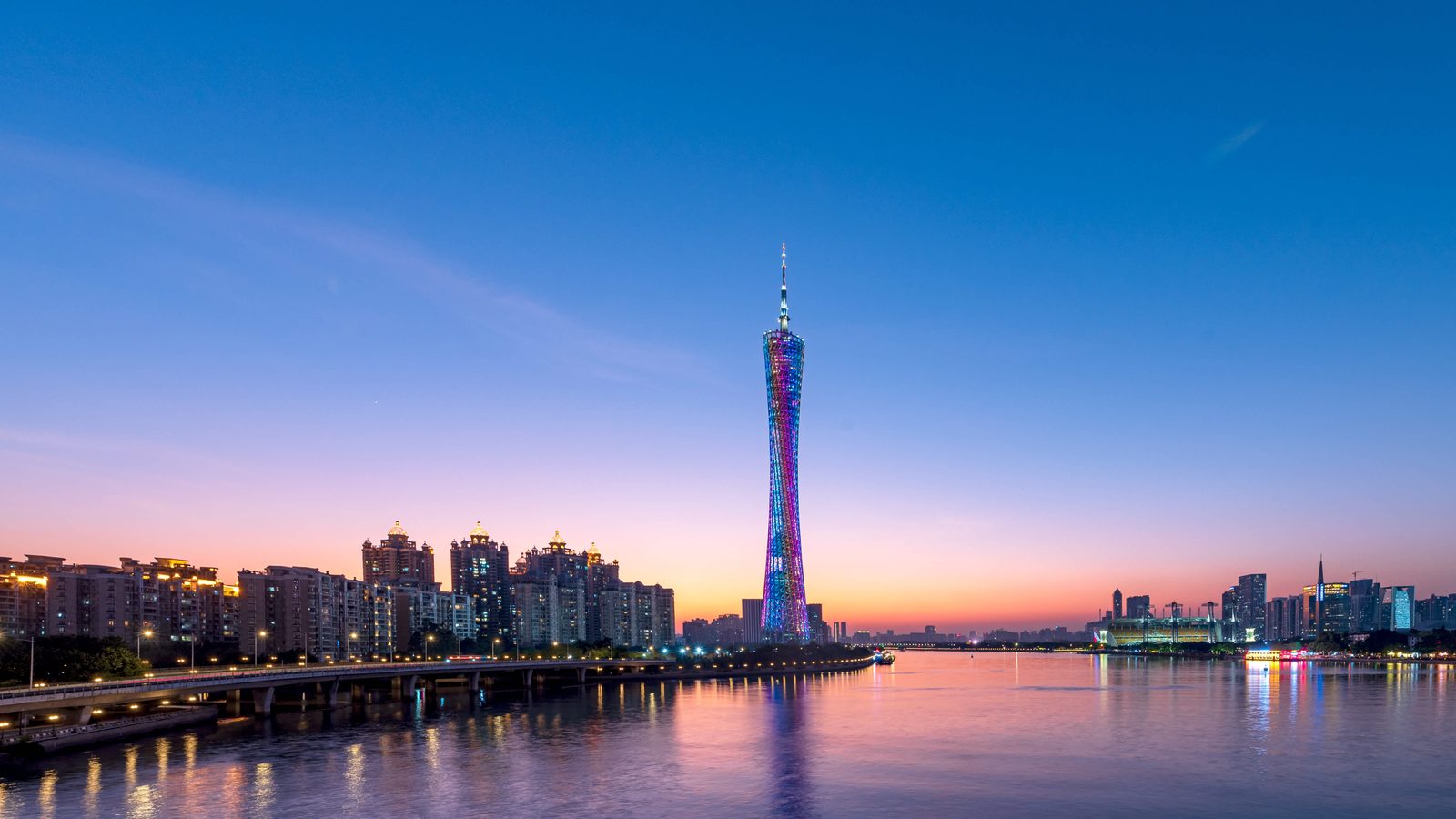
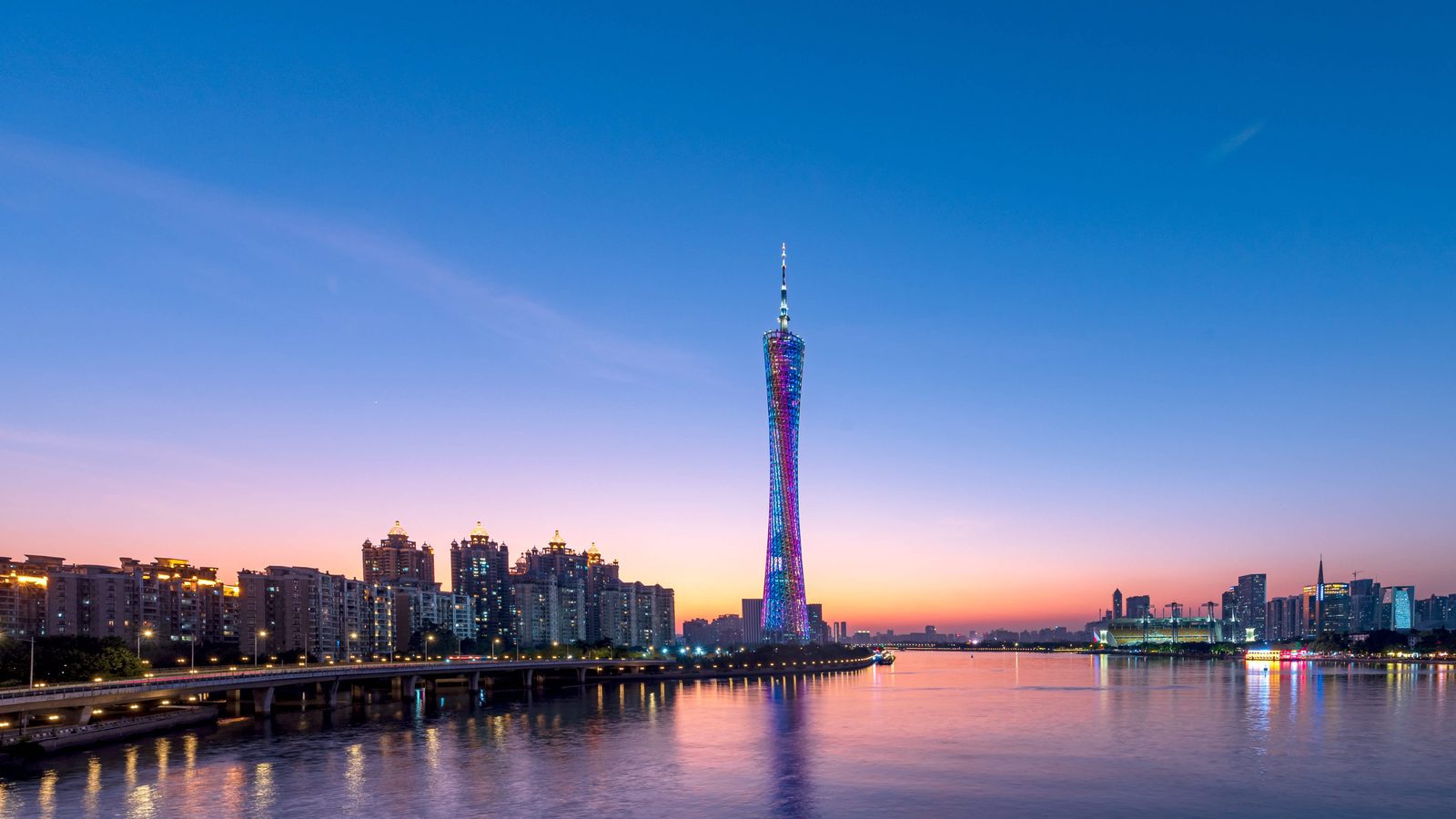
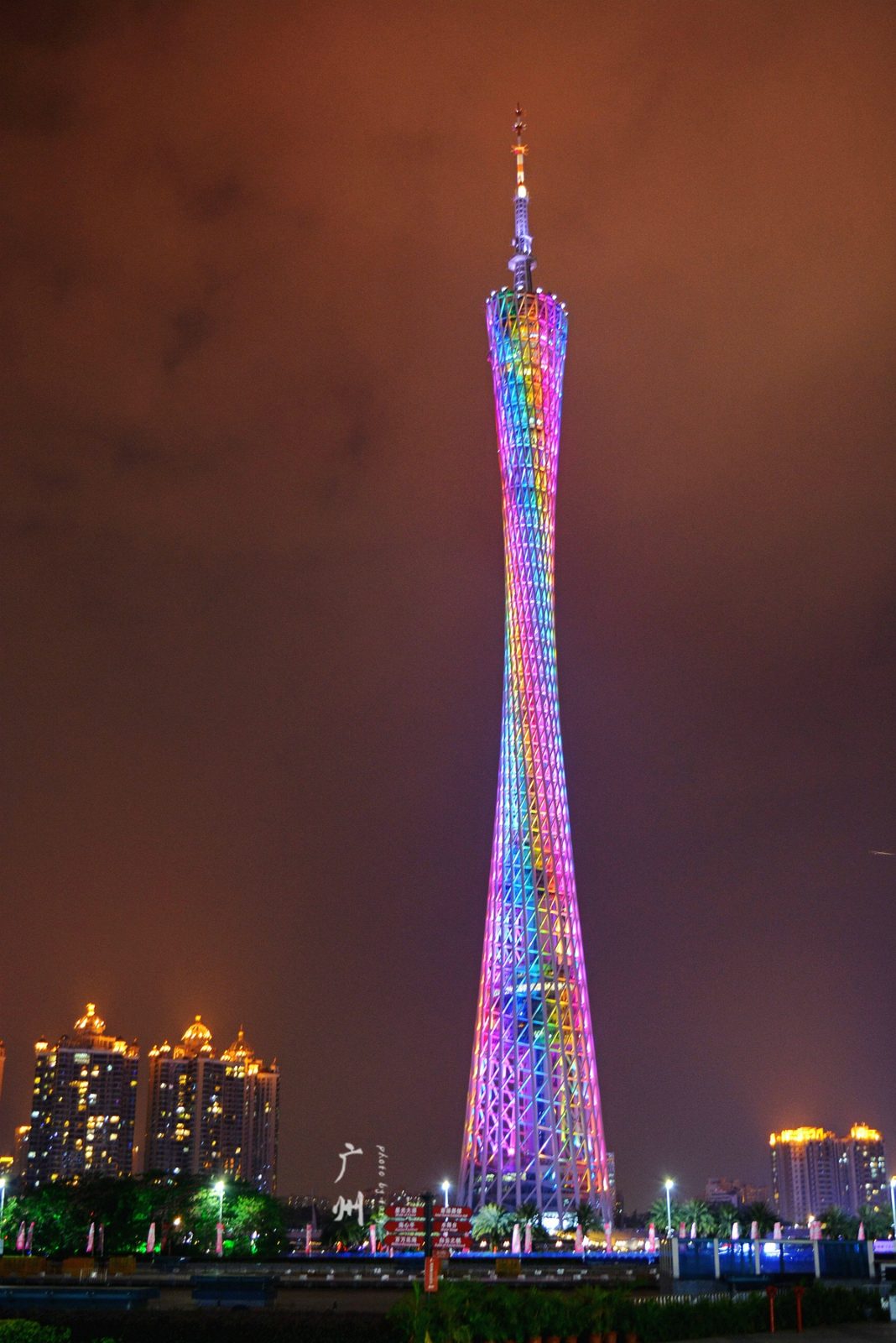
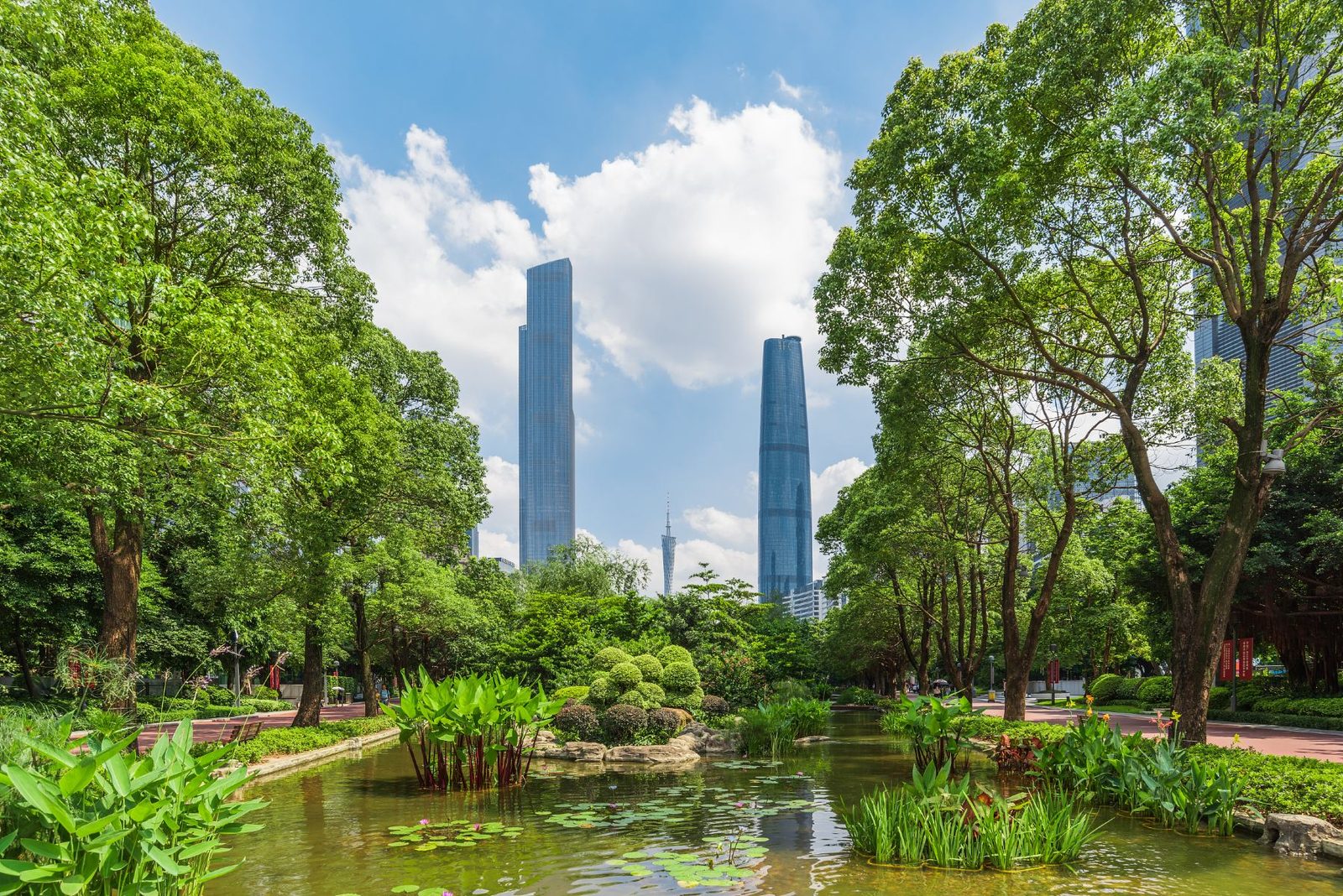
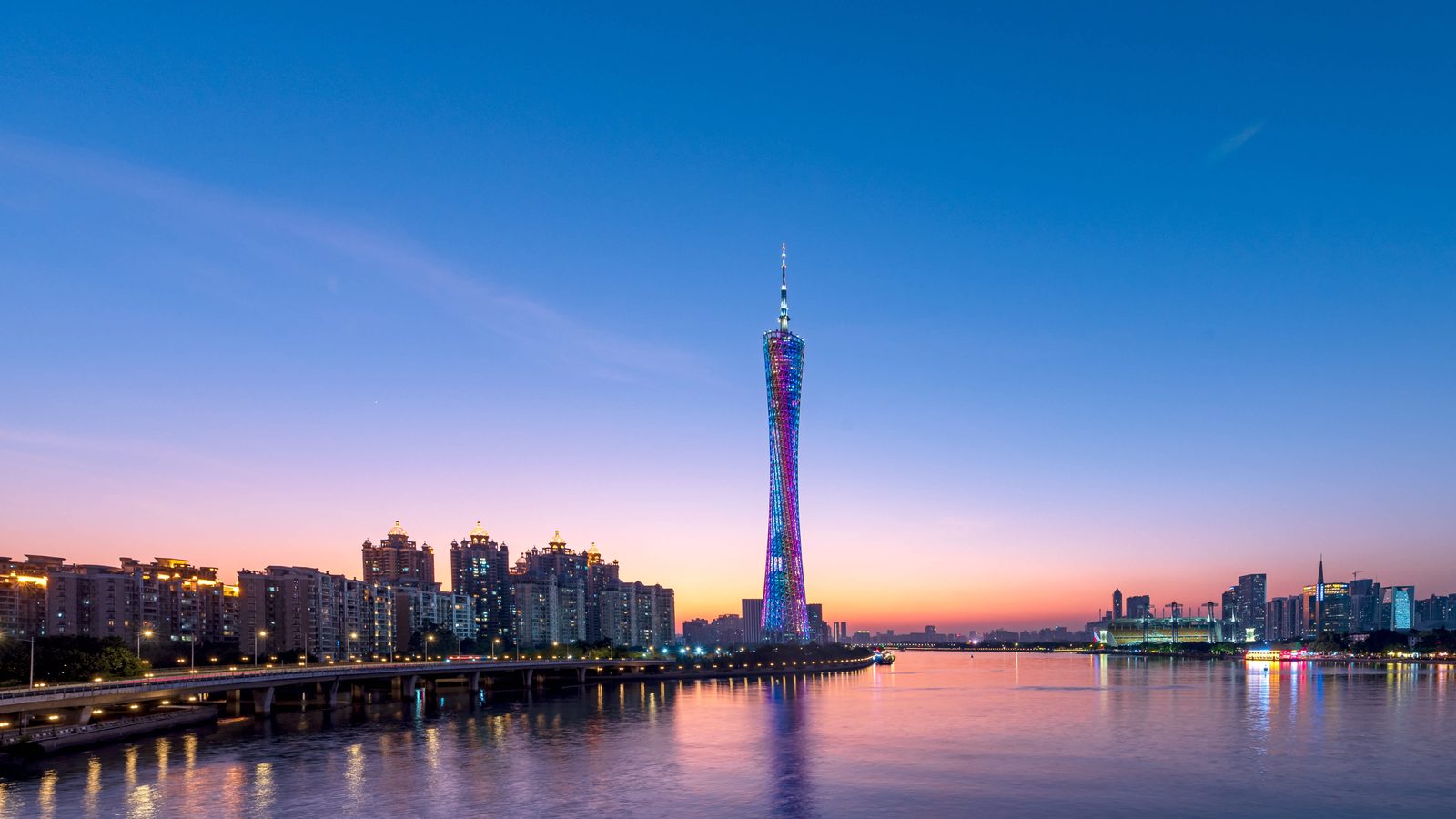
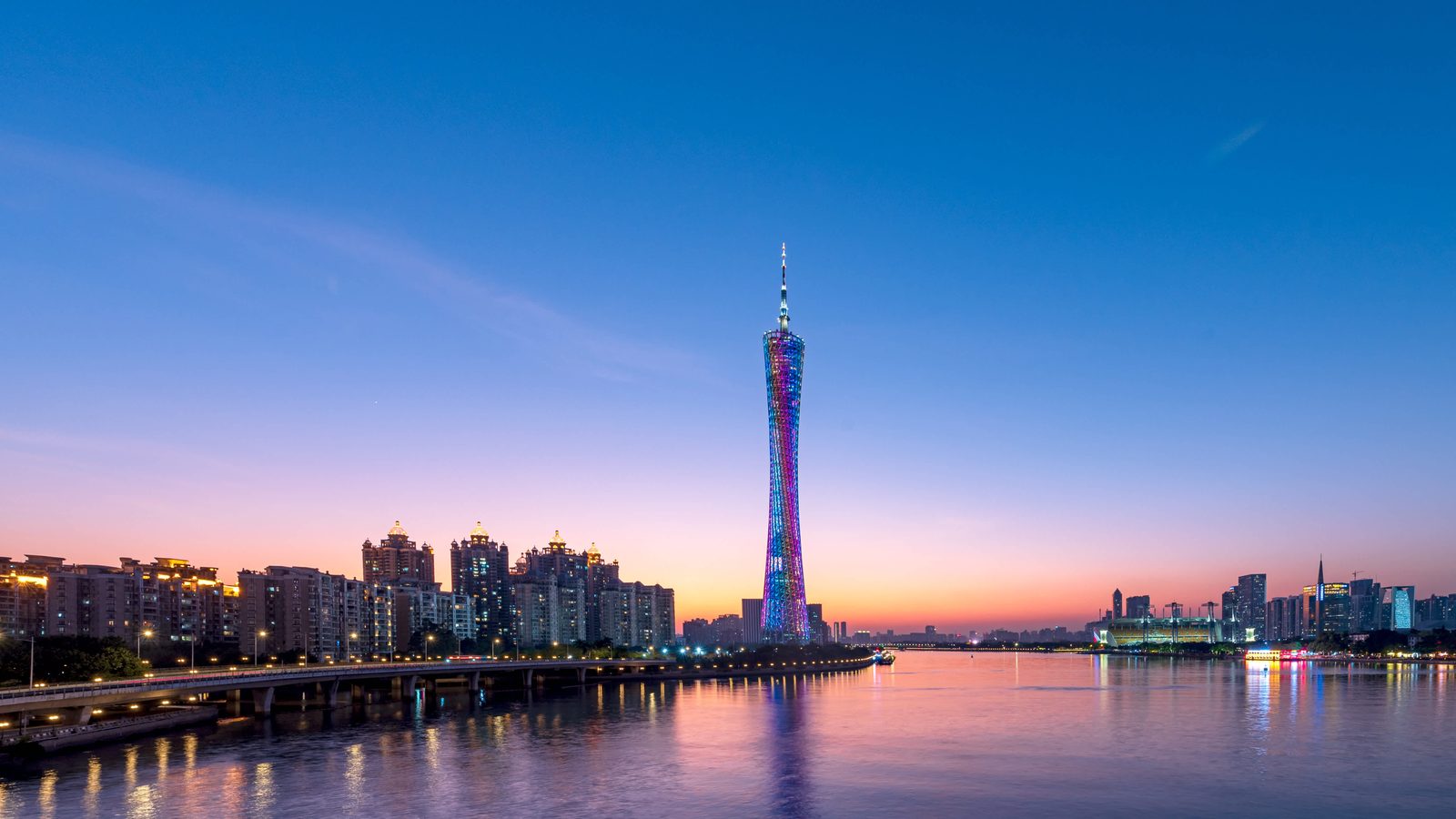
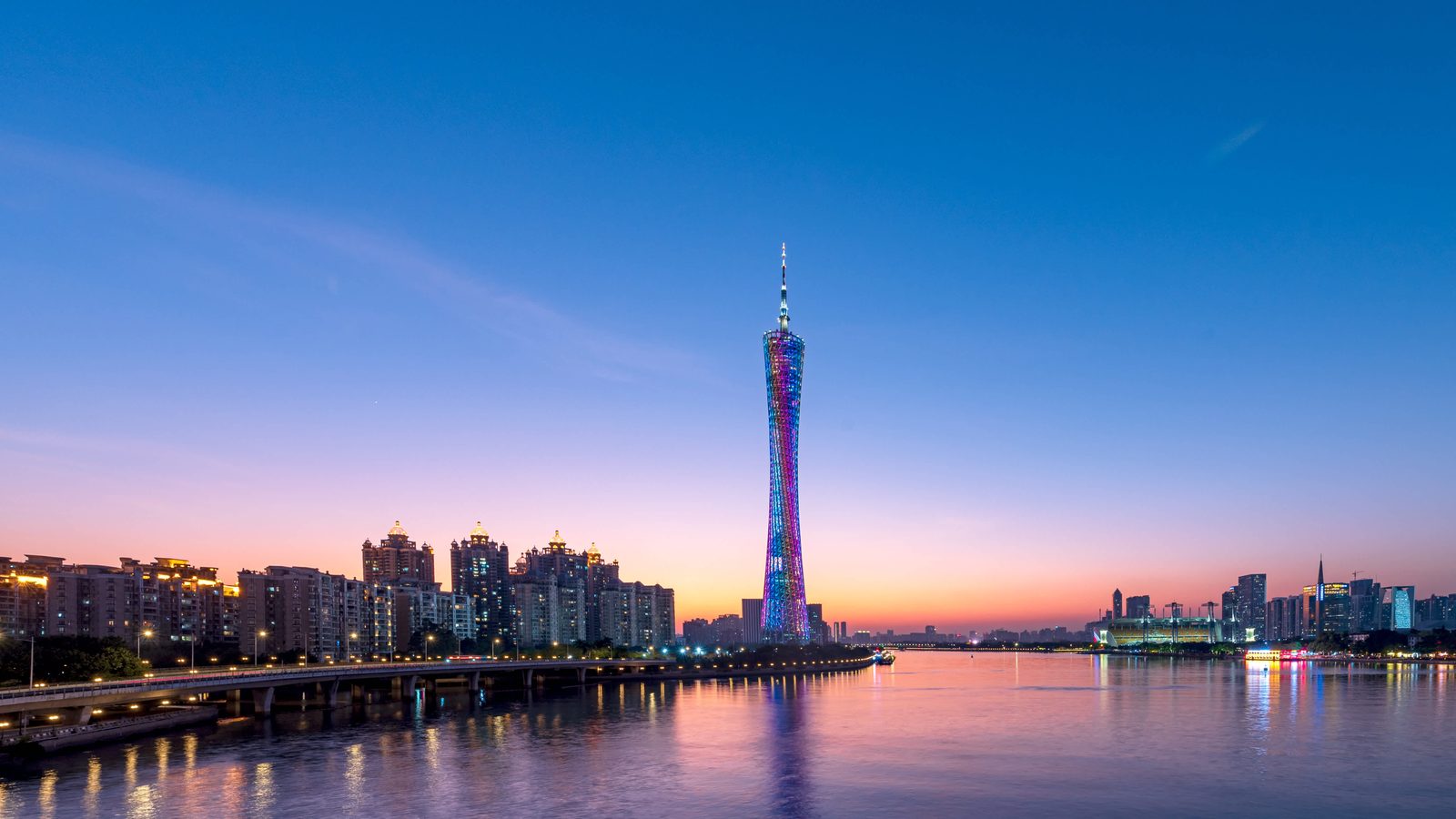
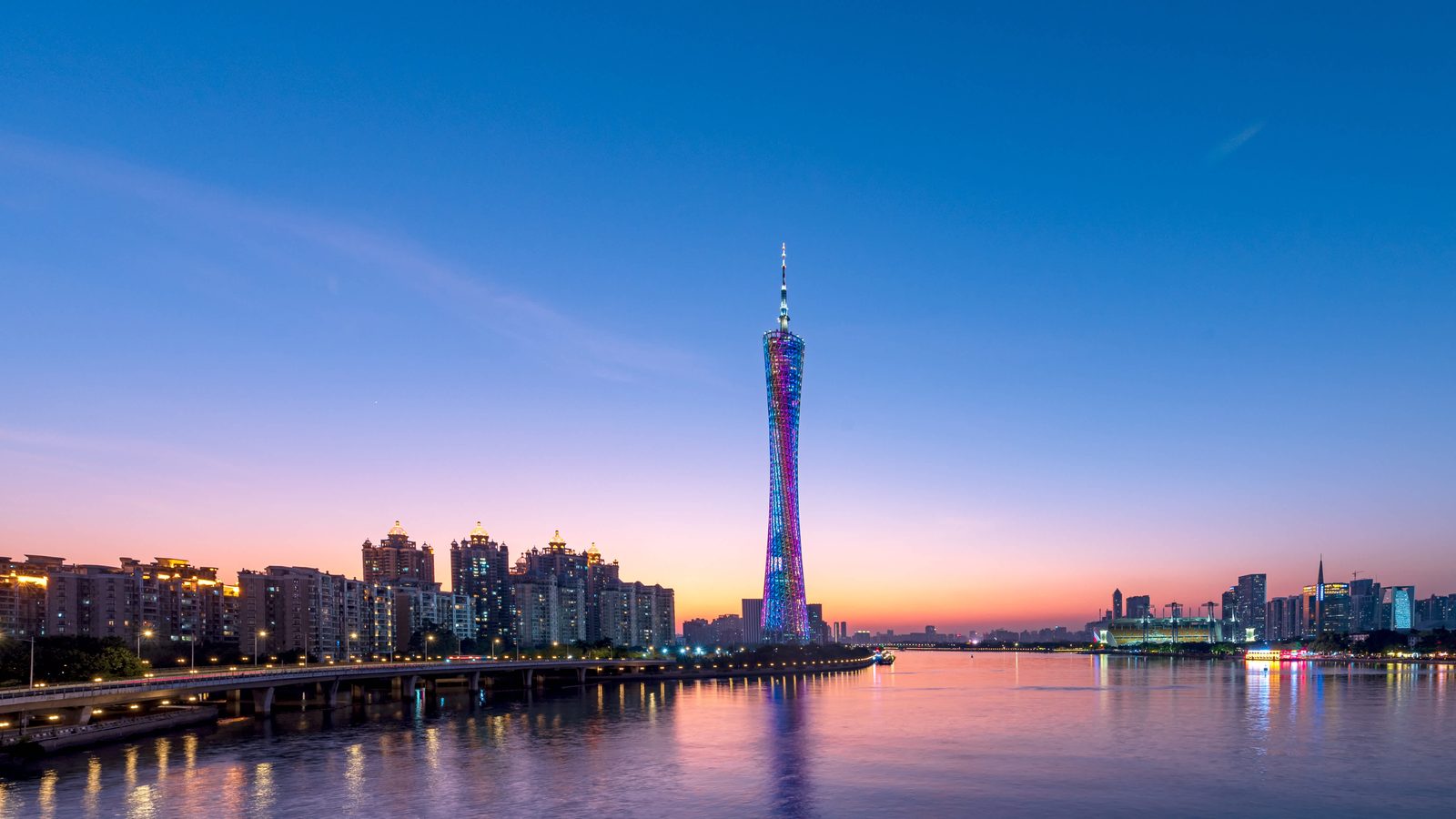
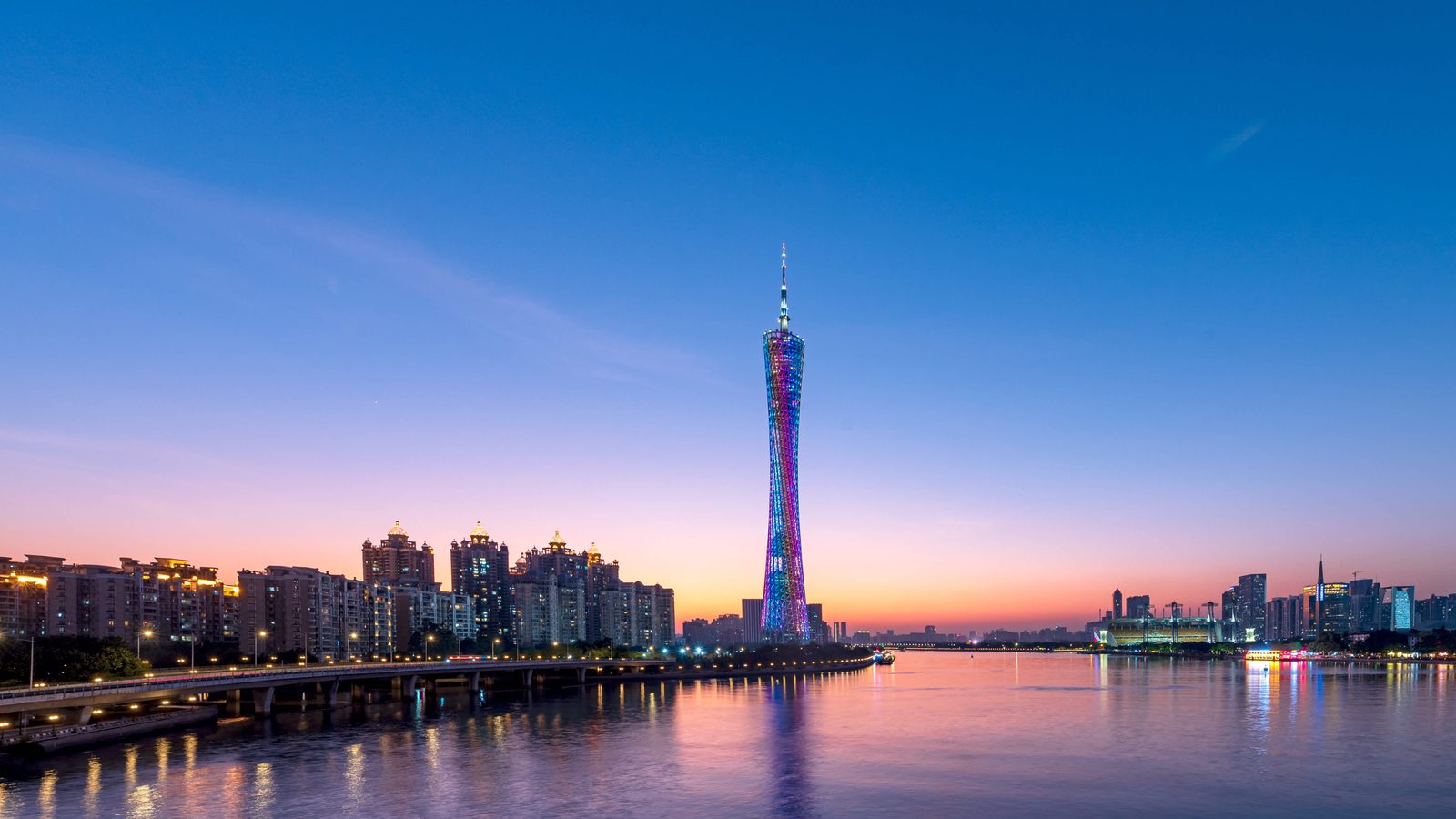
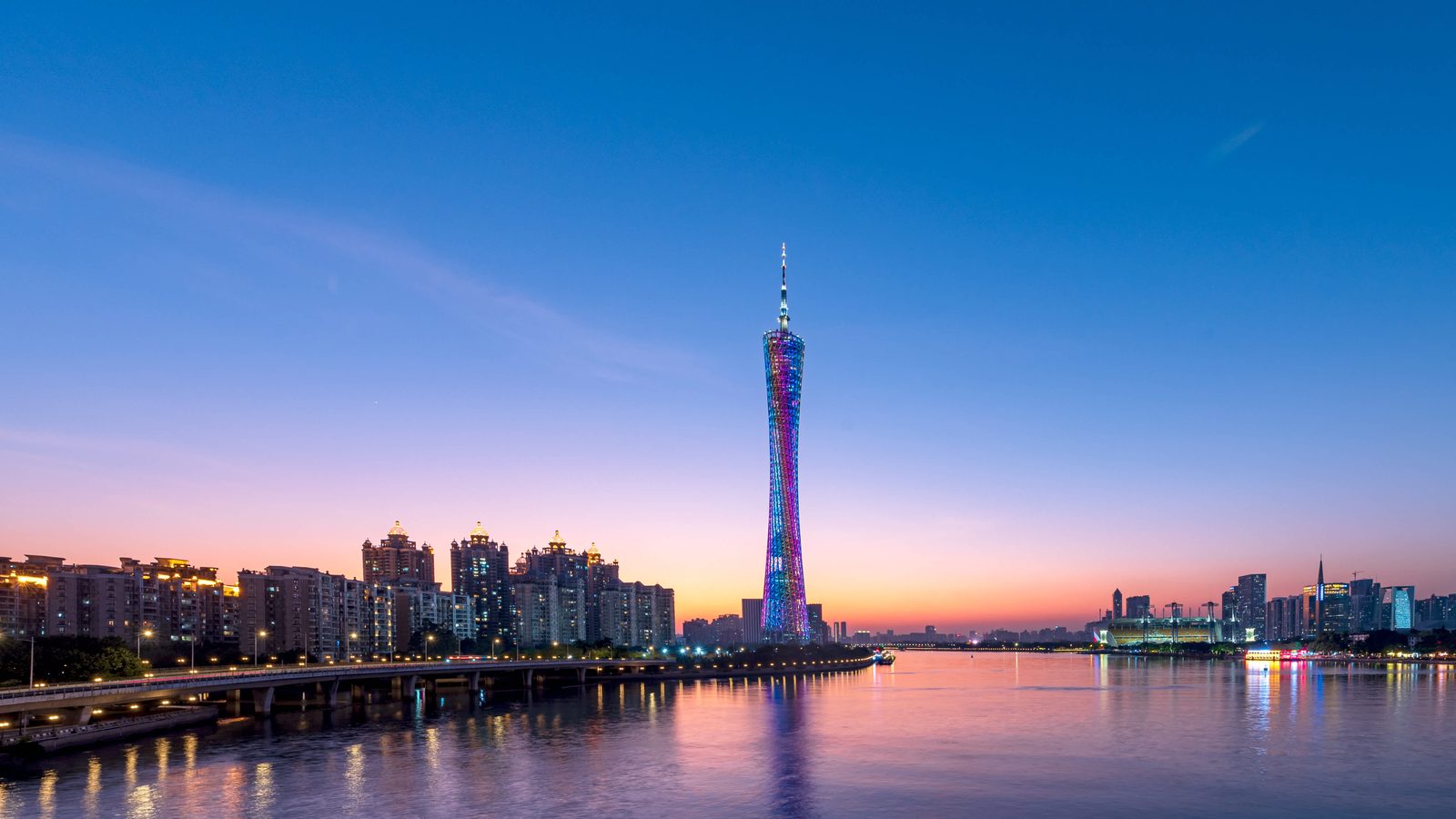
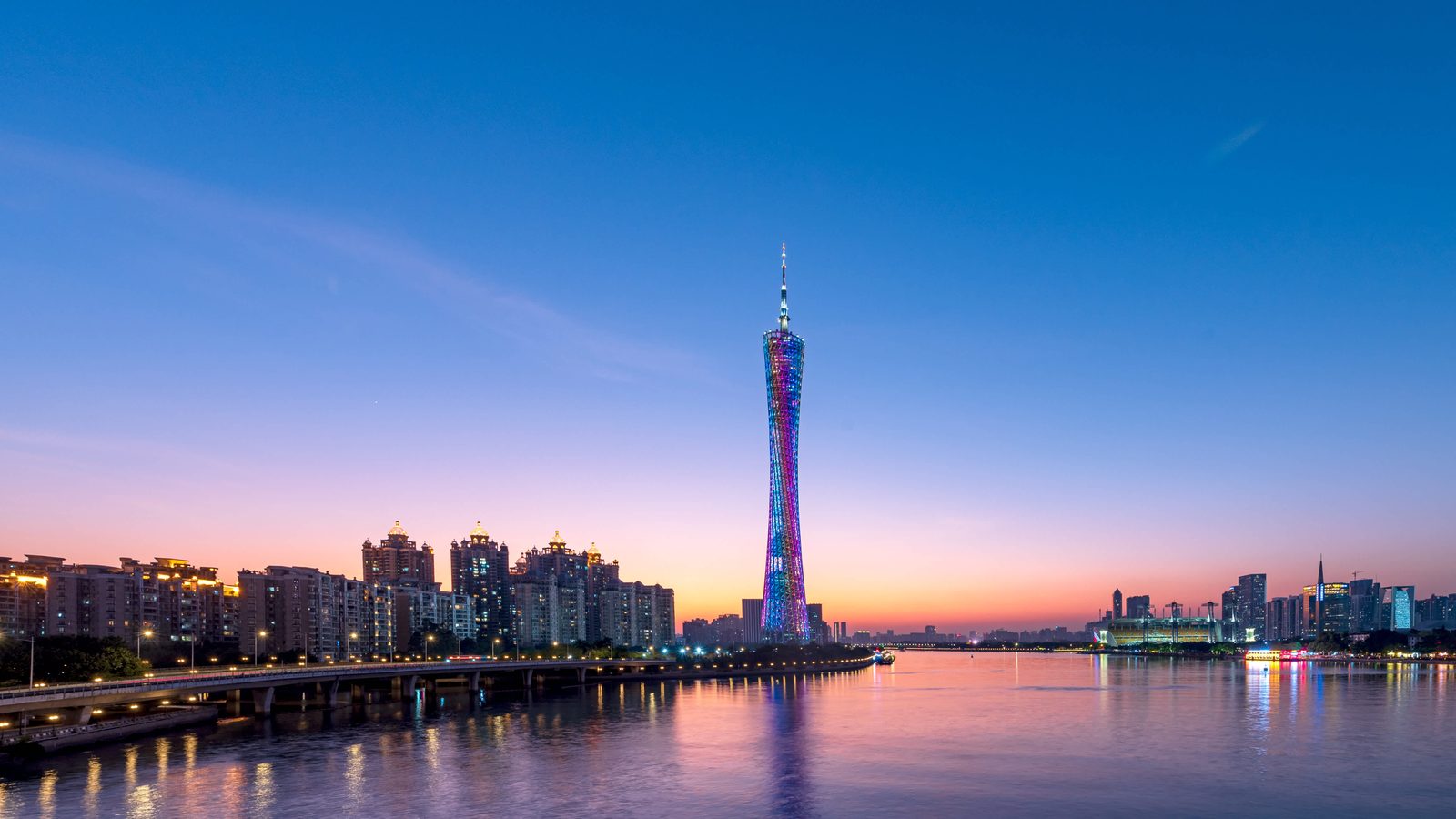
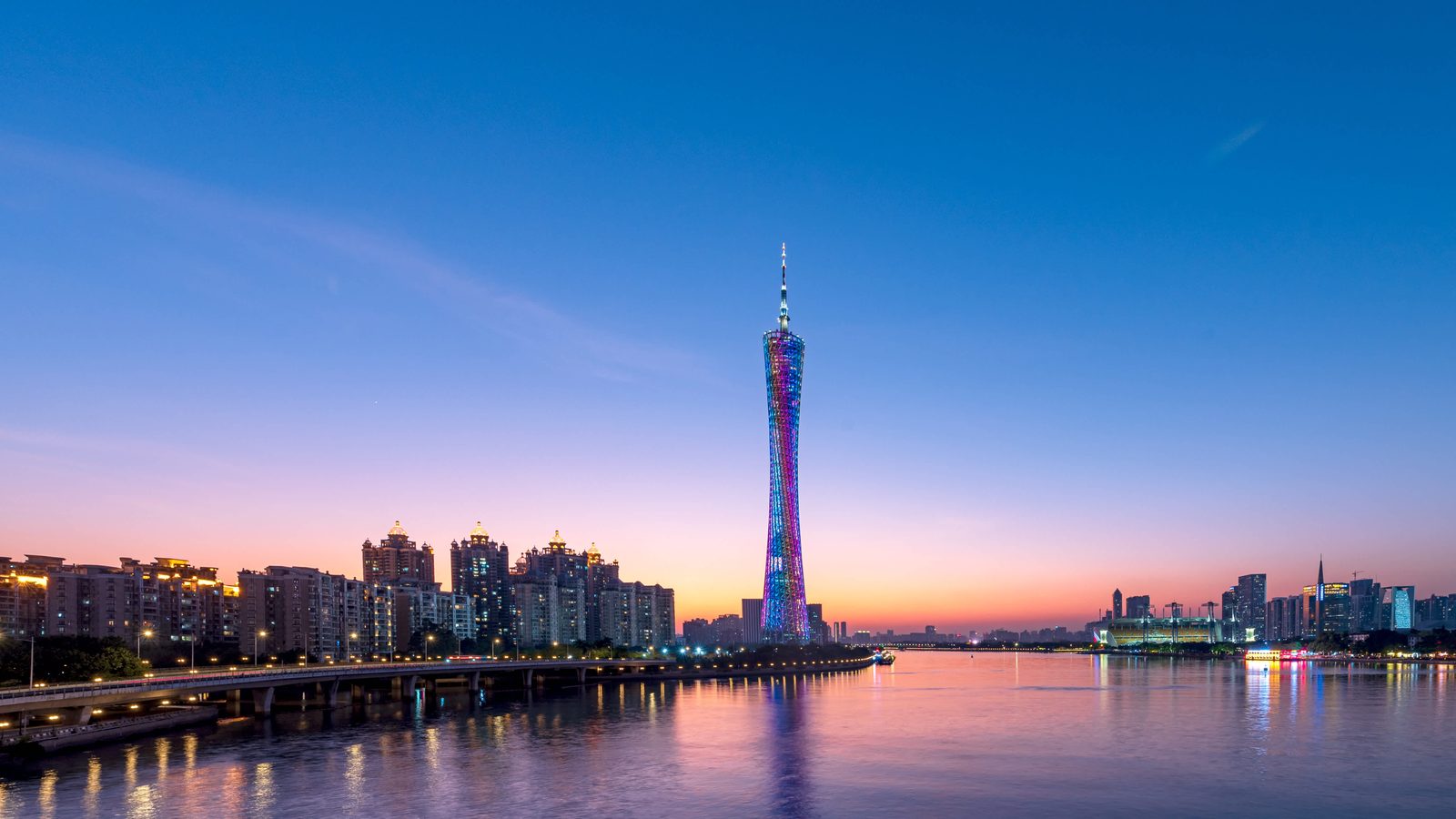
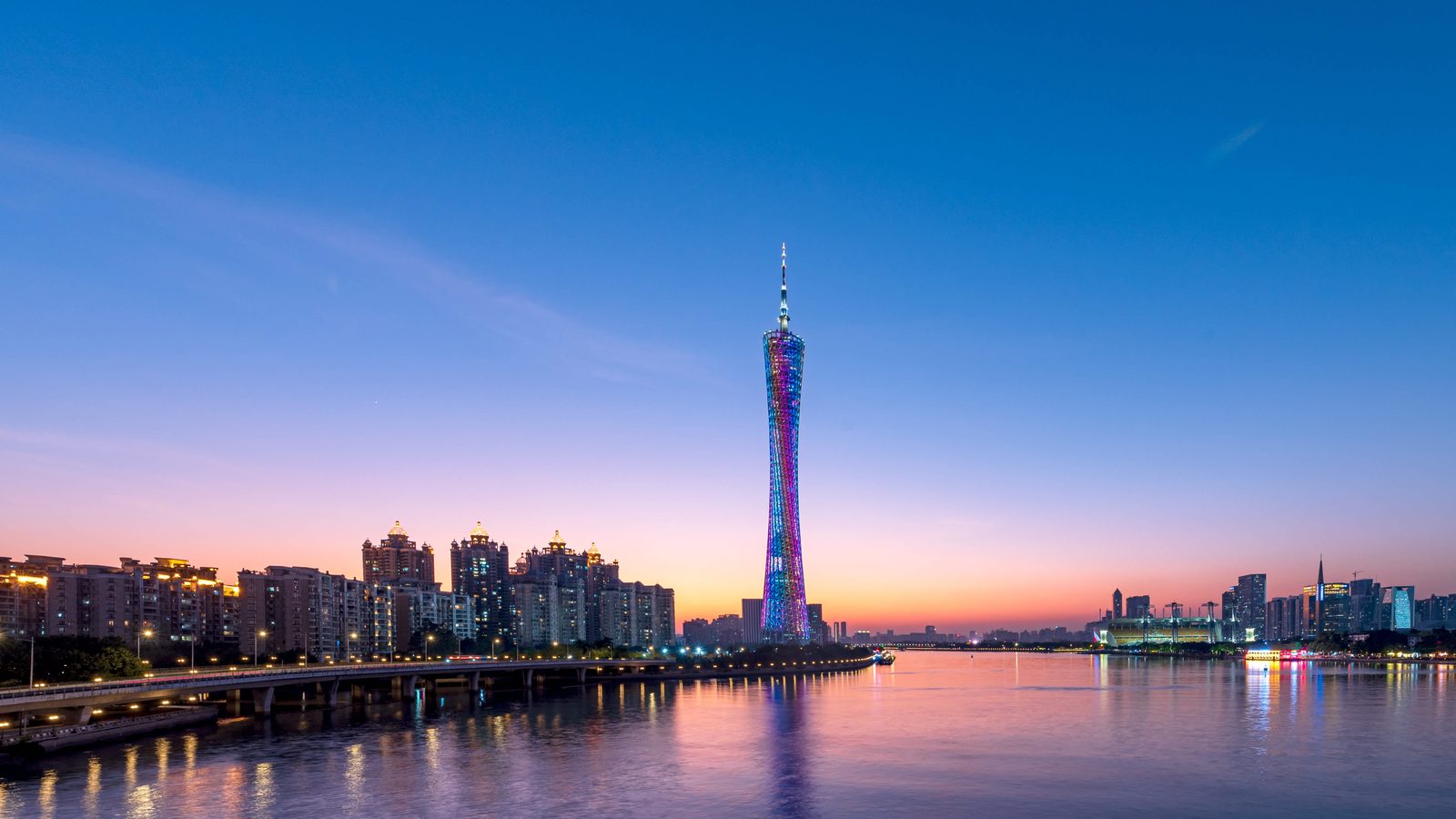
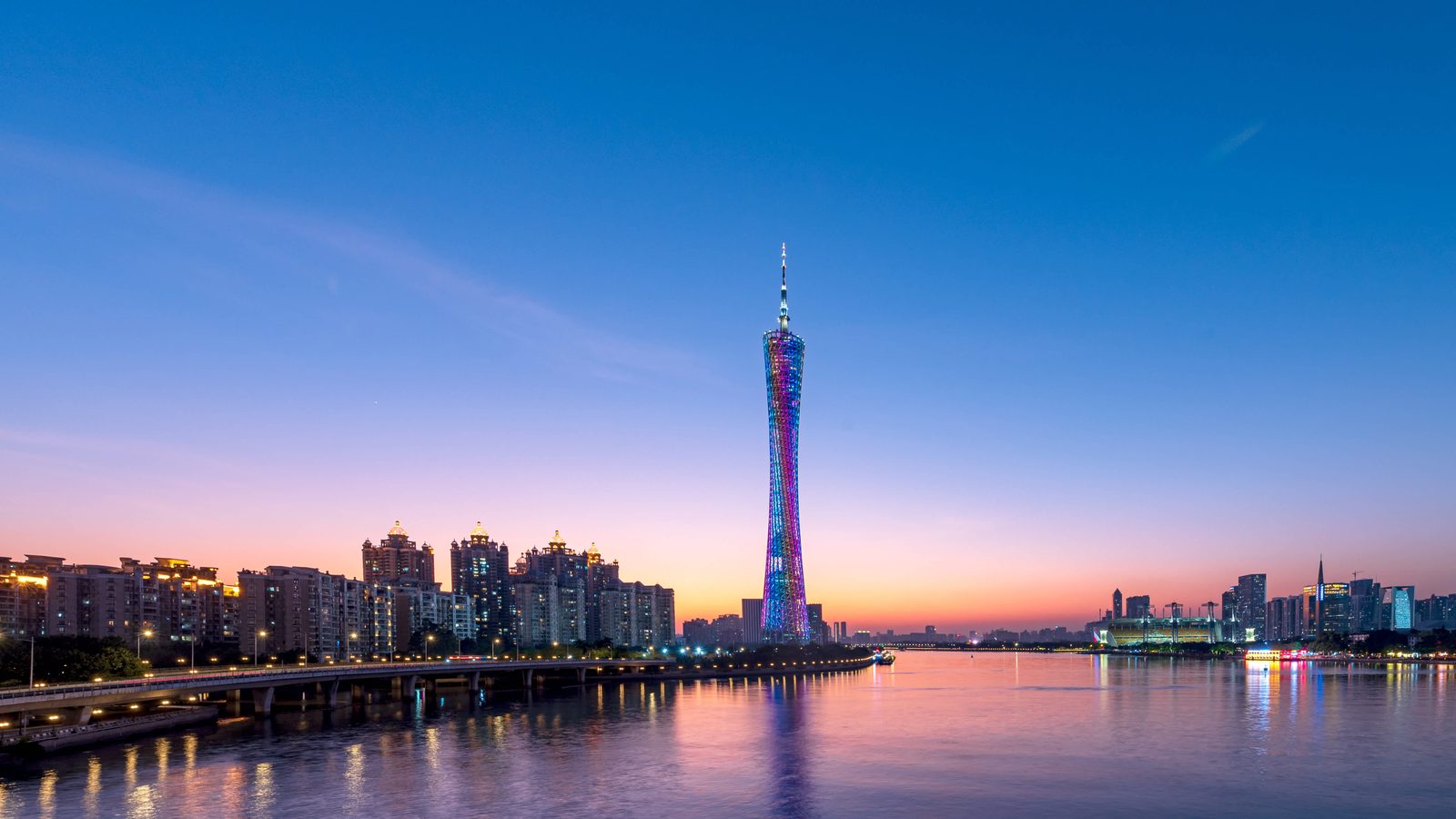
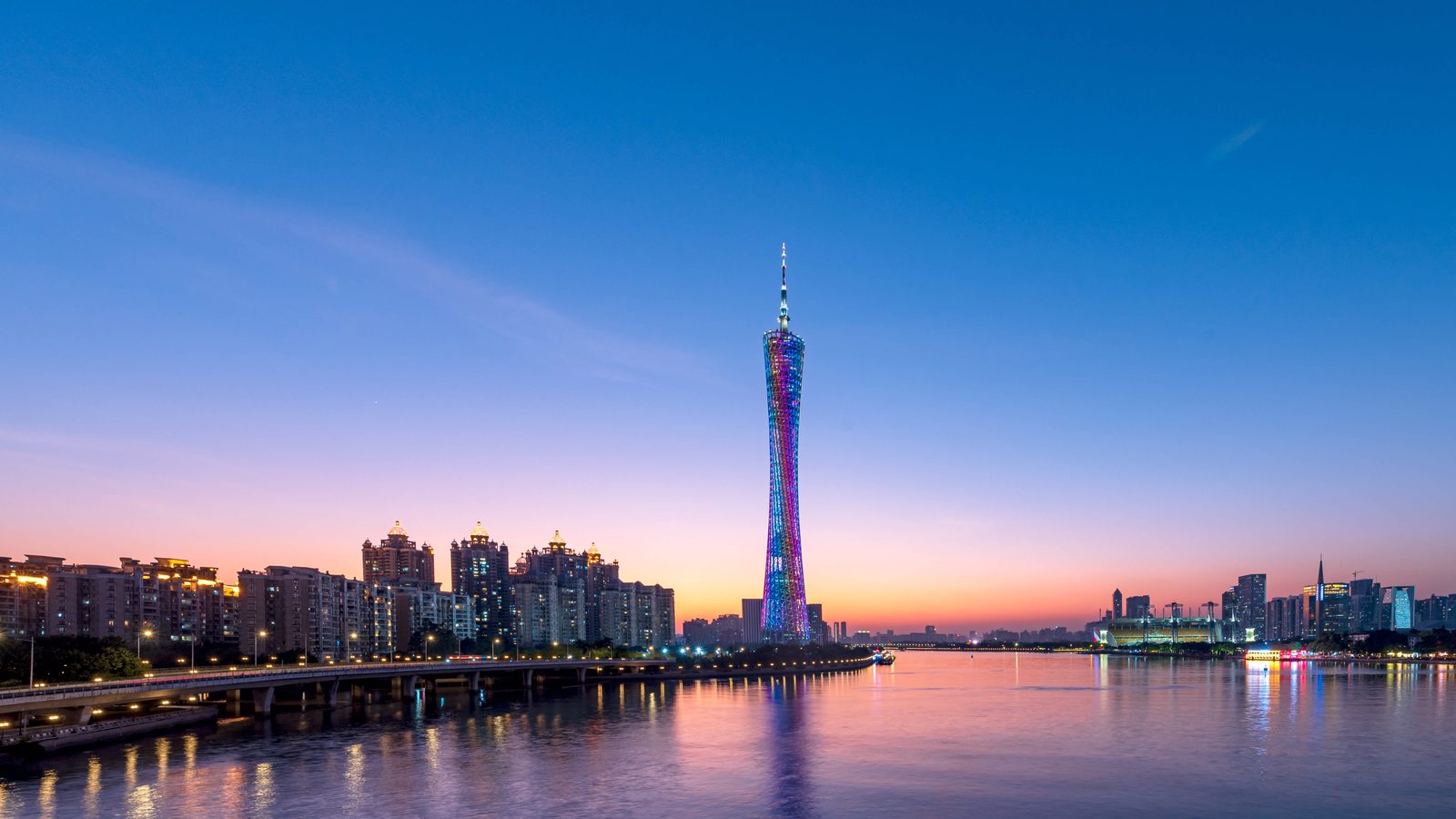
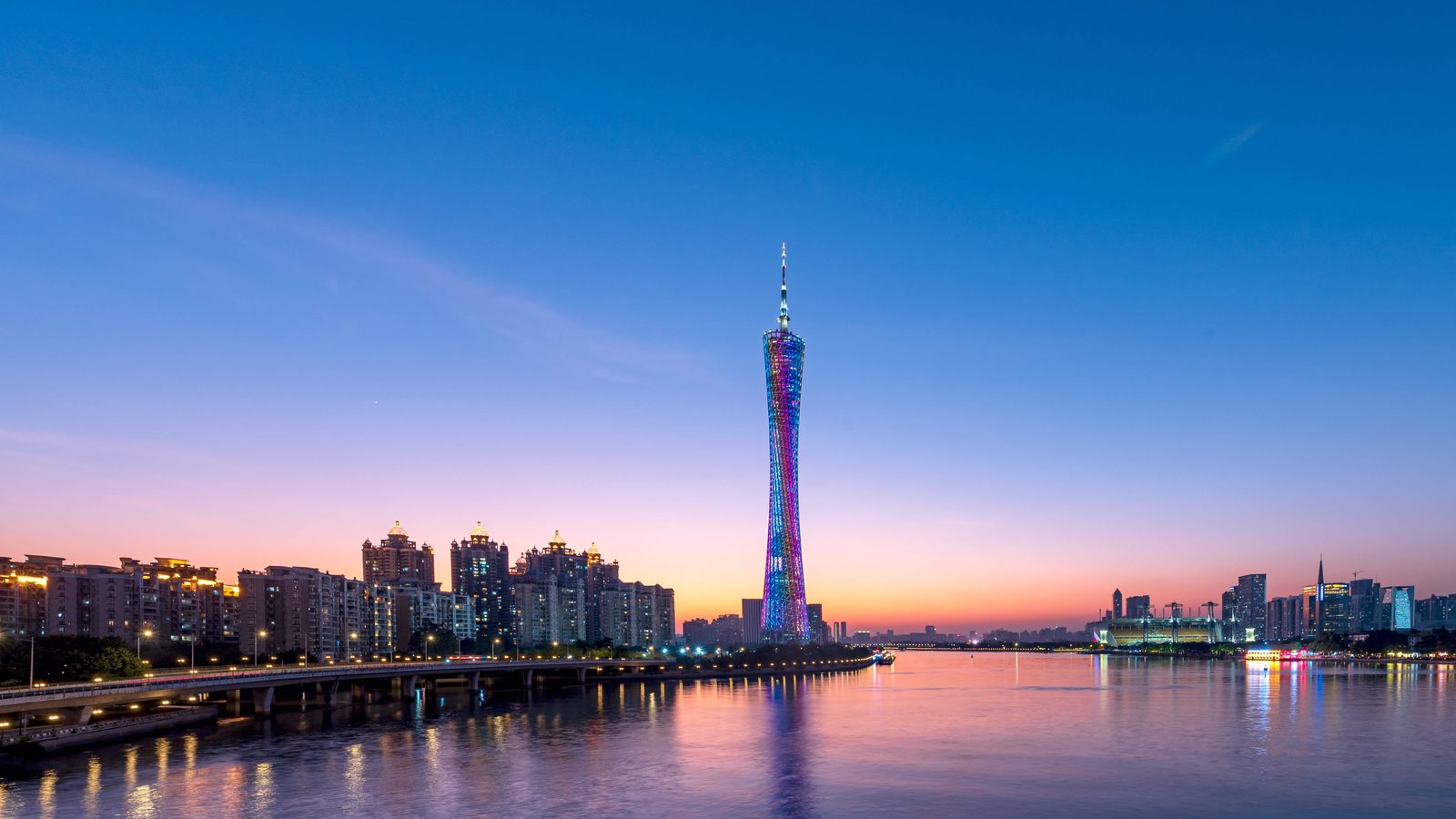
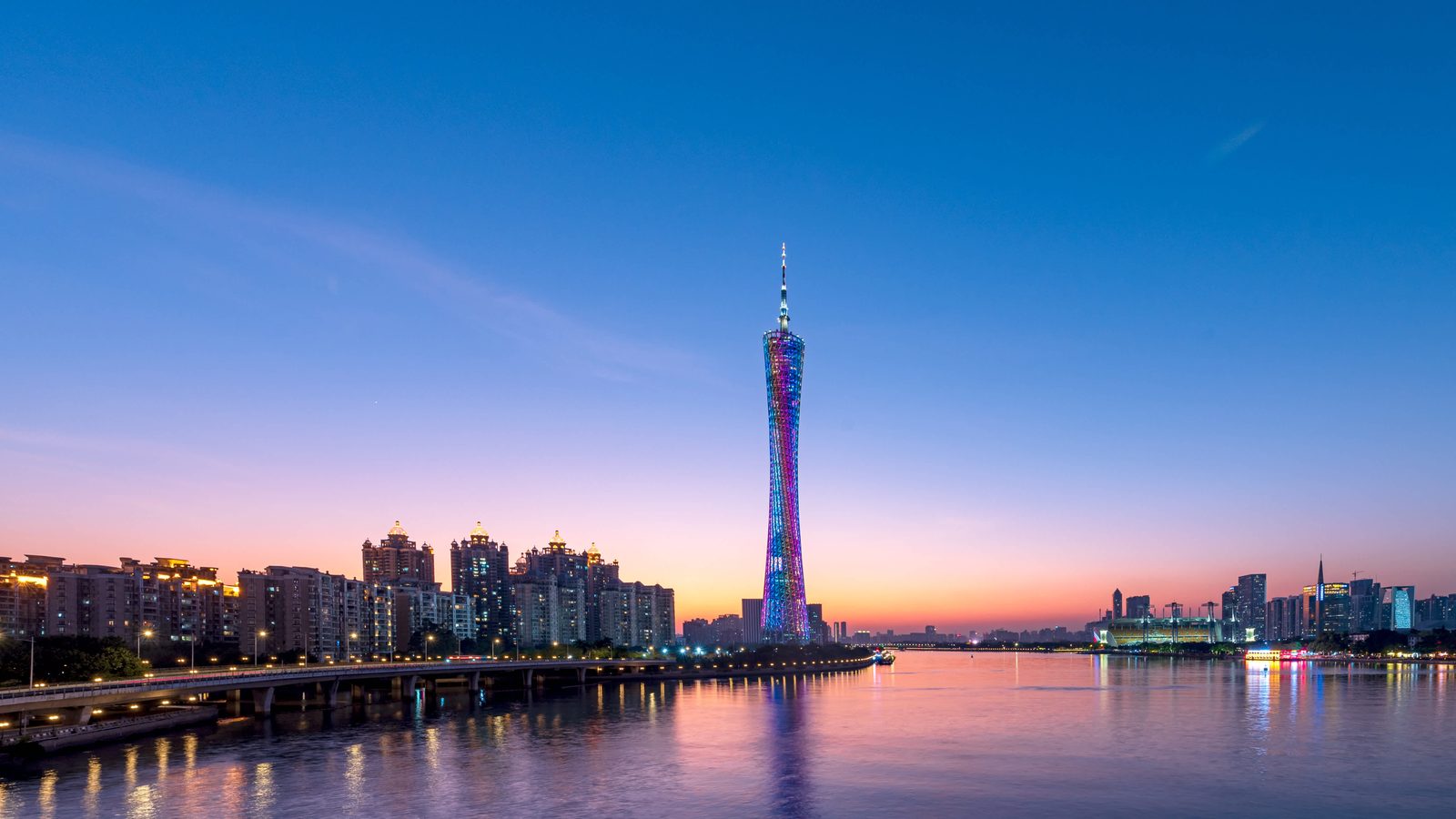
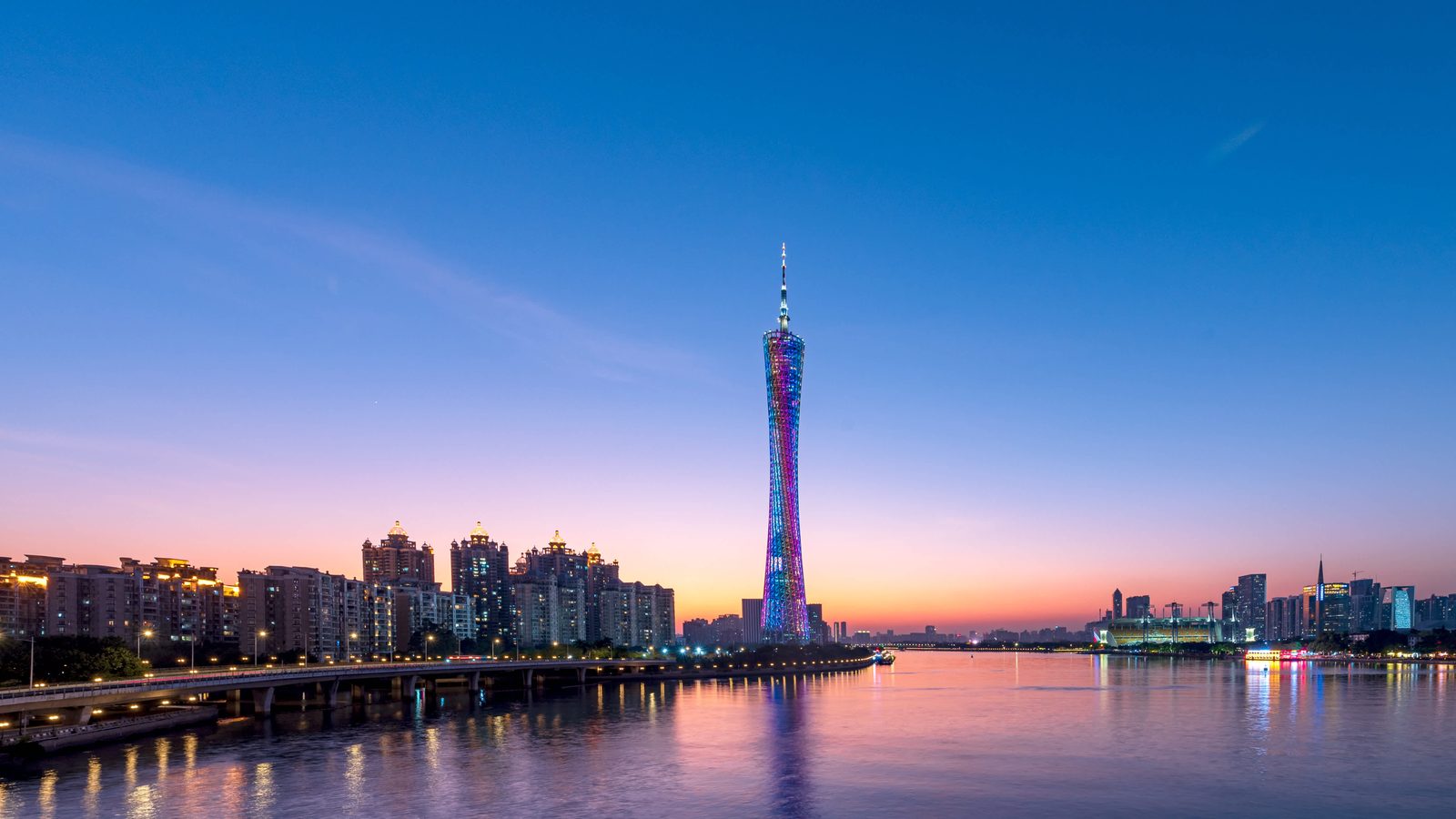
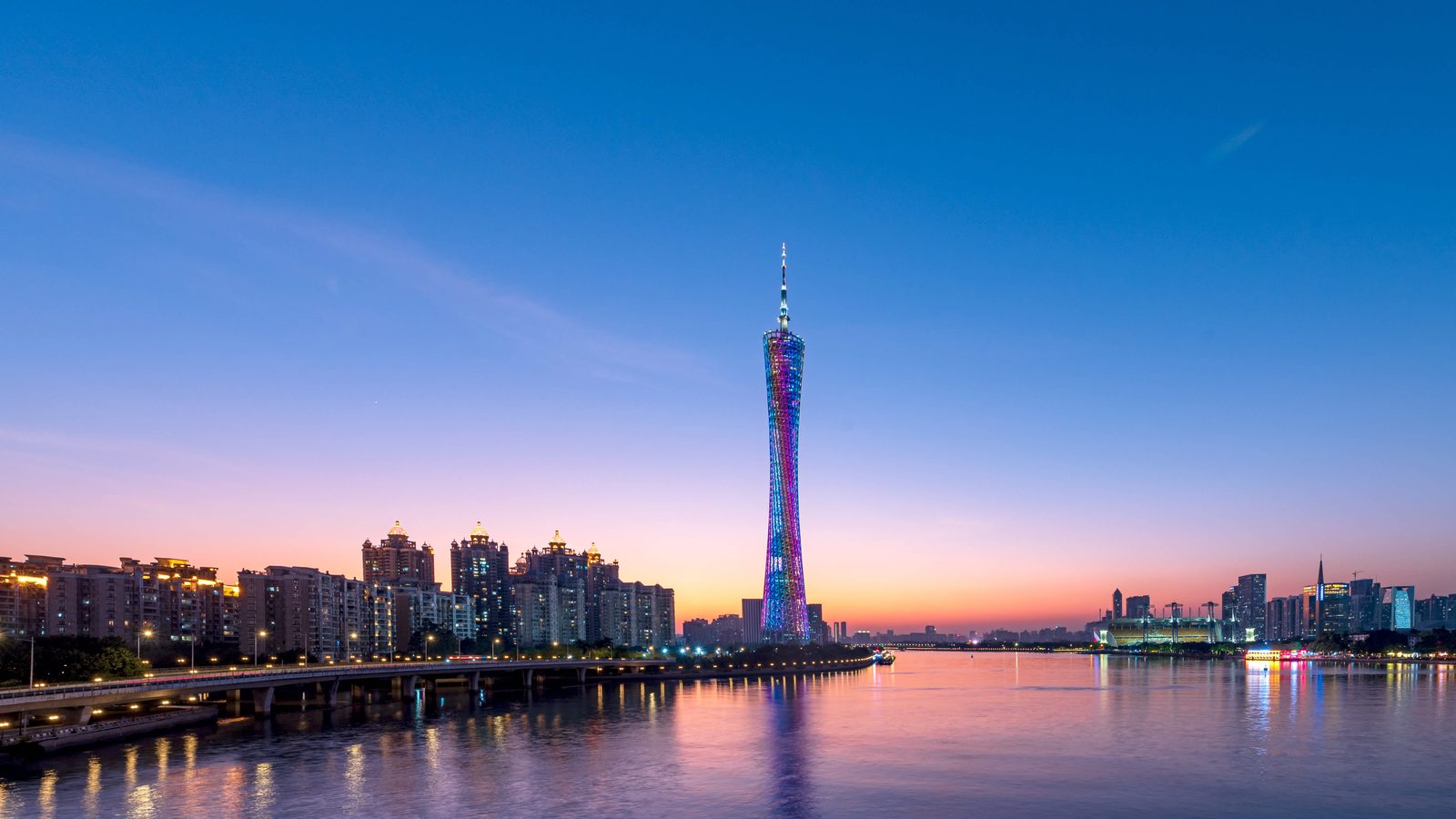
Canton Tower ("Slim Waist")
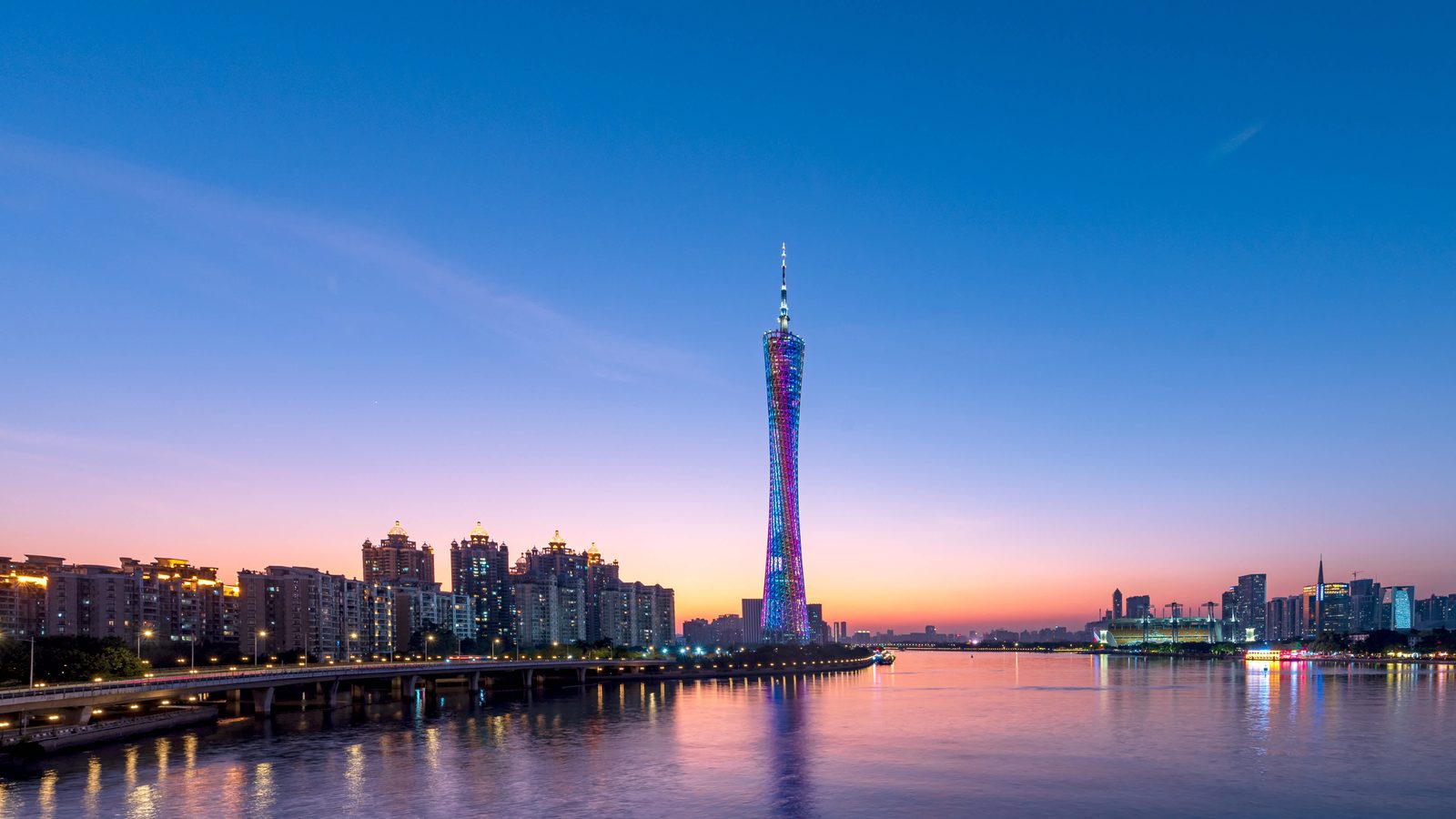
AttractionChina's tallest tower, opened in 2010, standing 600 m (604 m including the antenna): the slender, twisting hollow steel midsection of the tower gave rise to the "Slim Waist" nickname
 28
Huacheng Square
AttractionThe "city living room" at the heart of Zhujiang New Town: four cultural buildings ring the square — Guangzhou Opera House (Zaha Hadid's "rounded double pebbles"), Guangzhou Library ("beautiful books" zigzag form), Guangdong Museum (hollow "Moonlight Treasure Box" shell) and the Second Children's Palace…
 29
Haixinsha Island
AttractionVenue of the opening ceremony of the 2010 Guangzhou Asian Games: the sail-shaped grandstand and fountain array on this river island keep the Asian Games memory alive; now a public park and major events venue that often hosts light festivals, concerts and fireworks shows
 30
Guangdong Museum
AttractionThe "Moonlight Treasure Box" new building opened in 2010, its hollow-box form modeled on carved ivory puzzle balls: the collection features maritime trade and Guangdong history — export porcelain, Guangzhou embroidery, gold-lacquered wood carving, Duan inkstones and the museum's star treasure, the "Qianjin Monkey King" inkstone; the Chaozhou wood carving exhibition is among the finest of its kind nationwide
 31
Guangzhou Library
AttractionA city library shaped like a "beautiful book": its form like the Chinese character for sun resembles stacked volumes — one of the world's largest urban public libraries, with a collection topping 10 million volumes
 32
Pearl River Night Cruise
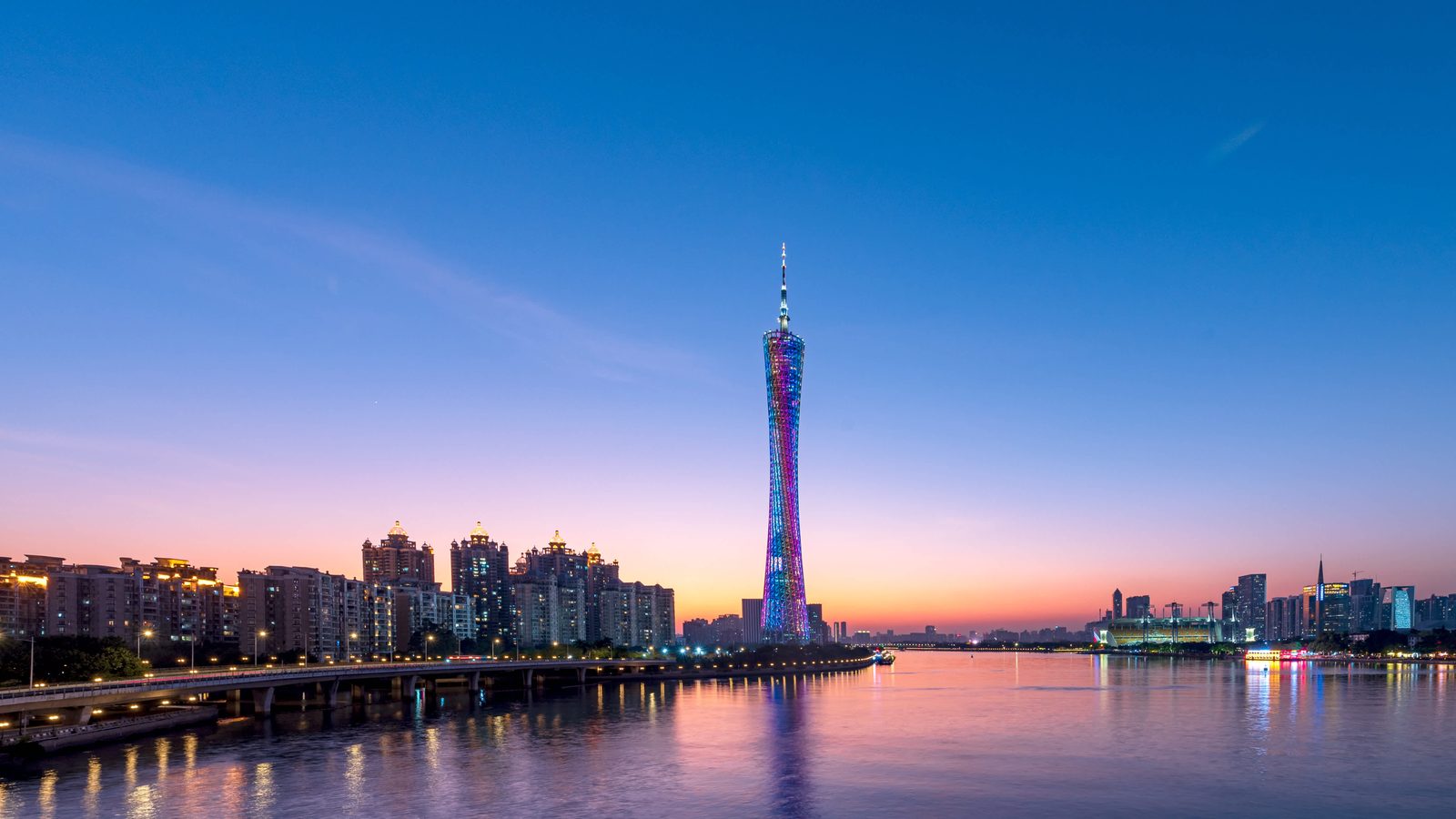
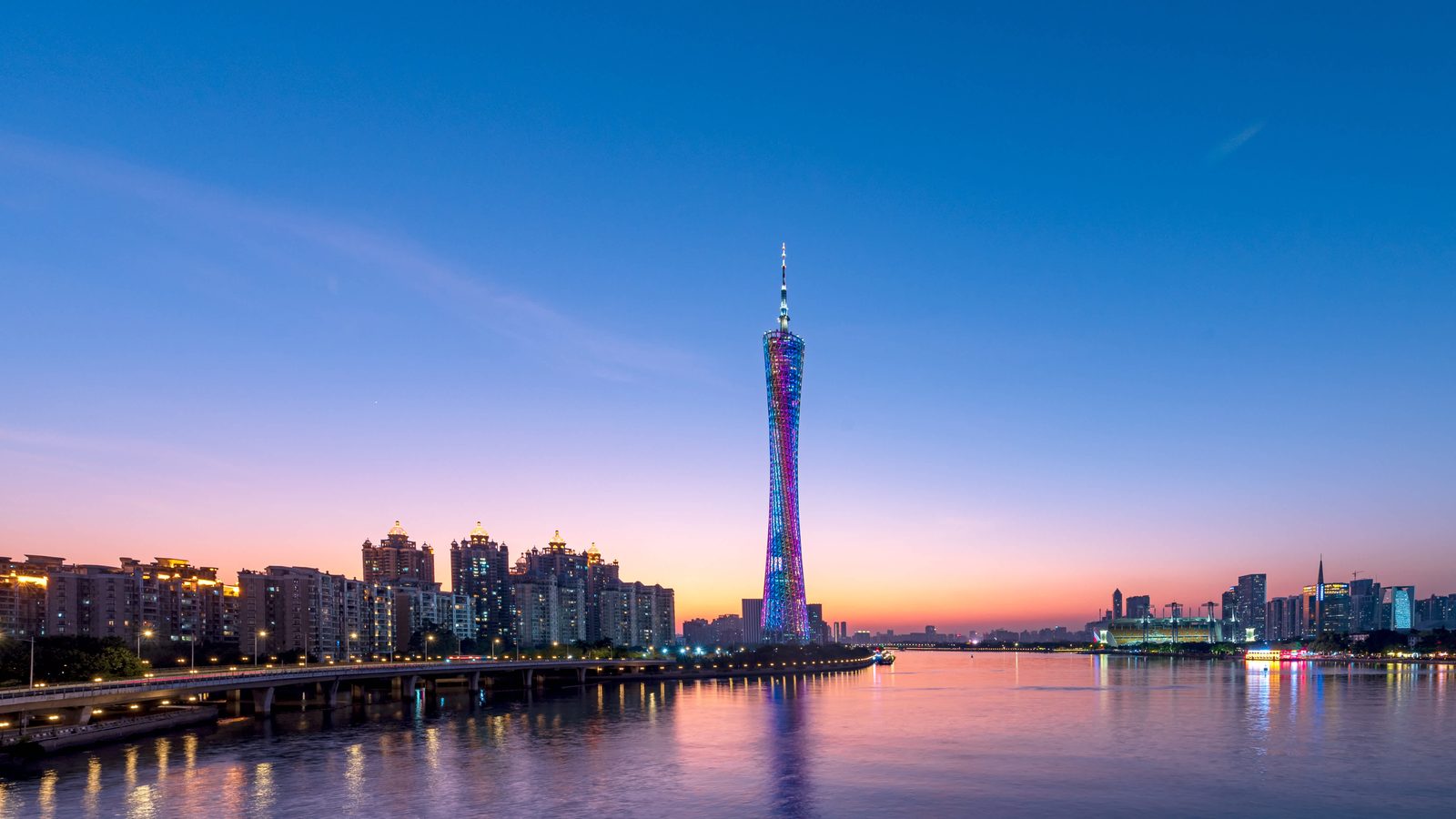
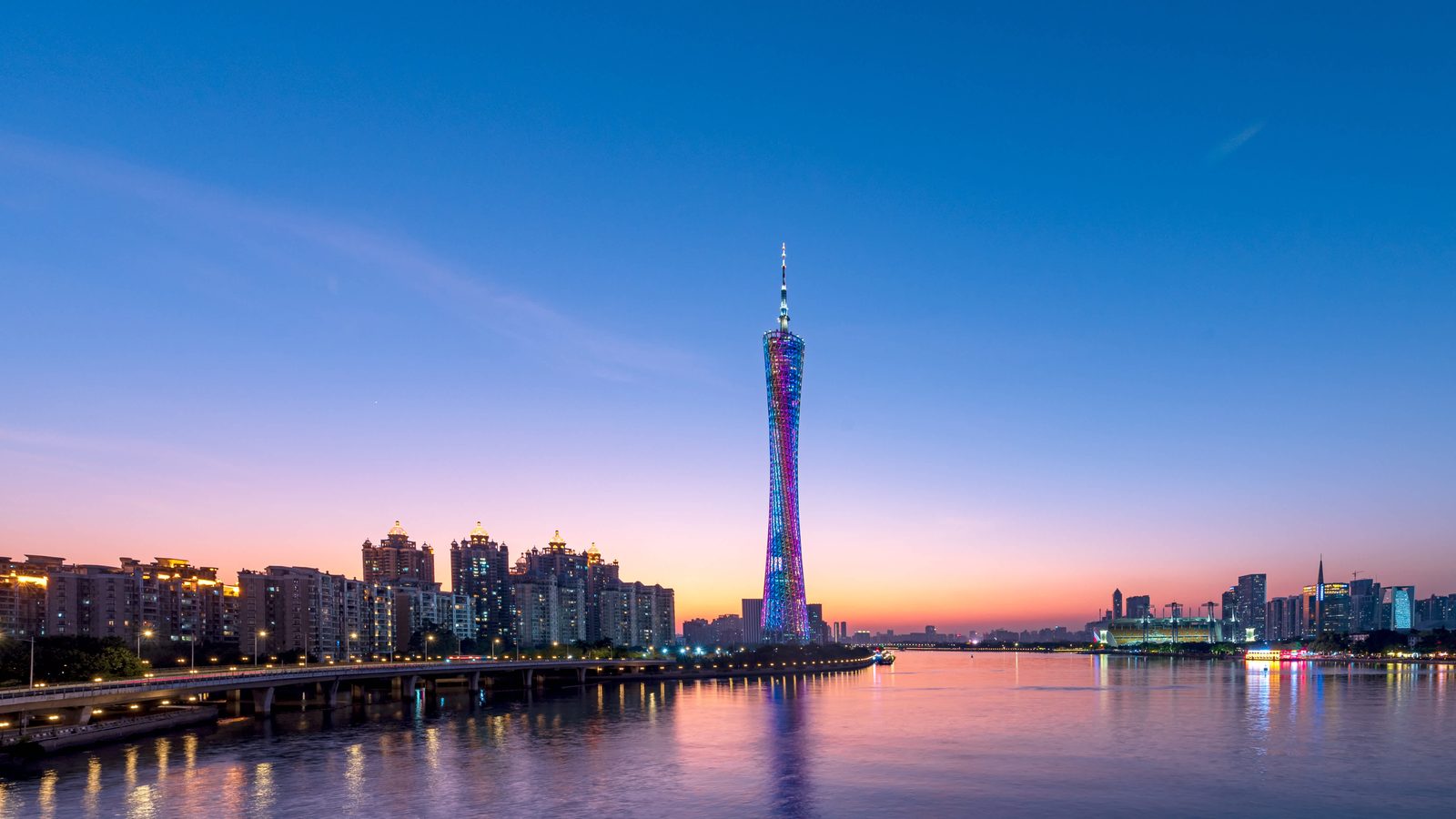
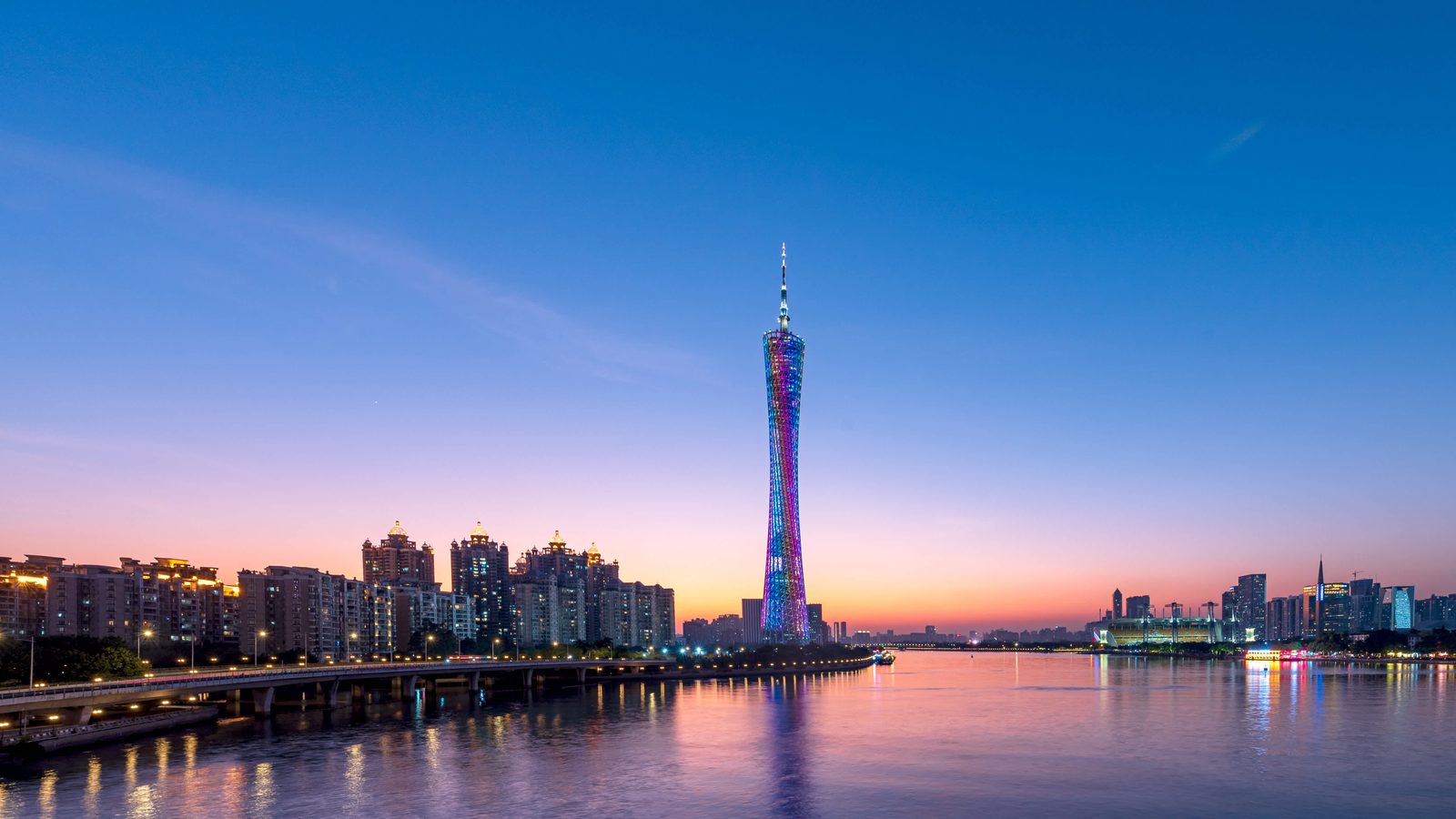
Attraction"Flowing Light on the Pearl River" (Zhushui Liuguang) is one of Guangzhou's New Eight Sights: board at Tianzi Wharf (Guangzhou's oldest surviving official wharf, where official boats were welcomed and seen off in the Ming and Qing dynasties) or Dashatou Wharf; the route passes Haiyin Bridge, Canton Tower, Liede Bridge and the Party Pier lights strip, with the Canton Tower light show as the climax of the riverside night views
 33
Party Pier Beer Culture & Creative Arts Zone
AttractionA beer culture and creative arts zone converted from the old Pearl River Brewery: a riverside street of beer bars blends with industrial relics such as fermentation tanks and beer pipelines; buzzing from dusk onward, it is a signature landmark of Guangzhou nightlife
 34
Nanyue King Museum (Royal Tomb Section)
AttractionThe tomb of Zhao Mo, second king of Nanyue, discovered by accident during construction on Xianggang Hill in 1983 — the most important archaeological find in Lingnan: the tomb was never looted and is displayed on site just as it was found, with national treasures such as the gold 'Wendi Xingxi' seal (the only Han-dynasty imperial gold seal with a dragon knob unearthed in China), the silk-threaded jade burial suit and the horn-shaped jade cup, among others…
 35
Southern Han Two Mausoleums Museum
AttractionA museum of Southern Han dynasty imperial mausoleums on Xiaoguwei Island in the University Town: Kangling is the tomb of Liu Yan, founding emperor of Southern Han, whose 'tomb platform of three stacked circular altars' design is unique in China; celadon jars and other relics were unearthed at Deling; the museum systematically presents Guangzhou's ancient history and Southern Han archaeological achievements
 36
Huaisheng Mosque (Light Tower)
AttractionOne of China's earliest mosques, built by Arab merchants in the early Tang dynasty — 'Huaisheng' means 'remembering the Prophet Muhammad': the Light Tower inside rises 36.3 m, an ancient minaret that doubled as a navigation beacon on the Pearl River, 'watching the sails' to guide ships at night; its cylindrical tower form is unique among surviving examples
 37
Qingzhen Xianxian Gumu (Ancient Tomb of the Muslim Sage)
AttractionTomb of Sa'd ibn Abi Waqqas, the Arab sage who came to China to preach Islam in the Tang dynasty: the tomb chamber is a domed echo structure — words spoken inside rumble with reverberation, hence its folk name the 'Sounding Tomb'; a unique ancient building prized for its acoustics
 38
Chimelong Tourist Resort (Safari Park)
AttractionA major resort complex in Hanxi, Panyu: Chimelong Safari Park is one of Asia's largest private zoos — ride the little train through animal herds (white tigers, koalas and the panda triplets are the star cast), with dual routes by aerial cableway and on foot
 39
Baomo Garden
AttractionA Lingnan-style garden in Shawan, Panyu, built in memory of the upright official Bao Zheng (the name 'Baomo' comes from the tale of Lord Bao's incorruptibility): the garden's porcelain mural of Along the River During the Qingming Festival recreates the entire painting in porcelain-sculpture craft and stretches over 1,000 meters — a rare large-scale porcelain mural
 40
Yuyin Shanfang Garden
AttractionThe most exquisite of the Four Great Gardens of Lingnan, in Nancun, Panyu: built in the Tongzhi reign of the Qing dynasty by juren (provincial graduate) Wu Bin, it covers just 1,598 square meters yet boasts a full set of pavilions, terraces, towers and bridges — 'scenery everywhere, seclusion at every step'
 41
Lianhua Mountain (Lotus Mountain)
AttractionThe ancient quarry site on Lianhua Mountain (Lotus Mountain) in Panyu: quarried for over 2,000 years since the Western Han dynasty, its sheer cliffs and strange rocks such as Swallow Rock (Yanziyan) and Lotus Stone form a landscape co-created by man and nature — a living specimen of ancient mining history
 42
Shawan Ancient Town
AttractionAn 800-year-old living specimen of Guangfu (Cantonese) folk culture of the Pearl River Delta in Panyu: Liugeng Hall (the He clan's grand ancestral hall) is one of the most magnificent ancestral halls in the delta, and the lanes of Chebei Street and Anning Street retain their original look
 43
Lingnan Impression Park
AttractionA theme park of Lingnan dwellings and folk customs in Guangzhou University Town: wok-ear walls, oyster-shell walls and qilou arcaded streets recreate the look of a Lingnan village; folk performances such as Cantonese opera, lion dance and dragon boat shows run at set times, and nostalgic workshops like copper-beating and weaving offer hands-on experiences
 44
Nansha Wetland Park
AttractionA Pearl River Delta mangrove wetland in Wanqingsha, Nansha: cruise by boat through the mangrove waterways; in winter migratory birds gather (rare waterbirds such as the black-faced spoonbill appear); the bird-watching tower and wetland boardwalks are great for birding and photography — an ecological calling card known as 'the kidney of Guangzhou'
 45
Nansha Tianhou Palace (Mazu Temple)
AttractionOne of the largest Mazu temples in Southeast Asia (rebuilt in 1997): built against Dajiao Mountain facing the sea, with a 14.5 m Tianhou statue; its halls rise up the slope in Song-dynasty-style architecture, making it a center of Mazu worship in the Pearl River Delta
 46
Baishuizhai Scenic Area
AttractionA scenic mountain-and-water attraction in Paitan Town, Zengcheng: Baishui Fairy Waterfall plunges 428.5 m, one of the highest-drop waterfalls on mainland China; the 9,999-step 'First Stairway of South China' trail climbs along the falls, with waterside boardwalks and waterfall-viewing pavilions accessible in stages—hikers short on stamina can turn back halfway
 47
Conghua Hot Springs
Attraction'The finest hot spring in Lingnan': the waters in Conghua Hot Spring Town are a rare soda-type spring (containing radon); a renowned health resort since the Republican era, it received Chinese and foreign dignitaries as a 'winter capital', and the cluster of hot spring hotels along the Liuxi River continues to this day
 48
Liuxi River National Forest Park
AttractionA national forest park on the upper Liuxi River in Conghua District: as a 'water-source forest of the Pearl River', it conserves Guangzhou's drinking-water catchment; lake and mountain scenery comes with a cruise-boat dock, and the December plum blossom festival 'Liuxi Fragrant Snow' is Guangzhou's top winter plum-viewing highlight
 49
Shimen National Forest Park
AttractionA national forest park in Conghua District: Tiantang Ding (Paradise Peak), Guangzhou's highest summit (1,210 m above sea level), lies within its bounds; in November–December sweet gum and Chinese tallow trees create the 'Shimen Red Leaves', Guangzhou's most brilliant autumn foliage, while the Heavenly Lake flower sea and stream-trekking trails offer highlights year-round
 50
Haizhu National Wetland Park
AttractionChina's largest inner-city wetland (1,100 hectares), known as the 'Green Heart of Guangzhou': creeks, orchards and mudflats interweave, serving as a stopover for migratory birds (black-faced spoonbills and egrets in flocks); longan and banana groves preserve its 'thousand-year orchard' foundation—a rare birdwatching haven in the heart of the city
What to eat in Guangzhou
Signature dishes, famous tables and street-food runs — spice levels marked honestly.
Guangzhou Restaurant
RestaurantCentury 'God of Eaters' house for morning tea.
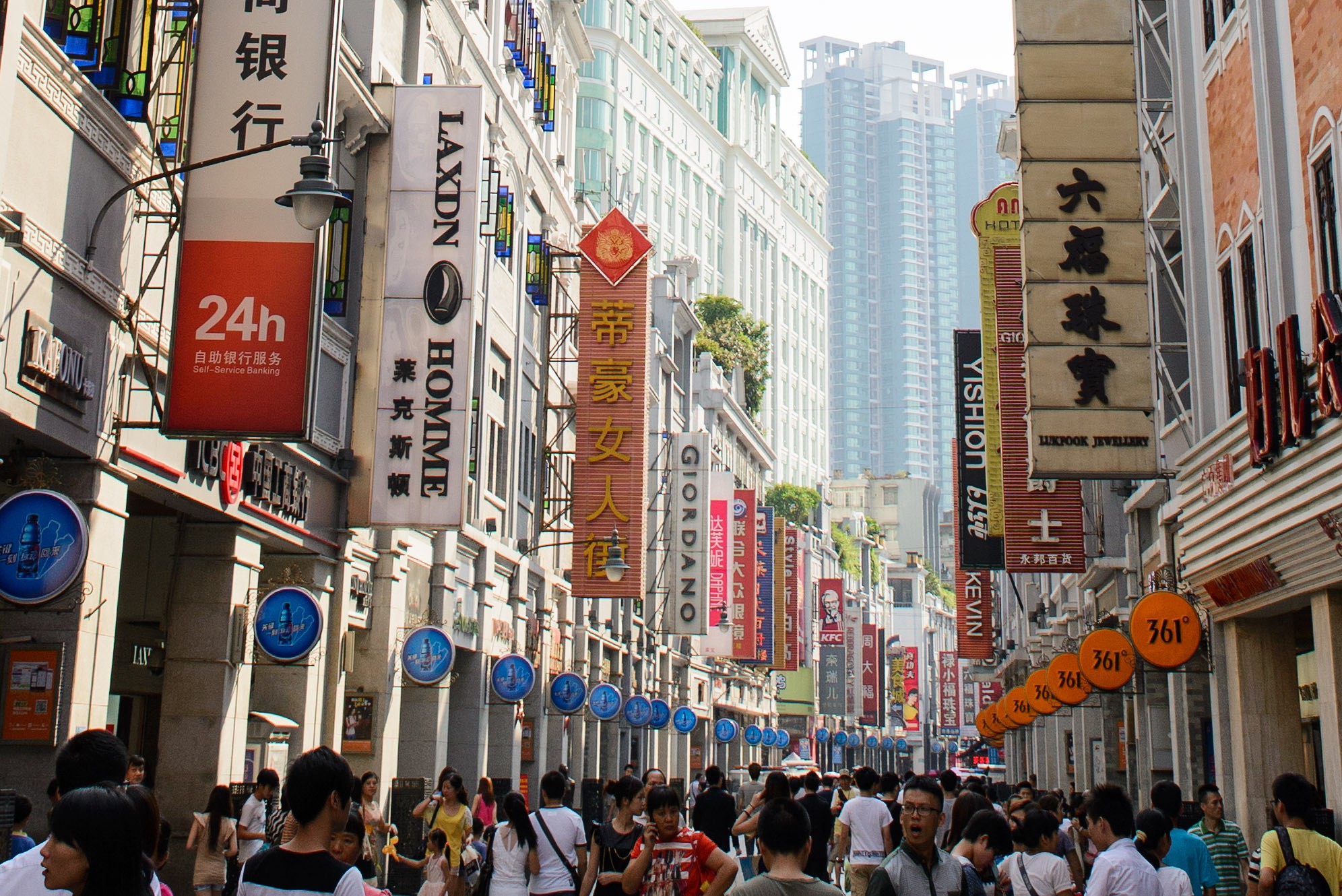
Shangxiajiu Pedestrian Street
Street FoodQilou arcade shops and snack stalls in old Liwan.
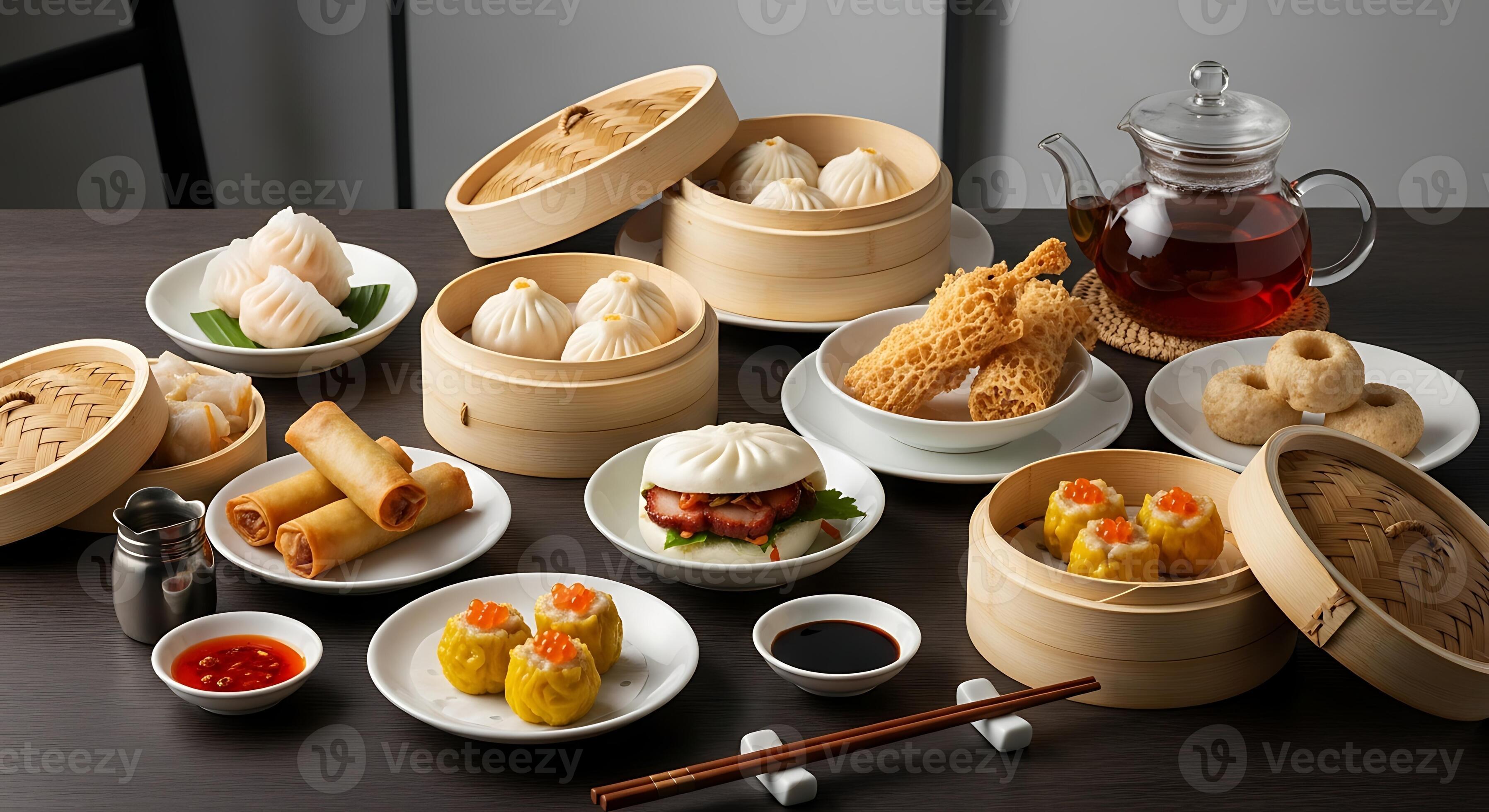
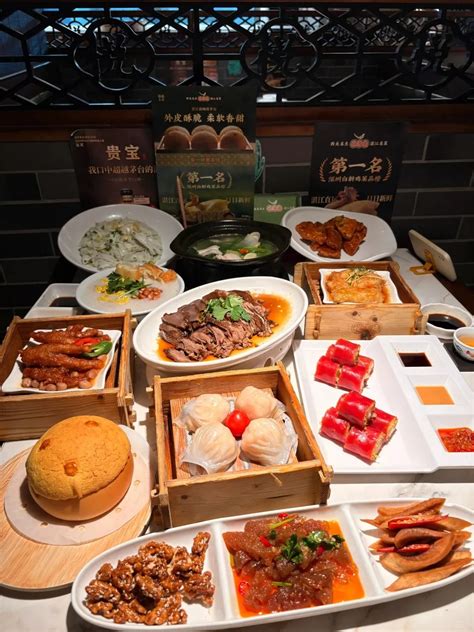
Cantonese Dim Sum
DishSteamer baskets of shrimp dumplings, pork buns and phoenix claws.
Where to stay
- Where to Stay in Guangzhou
The three areas worth sleeping in, with real price ranges.
🛏 CNY 250–1000/night · 3 areas compared
Getting around
- Getting Around Guangzhou
CAN airport express 30 min; 16 metro lines with English signage; ferries cross the Pearl River for 2 CNY.
Want a custom Guangzhou trip?
Tell us your dates — free draft plan within 24 hours.