Saihanba National Forest Park (Weichang)
Core area of the Mulan Weichang (Mulan Imperial Hunting Ground) established in the 20th year of the Kangxi reign of the Qing dynasty (1681); in the late Qing the enclosure was opened for reclamation, turning the grassland to desert
Visitor info
- Opening hours
- Open all day
- Ticket
- CNY 130 in peak season
Price is indicative — final quote on inquiry.
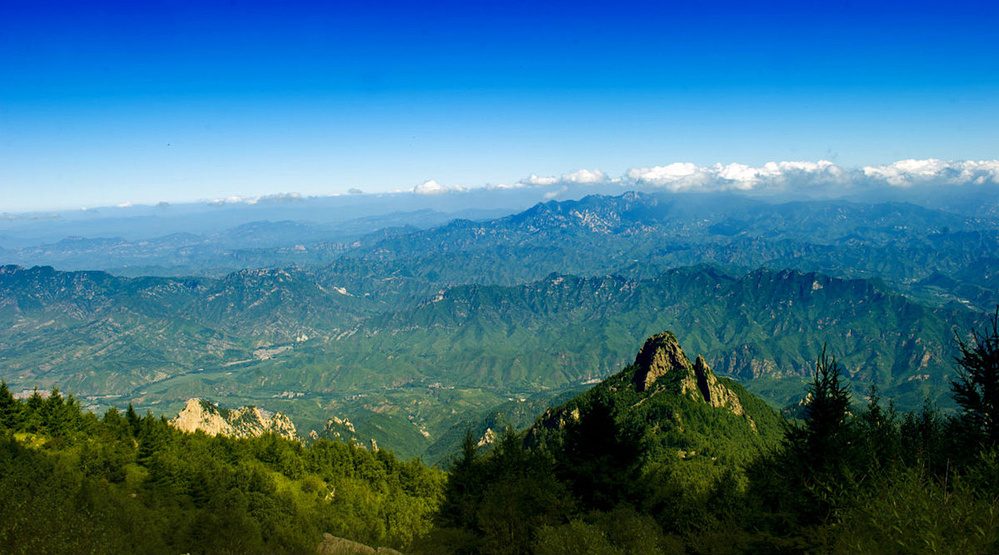
Core area of the Mulan Weichang (Mulan Imperial Hunting Ground) established in the 20th year of the Kangxi reign of the Qing dynasty (1681); in the late Qing the enclosure was opened for reclamation, turning the grassland to desert. A forestry farm was set up in 1962, and three generations planted more than one million mu (approx. 667 sq km) of forest in succession, creating one of the world's largest man-made forest seas; in 2017 it won the UN Champions of the Earth award. In autumn the birches and larches stretch in unbroken gold, Qixing Lake (Seven-Star Lake) and Taiyang Lake (Sun Lake) string together meadow wetlands, and winter brings ice-and-snow tourism — a landmark destination for eco-tourism north of Beijing.
Getting there: Self-drive or tourist shuttle bus from Weichang County
Photos
More in Chengde
- Chengde Mountain Resort
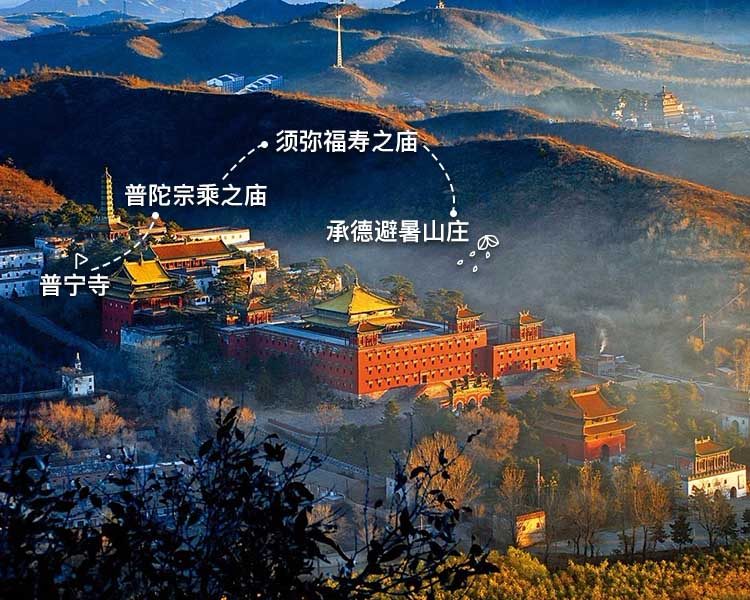
A UNESCO World Heritage Site (inscribed 1994) and national 5A-level scenic area; the largest surviving imperial garden in China (approx. 5.64 million sq m), laid out in four zones — palace, lake, plain, and mountain — dotted with the 72 Kangxi-Qianlong scenic spots
- Putuo Zongcheng Temple (Little Potala Palace)
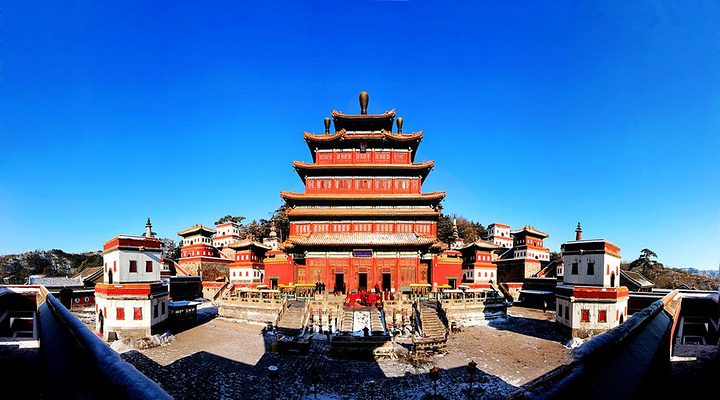
The largest of the Eight Outer Temples, built between Qianlong's 32nd year (1767) and his 36th year in imitation of the Potala Palace in Tibet, to celebrate the Empress Dowager's 80th birthday and receive congratulations from princes of the various ethnic groups
- Puning Temple
Built in Qianlong's 20th year (1755) after the pacification of the Dzungars, modeled on Samye Monastery in Tibet; its name means 'peace throughout the realm,' with a mandala layout blending Han and Tibetan styles
- Xumi Fushou Temple
A residence built in Qianlong's 45th year (1780) for the 6th Panchen Lama, who came to the Mountain Resort to congratulate Qianlong on his 70th birthday; modeled on Tashilhunpo Monastery in Shigatse, its name invokes the fortune, longevity and auspiciousness of Mount Sumeru
- Qingchui Peak National Forest Park
Famed for the solitary stone pillar Qingchui Peak (popularly known as Bangchui Mountain, 'Sledgehammer Mountain'), which stands over 38 m tall, thick on top and tapering below—a landmark of the Danxia landform left by eons of weathering and collapse; Qing emperors once composed poems praising it
- Chengde Museum
Opened in 2019, with the permanent exhibition 'Looking Both Inside and Outside the Great Wall: A True Record of Ethnic Unity in the Qing Heyday,' systematically displaying artifacts from the Mountain Resort and the Eight Outer Temples and the history of Qing-dynasty ethnic interaction