Tiantong Temple
One of the Five Mountains of Chan (Zen), hailed as the 'Buddhist Kingdom of the Southeast'; legend says the monk Yixing built a hut to practice here in 300 (the first year of the Yongkang reign of the Western Jin), and the deity Taibai Jinxing (Venus) sent a boy to bring his meals—hence the name Tiantong ('Heavenly Boy')
Visitor info
- Opening hours
- 06:00-16:00
- Ticket
- Free
Price is indicative — final quote on inquiry.
One of the Five Mountains of Chan (Zen), hailed as the 'Buddhist Kingdom of the Southeast'; legend says the monk Yixing built a hut to practice here in 300 (the first year of the Yongkang reign of the Western Jin), and the deity Taibai Jinxing (Venus) sent a boy to bring his meals—hence the name Tiantong ('Heavenly Boy'). Halls line a sevenfold central axis, rising up the hill one hall per level; the Wangong Pool, the twin pagodas, and the pine-lined deep path are classic scenes. In the Southern Song, the Japanese monk Dogen came to China seeking the Dharma, attained enlightenment under Chan master Rujing, and returned home to found Japan's Soto school, venerating Tiantong as its ancestral temple—Japanese Soto pilgrims still come in an unbroken stream today, making it the foremost ancestral temple of Sino-Japanese Buddhist exchange.
Getting there: Bus, Tiantong Temple stop
Photos
More in Ningbo
- Tianyi Pavilion · Moon Lake Scenic Area
China's oldest extant private library; a national key protected cultural site and a national 5A-level scenic area (the combined Tianyi Pavilion · Moon Lake area)
- Old Bund
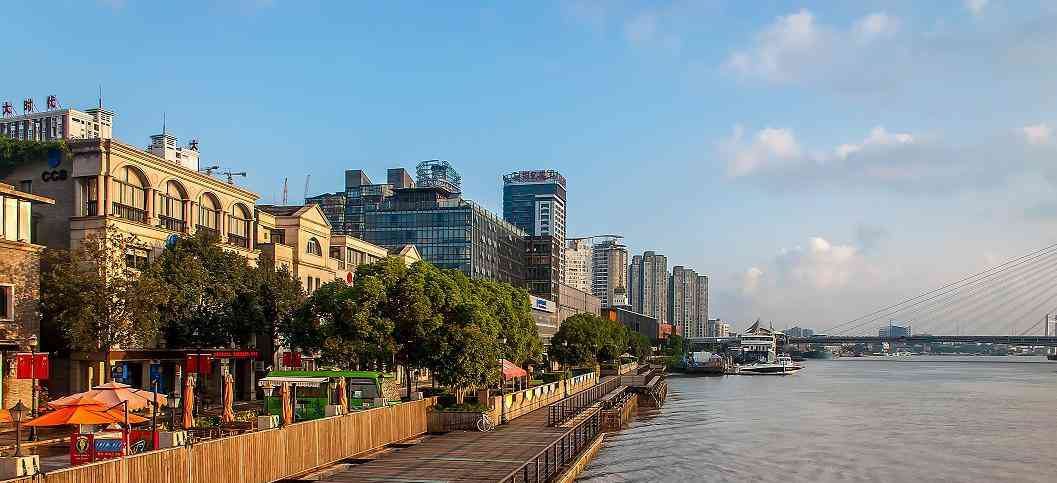
A riverside district of modern concession-era character on the Yong River, opened as a treaty port in 1844, about twenty years before Shanghai's Bund; surviving protected buildings include the Gothic Catholic church (built 1872), the former Zhejiang Customs House, and the Jiangbei police station; bars and restaurants coexist with historic buildings, and the night-view photo spot is in front of the Catholic church…
- Gulouyan Historic and Cultural District
Site of the ruins of Ningbo's ancient inner city; Haishu Tower, repeatedly destroyed and rebuilt on the original site of the inner city's south gate from the first year of the Tang Changqing reign (821), combines a Western-style clock tower with a Chinese-style gate platform—an iconic hybrid landmark of Ningbo
- Nantang Old Street
A Jiangnan water-town district along the Nantang River; its one-river-one-street layout recreates the look of old Ningbo's wharf, with Ming- and Qing-style buildings split into north and south streets
- Ningbo Museum
A signature work by architect Wang Shu after winning the Pritzker Prize; its walls are built from hundreds of thousands of bricks and tiles salvaged from the old city, and its form resembles a mountain or a ship—the building itself is an exhibit
- Qing'an Guild Hall (Eastern Zhejiang Maritime Folk Museum)
A Tianhou (Mazu) temple combined with a guild hall, built in 1853 (the third year of the Xianfeng reign) with funds raised by Ningbo's Northern-trade ship merchants; its brick, wood, and stone carvings are famed as the 'three wonders,' and the gilded coiling dragon in the opera-stage caisson is its crowning sight