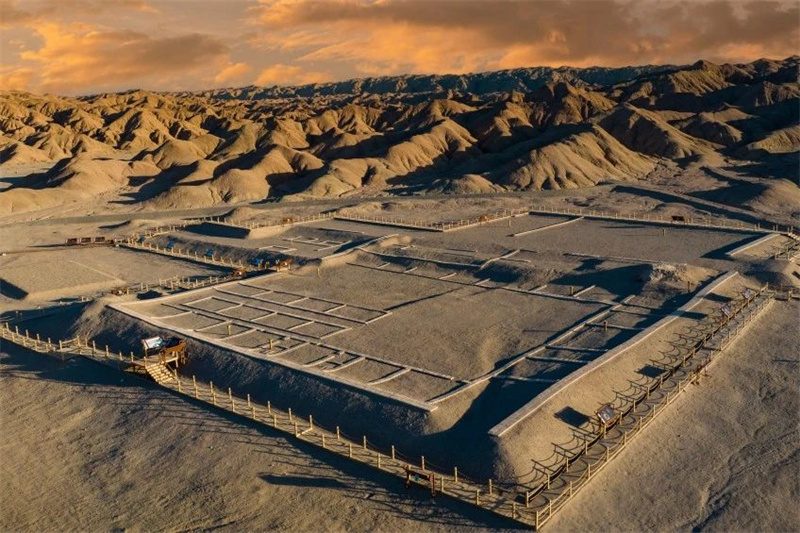
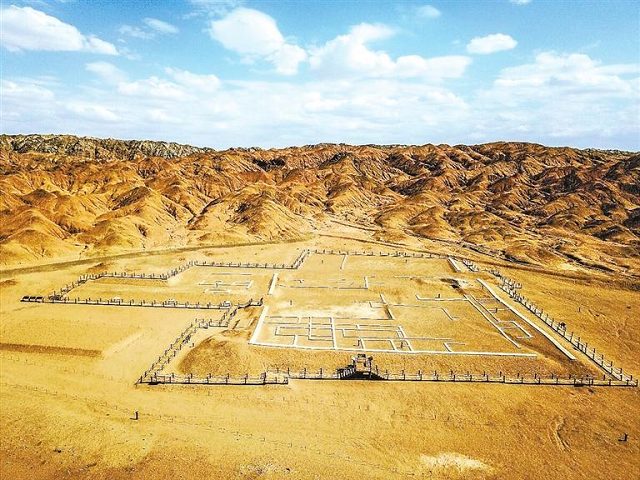
Xuanquanzhi Site (Han postal relay)
Official postal relay site set up by the Han and Tang empires east of Dunhuang Commandery; the 1990-1992 excavation unearthed more than 23,000 Han wooden slips, making it one of the earliest and best-preserved relay-station sites discovered to date, inscribed in 2014 as a site segment of the World Heritage "Silk Roads"
Visitor info
- Opening hours
- 09:00-17:00
- Ticket
- Free (reservation required)
Price is indicative — final quote on inquiry.
Official postal relay site set up by the Han and Tang empires east of Dunhuang Commandery; the 1990-1992 excavation unearthed more than 23,000 Han wooden slips, making it one of the earliest and best-preserved relay-station sites discovered to date, inscribed in 2014 as a site segment of the World Heritage "Silk Roads". Surviving remains include the wall foundations of the walled compound and stable ruins; visits require reservation, making it a deep-dive site for lovers of Silk Road institutional history.
Getting there: Self-drive east of downtown (approx. 64 km)
Photos
More in Dunhuang
- Mogao Grottoes
Commonly known as the Thousand Buddha Caves, first carved in 366 AD (Jianyuan Year 2 of Former Qin) when monk Le Zun saw golden light over Mingsha Mountain; built over a millennium across more than ten dynasties—Northern Liang, Northern Wei, Sui-Tang, Five Dynasties, Song, Western Xia, Yuan—with 735 caves, 45,000 square meters of murals, and painted sculptures 200…
- Yulin Grottoes
Located on both banks of the Yulin River valley in Guazhou County, named for the elm groves along the river; part of the Dunhuang grotto art system together with the Mogao Grottoes, known as their "sister grottoes"
- Western Thousand Buddha Caves
Named for its location west of the Mogao Grottoes on cliffs beside the Dang River; Northern Wei caves carved as early as or contemporaneous with the Mogao Grottoes still survive, with more than 20 caves and niches remaining
- Dunhuang Academy History Exhibition Center
A specialized exhibition hall facing the Mogao Grottoes across the river, housing full-scale replicas of several representative caves (including classic caves not open to visitors) and displaying manuscripts and artifacts unearthed at Mogao
- Mingsha Mountain & Crescent Moon Spring
A millennia-old wonder of sand and spring coexisting — a crescent-shaped spring lake at the foot of Mingsha Mountain, embraced by surrounding dunes yet "the sand never encroaches on the spring"; recorded in Han and Tang documents, and in the Qing dynasty "Yuequan Xiaoché (Clear Dawn at Crescent Spring)" was listed among the Eight Scenic Sights of Dunhuang
- Shazhou Night Market
A night market in central Dunhuang, named after ancient Shazhou, open from dusk until late at night