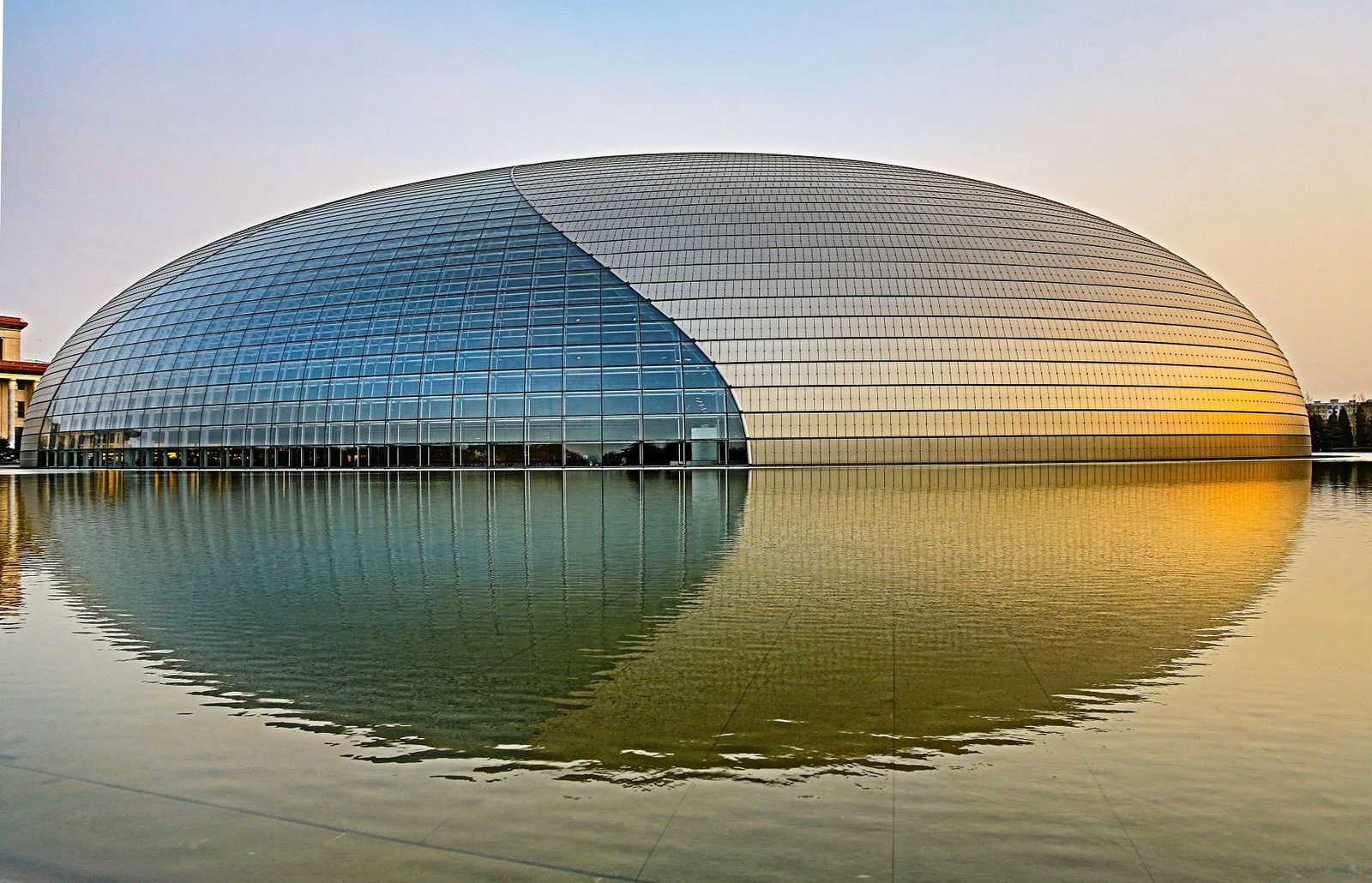
National Centre for the Performing Arts
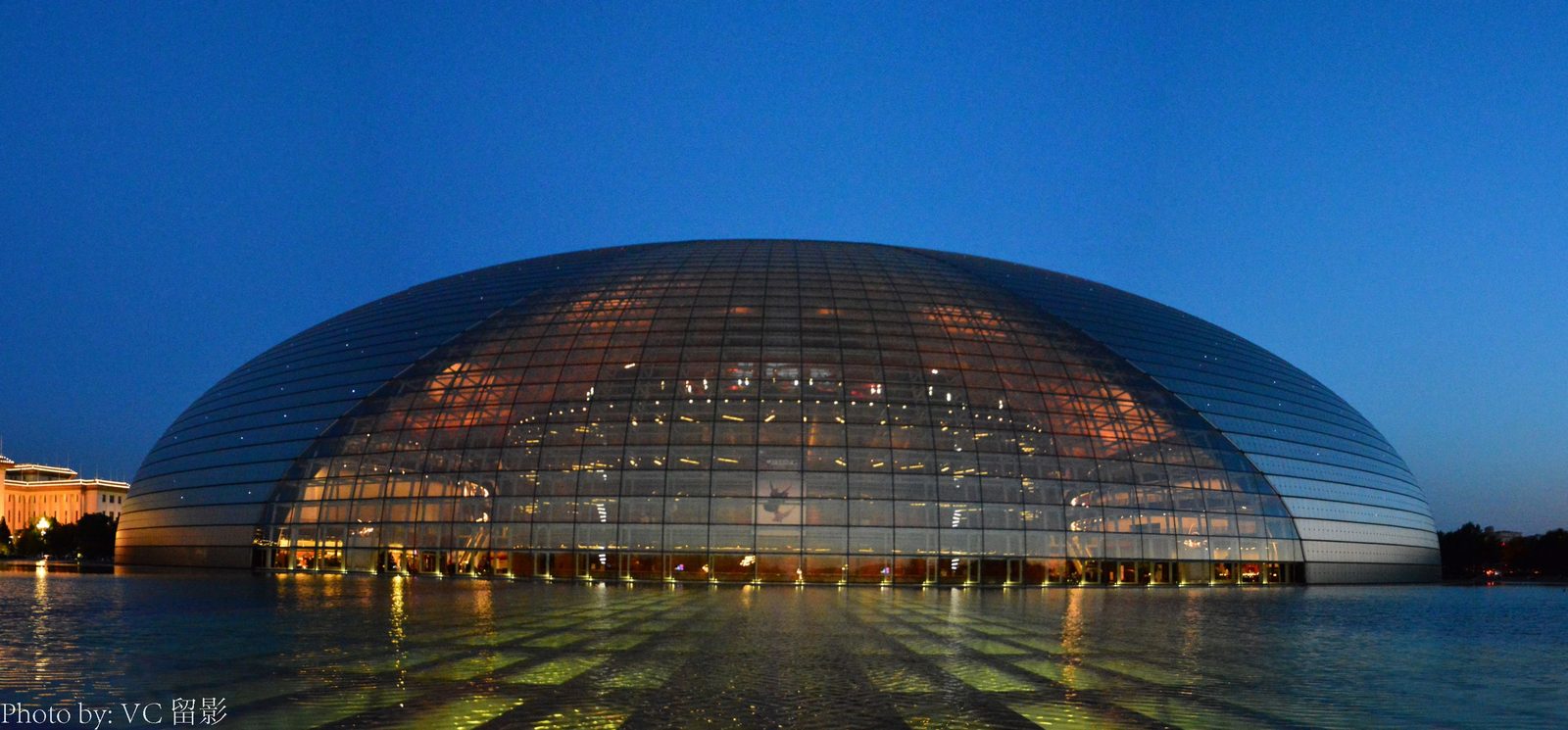
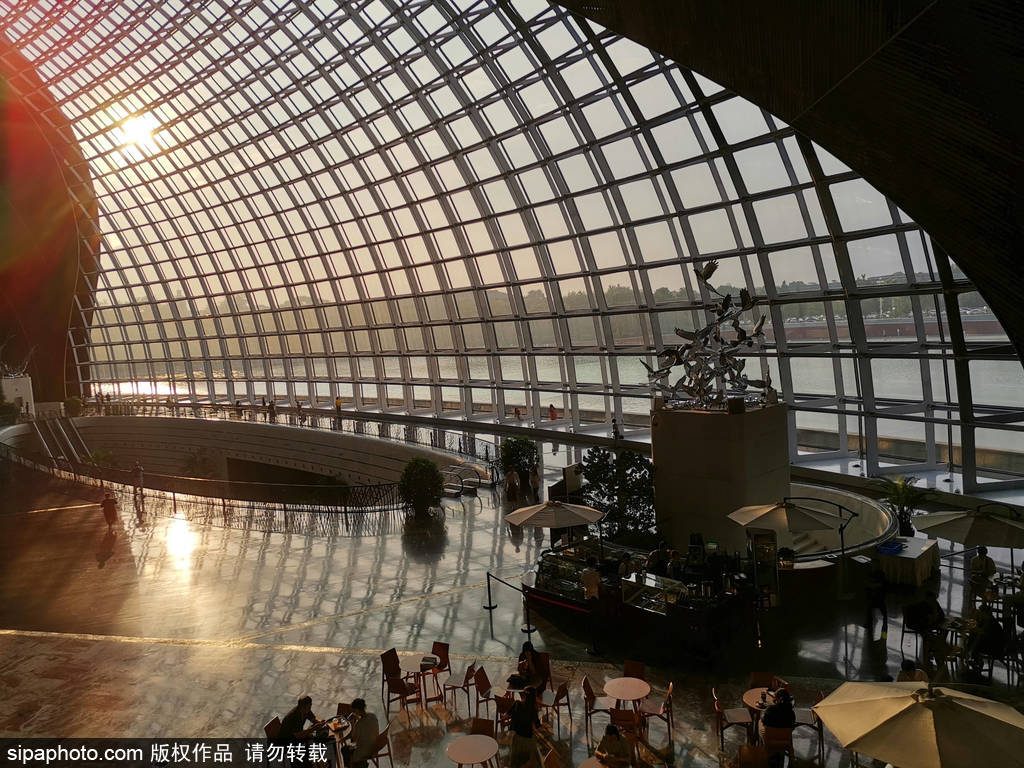
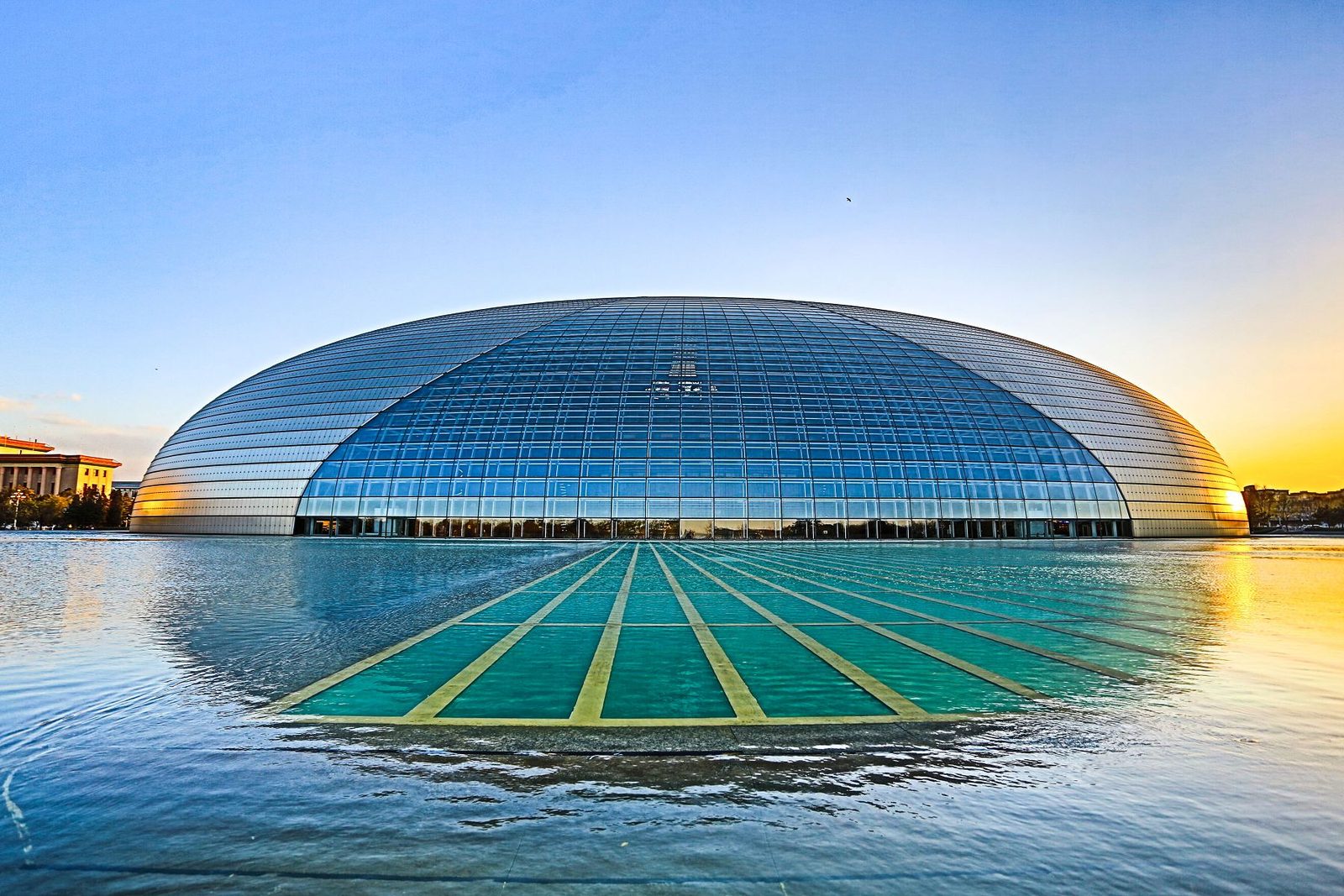
The "Pearl on the Lake", completed in 2007 and designed by French architect Paul Andreu: the titanium-and-glass shell shaped like a "giant egg" floats on an artificial lake and is entered through an underwater corridor, with the Opera House, Concert Hall and Theatre as its three venues
Visitor info
- Opening hours
- 09:00-17:00 (open until performances end)
- Ticket
- Exterior free · visiting ticket CNY 30
Price is indicative — final quote on inquiry.
The "Pearl on the Lake", completed in 2007 and designed by French architect Paul Andreu: the titanium-and-glass shell shaped like a "giant egg" floats on an artificial lake and is entered through an underwater corridor, with the Opera House, Concert Hall and Theatre as its three venues; the evening lights and their reflections on the lake during performance season are the Centre's most classic image. A CNY 30 visiting ticket lets you enter to view the architectural spaces; performance tickets cover opera, symphony, drama and more; it shares the area with the Great Hall of the People, together forming the core of China's national performing-arts district.
Getting there: Metro Line 1, Tian'anmen West Station
Photos
More in Beijing
- Summer Palace
Kunming Lake, the Long Corridor and Marble Boat of the imperial resort.
- The Forbidden City
The world's largest palace complex, 9,999 rooms of Ming and Qing emperors.
- Mutianyu Great Wall
The restored, less-crowded Great Wall section with a toboggan descent.
- Temple of Heaven
Where emperors prayed for harvest; morning tai chi in the cypress park.
- Tiananmen Square
One of the world's largest city squares, about 880 m long north to south and able to hold a million people—the core space of Beijing's Central Axis: the founding ceremony of the PRC was held here on October 1, 1949; the Monument to the People's Heroes stands at the center, the Great Hall of the People on the west, and on the east the China...
- The Palace Museum (Forbidden City)
Completed in the 18th year of Ming Yongle (1420), the imperial palace where 24 emperors of the Ming and Qing dynasties lived and ruled, formerly the Forbidden City: covering 720,000 sq m with over 8,700 rooms, the world's largest and best-preserved wooden palace complex