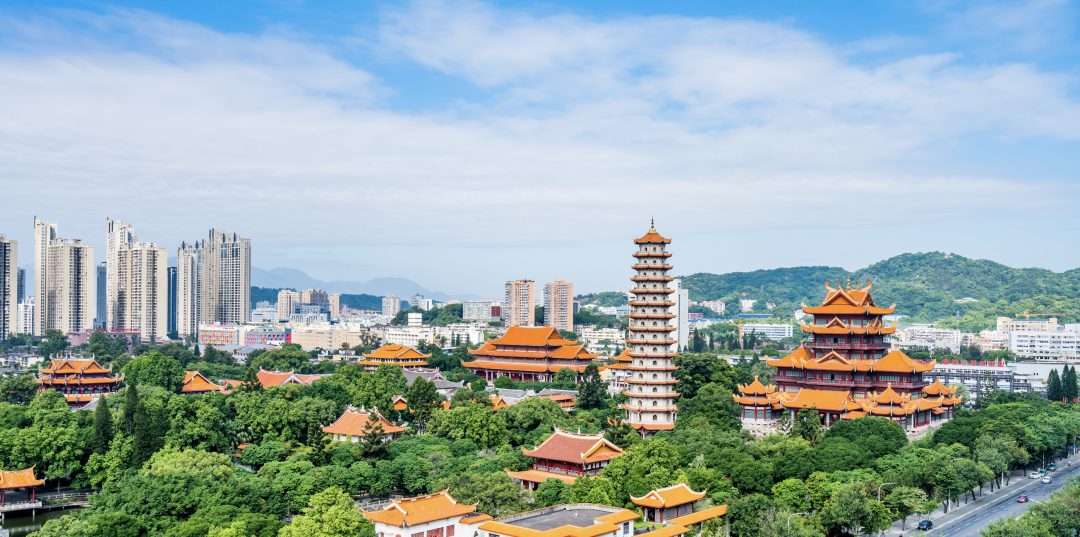
Minhou Shangjie University Town · Qishan Hill
Qishan Forest Park and Wanfo Temple
Visitor info
- Opening hours
- Open all day
- Ticket
- Free
Price is indicative — final quote on inquiry.
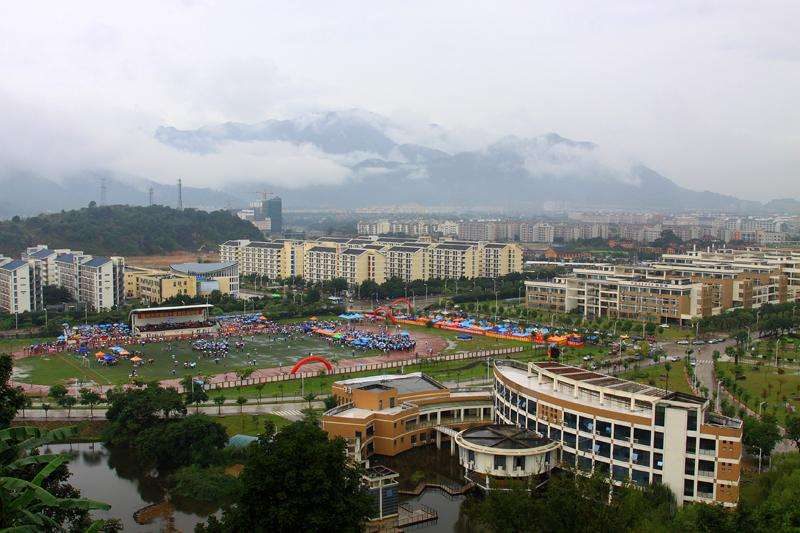
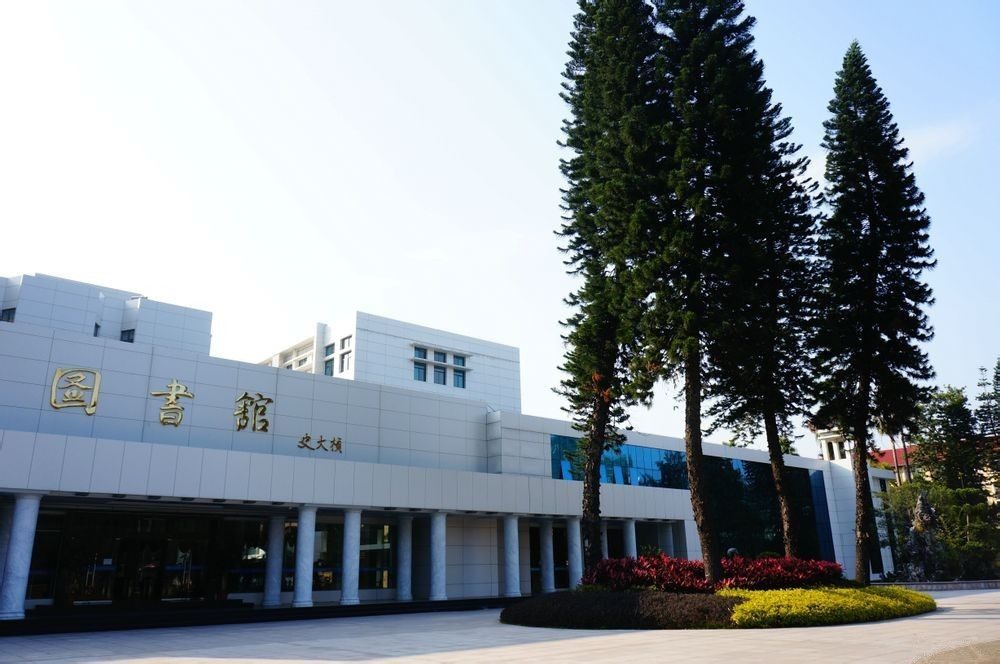
Qishan Forest Park and Wanfo Temple. Several universities cluster in the Shangjie area of Minhou, giving the university town a youthful vibe; behind it, Qishan Forest Park ranks with Gushan (Drum Mountain) as one of the "two wonders of Fujian — Flag on the left, Drum on the right", and its stone pines, seas of clouds and stream-valley boardwalks suit a half-day hike. At the foot of the hill, Wanfo Temple is said to be among the largest Buddhist temples in Southeast Asia: the Mahavira Hall rises against the slope and ten thousand Buddha statues line the halls — grand in scale and free to enter. The university libraries and creative-cultural streets are worth a side visit; Qishan plus Wanfo Temple makes a light "mountain forest + Zen" outing in Fuzhou's western suburbs, ideal for a half day.
Getting there: Bus / self-drive
Photos
More in Fuzhou
- Three Lanes and Seven Alleys (Sanfang Qixiang)
"Museum of Ming and Qing architecture"—China's largest and best-preserved historic and cultural district: Yijin Fang / Wenru Fang / Guanglu Fang + Yangqiao Alley / Langguan Alley / Ta Alley / Huang Alley / Anmin Alley / Gong Alley / Jibi Alley
- Former Residence of Lin Juemin and Bing Xin
One courtyard, two famous figures ('Letter to My Wife' was written here)
- Former Residence of Yan Fu
Late-life home of Yan Fu, translator of 'Evolution and Ethics' (a Qing-dynasty flower hall), with displays of his "natural selection" manuscripts
- Water Pavilion Stage
A water stage in a private mansion built in the Ming Wanli era (Fuzhou's only surviving private water stage); Min opera / pingshu storytelling performances
- Nanhou Street (South Back Street)
The "central axis of lane culture," with time-honored shops for Shoushan stone carving, oil-paper umbrellas, and bodiless lacquerware; a chinaberry-tree streetscape
- Wuta (Black Pagoda) · Baita (White Pagoda)
The Tang-era "Jingguang Pagoda" (Wuta, stone octagonal seven-story) and Dingguang Pagoda (Baita, brick-built), Fuzhou's "Two Pagodas" landmarks facing each other from Yu Hill and Wu Hill (the "Three Hills and Two Pagodas" layout of the old city)