Min River Night Cruise
Illuminated riverbanks (Jiefang Bridge / Zhongzhou Island / Financial Street)
Visitor info
- Opening hours
- Sessions 19:00-21:00
- Ticket
- approx. CNY 80
Price is indicative — final quote on inquiry.
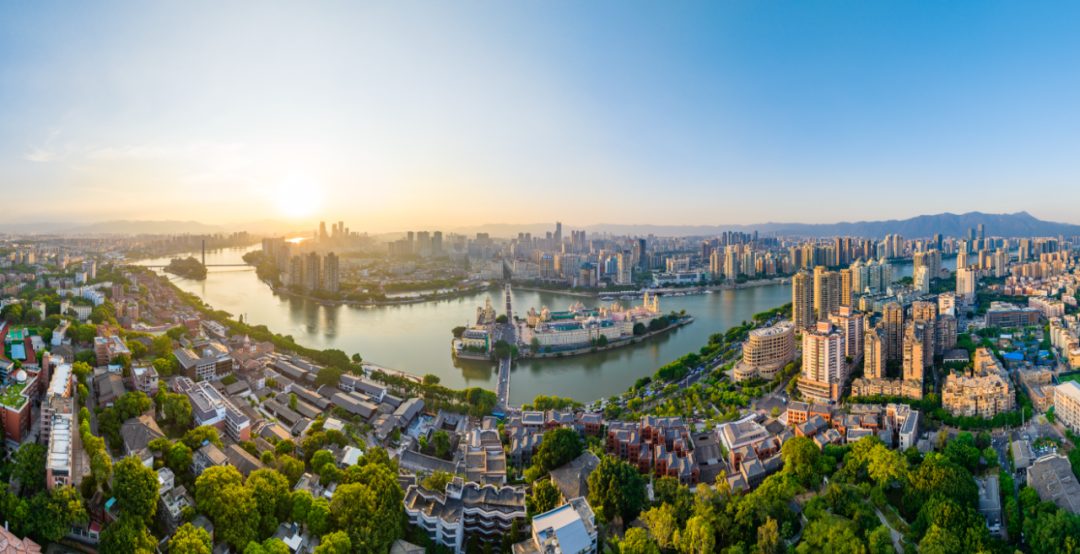
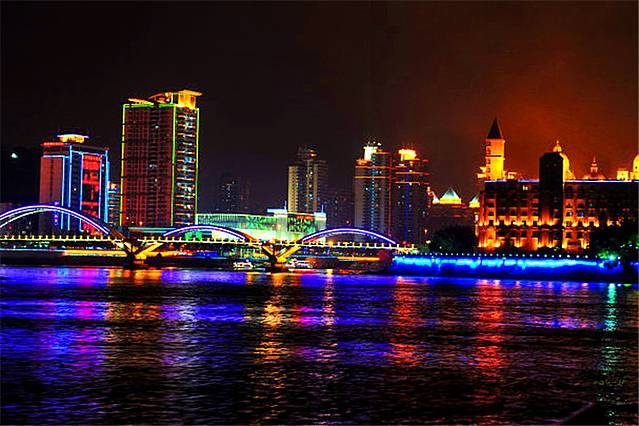
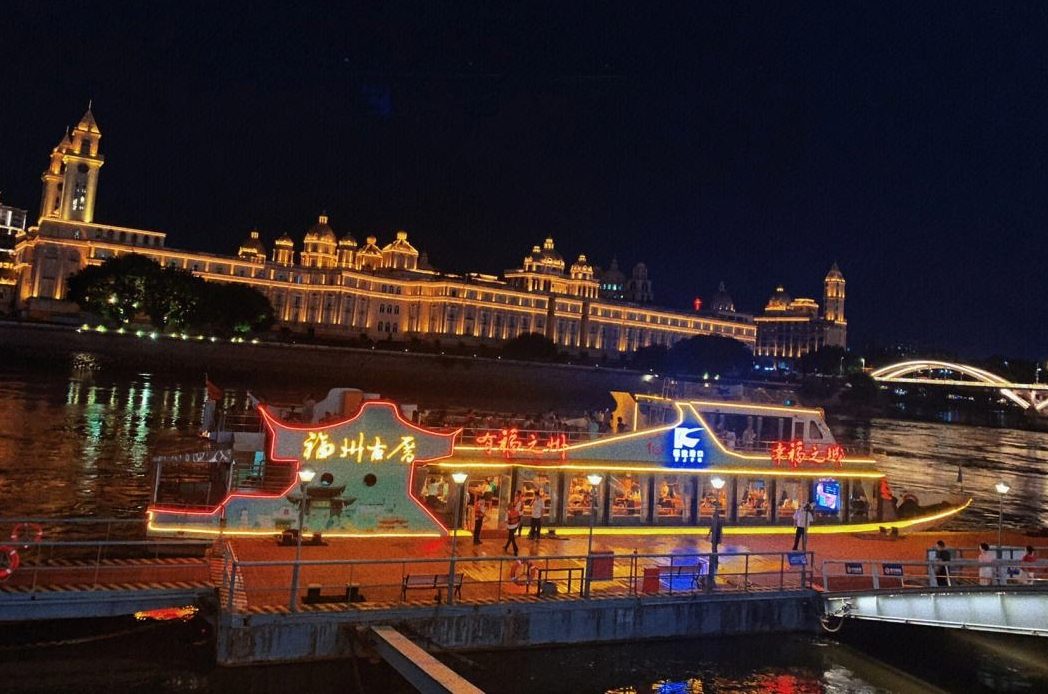
Illuminated riverbanks (Jiefang Bridge / Zhongzhou Island / Financial Street). Board at Taijiang Wharf and cruise the Min River by night as the lights of Fuzhou, the "sleepless capital of Min", unroll along both banks: the arc-shaped light band of Jiefang Bridge, the Zhongzhou Island light show, the skyscraper cluster of Financial Street and the neon of the riverside promenade reflected mid-river, with the boat threading among them for about an hour. The night route passes points such as Minjiang Bridge and Gushan Bridge, and tea ceremonies and Min Opera performances are often staged onboard; Fuzhou's summers are hot and humid, so the night breeze on the river is a welcome cooler — in winter, dress warmly for the night sail. Book the 19:00 or 20:00 session in advance, and have a bowl of fish balls on Taijiang Pedestrian Street before boarding for the smoothest flow.
Getting there: Taijiang Wharf
Photos
More in Fuzhou
- Three Lanes and Seven Alleys (Sanfang Qixiang)
"Museum of Ming and Qing architecture"—China's largest and best-preserved historic and cultural district: Yijin Fang / Wenru Fang / Guanglu Fang + Yangqiao Alley / Langguan Alley / Ta Alley / Huang Alley / Anmin Alley / Gong Alley / Jibi Alley
- Former Residence of Lin Juemin and Bing Xin
One courtyard, two famous figures ('Letter to My Wife' was written here)
- Former Residence of Yan Fu
Late-life home of Yan Fu, translator of 'Evolution and Ethics' (a Qing-dynasty flower hall), with displays of his "natural selection" manuscripts
- Water Pavilion Stage
A water stage in a private mansion built in the Ming Wanli era (Fuzhou's only surviving private water stage); Min opera / pingshu storytelling performances
- Nanhou Street (South Back Street)
The "central axis of lane culture," with time-honored shops for Shoushan stone carving, oil-paper umbrellas, and bodiless lacquerware; a chinaberry-tree streetscape
- Wuta (Black Pagoda) · Baita (White Pagoda)
The Tang-era "Jingguang Pagoda" (Wuta, stone octagonal seven-story) and Dingguang Pagoda (Baita, brick-built), Fuzhou's "Two Pagodas" landmarks facing each other from Yu Hill and Wu Hill (the "Three Hills and Two Pagodas" layout of the old city)