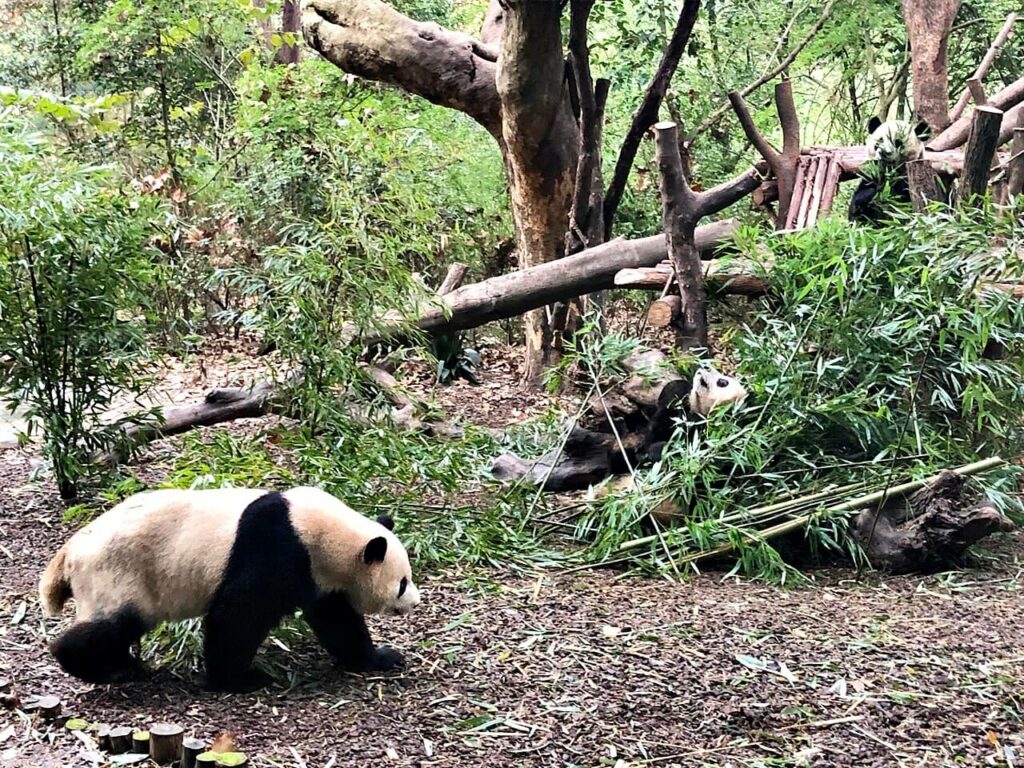
Giant Panda Breeding Base
Dozens of pandas eating bamboo; arrive 08:00 for feeding time.
Visitor info
- Opening hours
- 07:30-18:00
- Ticket
- 55 CNY
- Suggested visit
- half day
Price is indicative — final quote on inquiry.
Why it's worth it
The world's most successful giant panda breeding centre — over a hundred pandas across the bamboo groves of the northern outskirts, from pink newborns in the nursery to full-grown adults demolishing bamboo breakfasts.
Don't miss
- Pandas at breakfast (8:00-9:30) — afterwards they sleep like furry boulders for hours
- The nursery window during summer-autumn baby season, when cubs the size of bread loaves nap in rows
- Red panda enclosures — different compound, criminally underrated, occasionally they cross your path
Getting there
Metro Line 3 to Panda Avenue station, then the official shuttle bus to the gate; a taxi from the centre takes about 30 minutes.
Tips
- Be at the gate at 7:30 opening — the two-hour gap between 'cute' and 'asleep' is brutal
- Take the sightseeing cart (10 CNY) to the mountain-top Moon House first, then walk downhill past the nurseries
- Book online with passport; foreign visitors have a separate ticket channel that usually skips the queue
Photos



More in Chengdu
- Wuhou Shrine
Three Kingdoms temple of Zhuge Liang and Liu Bei among cypress groves.
- People's Park
Chengdu's open-air living room: tea houses, ear cleaning, matchmakers' corner.
- Jinli Ancient Street
Rebuilt Qing-style shopping street beside Wuhou Shrine; evening lanterns.
- Jinsha Site Museum
Capital-site ruins of the ancient Shu kingdom from the Shang-Zhou period, discovered in 2001: the Golden Sun Bird ornament (over 90% gold content, openwork rotating pattern) was designated the symbol of China's cultural heritage; the gold mask and the ten-section jade cong are national-treasure artifacts, testifying to the high development of ancient Shu civilization
- Wuhou Shrine · Jinli Street
The only shrine in China where ruler and minister are worshipped together: Liu Bei's Huiling Tomb and Zhuge Liang's hall were merged into one garden in the late Ming/early Qing; the 'winning hearts' (Gongxin) couplet is a famous maxim on governing Shu; Sanyi Temple and the stone-carved Chu Shi Biao (Memorial on Dispatching the Troops) are must-sees for Three Kingdoms fans; Du Fu's Tang-dynasty verse 'Where is the chancellor's shrine to be found?' has made it a sacred site of Three Kingdoms culture
- Du Fu Thatched Cottage
The original site of Du Fu's thatched cottage when he lived in exile in Chengdu from 759: the poet lived here for nearly four years, writing over 240 poems such as 'My Thatched Hut Wrecked by Autumn Wind' and 'Delighting in Rain on a Spring Night'; a memorial shrine was built from the Five Dynasties onward, taking its Gongbu Shrine layout in the Ming and Qing; Zhu De inscribed the couplet 'The poet-sage shines through the ages, the Cottage remains for posterity'