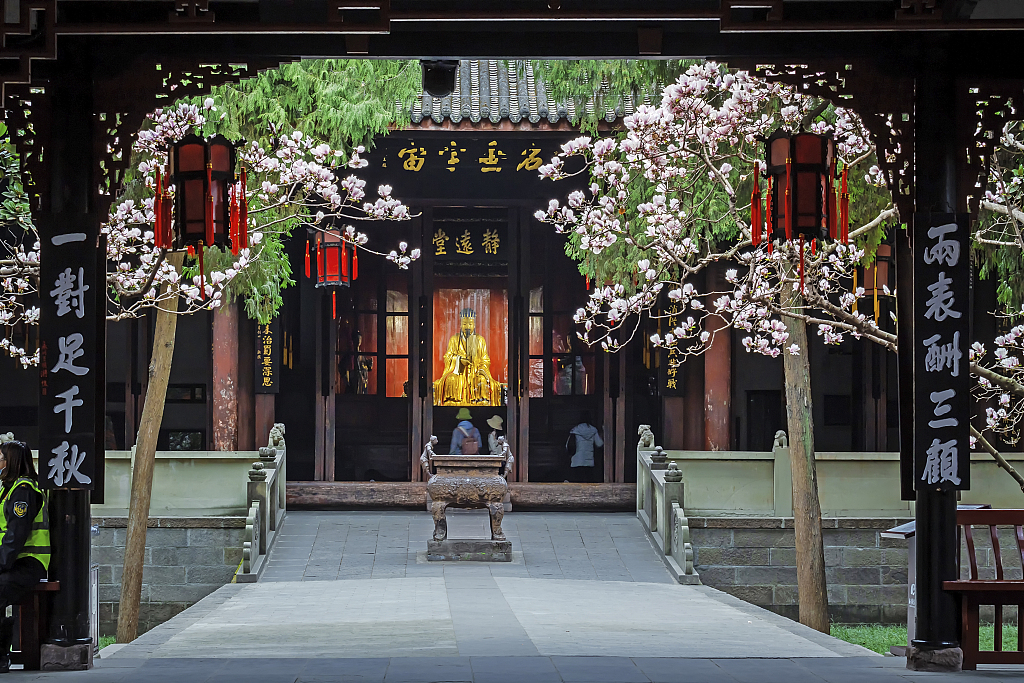
Wuhou Shrine
Three Kingdoms temple of Zhuge Liang and Liu Bei among cypress groves.
Visitor info
- Opening hours
- 08:00-20:00 (summer)
- Ticket
- 50 CNY
- Suggested visit
- 1-2 hours
Price is indicative — final quote on inquiry.
Why it's worth it
The temple to Zhuge Liang — the strategist of the Three Kingdoms — sharing its grounds with Liu Bei's tomb and the Huiling mausoleum grove since 223 AD. For Chinese visitors this is literary pilgrimage ground; for everyone else it's the Red Wall.
Don't miss
- The Red Wall bamboo alley — grey brick, green bamboo, the most photographed corridor in Chengdu
- Liu Bei's hill tomb, a quiet earthen mound wrapped in ancient cypress
- The Three Kingdoms culture museum inside the grounds, if the names Cao Cao and Guan Yu mean anything to you
Getting there
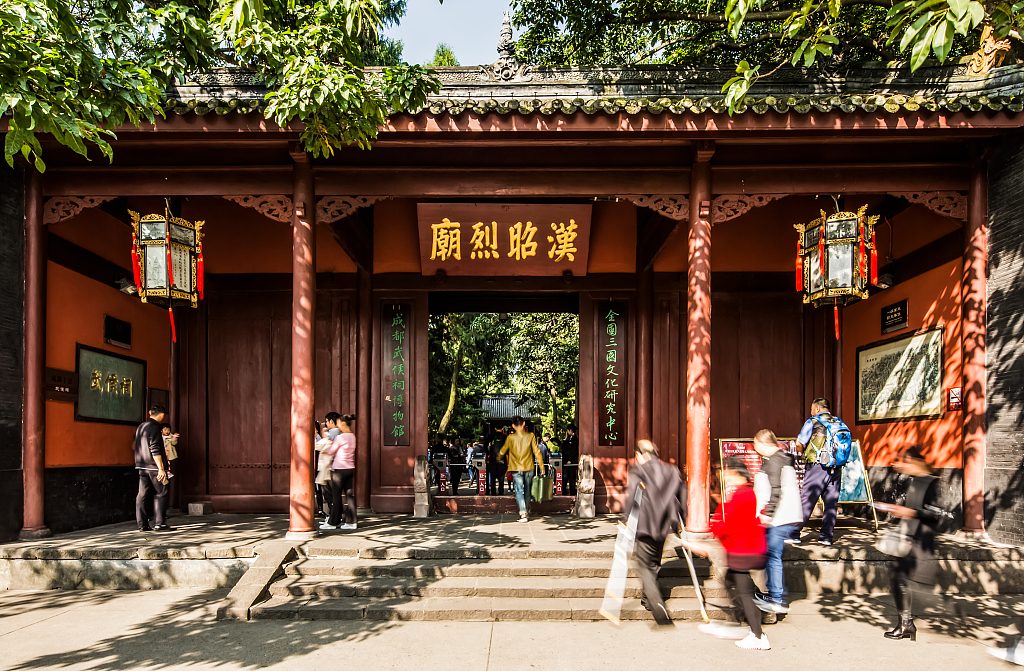
Metro Line 3 to Gaoshengqiao, Exit D; the shrine entrance faces Jinli Street across the square.
Tips
- Morning light through the bamboo on the Red Wall — by noon it's backlit and packed
- An hour covers it; exit through the back gate straight into Jinli for the evening
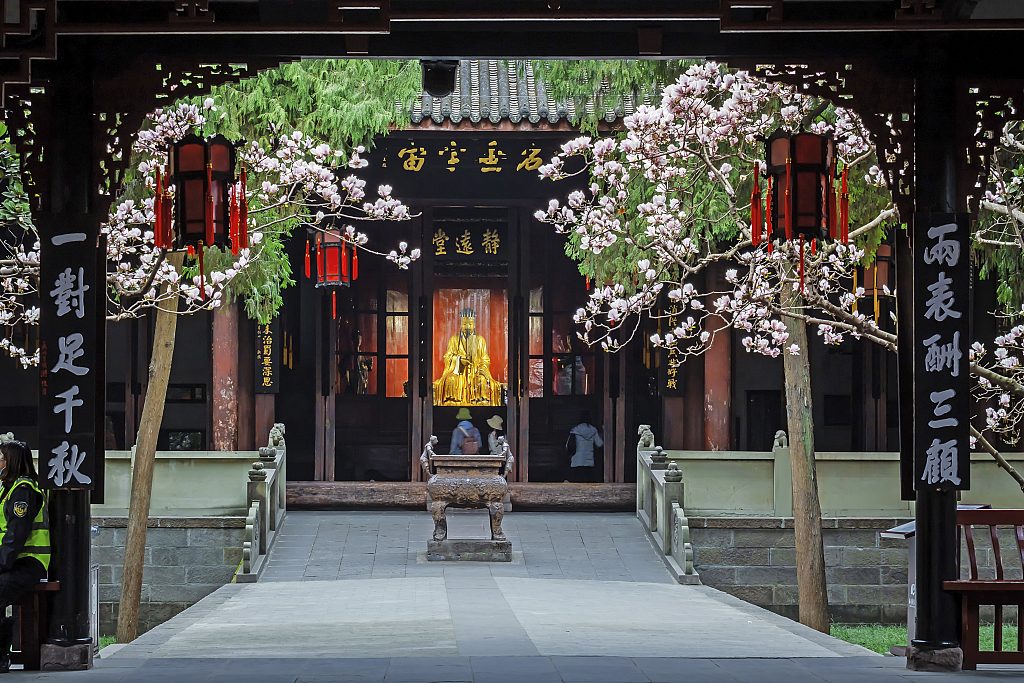
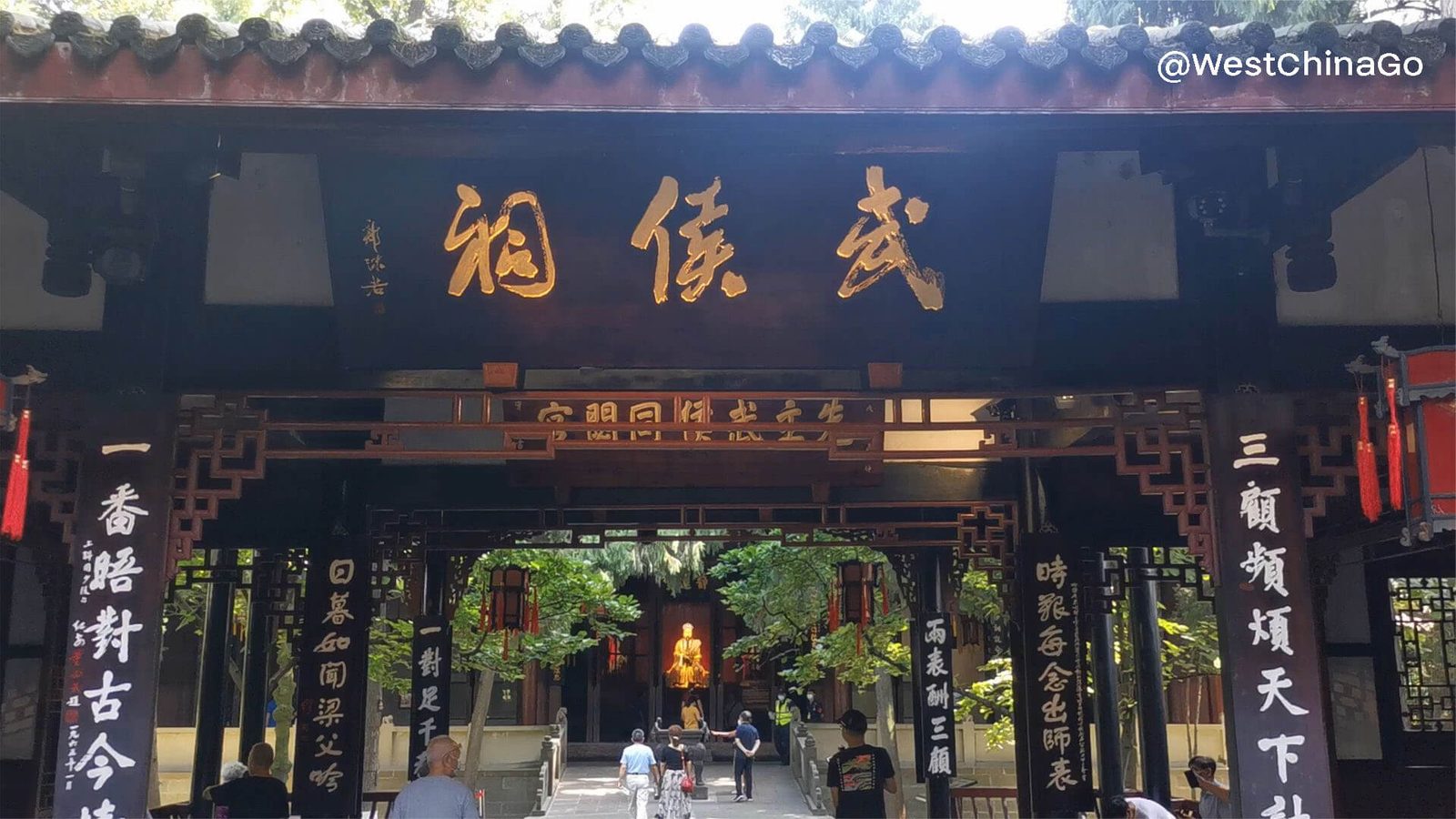
- Read the couplets at Zhuge Liang's hall — the most famous one critiques the temple's own existence
Photos
More in Chengdu
- People's Park
Chengdu's open-air living room: tea houses, ear cleaning, matchmakers' corner.
- Giant Panda Breeding Base
Dozens of pandas eating bamboo; arrive 08:00 for feeding time.
- Jinli Ancient Street
Rebuilt Qing-style shopping street beside Wuhou Shrine; evening lanterns.
- Jinsha Site Museum
Capital-site ruins of the ancient Shu kingdom from the Shang-Zhou period, discovered in 2001: the Golden Sun Bird ornament (over 90% gold content, openwork rotating pattern) was designated the symbol of China's cultural heritage; the gold mask and the ten-section jade cong are national-treasure artifacts, testifying to the high development of ancient Shu civilization
- Wuhou Shrine · Jinli Street
The only shrine in China where ruler and minister are worshipped together: Liu Bei's Huiling Tomb and Zhuge Liang's hall were merged into one garden in the late Ming/early Qing; the 'winning hearts' (Gongxin) couplet is a famous maxim on governing Shu; Sanyi Temple and the stone-carved Chu Shi Biao (Memorial on Dispatching the Troops) are must-sees for Three Kingdoms fans; Du Fu's Tang-dynasty verse 'Where is the chancellor's shrine to be found?' has made it a sacred site of Three Kingdoms culture
- Du Fu Thatched Cottage
The original site of Du Fu's thatched cottage when he lived in exile in Chengdu from 759: the poet lived here for nearly four years, writing over 240 poems such as 'My Thatched Hut Wrecked by Autumn Wind' and 'Delighting in Rain on a Spring Night'; a memorial shrine was built from the Five Dynasties onward, taking its Gongbu Shrine layout in the Ming and Qing; Zhu De inscribed the couplet 'The poet-sage shines through the ages, the Cottage remains for posterity'