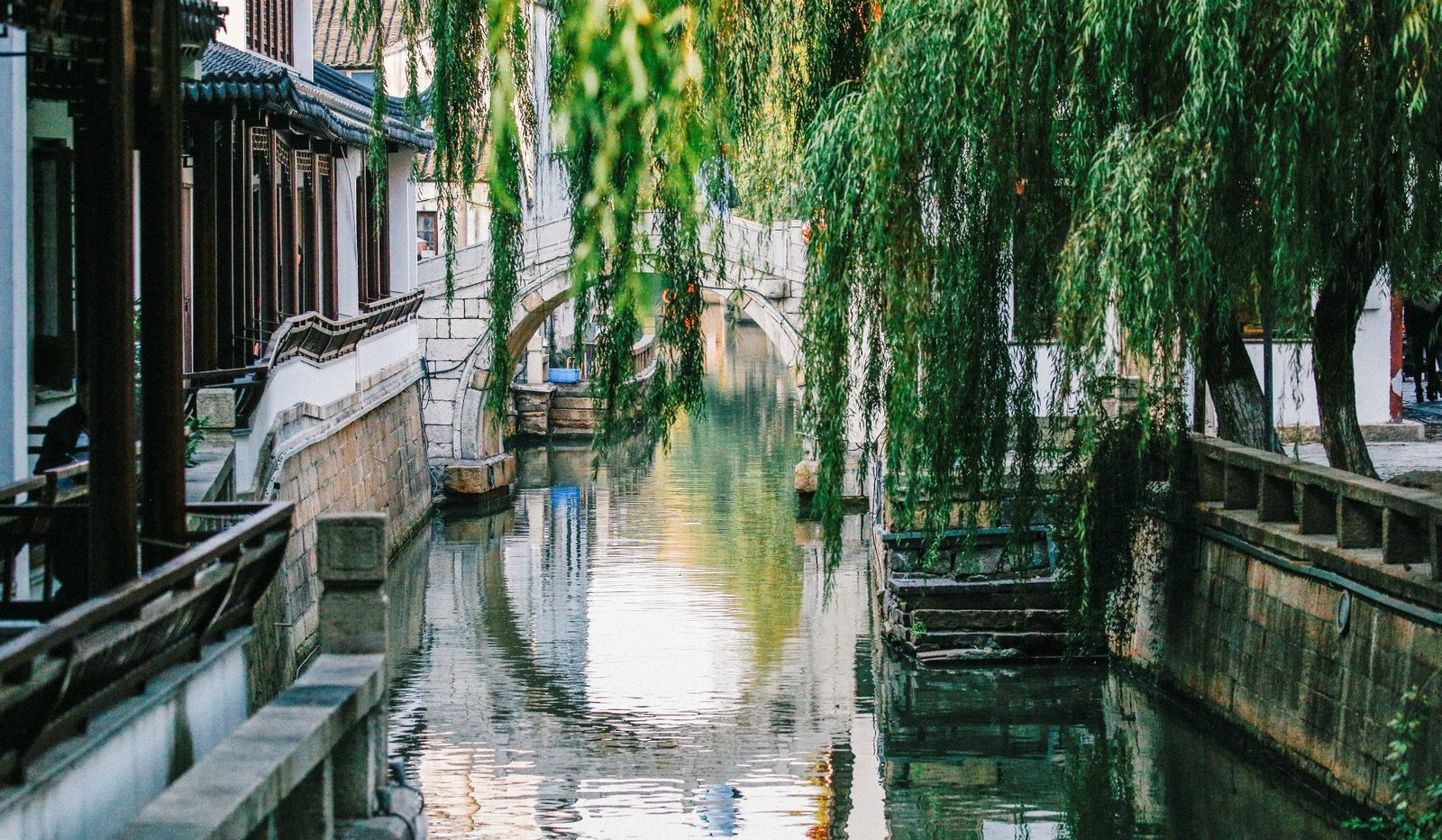
Suzhou Museum (Main Building)
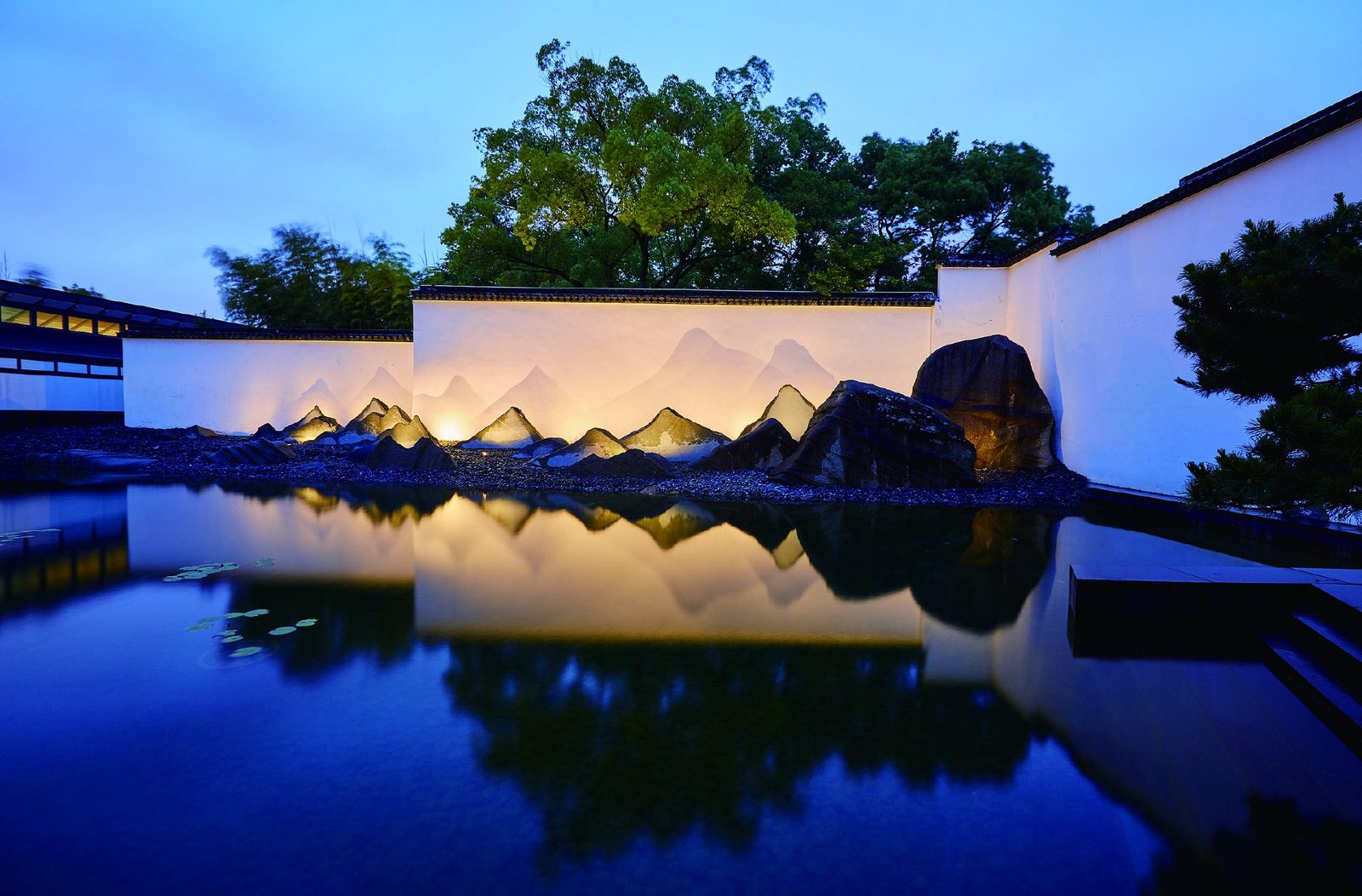
I.M. Pei's final masterpiece (opened 2006), 'Chinese yet new, Suzhou yet new'; the sliced-rock hillside borrows the white wall of the Humble Administrator's Garden as its backdrop
Visitor info
- Opening hours
- 09:00-17:00 · Closed on Mondays
- Ticket
- Free (reservation required)
Price is indicative — final quote on inquiry.
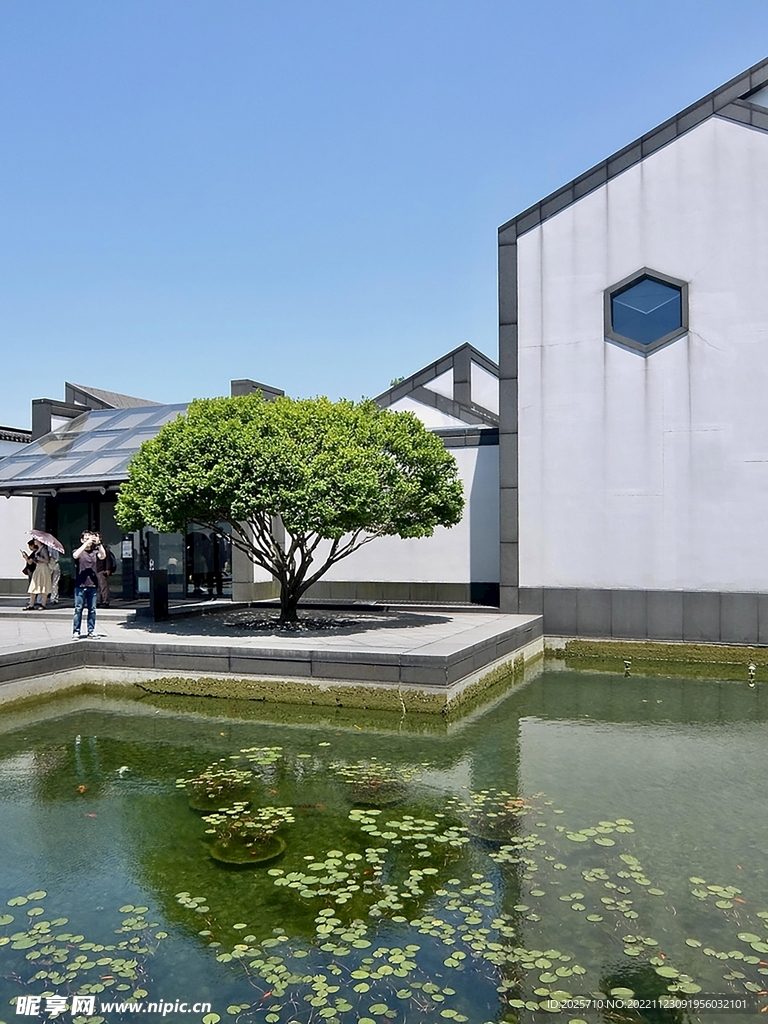
I.M. Pei's final masterpiece (opened 2006), 'Chinese yet new, Suzhou yet new'; the sliced-rock hillside borrows the white wall of the Humble Administrator's Garden as its backdrop; star exhibits: the Five Dynasties mise (secret-color) porcelain lotus bowl / the Pearl Sarira Stupa (Song dynasty, Suzhou embroidery with inlaid gems) / the wisteria planted by Wen Zhengming; adjoining Prince Zhong's Mansion (Li Xiucheng's palace of the Taiping Heavenly Kingdom). The last work of master architect I.M. Pei, completed in 2006: guided by 'Chinese yet new, Suzhou yet new', the elderly Pei rebuilt whitewashed walls and dark-tiled roofs in modern geometry, while the main garden's sliced-rock hill takes the Humble Administrator's Garden's white wall as paper and rock slices as brushstrokes, standing Mi Fu's ink-wash landscape upright before the wall — hailed as 'the most beautiful museum building'. The Five Dynasties mise (secret-color) porcelain lotus bowl has a glaze of moist jade green, and the Song dynasty Pearl Sarira Stupa gathers tens of thousands of pearls onto one stupa through Suzhou-embroidery gem-inlay craftsmanship — both are national-treasure artifacts; the wisteria planted by Wen Zhengming still flourishes, and Prince Zhong's Mansion (Li Xiucheng's palace of the Taiping Heavenly Kingdom) connects to the museum and is free to view on the same visit. Free (reservation required); places are scarce, so grab a slot several days ahead.
Getting there: Next to the Humble Administrator's Garden
Photos
More in Suzhou
- Humble Administrator's Garden
Built in the fourth year of the Ming Zhengde reign (1509) by Wang Xianchen, with Wen Zhengming participating in the design, the 'Mother of Chinese Gardens' (a representative Jiangnan garden): Hall of Distant Fragrance / Little Flying Rainbow (Suzhou's only covered bridge) / 'With Whom Shall I Sit' Pavilion
- Lion Grove Garden
Built in 1342 (2nd year of the Yuan Zhizheng era) by Zen Master Tianru (Lion Grove Chan Temple); a labyrinth of Taihu Lake rockeries ('kingdom of rockeries', nine interweaving routes); Emperor Qianlong visited six times and inscribed 'True Delight'
- Lingering Garden
Xu Taishi built the East Garden in the Ming Wanli era; Liu Shu's Hanbi (Cold Green) Villa in the Qing dynasty
- Master of the Nets Garden
Site of Southern Song Shi Zhengzhi's Wanjuan Hall ('Fisherman's Retreat'); rebuilt in the Qianlong era of the Qing by Song Zongyuan as the 'Master of the Nets' (fisherman, his self-styled name)
- Canglang Pavilion
Built in 1045 (5th year of the Northern Song Qingli era) by Su Shunqin, Suzhou's oldest surviving garden ('scenery before you enter the gate' — double corridor with lattice windows); the famous couplet 'A clear breeze and bright moon are priceless' (assembled from lines by Ouyang Xiu and Su Shunqin)
- Couple's Retreat Garden
A former garden of the Yongzheng-era Baoning Prefecture prefect; rebuilt in the Tongzhi era by Shen Bingcheng — 'Couple's Garden where a good couple dwells' (Zaijiu Hall); East Garden's yellow-stone rockery (surviving Ming-era stones)