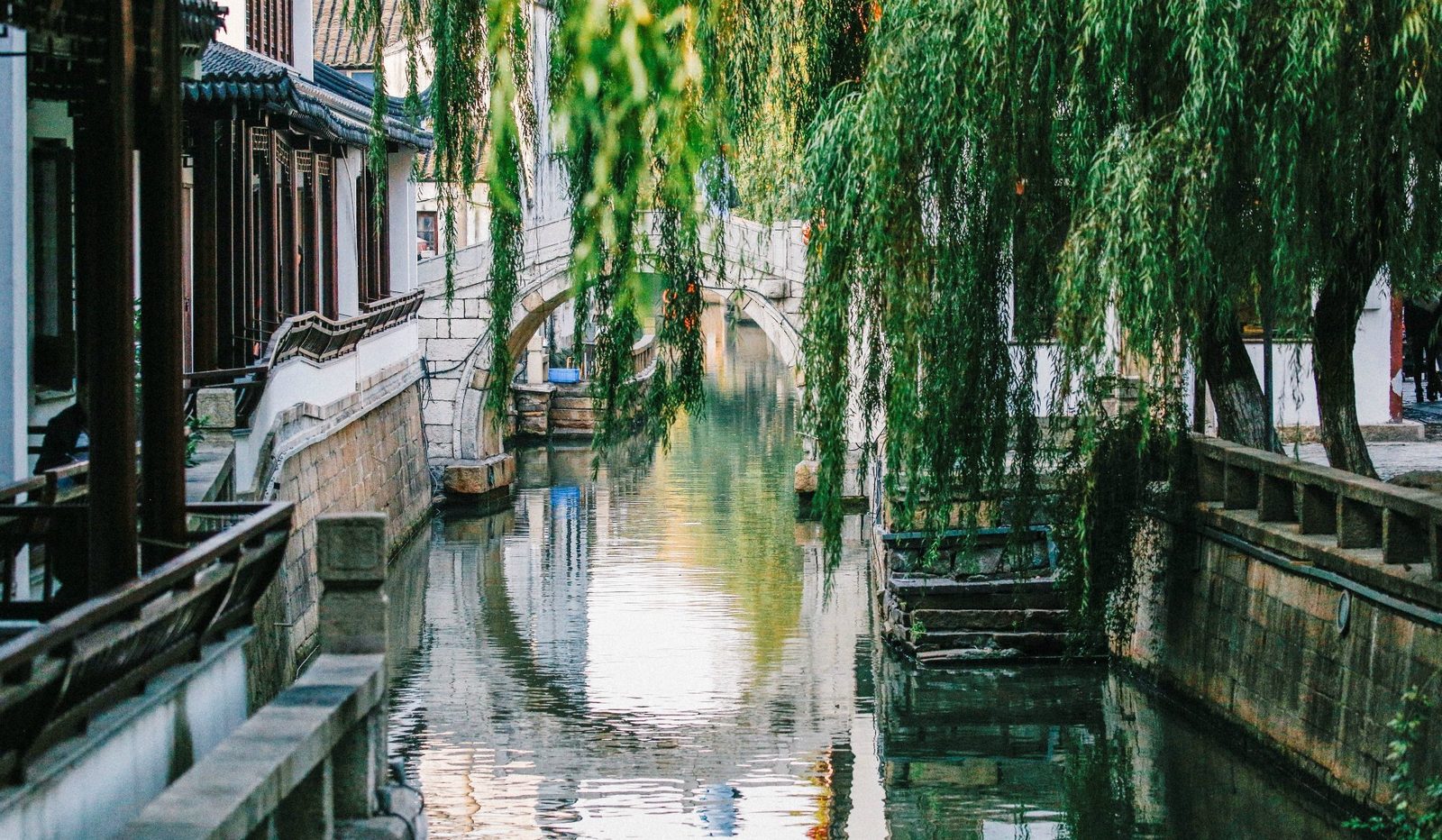
Fengqiao Scenic Area (Hanshan Temple)
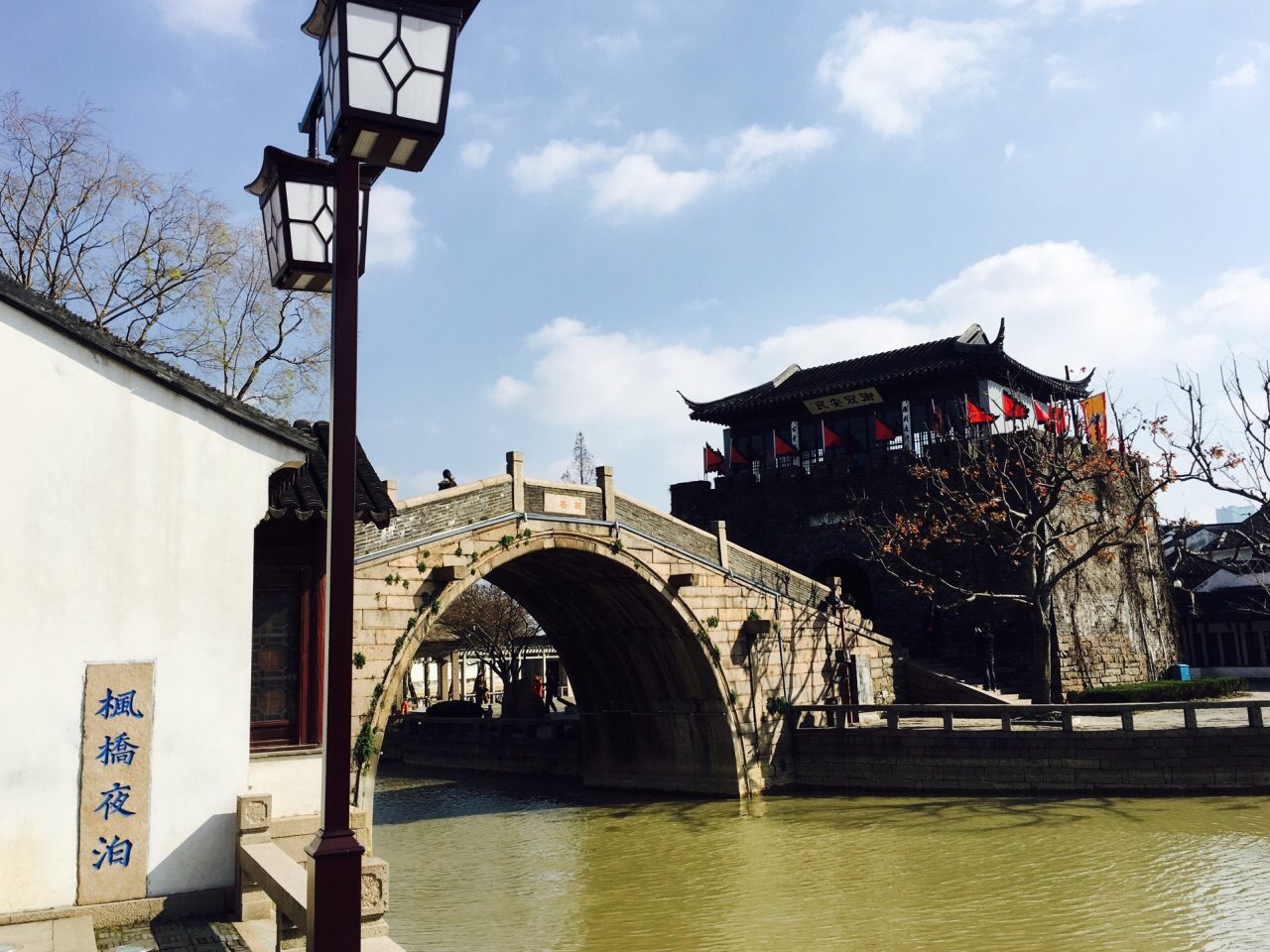
From Tang poet Zhang Ji's 'A Night Mooring by Fengqiao': 'Beyond Gusu city lies Hanshan Temple; the sound of its midnight bell reaches the traveler's boat'
Visitor info
- Opening hours
- 07:30-17:30
- Ticket
- Hanshan Temple CNY 20 · Fengqiao CNY 25
Price is indicative — final quote on inquiry.
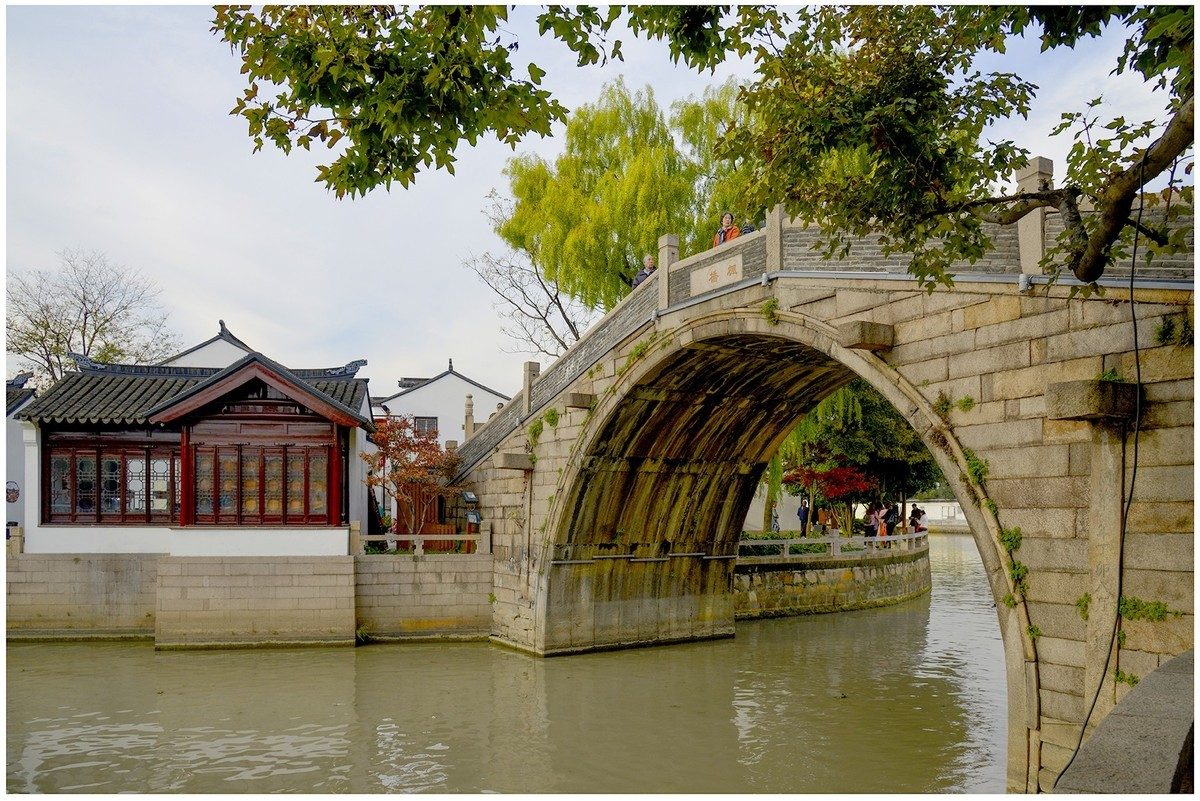
From Tang poet Zhang Ji's 'A Night Mooring by Fengqiao': 'Beyond Gusu city lies Hanshan Temple; the sound of its midnight bell reaches the traveler's boat'; Hanshan Temple (built in the Liang dynasty of the Southern Dynasties; Hanshan and Shide, the 'Two Immortals of Harmony'); stone inscriptions (Yu Yue's poem stele / Hanshanzi's poems); Tieling Pass (Ming Jiajing-era stronghold against Japanese pirates). In the Tang Tianbao era, Zhang Ji failed the imperial exam and moored for the night at Fengqiao; that one poem, 'A Night Mooring by Fengqiao,' made Hanshan Temple and this bridge famous for a thousand years. Its lines 'The moon sets, crows cry, frost fills the sky; by river maples and fishing lights I lie wakeful in sorrow' became required Tang poetry in Japanese textbooks, making Hanshan Temple an iconic destination for Japanese visitors to China. Founded in the Liang dynasty of the Southern Dynasties, the temple is named after the eminent monks Hanshan and Shide, who resided here and are venerated by common folk as the 'Two Immortals of Harmony.' The stele corridor holds Yu Yue's handwritten stele of 'A Night Mooring by Fengqiao' and carvings of Hanshanzi's poems; every New Year's Eve, tens of thousands of visitors pack the temple for the 'listening to the bell' event to hear the 108 tolls that ring in the new year. Beside the temple stands Tieling Pass, built in the Ming Jiajing era against Japanese pirates; Jiangfengzhou Park strings poem, bridge, temple, and pass into one route.
Getting there: Bus / by taxi (Fengqiao Road)
Photos
More in Suzhou
- Humble Administrator's Garden
Built in the fourth year of the Ming Zhengde reign (1509) by Wang Xianchen, with Wen Zhengming participating in the design, the 'Mother of Chinese Gardens' (a representative Jiangnan garden): Hall of Distant Fragrance / Little Flying Rainbow (Suzhou's only covered bridge) / 'With Whom Shall I Sit' Pavilion
- Suzhou Museum (Main Building)
I.M. Pei's final masterpiece (opened 2006), 'Chinese yet new, Suzhou yet new'; the sliced-rock hillside borrows the white wall of the Humble Administrator's Garden as its backdrop
- Lion Grove Garden
Built in 1342 (2nd year of the Yuan Zhizheng era) by Zen Master Tianru (Lion Grove Chan Temple); a labyrinth of Taihu Lake rockeries ('kingdom of rockeries', nine interweaving routes); Emperor Qianlong visited six times and inscribed 'True Delight'
- Lingering Garden
Xu Taishi built the East Garden in the Ming Wanli era; Liu Shu's Hanbi (Cold Green) Villa in the Qing dynasty
- Master of the Nets Garden
Site of Southern Song Shi Zhengzhi's Wanjuan Hall ('Fisherman's Retreat'); rebuilt in the Qianlong era of the Qing by Song Zongyuan as the 'Master of the Nets' (fisherman, his self-styled name)
- Canglang Pavilion
Built in 1045 (5th year of the Northern Song Qingli era) by Su Shunqin, Suzhou's oldest surviving garden ('scenery before you enter the gate' — double corridor with lattice windows); the famous couplet 'A clear breeze and bright moon are priceless' (assembled from lines by Ouyang Xiu and Su Shunqin)