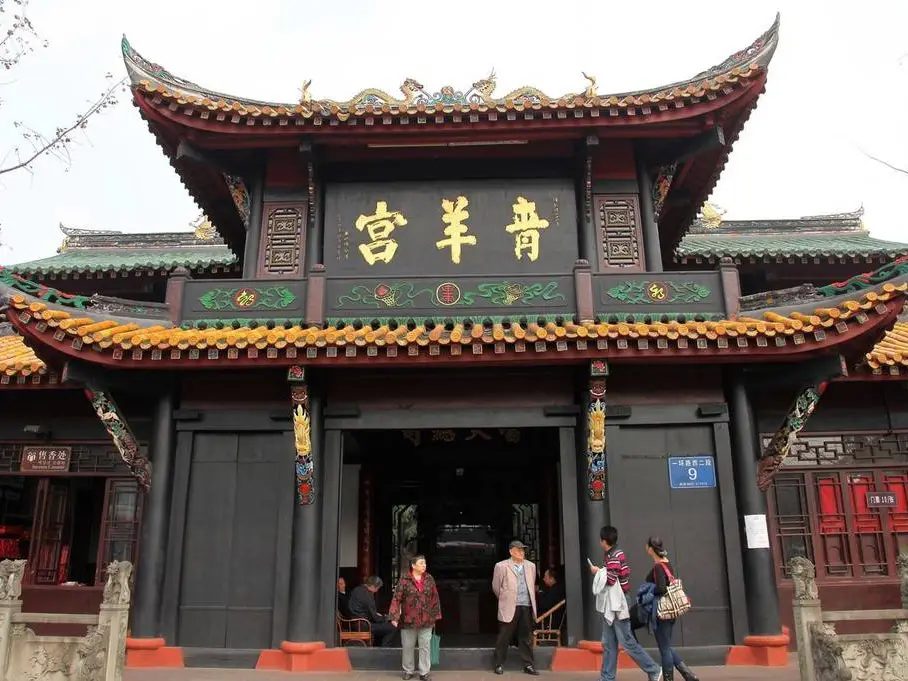
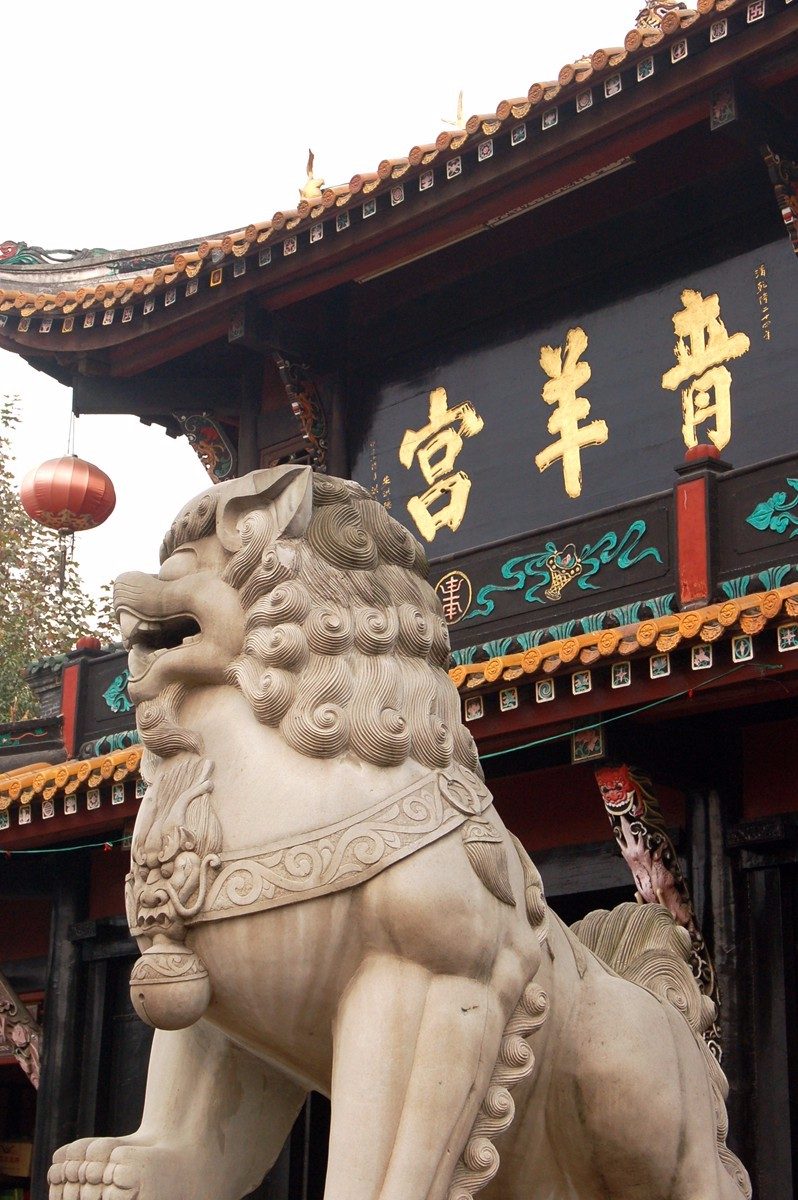
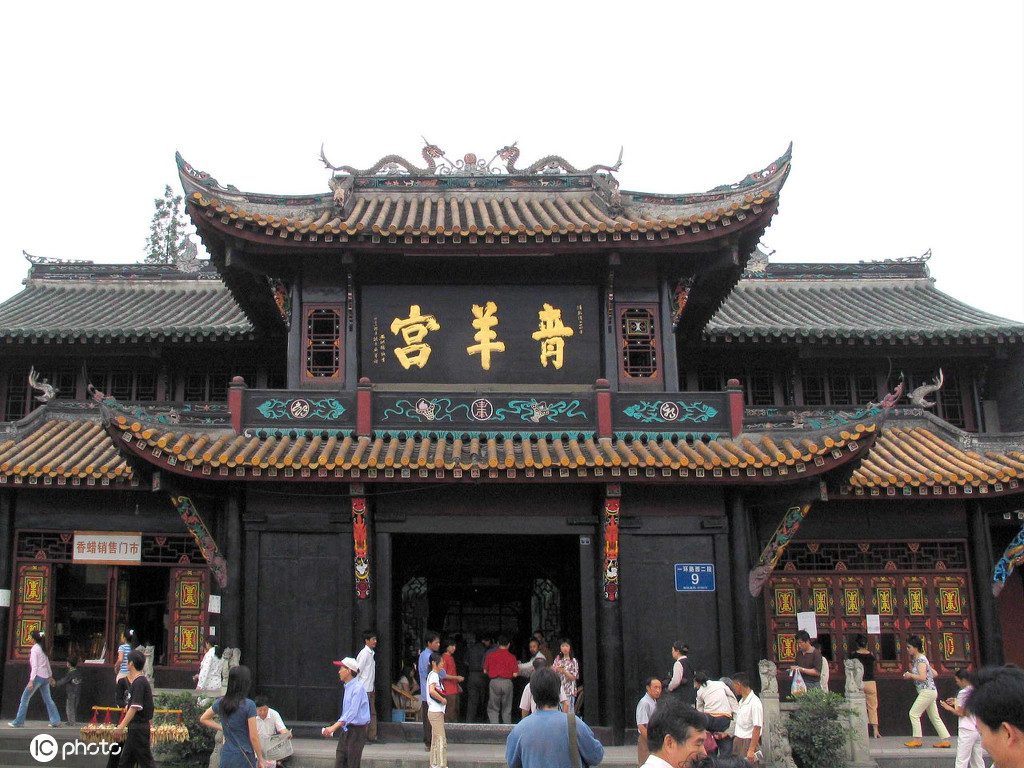
Qingyang Palace
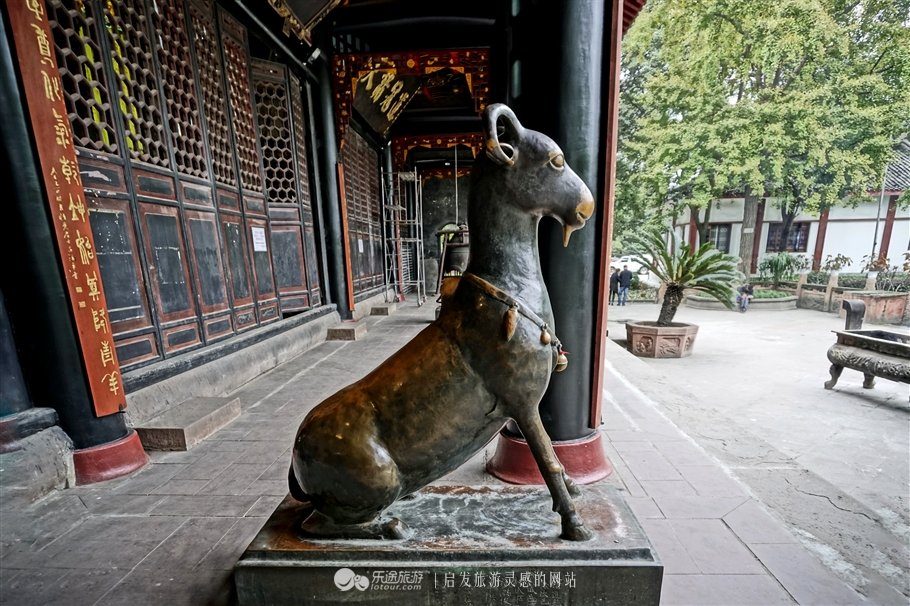
Legendary origins at a Zhou-dynasty market, expanded in the Tang dynasty into the foremost Taoist temple of Southwest China: the Bagua (Eight Trigrams) Pavilion is exquisitely carved, and the one-horned bronze ram, combining features of all twelve zodiac animals, is the temple's guardian treasure — touching the bronze ram for blessings is a tradition kept alive for over a century
Visitor info
- Opening hours
- 08:00-18:00
- Ticket
- CNY 10
Price is indicative — final quote on inquiry.
Legendary origins at a Zhou-dynasty market, expanded in the Tang dynasty into the foremost Taoist temple of Southwest China: the Bagua (Eight Trigrams) Pavilion is exquisitely carved, and the one-horned bronze ram, combining features of all twelve zodiac animals, is the temple's guardian treasure — touching the bronze ram for blessings is a tradition kept alive for over a century; woodblocks of the Daozang Jiyao (Essentials of the Taoist Canon) are kept in the Scripture Repository, and the flower fair in the second lunar month is a traditional temple fair. Admission CNY 10, direct via Metro Line 5, Qingyang Palace Station; can be linked with Baihuatan Park and Du Fu Thatched Cottage for a one-day itinerary.
Getting there: Metro Line 5, Qingyang Palace Station
Photos
More in Chengdu
- Wuhou Shrine
Three Kingdoms temple of Zhuge Liang and Liu Bei among cypress groves.
- People's Park
Chengdu's open-air living room: tea houses, ear cleaning, matchmakers' corner.
- Giant Panda Breeding Base
Dozens of pandas eating bamboo; arrive 08:00 for feeding time.
- Jinli Ancient Street
Rebuilt Qing-style shopping street beside Wuhou Shrine; evening lanterns.
- Jinsha Site Museum
Capital-site ruins of the ancient Shu kingdom from the Shang-Zhou period, discovered in 2001: the Golden Sun Bird ornament (over 90% gold content, openwork rotating pattern) was designated the symbol of China's cultural heritage; the gold mask and the ten-section jade cong are national-treasure artifacts, testifying to the high development of ancient Shu civilization
- Wuhou Shrine · Jinli Street
The only shrine in China where ruler and minister are worshipped together: Liu Bei's Huiling Tomb and Zhuge Liang's hall were merged into one garden in the late Ming/early Qing; the 'winning hearts' (Gongxin) couplet is a famous maxim on governing Shu; Sanyi Temple and the stone-carved Chu Shi Biao (Memorial on Dispatching the Troops) are must-sees for Three Kingdoms fans; Du Fu's Tang-dynasty verse 'Where is the chancellor's shrine to be found?' has made it a sacred site of Three Kingdoms culture