Suzhou Silk Museum
Ancient Hall (kesi and Song brocade) + Sericulture House + Weaving & Dyeing Workshop (live weaving demonstrations of Song brocade and kesi)
Visitor info
- Opening hours
- 09:00-17:00 · Closed Mondays
- Ticket
- Free
Price is indicative — final quote on inquiry.
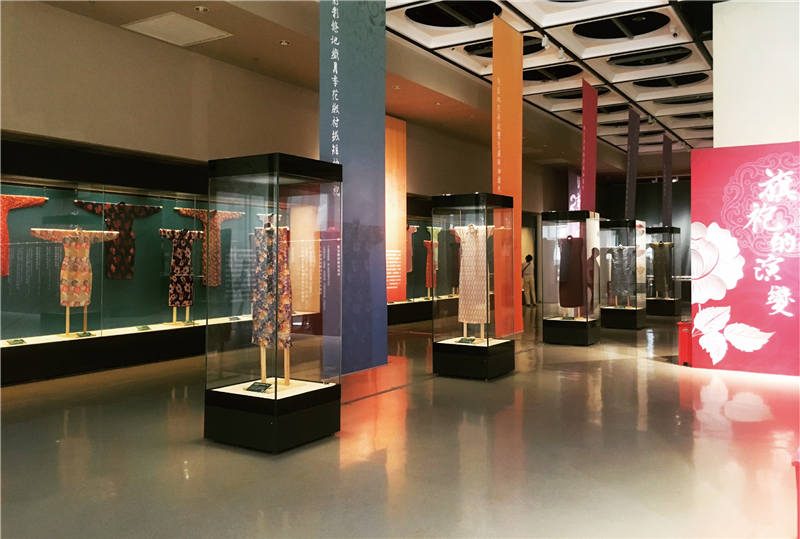
Ancient Hall (kesi and Song brocade) + Sericulture House + Weaving & Dyeing Workshop (live weaving demonstrations of Song brocade and kesi). China's first museum devoted to silk, its Ancient Hall displays handed-down patterns of the two supreme weaving arts, kesi and Song brocade — the 'continuous warp, interrupted weft' technique behind the saying 'an inch of kesi, an inch of gold,' together with Song brocade's elegant motifs, marks the peak of Chinese silk weaving; the Sericulture House recreates a farm family raising silkworms, and in the Weaving & Dyeing Workshop inheritors of Song brocade and kesi give daily live demonstrations on old-style huolou pattern looms, the rhythm of shuttles darting and the intricacy of warp and weft leaving viewers amazed. Suzhou has been the 'mansion of silk' since ancient times — in Ming and Qing times the Suzhou Weaving Bureau supplied the imperial court exclusively, and the former site of the Weaving Office is nearby. The museum is free to enter; the loom demonstration hours are the best to plan around, and afterwards you can conveniently shop for genuine silk products along Renmin Road nearby.
Getting there: Renmin Road
Photos
More in Suzhou
- Humble Administrator's Garden
Built in the fourth year of the Ming Zhengde reign (1509) by Wang Xianchen, with Wen Zhengming participating in the design, the 'Mother of Chinese Gardens' (a representative Jiangnan garden): Hall of Distant Fragrance / Little Flying Rainbow (Suzhou's only covered bridge) / 'With Whom Shall I Sit' Pavilion
- Suzhou Museum (Main Building)
I.M. Pei's final masterpiece (opened 2006), 'Chinese yet new, Suzhou yet new'; the sliced-rock hillside borrows the white wall of the Humble Administrator's Garden as its backdrop
- Lion Grove Garden
Built in 1342 (2nd year of the Yuan Zhizheng era) by Zen Master Tianru (Lion Grove Chan Temple); a labyrinth of Taihu Lake rockeries ('kingdom of rockeries', nine interweaving routes); Emperor Qianlong visited six times and inscribed 'True Delight'
- Lingering Garden
Xu Taishi built the East Garden in the Ming Wanli era; Liu Shu's Hanbi (Cold Green) Villa in the Qing dynasty
- Master of the Nets Garden
Site of Southern Song Shi Zhengzhi's Wanjuan Hall ('Fisherman's Retreat'); rebuilt in the Qianlong era of the Qing by Song Zongyuan as the 'Master of the Nets' (fisherman, his self-styled name)
- Canglang Pavilion
Built in 1045 (5th year of the Northern Song Qingli era) by Su Shunqin, Suzhou's oldest surviving garden ('scenery before you enter the gate' — double corridor with lattice windows); the famous couplet 'A clear breeze and bright moon are priceless' (assembled from lines by Ouyang Xiu and Su Shunqin)