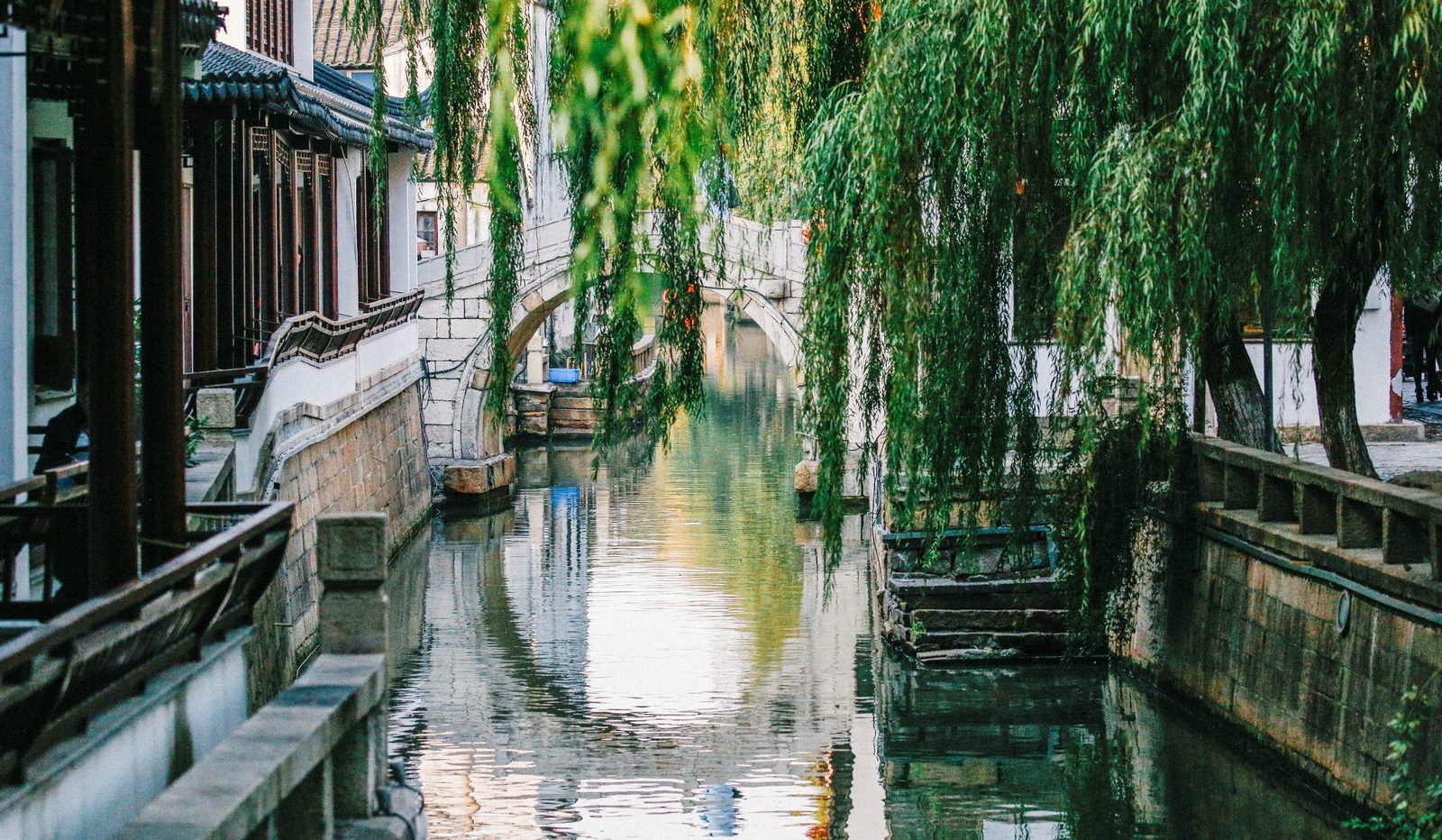
Wuqu Fang · Taohuawu (Peach Blossom Dock)
Tang Yin's former residence site / Taohuawu Woodblock New Year Print Museum
Visitor info
- Opening hours
- Open all day
- Ticket
- Free
Price is indicative — final quote on inquiry.
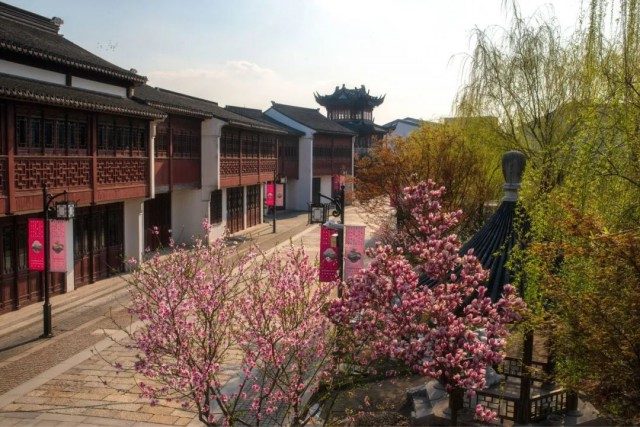
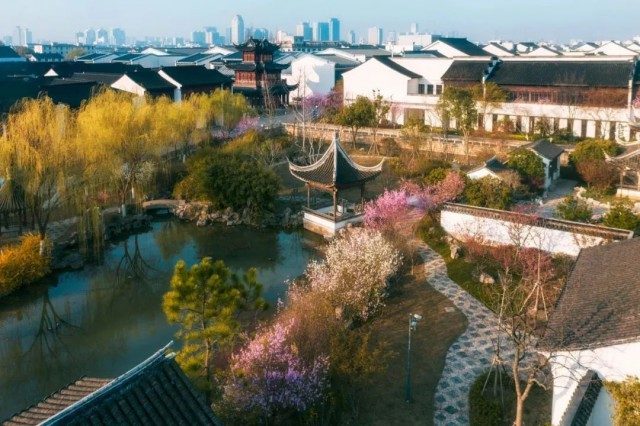
Tang Yin's former residence site / Taohuawu Woodblock New Year Print Museum. The Wuqu Fang area is where Tang Bohu (Tang Yin), the gifted scholar of the Ming dynasty, made his home; the old site of Peach Blossom Cottage — 'in Peach Blossom Dock a peach blossom cottage, beneath the cottage a Peach Blossom Immortal' — lies nearby. After restoration, Tang Yin's former residence site displays his life story and reproductions of his paintings and calligraphy, presenting the legend of the 'most romantic genius of Jiangnan' alongside his real misfortunes in the imperial examinations. Taohuawu woodblock New Year prints and Tianjin's Yangliuqing prints are known together as 'Tao of the South and Yang of the North'; their one-block-one-color overprinting technique was once exported as far as Japan and influenced ukiyo-e. The Taohuawu Woodblock New Year Print Museum preserves old blocks and prints fresh impressions from them, and you can watch the multicolor overprinting process on site. The quarter is free to enter and sees few tourists, making it a good fit for travelers interested in painting, calligraphy and folk prints; it pairs well with the North Temple Pagoda (Beisita) for a half-day route through the old city's northwest.
Getting there: Beisita (North Temple Pagoda) Station
Photos
More in Suzhou
- Humble Administrator's Garden
Built in the fourth year of the Ming Zhengde reign (1509) by Wang Xianchen, with Wen Zhengming participating in the design, the 'Mother of Chinese Gardens' (a representative Jiangnan garden): Hall of Distant Fragrance / Little Flying Rainbow (Suzhou's only covered bridge) / 'With Whom Shall I Sit' Pavilion
- Suzhou Museum (Main Building)
I.M. Pei's final masterpiece (opened 2006), 'Chinese yet new, Suzhou yet new'; the sliced-rock hillside borrows the white wall of the Humble Administrator's Garden as its backdrop
- Lion Grove Garden
Built in 1342 (2nd year of the Yuan Zhizheng era) by Zen Master Tianru (Lion Grove Chan Temple); a labyrinth of Taihu Lake rockeries ('kingdom of rockeries', nine interweaving routes); Emperor Qianlong visited six times and inscribed 'True Delight'
- Lingering Garden
Xu Taishi built the East Garden in the Ming Wanli era; Liu Shu's Hanbi (Cold Green) Villa in the Qing dynasty
- Master of the Nets Garden
Site of Southern Song Shi Zhengzhi's Wanjuan Hall ('Fisherman's Retreat'); rebuilt in the Qianlong era of the Qing by Song Zongyuan as the 'Master of the Nets' (fisherman, his self-styled name)
- Canglang Pavilion
Built in 1045 (5th year of the Northern Song Qingli era) by Su Shunqin, Suzhou's oldest surviving garden ('scenery before you enter the gate' — double corridor with lattice windows); the famous couplet 'A clear breeze and bright moon are priceless' (assembled from lines by Ouyang Xiu and Su Shunqin)