Tomb of the Five Men · Tomb of Ge Xian
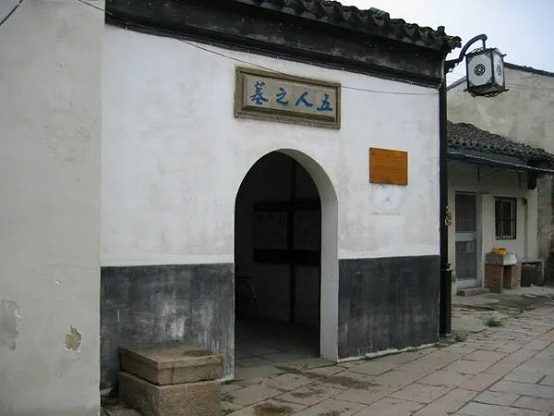
Tombs of the five martyrs of the Ming-era Suzhou citizens' anti-tax uprising (recorded in Zhang Pu's 'Record of the Five Men's Tomb')
Visitor info
- Opening hours
- Open all day
- Ticket
- Free
Price is indicative — final quote on inquiry.
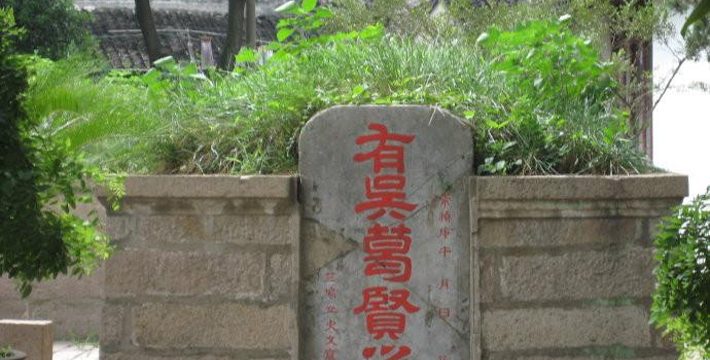
Tombs of the five martyrs of the Ming-era Suzhou citizens' anti-tax uprising (recorded in Zhang Pu's 'Record of the Five Men's Tomb'). In the sixth year of the Ming Tianqi reign (1626), tens of thousands of Suzhou citizens rose up to protest the eunuch faction of Wei Zhongxian arresting the Donglin Party scholar Zhou Shunchang. Five ordinary citizens—Yan Peiwei, Yang Nianru, Ma Jie, Shen Yang, and Zhou Wenyuan—stepped forward to take the blame and went to their deaths. Afterwards, the people of Suzhou buried the five beside Shantang Creek near Tiger Hill, and the Fushe Society leader Zhang Pu wrote the 'Record of the Five Men's Tomb' for them; its line 'to show how great the matter of life and death is, and that even a commoner can bear weight upon the state' entered middle-school textbooks, keeping the names of these five ordinary martyrs alive to this day. Ge Xian (Ge Cheng), an anti-tax leader of the Wanli era, admired the five martyrs in his lifetime and was reburied beside them after his death; the two neighboring tombs are visited in their memory. The cemetery is free and modest in size—a 'civic lesson' stop on Shantang Street's cultural route, well suited for visitors who have read the 'Record of the Five Men's Tomb.'
Getting there: Next to Tiger Hill
Photos
More in Suzhou
- Humble Administrator's Garden
Built in the fourth year of the Ming Zhengde reign (1509) by Wang Xianchen, with Wen Zhengming participating in the design, the 'Mother of Chinese Gardens' (a representative Jiangnan garden): Hall of Distant Fragrance / Little Flying Rainbow (Suzhou's only covered bridge) / 'With Whom Shall I Sit' Pavilion
- Suzhou Museum (Main Building)
I.M. Pei's final masterpiece (opened 2006), 'Chinese yet new, Suzhou yet new'; the sliced-rock hillside borrows the white wall of the Humble Administrator's Garden as its backdrop
- Lion Grove Garden
Built in 1342 (2nd year of the Yuan Zhizheng era) by Zen Master Tianru (Lion Grove Chan Temple); a labyrinth of Taihu Lake rockeries ('kingdom of rockeries', nine interweaving routes); Emperor Qianlong visited six times and inscribed 'True Delight'
- Lingering Garden
Xu Taishi built the East Garden in the Ming Wanli era; Liu Shu's Hanbi (Cold Green) Villa in the Qing dynasty
- Master of the Nets Garden
Site of Southern Song Shi Zhengzhi's Wanjuan Hall ('Fisherman's Retreat'); rebuilt in the Qianlong era of the Qing by Song Zongyuan as the 'Master of the Nets' (fisherman, his self-styled name)
- Canglang Pavilion
Built in 1045 (5th year of the Northern Song Qingli era) by Su Shunqin, Suzhou's oldest surviving garden ('scenery before you enter the gate' — double corridor with lattice windows); the famous couplet 'A clear breeze and bright moon are priceless' (assembled from lines by Ouyang Xiu and Su Shunqin)