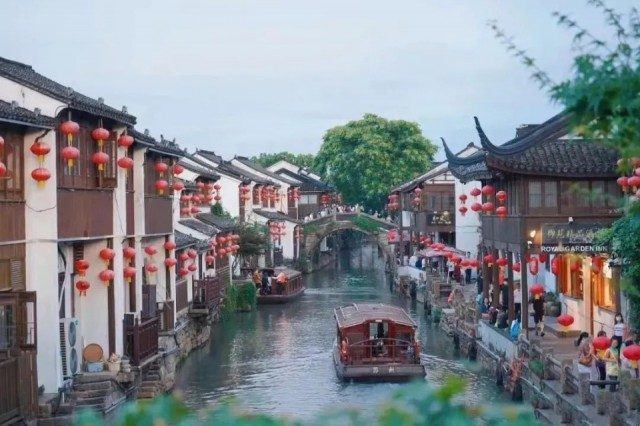
Zhouzhuang
'China's No. 1 water town' (Shen Wansan's former residence / Twin Bridges—Chen Yifei's 'Memory of Hometown' brought Zhouzhuang to the world / Zhang Hall and Shen Hall), on the World Heritage tentative list
Visitor info
- Opening hours
- 07:30-19:00
- Ticket
- CNY 100
Price is indicative — final quote on inquiry.
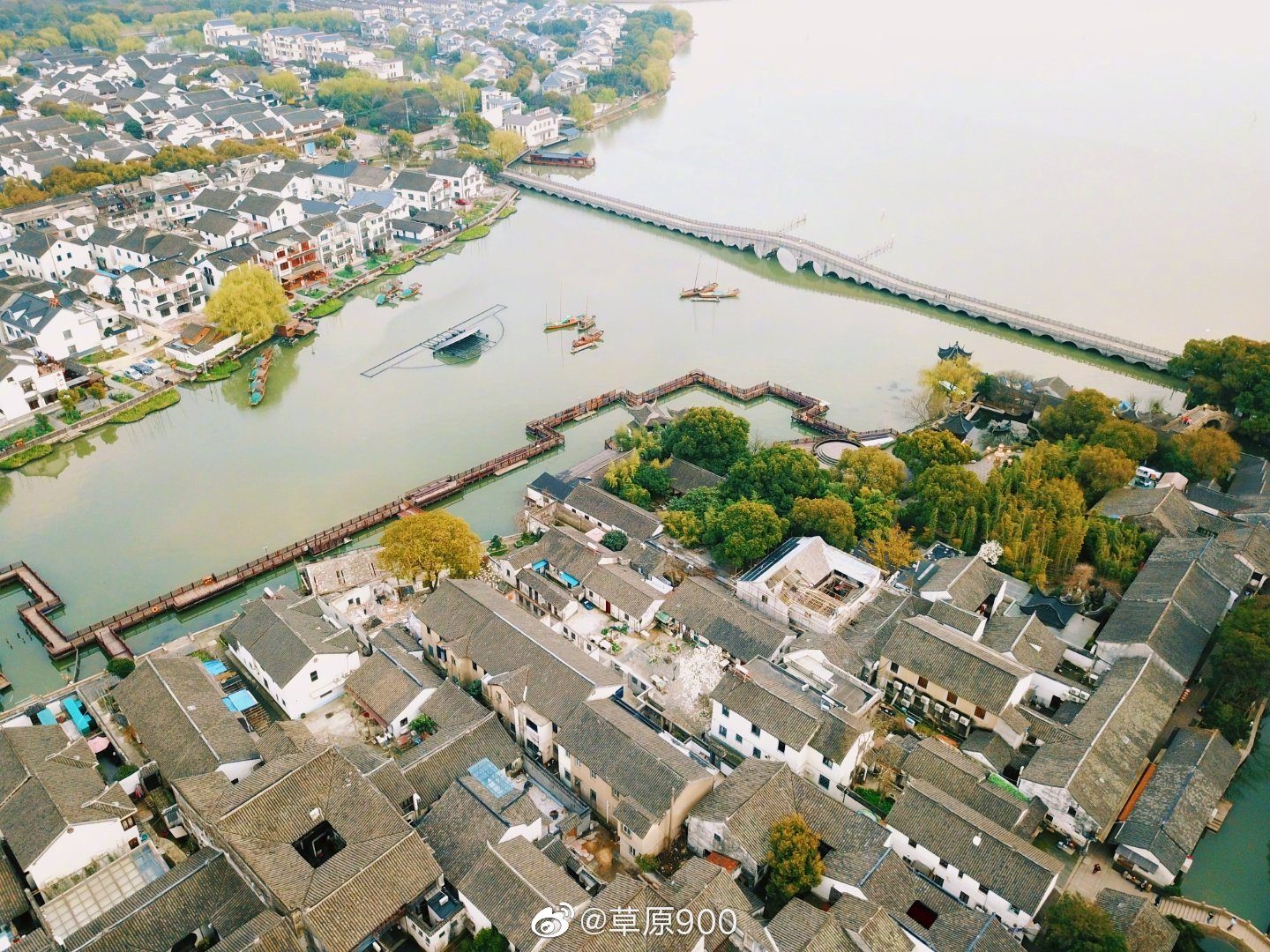
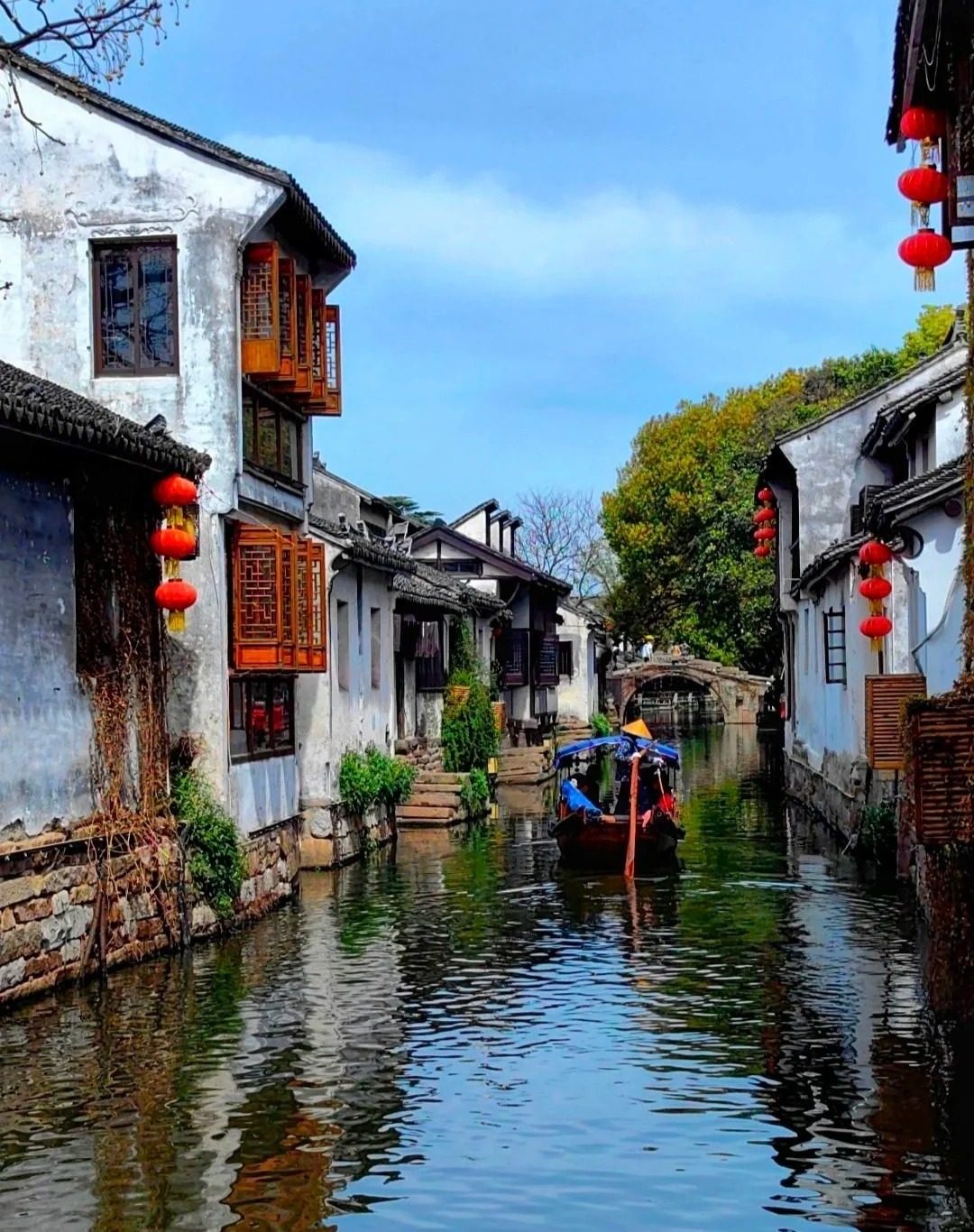
'China's No. 1 water town' (Shen Wansan's former residence / Twin Bridges—Chen Yifei's 'Memory of Hometown' brought Zhouzhuang to the world / Zhang Hall and Shen Hall), on the World Heritage tentative list. Zhouzhuang is called 'China's No. 1 water town' for its fully preserved water-town layout of 'little bridges, flowing water, and homes' dating back to the Song and Yuan eras: the Twin Bridges (Shide Bridge and Yong'an Bridge) cross the water one lengthwise and one crosswise, lying on the river like a key. Painter Chen Yifei's oil painting 'Memory of Hometown,' inspired by them, was exhibited in New York in 1984 and bought by Armand Hammer as a gift for Deng Xiaoping—Zhouzhuang has been on the world map ever since. Legends of the Ming merchant magnate Shen Wansan, Zhang Hall's remarkable design where 'sedan chairs enter through the front gate while boats pass through the house,' and Shen Hall with its seven successive courtyards make up the town's three great cultural sights. Grid-patterned canals weave among old bridges and old houses; morning mist and night lantern reflections are the golden hours for photography. Reachable via Metro Line 11, Huaqiao Station, then a bus; holiday crowds are enormous—consider staying overnight to see the empty town at dawn.
Getting there: Shuttle bus from Suzhou Railway Station / Metro Line 11, Huaqiao Station, then a Kunshan bus
Photos
More in Suzhou
- Humble Administrator's Garden
Built in the fourth year of the Ming Zhengde reign (1509) by Wang Xianchen, with Wen Zhengming participating in the design, the 'Mother of Chinese Gardens' (a representative Jiangnan garden): Hall of Distant Fragrance / Little Flying Rainbow (Suzhou's only covered bridge) / 'With Whom Shall I Sit' Pavilion
- Suzhou Museum (Main Building)
I.M. Pei's final masterpiece (opened 2006), 'Chinese yet new, Suzhou yet new'; the sliced-rock hillside borrows the white wall of the Humble Administrator's Garden as its backdrop
- Lion Grove Garden
Built in 1342 (2nd year of the Yuan Zhizheng era) by Zen Master Tianru (Lion Grove Chan Temple); a labyrinth of Taihu Lake rockeries ('kingdom of rockeries', nine interweaving routes); Emperor Qianlong visited six times and inscribed 'True Delight'
- Lingering Garden
Xu Taishi built the East Garden in the Ming Wanli era; Liu Shu's Hanbi (Cold Green) Villa in the Qing dynasty
- Master of the Nets Garden
Site of Southern Song Shi Zhengzhi's Wanjuan Hall ('Fisherman's Retreat'); rebuilt in the Qianlong era of the Qing by Song Zongyuan as the 'Master of the Nets' (fisherman, his self-styled name)
- Canglang Pavilion
Built in 1045 (5th year of the Northern Song Qingli era) by Su Shunqin, Suzhou's oldest surviving garden ('scenery before you enter the gate' — double corridor with lattice windows); the famous couplet 'A clear breeze and bright moon are priceless' (assembled from lines by Ouyang Xiu and Su Shunqin)