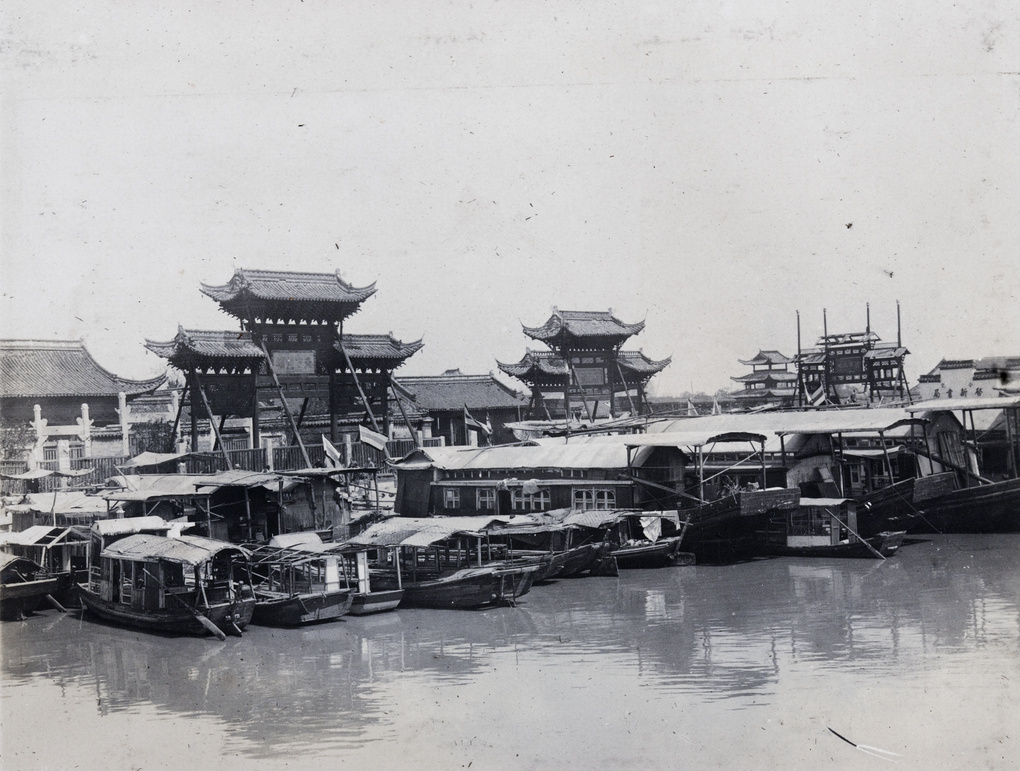
Confucius Temple (Fuzimiao)
Qinhuai River lantern district; night cruise past painted boats.
Visitor info
- Opening hours
- best 18:00-22:00
- Ticket
- free area; cruise 80 CNY
- Suggested visit
- half day
Price is indicative — final quote on inquiry.
Why it's worth it
The Confucius Temple district on the Qinhuai River — since 1034 a shrine to scholarship, an exam compound that once held twenty thousand candidates, and now a lantern-lit riverfront where the boat ride at night is the main event.
Don't miss
- The lantern boats after dark — lit dragon-prows sliding under the Wende Bridge glow
- Jiangnan Gongyuan, the imperial examination cells: a corridor of one-man rooms you can stand in
- The dance of reflections on the Qinhuai at the Dasiful arch, camera-ready every night
Getting there
Metro Line 3 to Fuzimiao station; the temple-boat quarter is a five-minute walk south.
Tips
- Night beats day here, full stop — come at 7pm, eat first, boat second
- Boat tickets include the riverside walk; buy at the dock, queues shorten after 8pm
- Weekends are lantern-festival-crowded year-round; weeknights breathe
Photos
More in Nanjing
- Sun Yat-sen Mausoleum
392 marble steps up Purple Mountain to the father of modern China.
- Ming Xiaoling Mausoleum
Sacred Way stone animals guarding the tomb of the Ming founder.
- Zhonghua Gate
The world's largest castle-style city gate, 27 soldier hideouts inside.
- Sun Yat-sen Mausoleum
The mausoleum of Dr. Sun Yat-sen, begun in 1926 with his remains interred in 1929. The "Liberty Bell" ground plan by young architect Lü Yanzhi won a global design competition, a milestone of modern Chinese architectural history.
- Ming Xiaoling Mausoleum
The joint tomb of Ming founder Zhu Yuanzhang and Empress Ma, begun in 1381. It pioneered the "court in front, resting quarters behind" mausoleum layout, the wellspring of the Ming-Qing imperial tomb system; in 2003 it was inscribed as a UNESCO World Heritage Site as part of the extension of the Imperial Tombs of the Ming and Qing Dynasties.
- Linggu Temple
An ancient temple at the southern foot of Purple Mountain, descended from the Liang-dynasty Kaishan Temple; relocated and renamed Linggu Temple in the early Ming, its old view "Deep Pines of Linggu" was listed among the Forty-Eight Scenes of Jinling.