
Bailuzhou Park
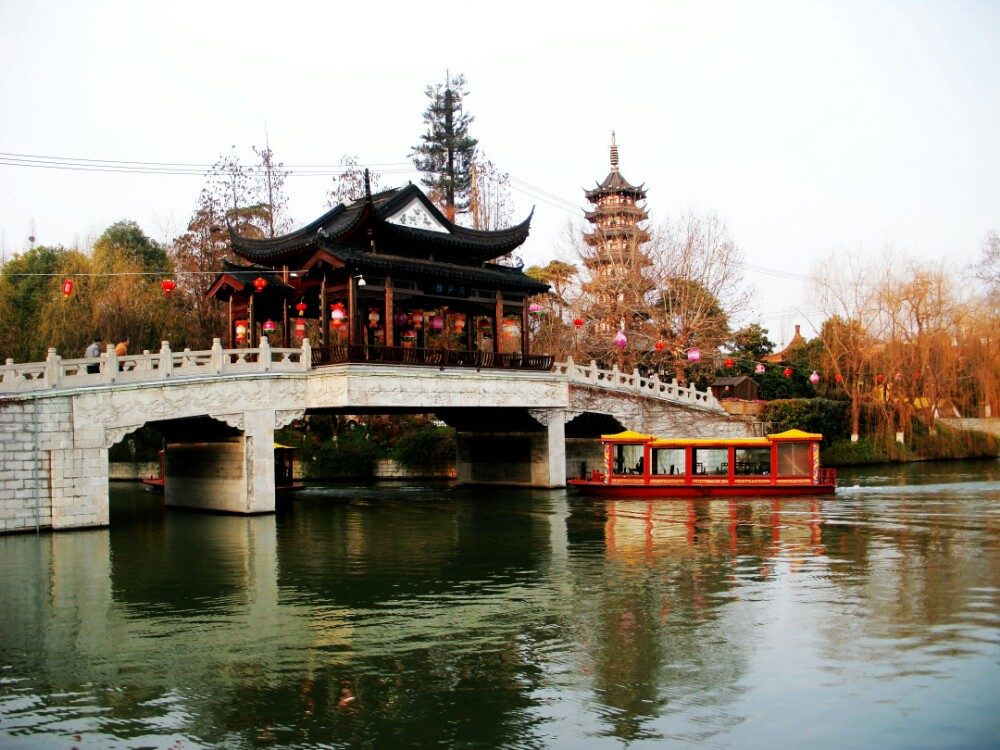
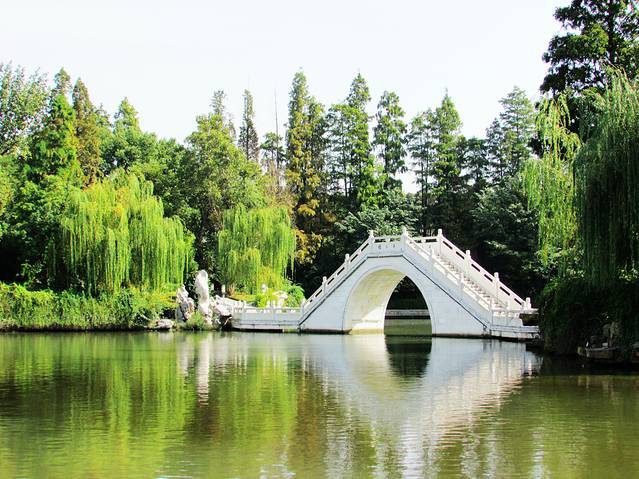
Historic site of the East Garden of Xu Da, the Ming dynasty Prince of Zhongshan; the park entered the Forty-Eight Scenes of Jinling as "White Egret Fragrant Islet"; lake-center islets linked by winding bridges — a quiet citizens' garden beside the bustling Qinhuai River
Visitor info
- Opening hours
- 06:00-22:00
- Ticket
- Free
Price is indicative — final quote on inquiry.
Historic site of the East Garden of Xu Da, the Ming dynasty Prince of Zhongshan; the park was listed among the Forty-Eight Scenes of Jinling as "White Egret Fragrant Islet", its lake-center islets linked by winding bridges — a citizens' garden offering quiet amid the bustle by the Qinhuai River. The East Water Gate (Dongshuiguan) ruins in the park were the water gate where the Qinhuai River entered the city beneath the Ming city wall; its twin-arched sluices join the ramparts, a key point for understanding Nanjing's "water and city as one" layout. Mornings are steeped in old-Nanjing life — tai chi and folk opera singing; by evening, lantern-lit waters lie just a wall away from the hubbub of the Confucius Temple area, making it a good breather stop on a Qinhuai itinerary; in spring peach and plum trees line the banks, and on summer nights lotus flowers mirror the lanterns of painted pleasure boats.
Getting there: East of the Confucius Temple
Photos
More in Nanjing
- Sun Yat-sen Mausoleum
392 marble steps up Purple Mountain to the father of modern China.
- Ming Xiaoling Mausoleum
Sacred Way stone animals guarding the tomb of the Ming founder.
- Confucius Temple (Fuzimiao)
Qinhuai River lantern district; night cruise past painted boats.
- Zhonghua Gate
The world's largest castle-style city gate, 27 soldier hideouts inside.
- Sun Yat-sen Mausoleum
The mausoleum of Dr. Sun Yat-sen, begun in 1926 with his remains interred in 1929. The "Liberty Bell" ground plan by young architect Lü Yanzhi won a global design competition, a milestone of modern Chinese architectural history.
- Ming Xiaoling Mausoleum
The joint tomb of Ming founder Zhu Yuanzhang and Empress Ma, begun in 1381. It pioneered the "court in front, resting quarters behind" mausoleum layout, the wellspring of the Ming-Qing imperial tomb system; in 2003 it was inscribed as a UNESCO World Heritage Site as part of the extension of the Imperial Tombs of the Ming and Qing Dynasties.