Chaotian Palace (Nanjing Municipal Museum)
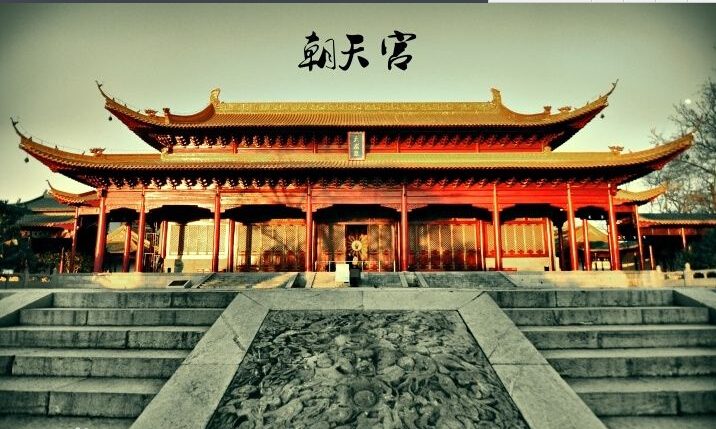
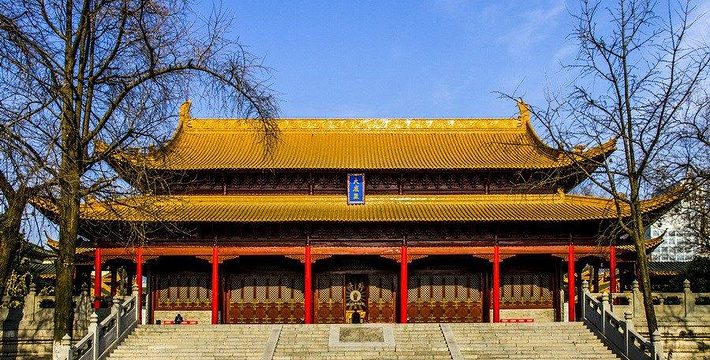
Ming Hongwu-era site where civil and military officials rehearsed court etiquette before paying homage (the largest surviving ancient building complex in Jiangnan), Lingxing Gate and Dacheng Hall
Visitor info
- Opening hours
- 09:00-18:00 (closed on Mondays)
- Ticket
- CNY 25
Price is indicative — final quote on inquiry.
Ming Hongwu-era site where civil and military officials rehearsed court etiquette before paying homage (the largest surviving ancient building complex in Jiangnan), Lingxing Gate and Dacheng Hall; Yeshan Spring-and-Autumn Garden (site of the Spring and Autumn period Wu state's bronze smelting). Chaotian Palace takes its name from the Hongwu-era rule that the hundred officials rehearsed rituals here before paying homage to the emperor. The surviving complex is a Qing-restored Confucian temple rising step by step along a central axis — Lingxing Gate, Dacheng Hall and Chongsheng Hall climbing ever higher — one of the largest and best-preserved ancient building complexes in Jiangnan. Beneath Yeshan Hill lie the smelting remains of the Spring and Autumn period Wu state, the origin of the name "Yecheng" (Smelting City); today it houses the Nanjing Municipal Museum, with permanent displays of Six Dynasties artifacts and urban archaeology finds, and the "Little Forbidden City of Nanjing" photo angles on the red walls are hugely popular on social media.
Getting there: Metro Line 1, Zhangfuyuan Station / Line 2, Shanghai Road Station
Photos
More in Nanjing
- Sun Yat-sen Mausoleum
392 marble steps up Purple Mountain to the father of modern China.
- Ming Xiaoling Mausoleum
Sacred Way stone animals guarding the tomb of the Ming founder.
- Confucius Temple (Fuzimiao)
Qinhuai River lantern district; night cruise past painted boats.
- Zhonghua Gate
The world's largest castle-style city gate, 27 soldier hideouts inside.
- Sun Yat-sen Mausoleum
The mausoleum of Dr. Sun Yat-sen, begun in 1926 with his remains interred in 1929. The "Liberty Bell" ground plan by young architect Lü Yanzhi won a global design competition, a milestone of modern Chinese architectural history.
- Ming Xiaoling Mausoleum
The joint tomb of Ming founder Zhu Yuanzhang and Empress Ma, begun in 1381. It pioneered the "court in front, resting quarters behind" mausoleum layout, the wellspring of the Ming-Qing imperial tomb system; in 2003 it was inscribed as a UNESCO World Heritage Site as part of the extension of the Imperial Tombs of the Ming and Qing Dynasties.