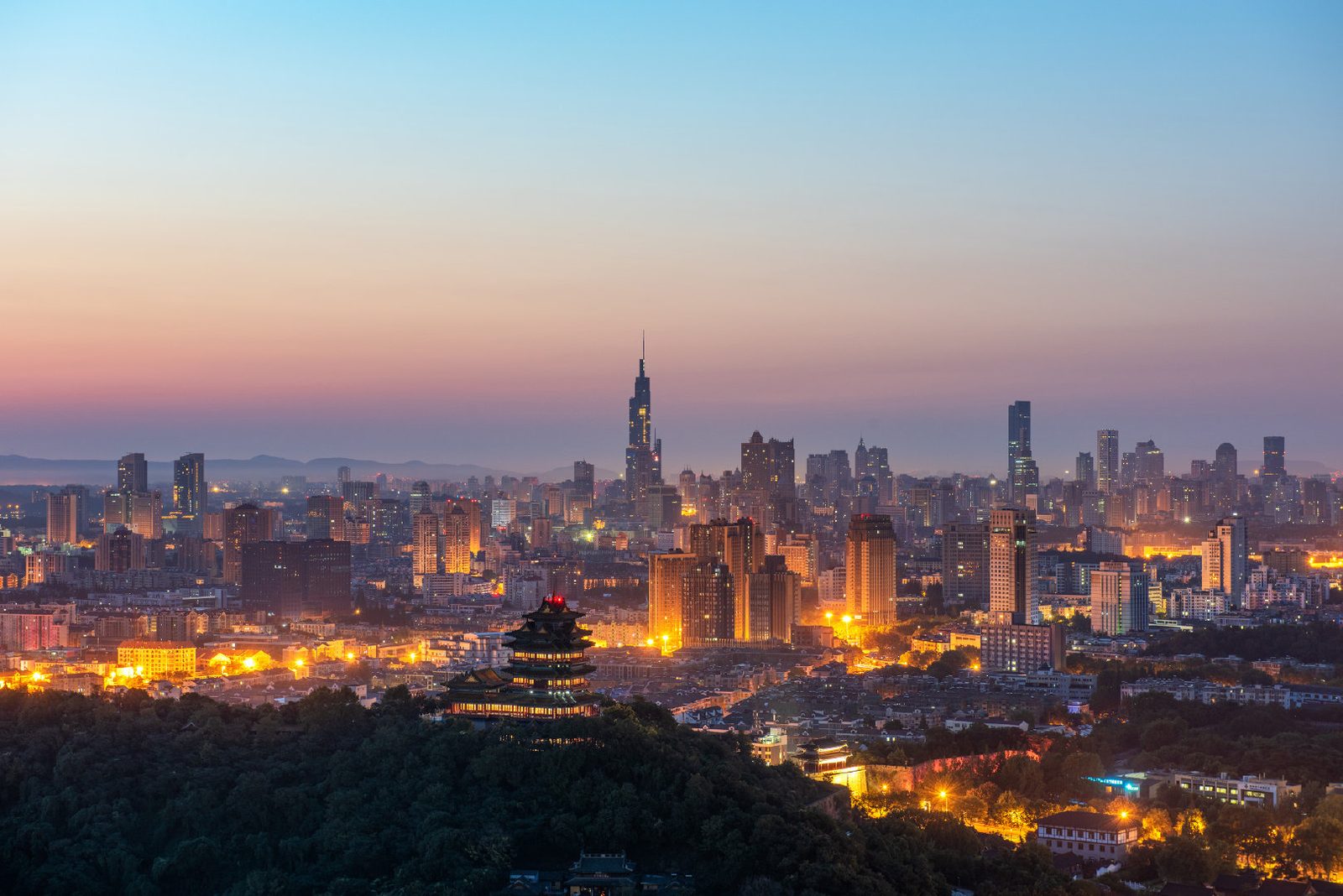
Nanjing Eye Pedestrian Bridge
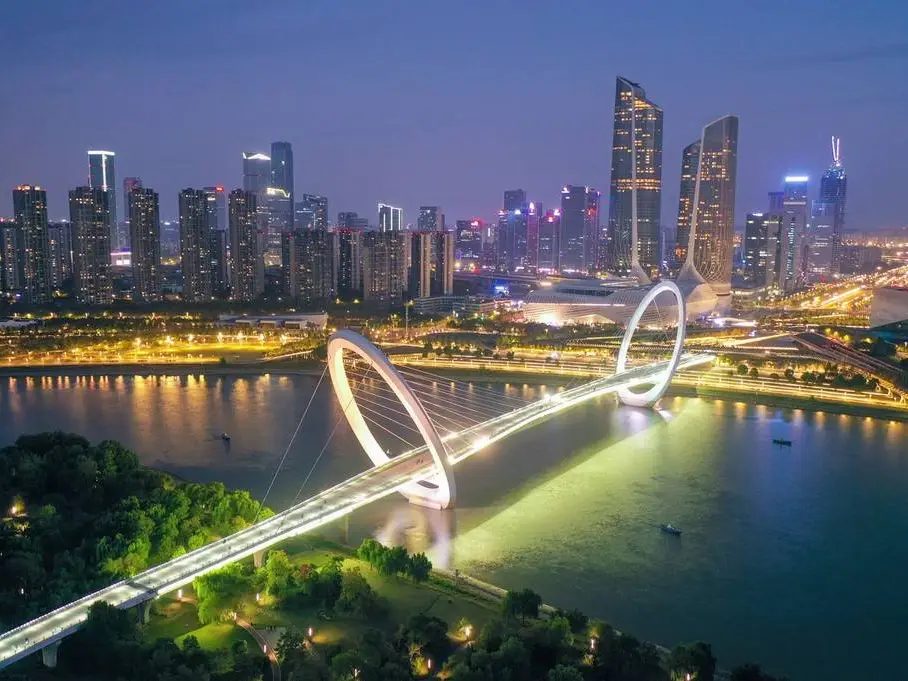
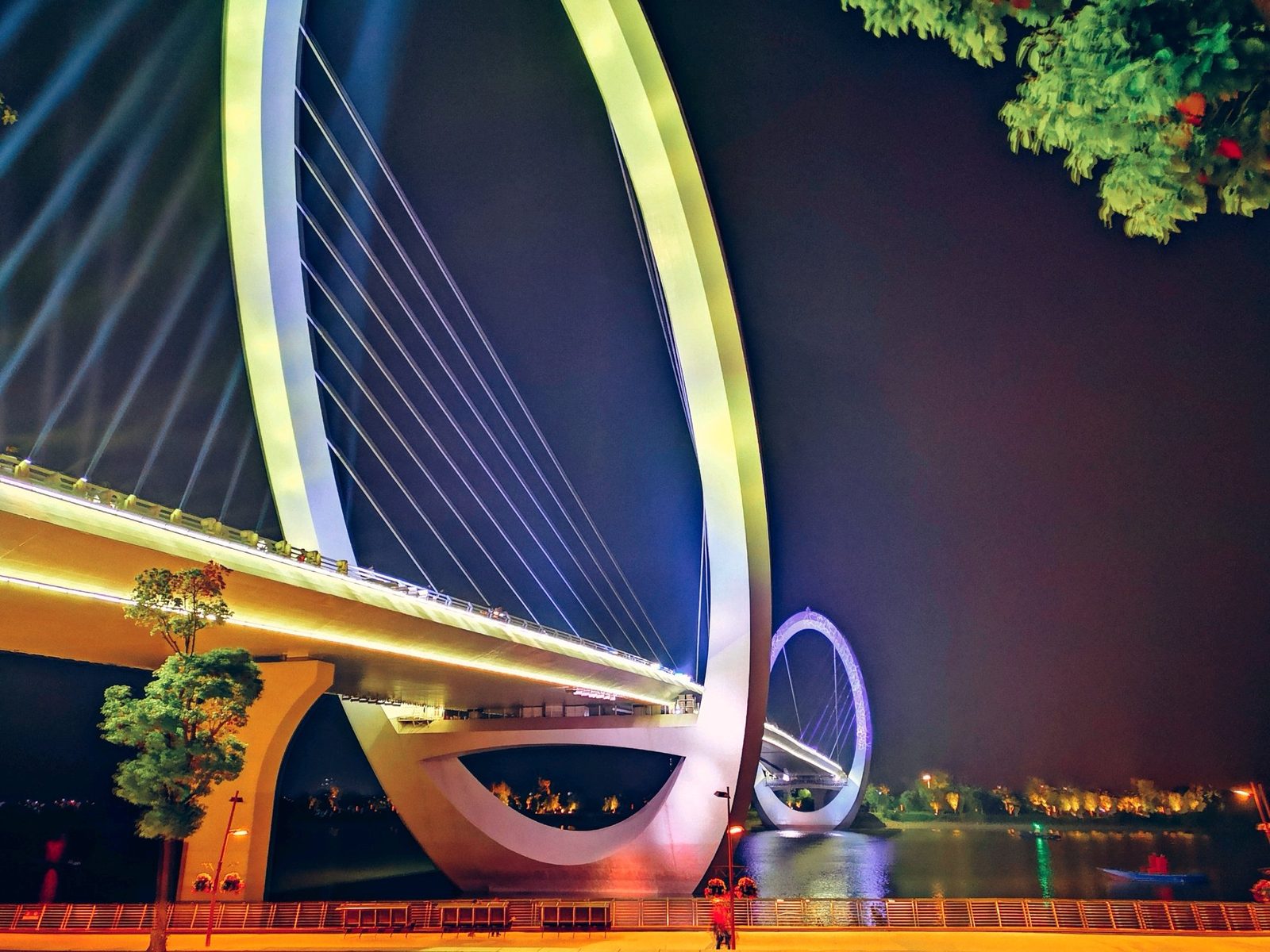
Landmark pedestrian bridge of the 2014 Youth Olympic Games (cable-stayed bridge with two curved towers), views over the Jiajiang channel + light show at Youth Olympic Park
Visitor info
- Opening hours
- Open all day
- Ticket
- Free
Price is indicative — final quote on inquiry.
Landmark pedestrian bridge of the 2014 Youth Olympic Games (cable-stayed bridge with two curved towers), views over the Jiajiang channel + light show at Youth Olympic Park. This curved cable-stayed bridge spanning the Jiajiang channel is strung from two rounded towers like the strings of a harp — the signature architectural legacy the Youth Olympics left Nanjing, and the first pedestrian sightseeing bridge over the Yangtze. As evening lights come on, the bridge's light strips and the skyscrapers on both banks mirror on the water; the Youth International Culture & Arts Center and the lawns of Youth Olympic Park form an open viewing belt with a steady stream of night runners and photographers. The round-trip walk across the bridge takes about 20 minutes, making it the central node of the Hexi riverside route.
Getting there: Metro Line 10, Lüboyuan Station
Photos
More in Nanjing
- Sun Yat-sen Mausoleum
392 marble steps up Purple Mountain to the father of modern China.
- Ming Xiaoling Mausoleum
Sacred Way stone animals guarding the tomb of the Ming founder.
- Confucius Temple (Fuzimiao)
Qinhuai River lantern district; night cruise past painted boats.
- Zhonghua Gate
The world's largest castle-style city gate, 27 soldier hideouts inside.
- Sun Yat-sen Mausoleum
The mausoleum of Dr. Sun Yat-sen, begun in 1926 with his remains interred in 1929. The "Liberty Bell" ground plan by young architect Lü Yanzhi won a global design competition, a milestone of modern Chinese architectural history.
- Ming Xiaoling Mausoleum
The joint tomb of Ming founder Zhu Yuanzhang and Empress Ma, begun in 1381. It pioneered the "court in front, resting quarters behind" mausoleum layout, the wellspring of the Ming-Qing imperial tomb system; in 2003 it was inscribed as a UNESCO World Heritage Site as part of the extension of the Imperial Tombs of the Ming and Qing Dynasties.