Tiansheng Bridge (Lishui)
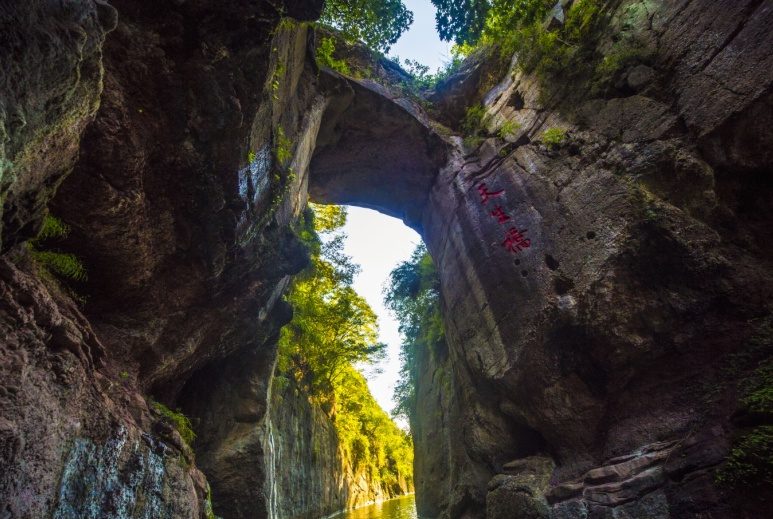
A "naturally formed" bridge carved from rock over the man-made Yanzhi River canal in the Ming Hongwu era (built 1393, the only surviving stone-bridge marvel on a man-made canal in Jiangnan); boat rides on the Yanzhi River
Visitor info
- Opening hours
- 08:00-17:00
- Ticket
- CNY 30
Price is indicative — final quote on inquiry.
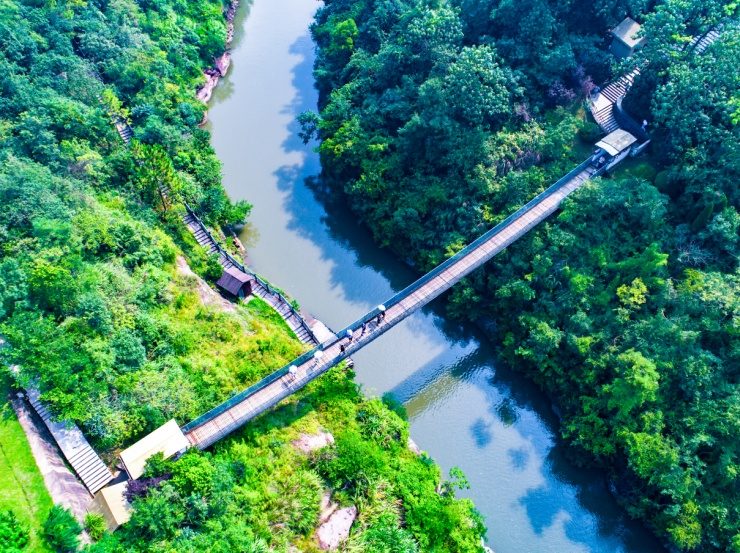
A bridge "naturally" made by carving through rock over the man-made Yanzhi River canal in the Ming Hongwu era (built in 1393, the only surviving stone-bridge marvel on a man-made canal in Jiangnan); boat rides on the Yanzhi River. In 1393, to connect grain shipping between the Qinhuai River and Shijiu Lake, Zhu Yuanzhang had workers roast the rock and douse it with vinegar, cutting through more than ten li of the Yanzhi ridge to create the Yanzhi River; the stretch where a giant boulder spans the water, leaving a natural opening, is called "Tiansheng Bridge" — the only surviving stone-bridge wonder on a man-made canal in Jiangnan. Steep ochre-red cliffs tower on both banks of a deep gorge; a boat ride through it gives a close-up sense of the engineering miracle of "carving a river out of rock" six hundred years ago. The river glows rouge-red against the Danxia-colored cliffs, making the scenery instantly recognizable.
Getting there: Bus from Lishui / self-drive
Photos
More in Nanjing
- Sun Yat-sen Mausoleum
392 marble steps up Purple Mountain to the father of modern China.
- Ming Xiaoling Mausoleum
Sacred Way stone animals guarding the tomb of the Ming founder.
- Confucius Temple (Fuzimiao)
Qinhuai River lantern district; night cruise past painted boats.
- Zhonghua Gate
The world's largest castle-style city gate, 27 soldier hideouts inside.
- Sun Yat-sen Mausoleum
The mausoleum of Dr. Sun Yat-sen, begun in 1926 with his remains interred in 1929. The "Liberty Bell" ground plan by young architect Lü Yanzhi won a global design competition, a milestone of modern Chinese architectural history.
- Ming Xiaoling Mausoleum
The joint tomb of Ming founder Zhu Yuanzhang and Empress Ma, begun in 1381. It pioneered the "court in front, resting quarters behind" mausoleum layout, the wellspring of the Ming-Qing imperial tomb system; in 2003 it was inscribed as a UNESCO World Heritage Site as part of the extension of the Imperial Tombs of the Ming and Qing Dynasties.