
Zhuzhen Chishan Lake (Luhe)
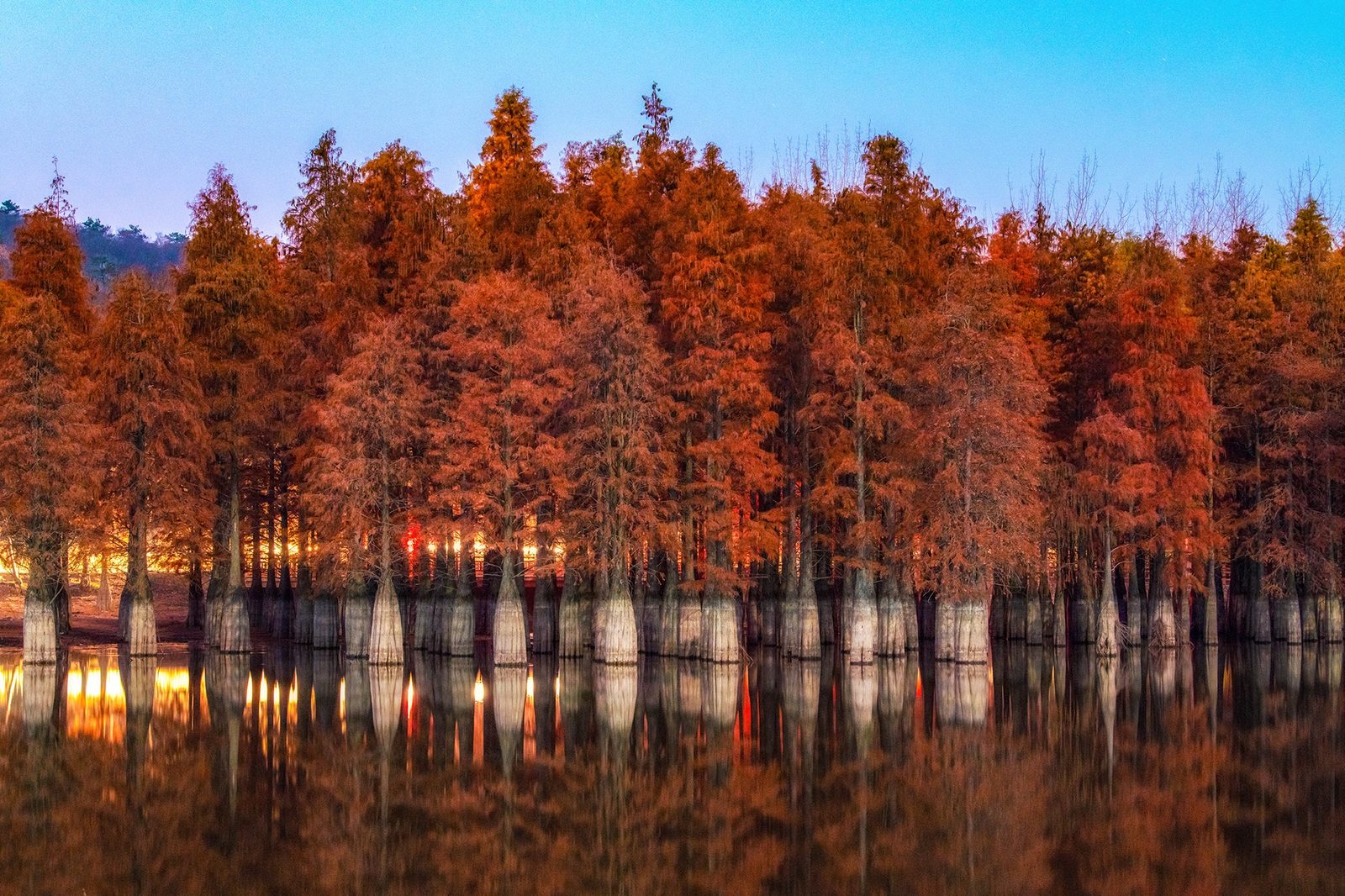
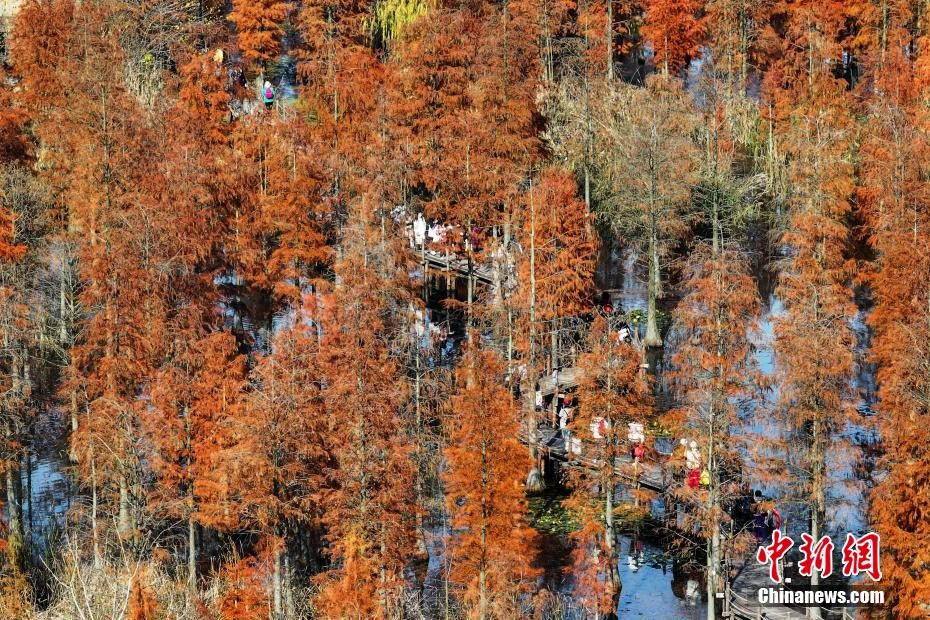
Thousand-mu pond cypress water forest (red foliage in autumn and winter), egret birdwatching corridor, lake on the Jiangsu–Anhui border
Visitor info
- Opening hours
- 08:30-17:00
- Ticket
- CNY 45
Price is indicative — final quote on inquiry.
Thousand-mu pond cypress water forest (red foliage in autumn and winter), egret birdwatching corridor, lake on the Jiangsu–Anhui border. Chishan Lake straddles the border river between Jiangsu and Anhui provinces; thousands of pond cypresses stand in ranks in the lake, their roots submerged in the water, and in autumn the needles turn from green to red and then brown, forming a rare 'water forest' spectacle in East China, at its most colorful around December. Boardwalks and boat channels pass through the woods; the sight of egrets roosting on the branches and whole flocks of egrets startled up by the sound of paddles is a celebrated spot among birdwatchers. The park has a birdwatching corridor and a science hall; as an ecological hidden gem at the Jiangsu–Anhui border, visitor density is far lower than at city attractions, ideal for photographers and nature lovers seeking quiet.
Getting there: Luhe bus / self-drive
Photos
More in Nanjing
- Sun Yat-sen Mausoleum
392 marble steps up Purple Mountain to the father of modern China.
- Ming Xiaoling Mausoleum
Sacred Way stone animals guarding the tomb of the Ming founder.
- Confucius Temple (Fuzimiao)
Qinhuai River lantern district; night cruise past painted boats.
- Zhonghua Gate
The world's largest castle-style city gate, 27 soldier hideouts inside.
- Sun Yat-sen Mausoleum
The mausoleum of Dr. Sun Yat-sen, begun in 1926 with his remains interred in 1929. The "Liberty Bell" ground plan by young architect Lü Yanzhi won a global design competition, a milestone of modern Chinese architectural history.
- Ming Xiaoling Mausoleum
The joint tomb of Ming founder Zhu Yuanzhang and Empress Ma, begun in 1381. It pioneered the "court in front, resting quarters behind" mausoleum layout, the wellspring of the Ming-Qing imperial tomb system; in 2003 it was inscribed as a UNESCO World Heritage Site as part of the extension of the Imperial Tombs of the Ming and Qing Dynasties.