Xi'an 西安
Ancient capital of 13 dynasties: Terracotta Army, Tang pagodas and the Muslim Quarter.
- Best season
- Mar-May and Sep-Nov
- Getting in
- XIY Xianyang; west-China rail hub
Why Xi'an
Terracotta warriors, a bikeable Ming wall and the Muslim Quarter's grills.
Best season
Mar-Jun and Sep-Nov
Getting in
XIY airport; HSR hub on the Beijing-Xi'an-Chengdu lines
First-timer's route
- Day 1: City Wall by bike at golden hour, Bell and Drum Towers, Muslim Quarter dinner crawl
- Day 2: Terracotta Army in the morning (first entry), Huaqing Palace on the way back, Big Wild Goose Pagoda fountain show at night
- Day 3: Shaanxi History Museum (free, book ahead — a highlight equal to the warriors), then a quiet teahouse afternoon
Getting around
Line 2 runs the north-south spine past the Bell Tower and station. The old town inside the wall is walkable end to end in 40 minutes. Taxis start cheap and drivers rarely speak English — have addresses in Chinese characters.
Top things to do in Xi'an
Ranked picks — headline sights first, with tickets and timing at a glance.
 1
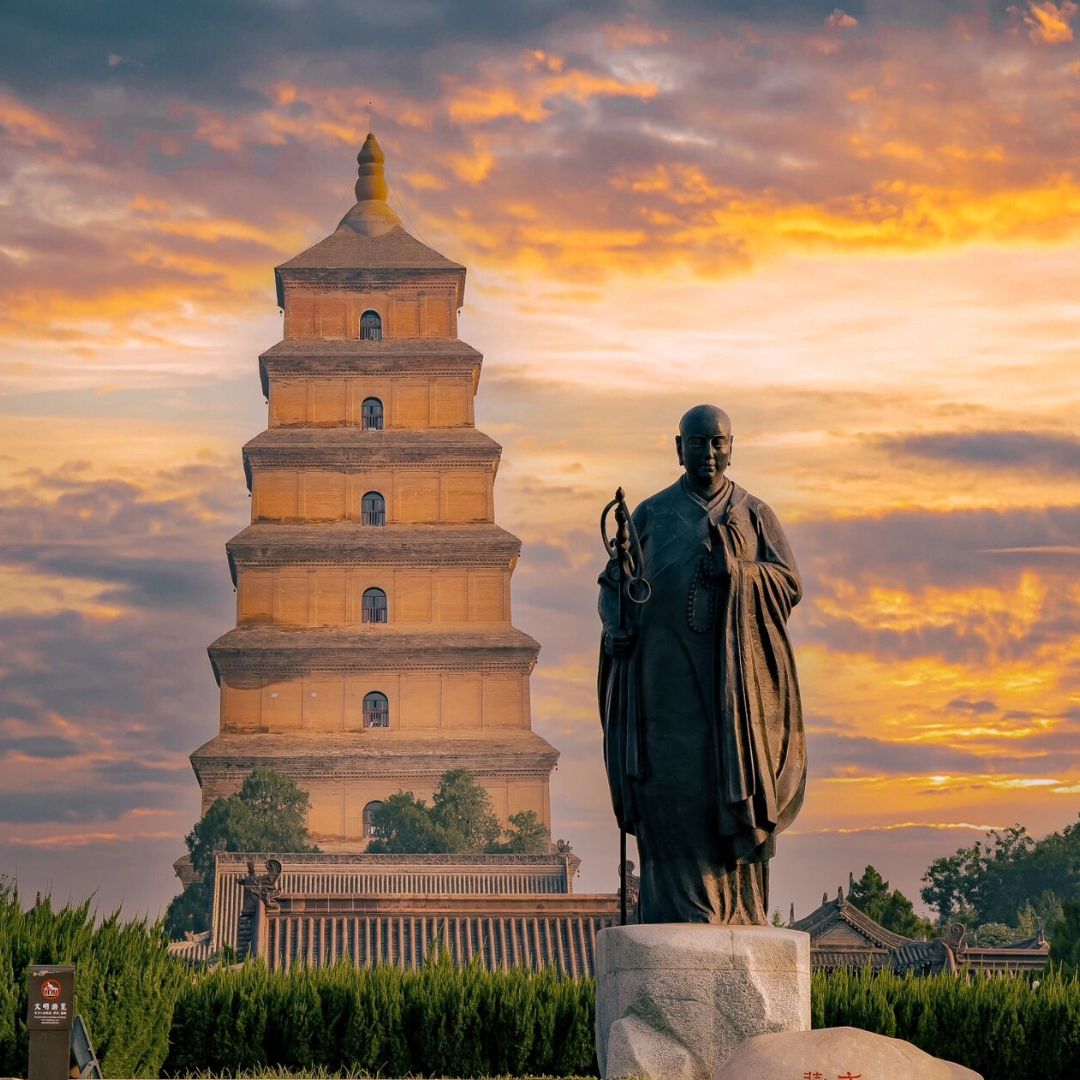
Big Wild Goose Pagoda
AttractionTang-dynasty Buddhist pagoda with nightly musical fountain.
 2
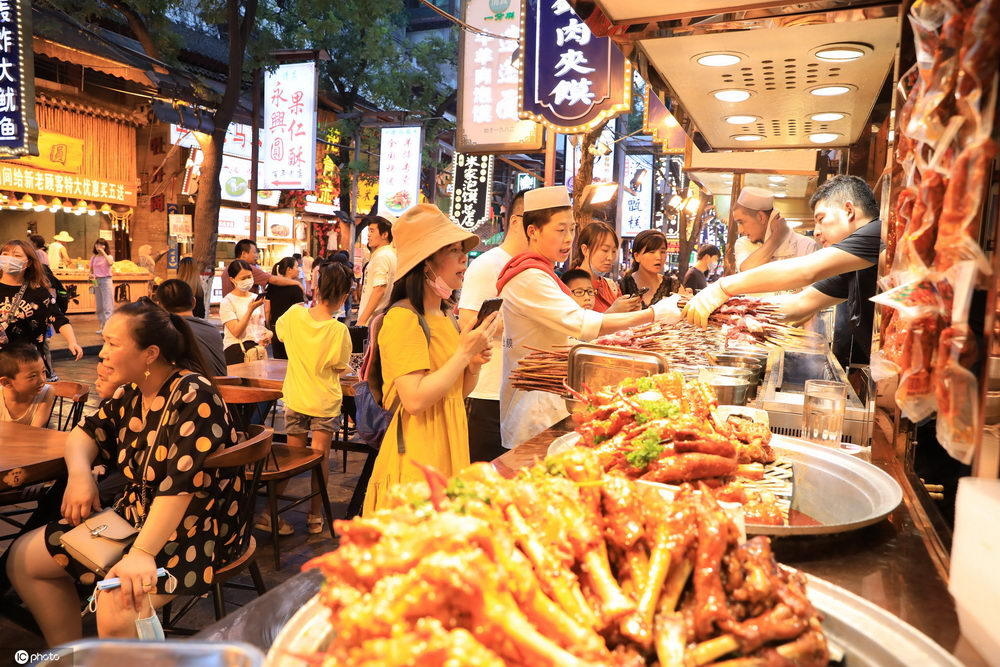
Muslim Quarter
AttractionLantern-lit food alleys behind the Drum Tower since the Tang dynasty.
 3
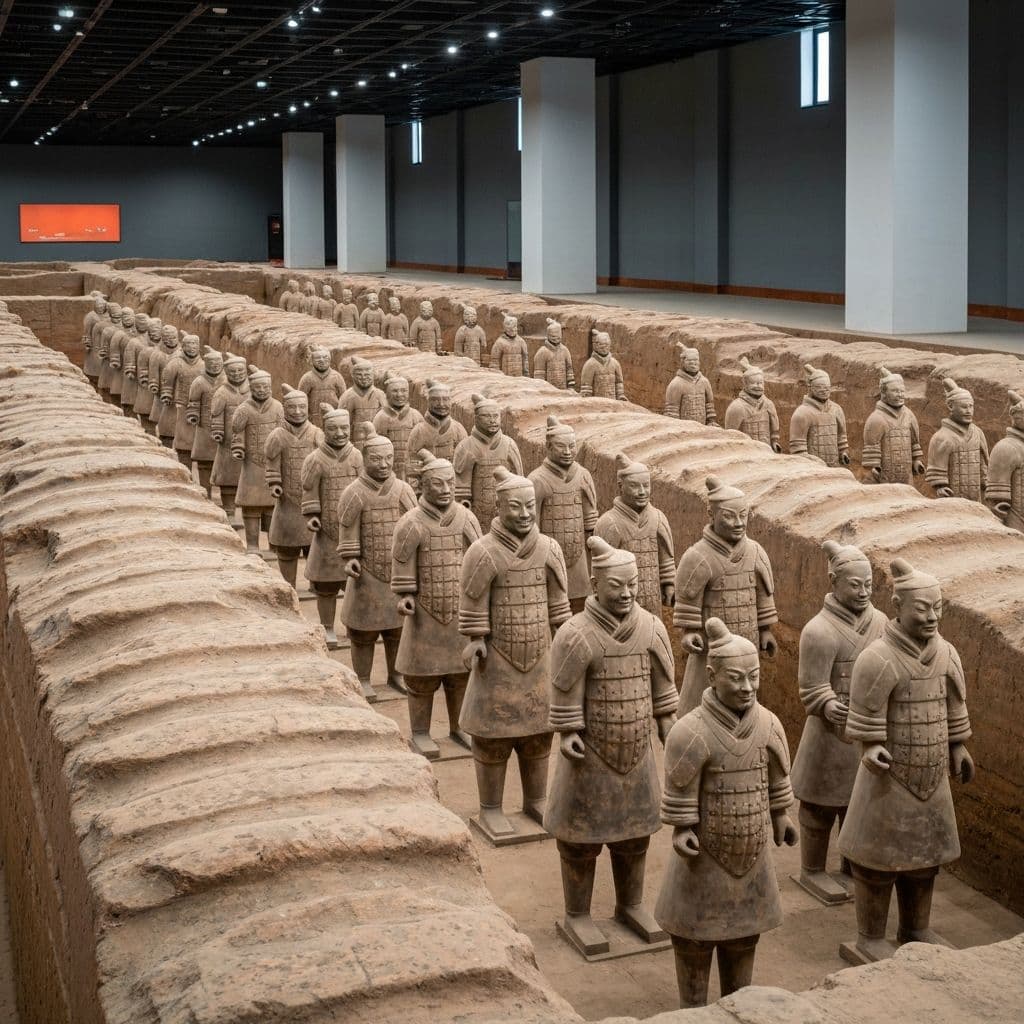
Terracotta Army
Attraction8,000 life-size clay warriors guarding Emperor Qin Shi Huang since 210 BC.
 4
Xi'an City Wall
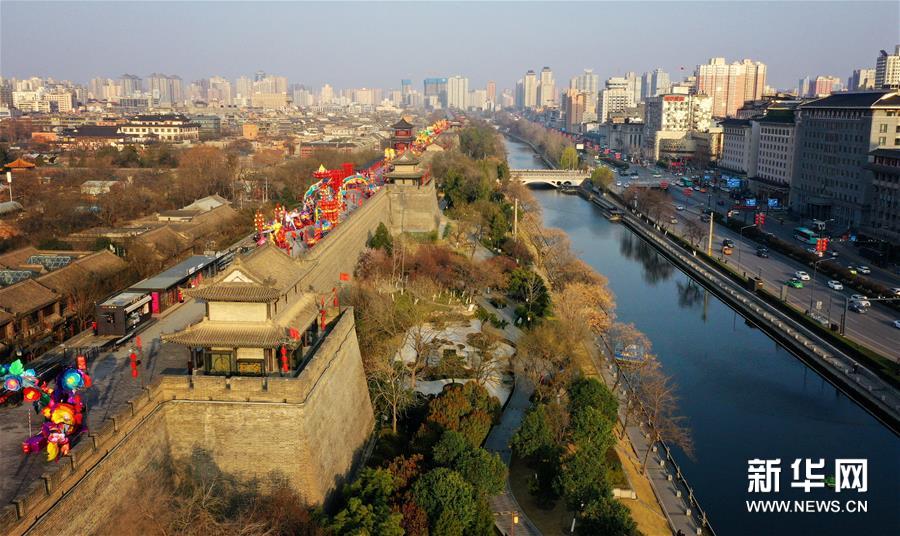
AttractionRide a bicycle on the best-preserved Ming city wall in China.
 5
Emperor Qinshihuang's Mausoleum Site Museum
AttractionDiscovered by villager Yang Zhifa while digging a well in 1974, the "Eighth Wonder of the World": Over 6,000 terracotta warriors in the First Pit infantry formation with "a thousand faces, a thousand looks"; the Second Pit features mixed arms formations and kneeling archers and green-faced figures; the Third Pit is the command headquarters; the Bronze Chariot and Horse Museum's First Chariot and Second Chariot are known as the "Crown of Bronze..."
 6
Emperor Qinshihuang's Mausoleum (Lishan Garden)
AttractionThe resting place of China's first emperor (built for 38 years, mobilizing 720,000 laborers): The burial mound has not been excavated—legends state it was "filled with mercury to simulate rivers, lakes, and seas" to mimic the terrain, which awaits archaeological verification; pit burials such as the Acrobatics Pit, Civil Official Pit, and Stone Armor Pit display the skills of various trades in the Qin Dynasty.
 7
Huaqing Palace (Huaqing Pool · Lishan)
AttractionThe site of King You of Zhou's Liguang Palace and the hot spring palace expanded by Emperor Xuanzong of Tang: The ruins of the Haitang Bath (where Yang Guifei was granted a bath) and the other five sets of imperial bath ruins, such as the Xingchen Bath and the Lotus Bath, are the actual setting for the poetic scene of "Spring Cold, Bathing in Huaqing Pool."
 8
The Everlasting Regret Show
AttractionA real-life performance of Bai Juyi's "The Everlasting Regret": The Lishan mountain body and Jiulong Lake serve as the stage; ice screens and lighting technology recreate the legendary scene of "On the Seventh Day of the Seventh Month, in the Hall of Eternal Life." It is a benchmark work in national tourism performance art.
 9
Han Yangling Museum
AttractionThe mausoleum of Emperor Jing of Han (Liu Qi), started in 153 BC: The underground museum of the outer pit ruins features a glass walkway overlooking over 8,000 pottery figures in their original state. Robed pottery figures (armless bare figures) are a unique witness to Han dynasty burial customs, and the Luo Jing Shi (Compass Stone) site is a physical example of Han dynasty surveying techniques.
 10
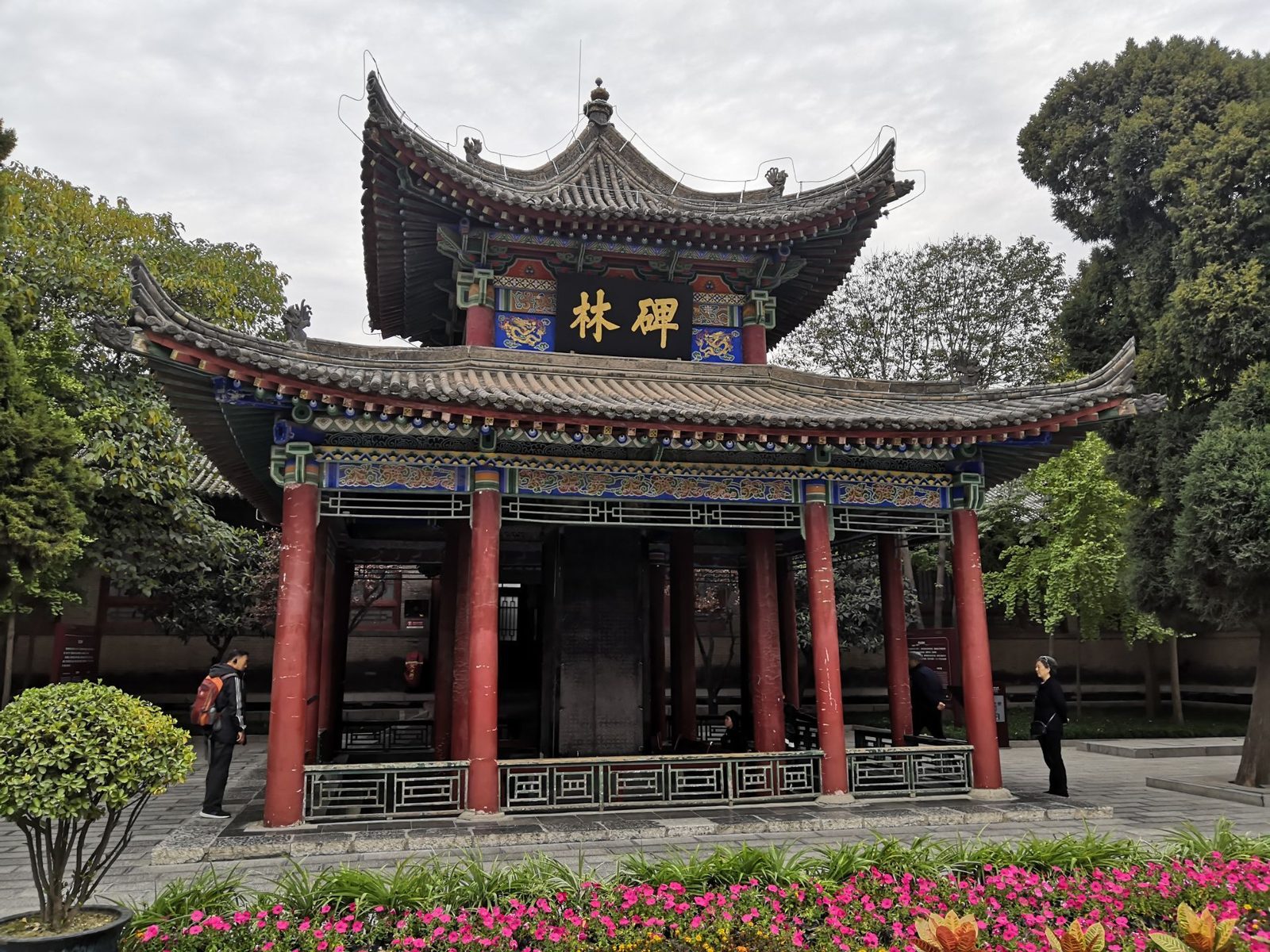
Forest of Stone Steles Museum
AttractionA treasury of stone inscriptions built in the 2nd year of Yuanyou of the Northern Song Dynasty (1087): Over 900 years of history, housing more than 3,000 steles. The Stone Platform Classic of Filial Piety and the Kaicheng Stone Classics (650,000 characters of Tang dynasty Confucian classics), the Nestorian Stele, Yan Zhenqing's Precious Pagoda Stele, and Liu Gongquan's Xuanmi Pagoda Stele are famous calligraphy steles; the Six Steeds of Zhaoling (four real steeds) represent the peak of Tang stone carving. A holy land of calligraphy, known as the 'China Stone Carving Art Museum'.
 11
Small Wild Goose Pagoda · Xi'an Museum
AttractionTang Jianfu Temple Pagoda (built in 707, currently 13 layers out of 15, 43.3m high): 'Morning Bell at the Wild Goose Pagoda' is one of the Eight Sceneries of Guanzhong. The legendary 'divine healing' of the pagoda body cracking twice during the Ming Dynasty Shaanxi earthquake and then automatically closing is a architectural marvel.
 12
Daci'en Temple · Big Wild Goose Pagoda
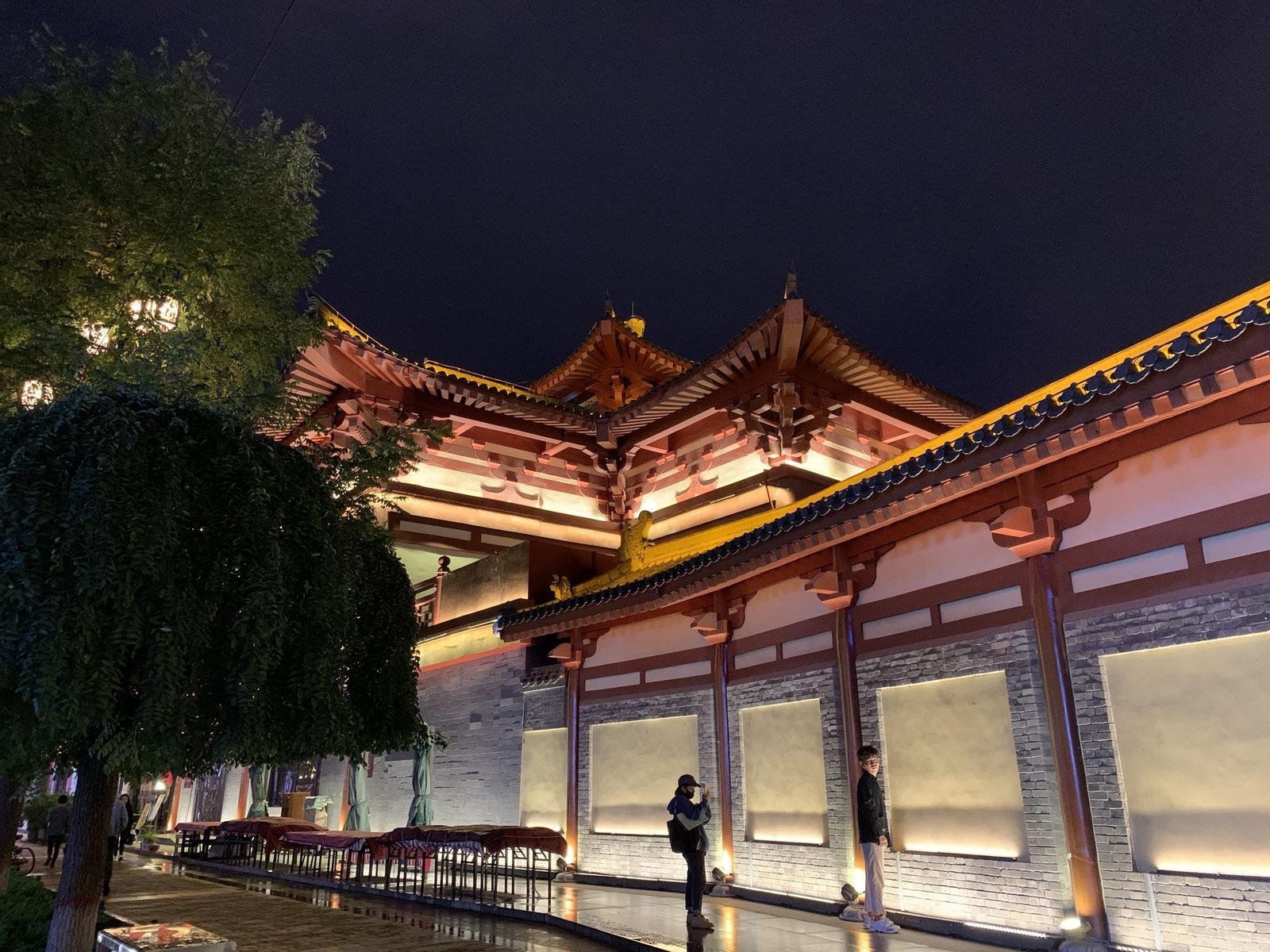
AttractionA pagoda built by Xuanzang in the 3rd year of Yonghui of the Tang Dynasty (652) to house scriptures: The site of the translation institute where Xuanzang presided over translations. The seven-story, 64.5-meter wooden-style brick pagoda is a national treasure. Xuanzang Sanzang Courtyard and Dabyue Hall commemorate this pilgrim.
 13
Daxingshan Temple
AttractionAn imperial temple in Jingshan Ward of Sui-Tang Chang'an: The ancestral court of Esoteric Buddhism (the Three Great Masters of Kaiyuan transmitted Esoteric Buddhism here). A 'National Temple' built by Emperor Wen of Sui. The translation of scriptures by Amoghavajra witnesses Sino-Indian cultural exchange.
 14
Qinglong Temple
AttractionThe ancestral court of Esoteric Buddhism in the Sui and Tang Dynasties (abbot was Master Huiguo): Japanese monk Kukai (Master Kobo) came here to seek the Dharma, making it the ancestral court of Japanese Shingon Buddhism. The Huiguo-Kukai Memorial Hall was built with Japanese aid in 1986.
 15
Xi'an City Wall
AttractionA city wall expanded in the 3rd year of the Hongwu reign of the Ming Dynasty (1370) on the basis of the Tang Imperial City (total length 13.74 km, best preserved in China): Four gates Changle, Anding, Yongning, and Anyuan; the Yongning Gate drawbridge, moon city, and barbican system is complete; riding the wall (bicycle CNY 45/100 min) is a classic activity; Guang Gate Ruins Museum displays Tang Imperial City sluice gate ruins (Free).
 16
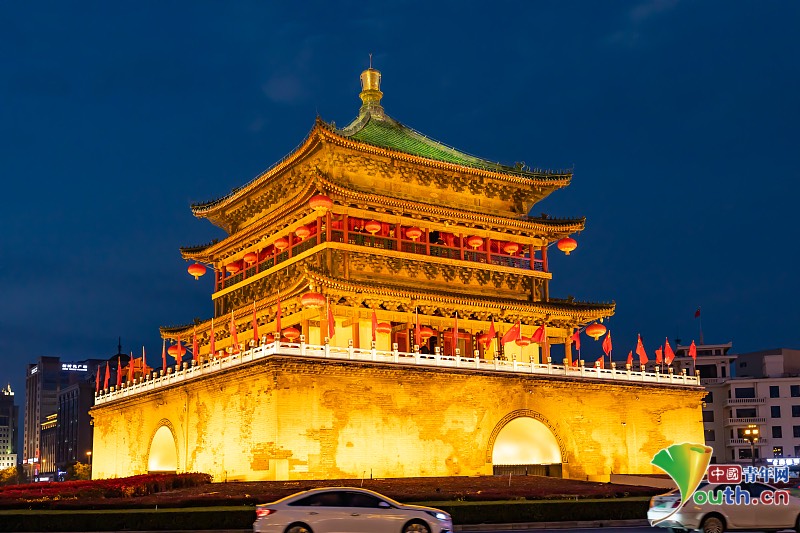
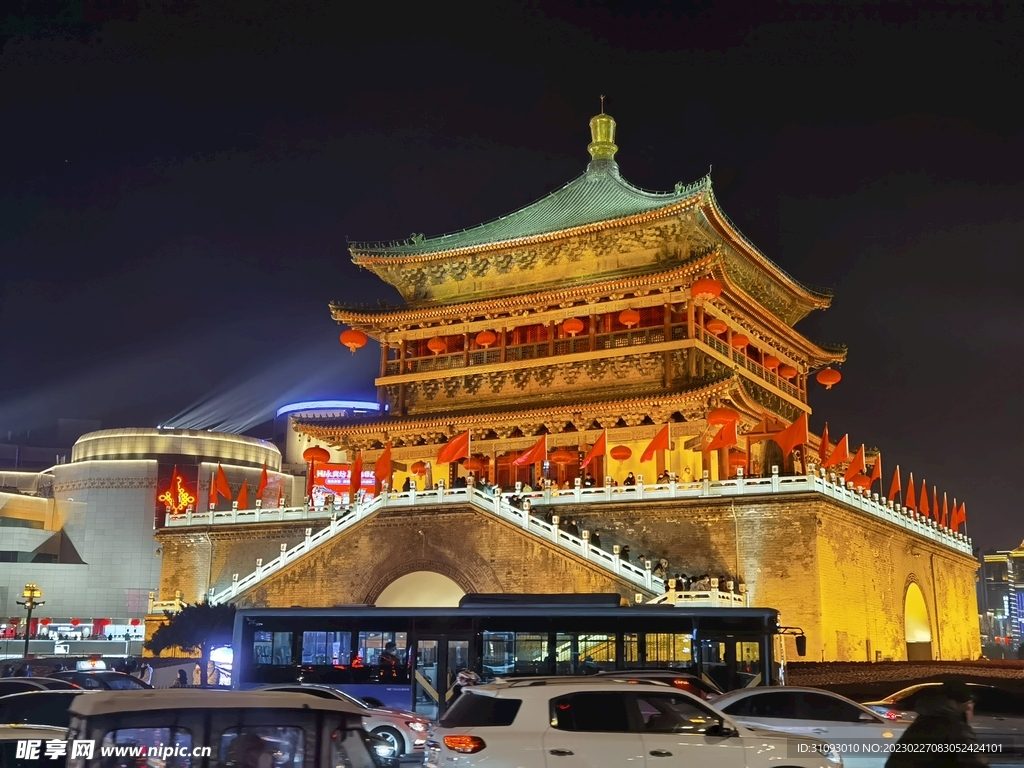
Bell Tower
AttractionA 36-meter double-eave three-tier four-corner hip roof wooden structure built in the 17th year of the Hongwu reign of the Ming Dynasty (1384): The largest and most complete Bell Tower existing today; the original Jingyun Bell cast by Tang Ruizong is preserved in the Forest of Steles; exhibits inside and bell performances are highlights.
 17
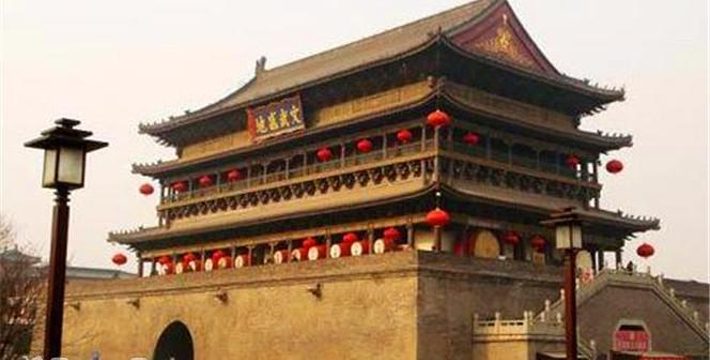
Drum Tower
AttractionBuilt in the 13th year of the Hongwu reign of the Ming Dynasty (1380): China's largest existing Drum Tower (34m high), 24 solar term drums displayed corresponding to the 24 solar terms, the plaque 'Wenwu Shengdi' is a famous plaque.
 18
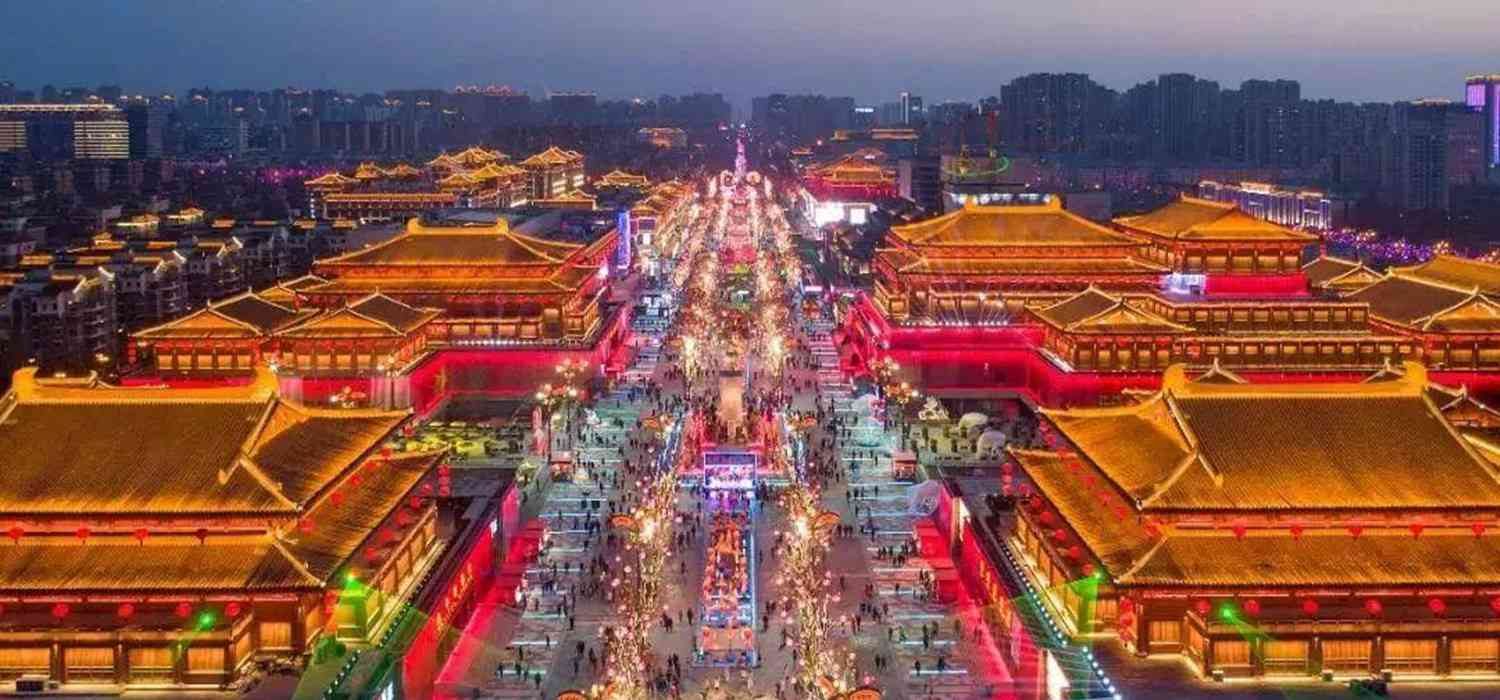
Muslim Quarter (Beiyuanmen)
AttractionBeiyuanmen Historical and Cultural Block: Former site of Ming and Qing government offices converted into a residential area; a street of Pita bread, cured beef, mirror cakes, and pomegranate juice (extending through Huajue Lane, Xiyangshi, Dapiyuan), the block is the residential area for Xi'an Muslims with 7 mosques distributed.
 19
Huajue Lane Great Mosque
AttractionBuilt in the 1st year of Tianbao of the Tang Dynasty (742) legend, rebuilt in the Ming Dynasty: A mosque with a Chinese-style garden layout — Shengxin Pavilion and Phoenix Pavilion wooden archways form a unique architectural example of 'Chinese-Arab fusion', rich display of world Islamic artifacts.
 20
Shuyuanmen
AttractionThe street in front of the Ming Dynasty 'Guanzhong Academy' (Feng Congmu teaching): A street of four treasures of the study, calligraphy, paintings, and stele rubbings; brush, ink, paper, and inkstone and rubbings experiences continue the 'Forest of Steles - Shuyuanmen' cultural belt.
 21
Xiangzi Temple
AttractionLegendary site where Han Xiangzi of the Eight Immortals is said to have taken Taoist vows (one of the ancestral seats of Quanzhen Taoism); the Han Xiangzi plum-blossom stele is a famed relic, and the small temple is exquisite and tranquil
 22
Defu Lane
AttractionA bluestone-paved street of cafés and bars (pioneered Xi'an's nightlife from the 1990s): the Fenxiang–Defu Lane–Zhubashi nightlife belt, where old Xi'an's tipsy memories coexist with trendy cafés
 23
Yongxingfang Food Street
AttractionAn intangible-heritage food street built on the former site of Tang minister Wei Zheng's mansion (opened 2014): the viral 'bowl-smashing' ritual (rice wine, CNY 5 a bowl), a hub of Shaanxi cuisine and intangible-heritage performances, and a collection of county-level specialties — 'taste all of Shaanxi in one bite'
 24
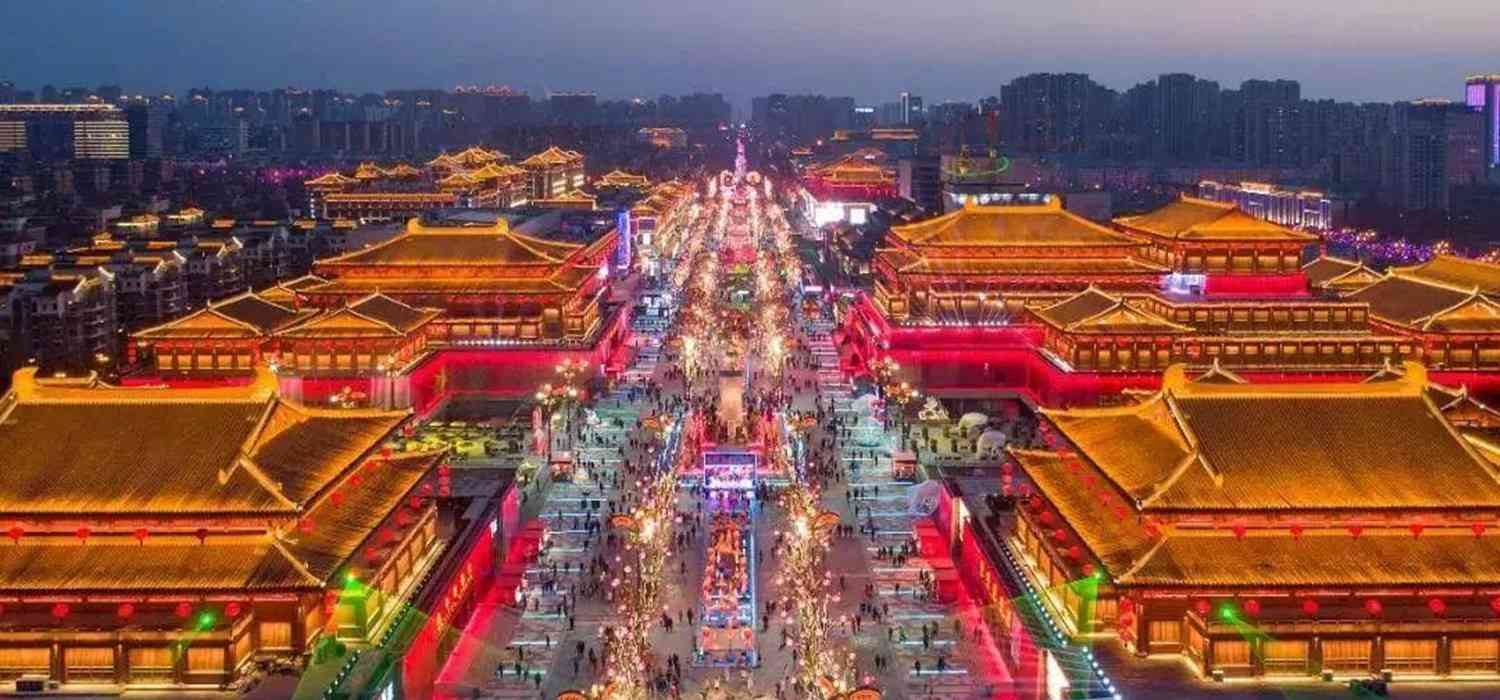
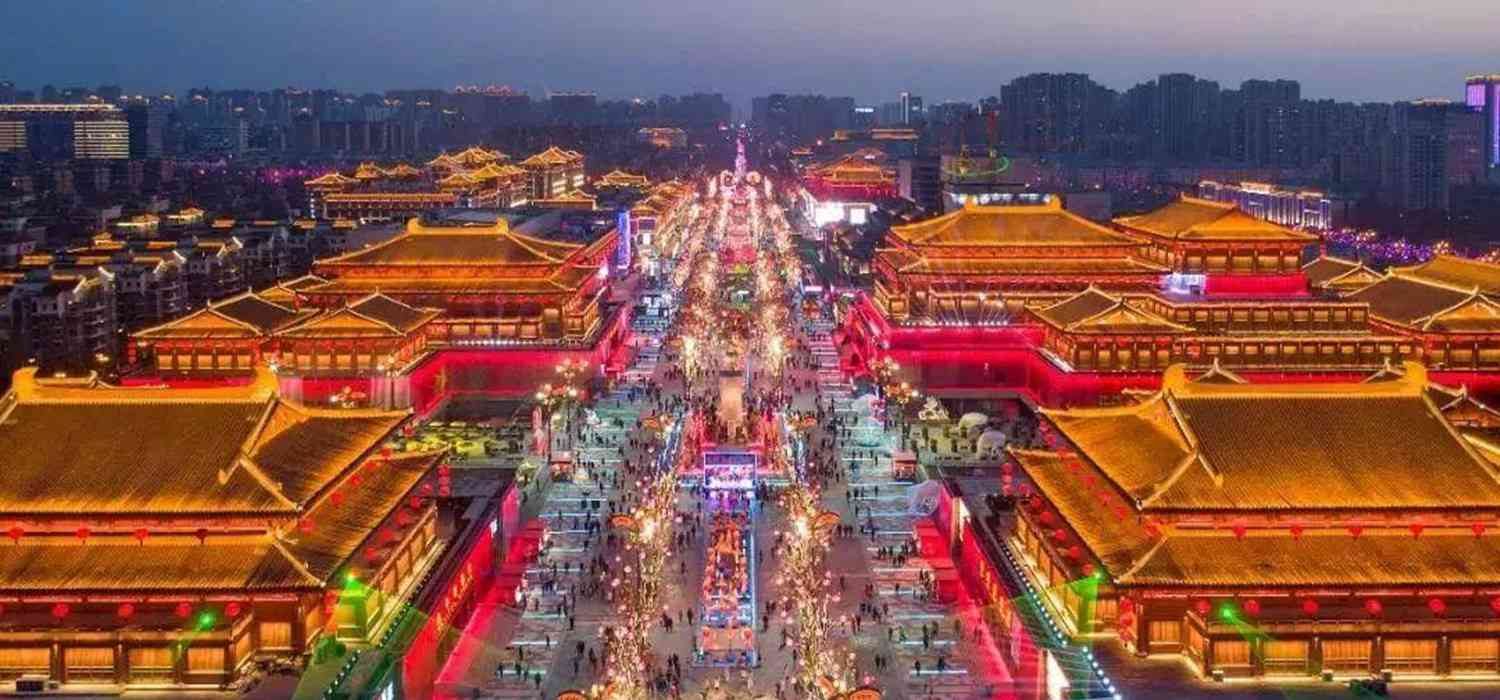
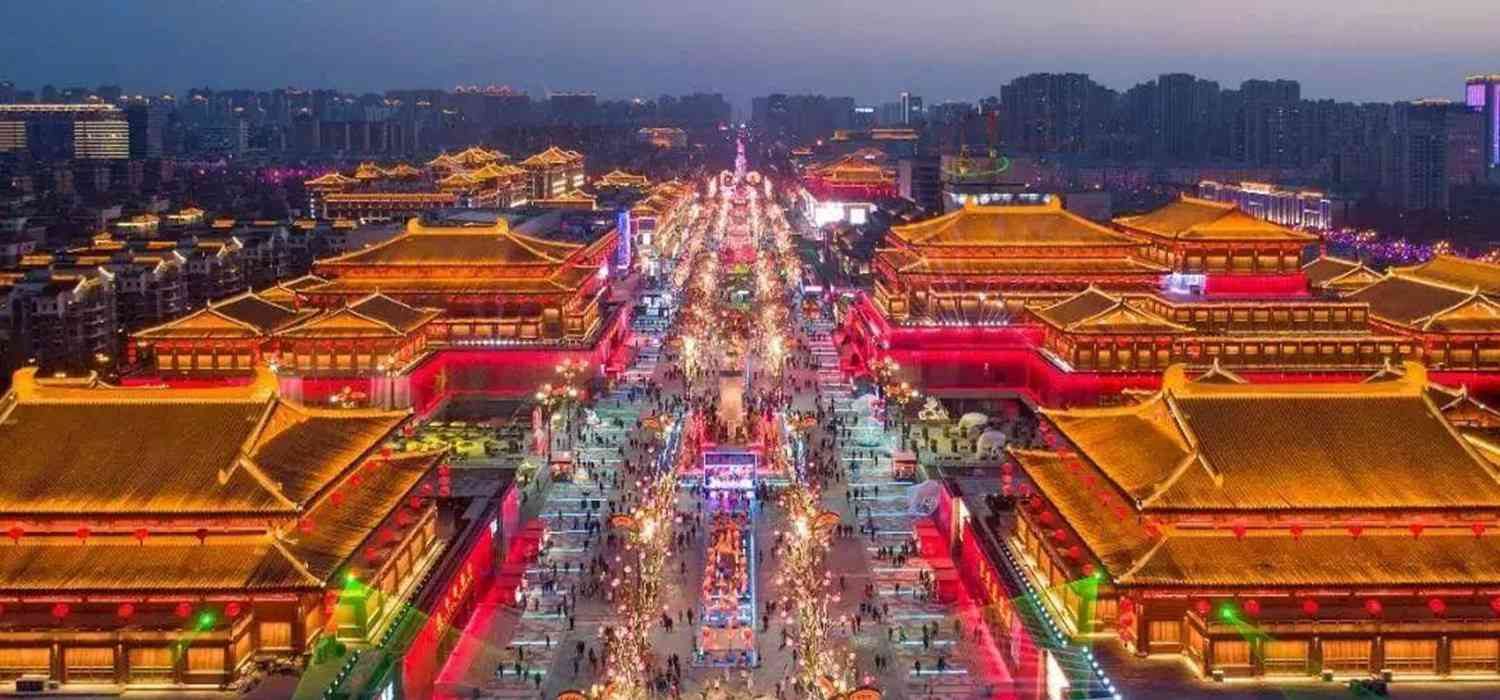
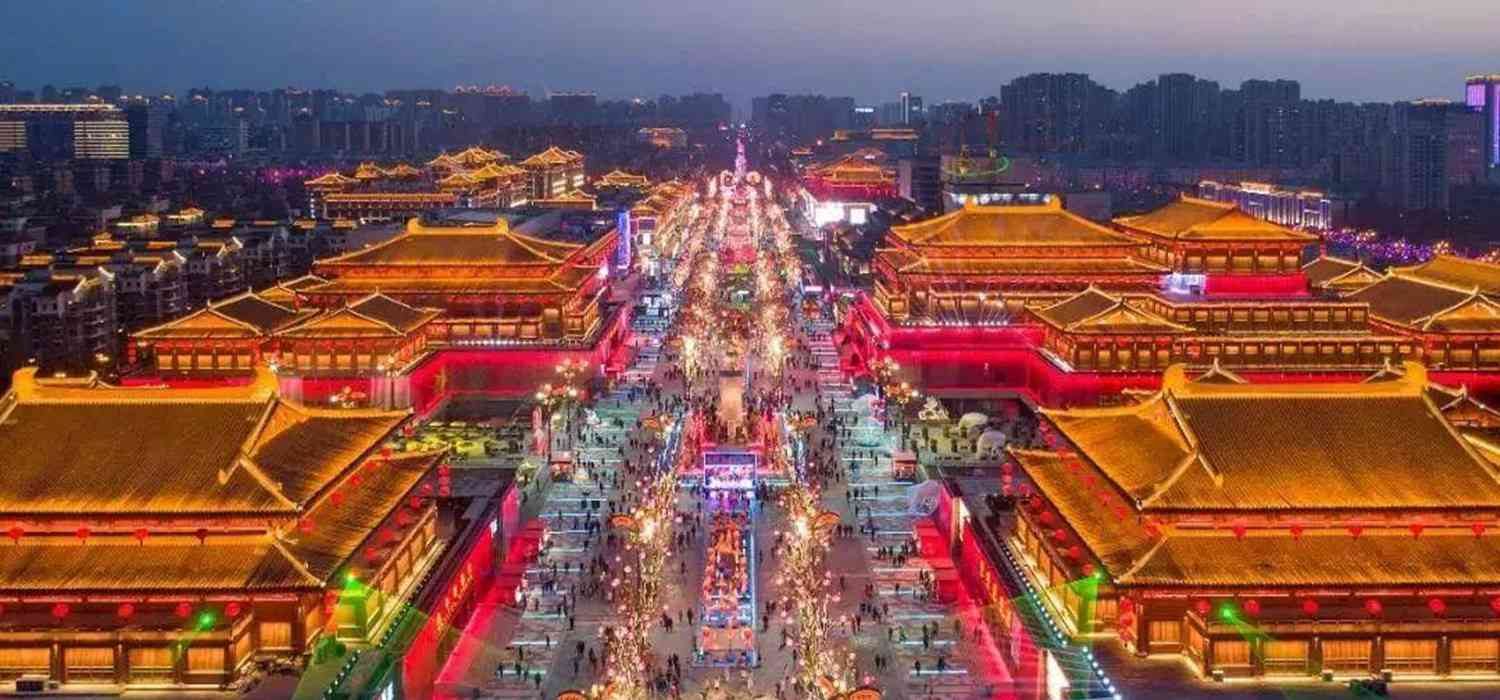
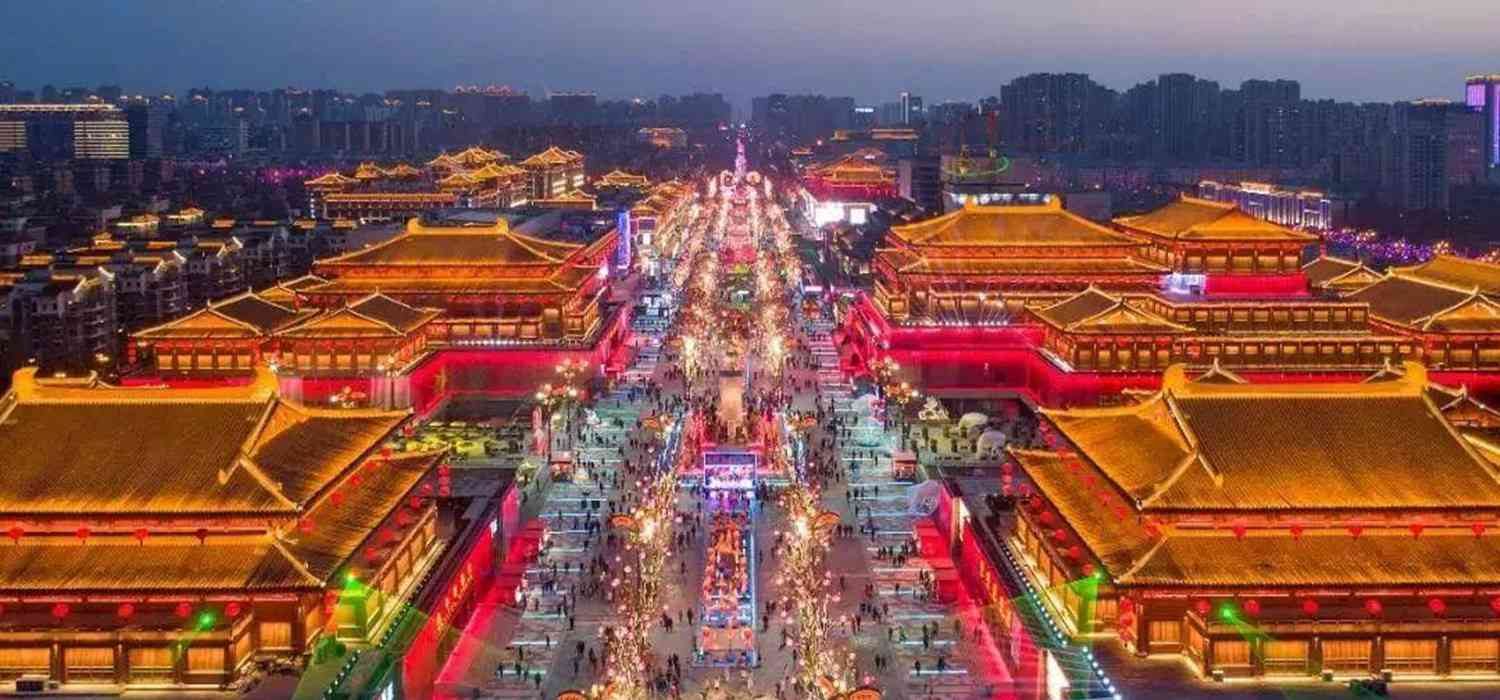
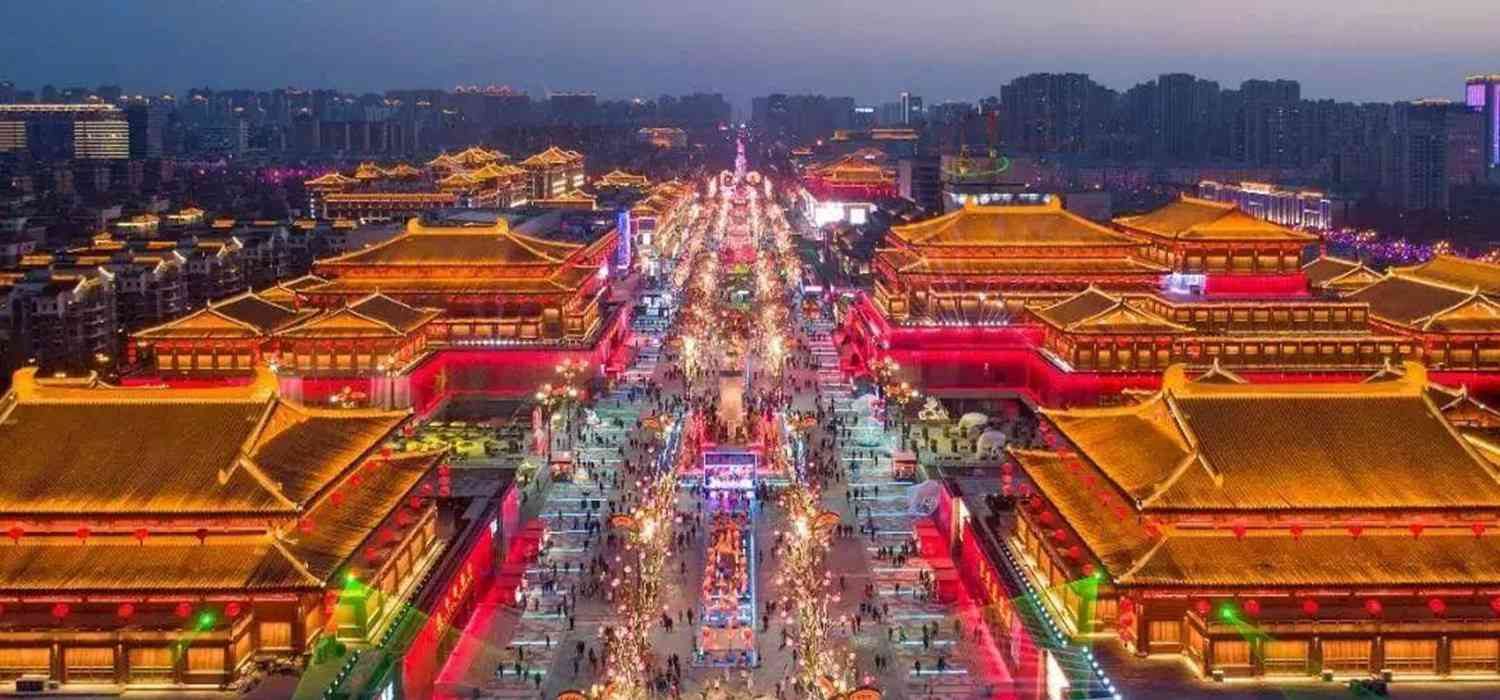
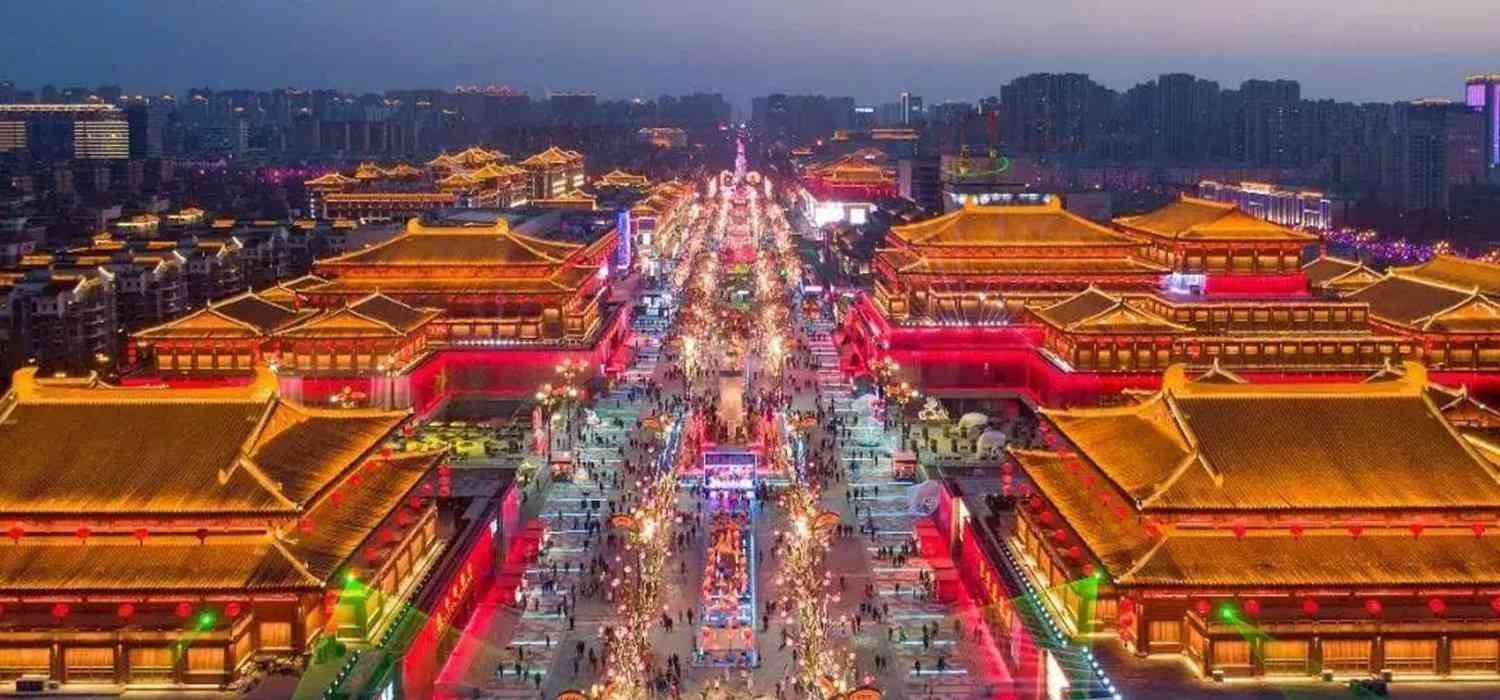
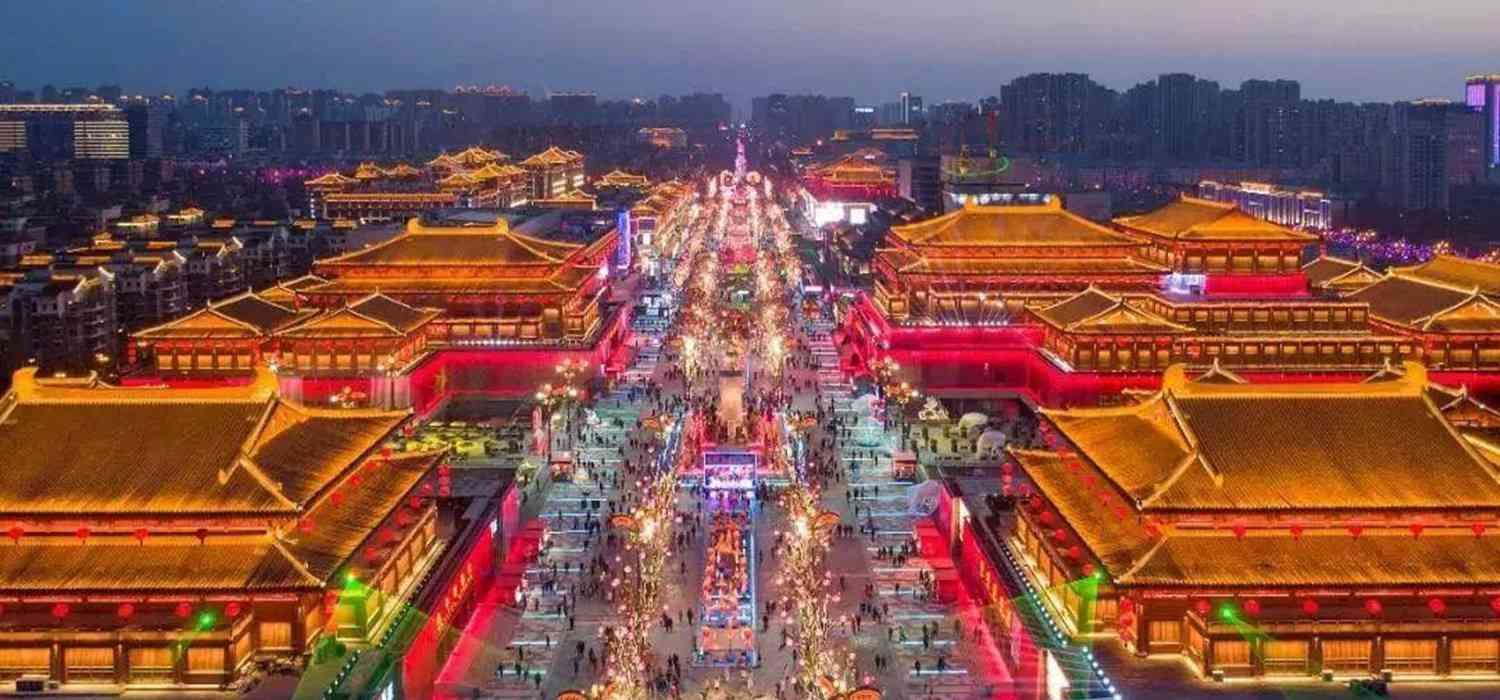
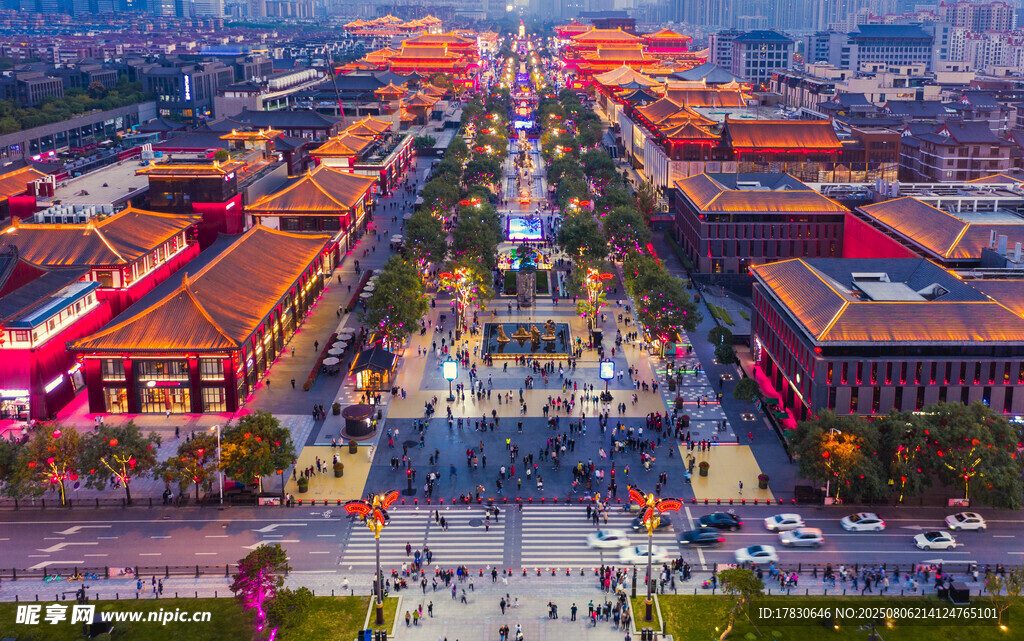
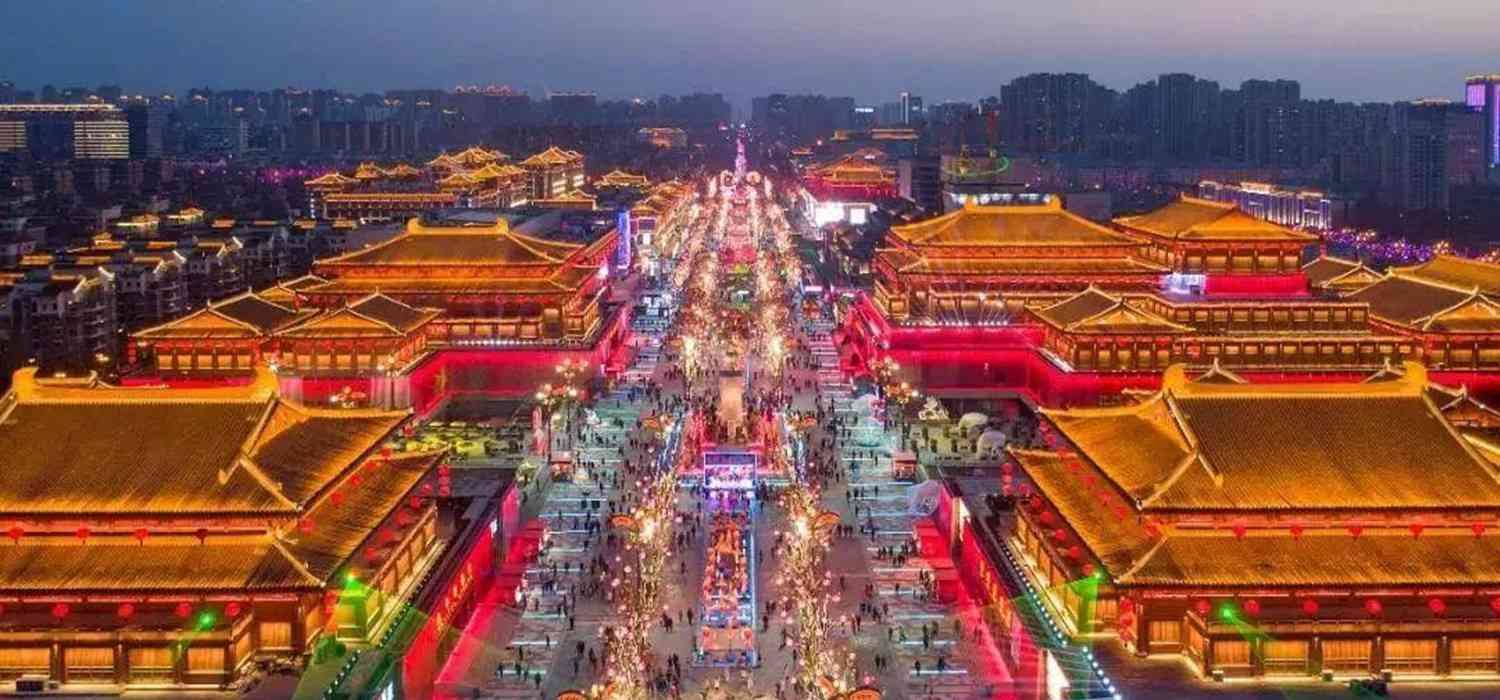
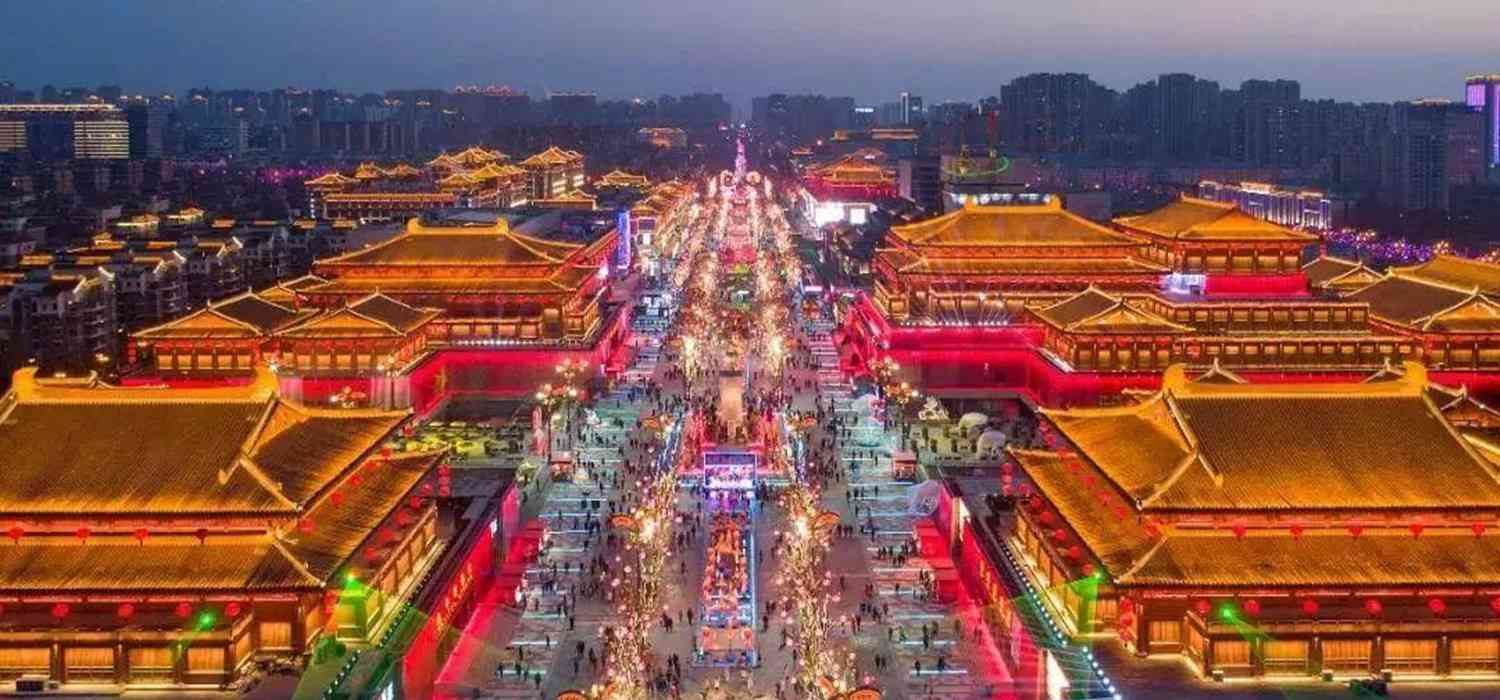
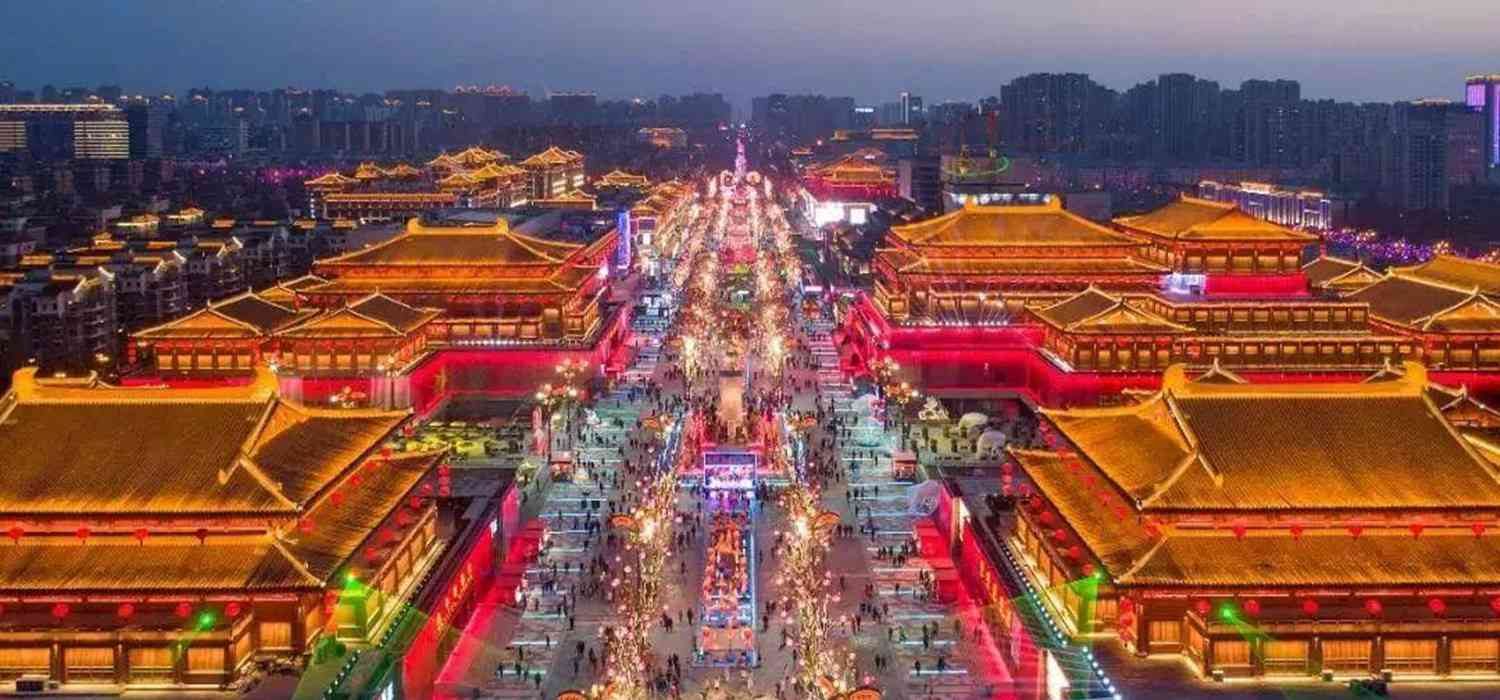
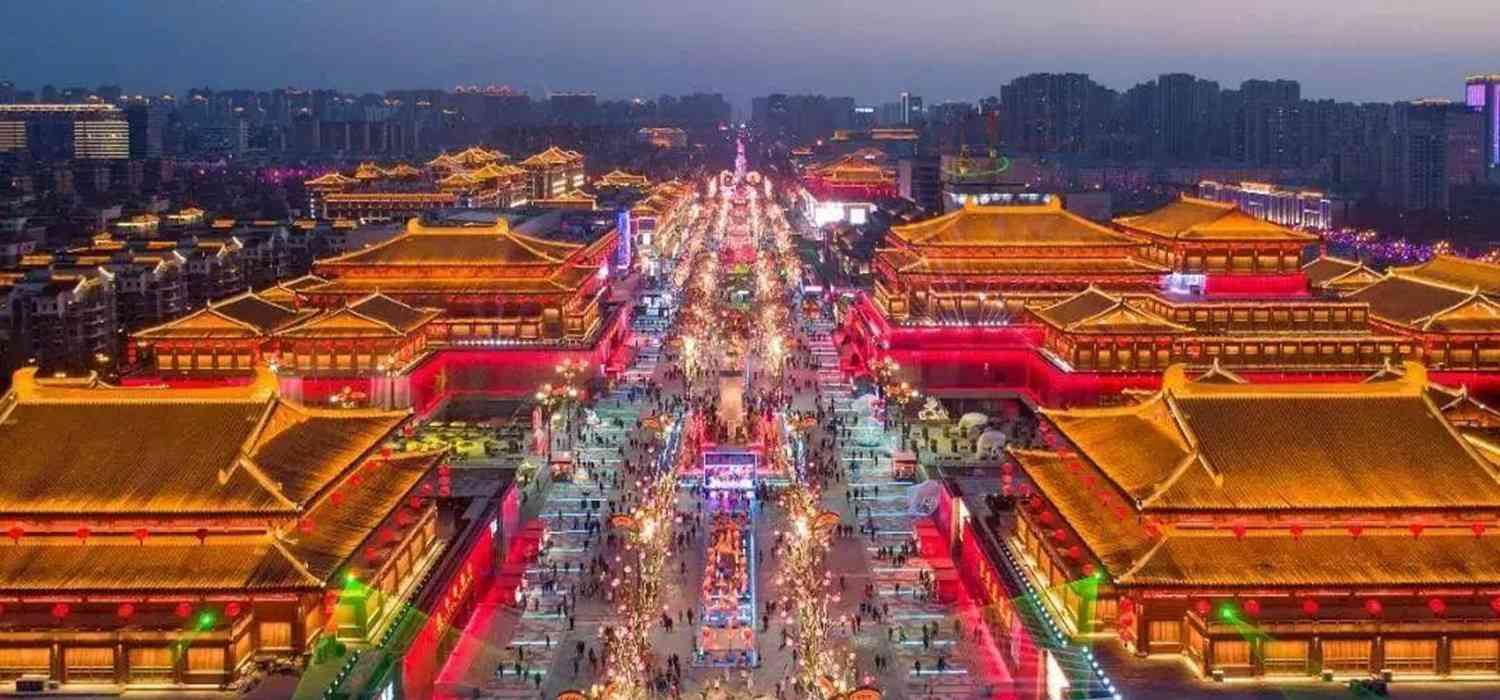
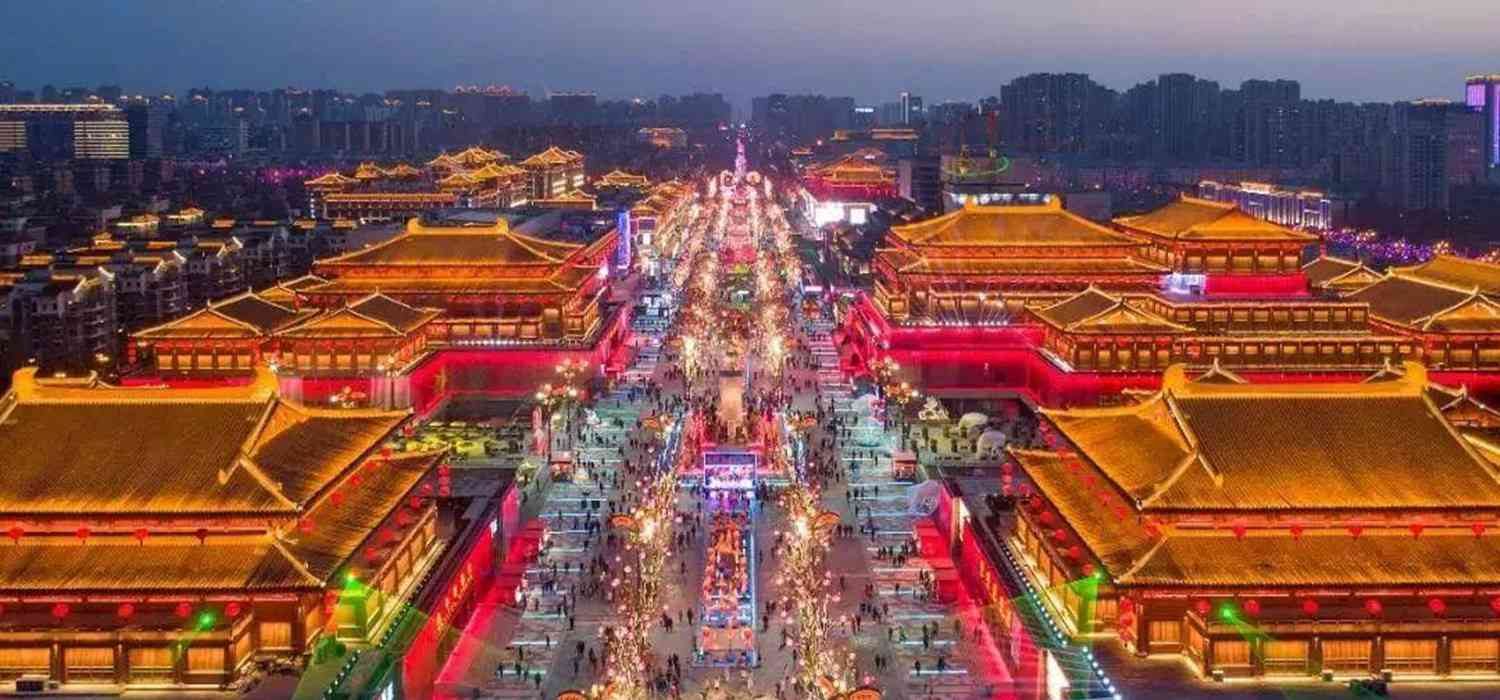
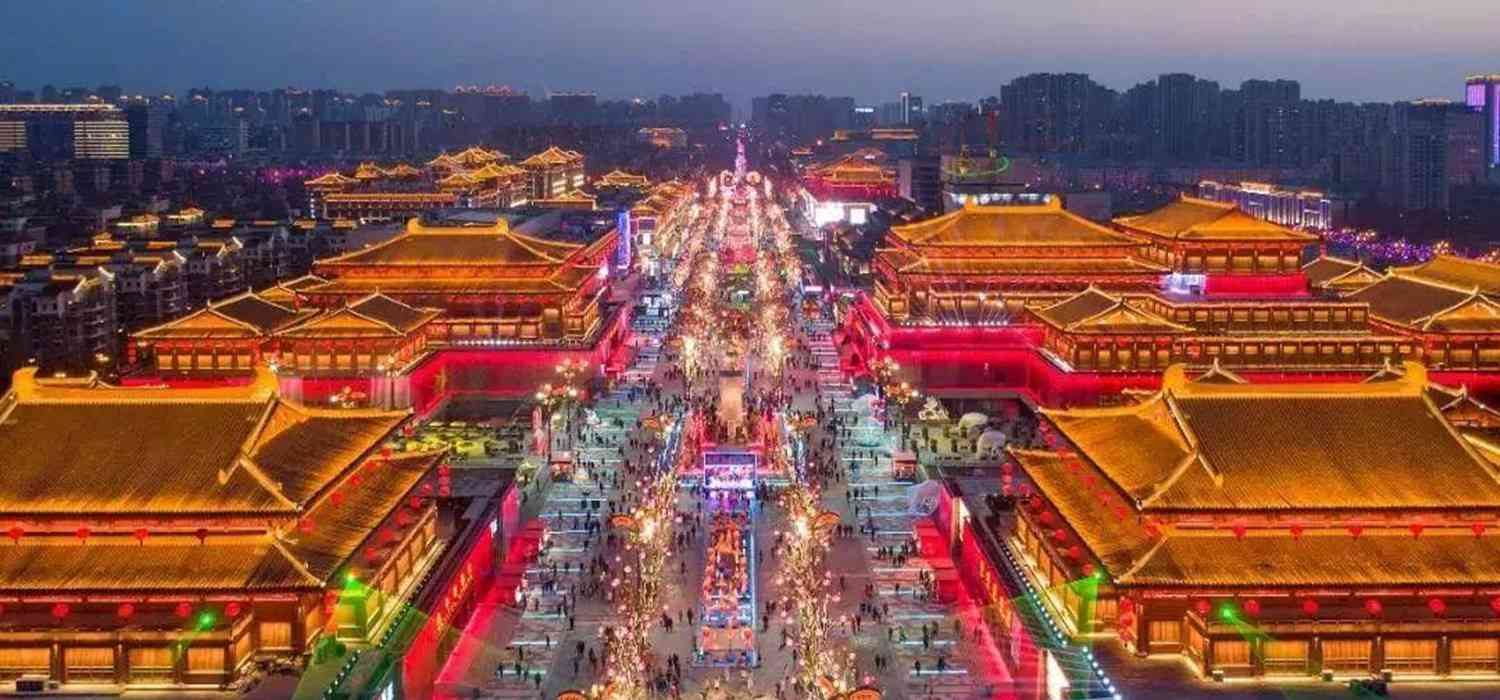
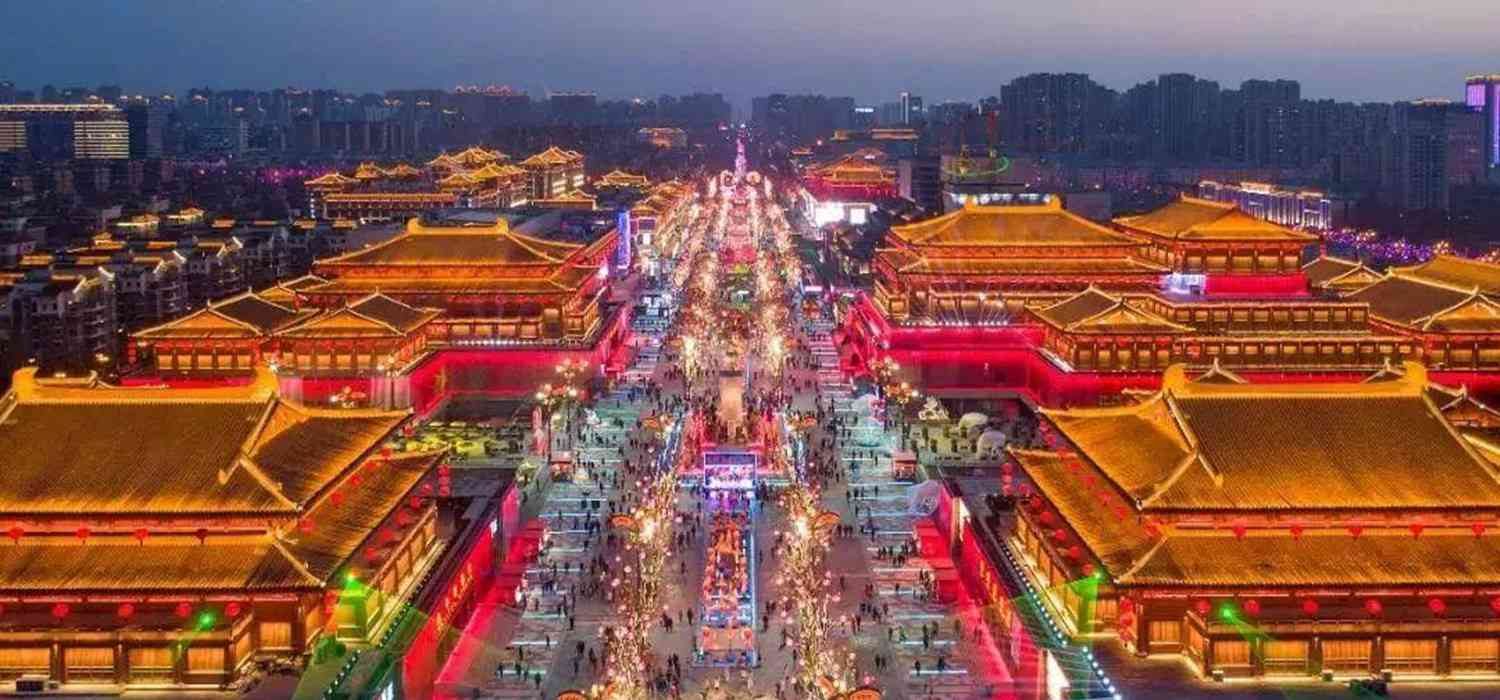
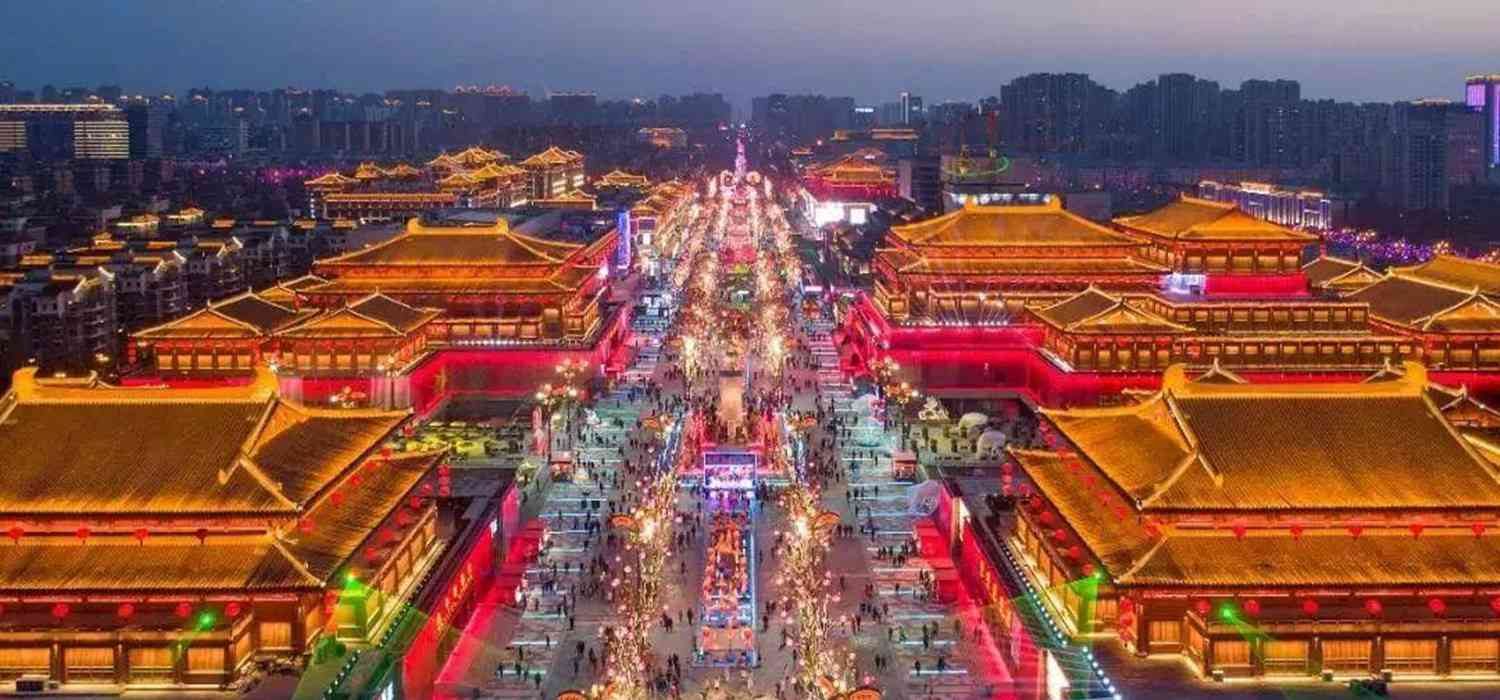
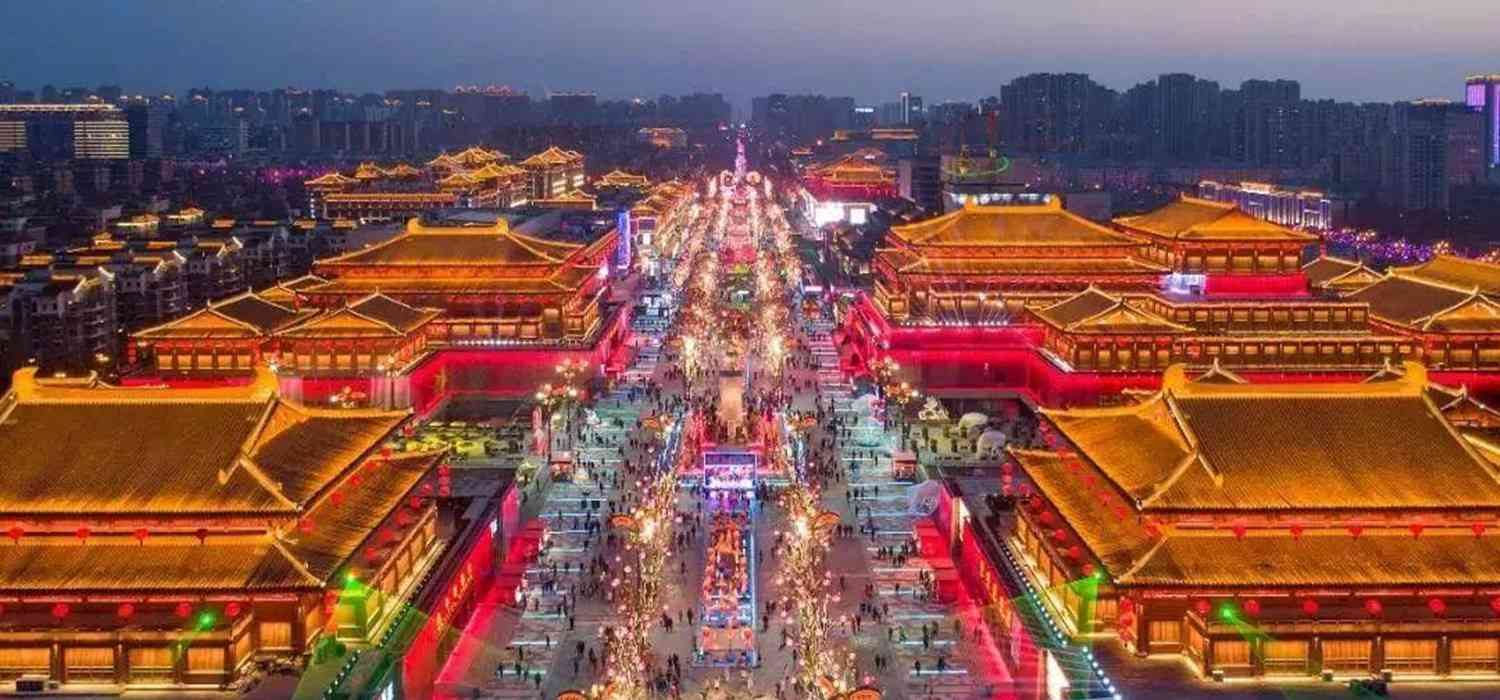
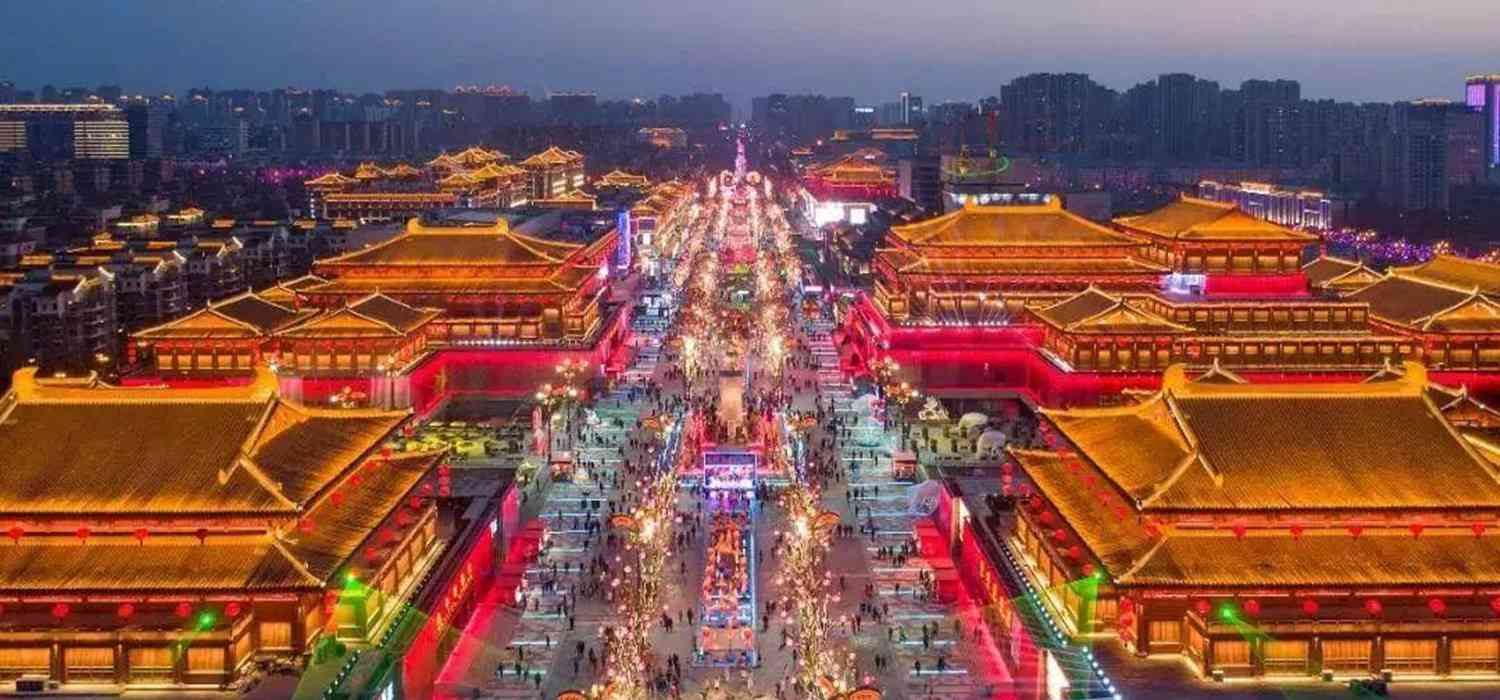
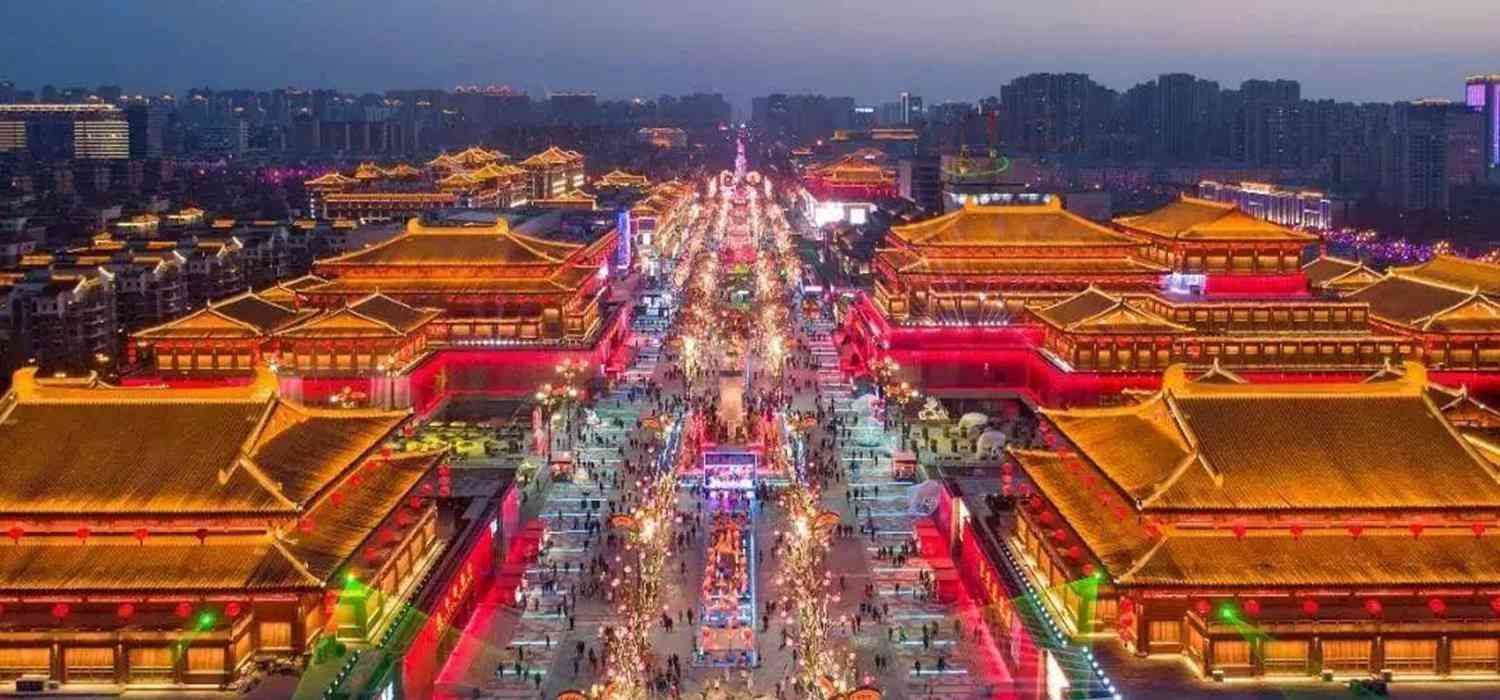
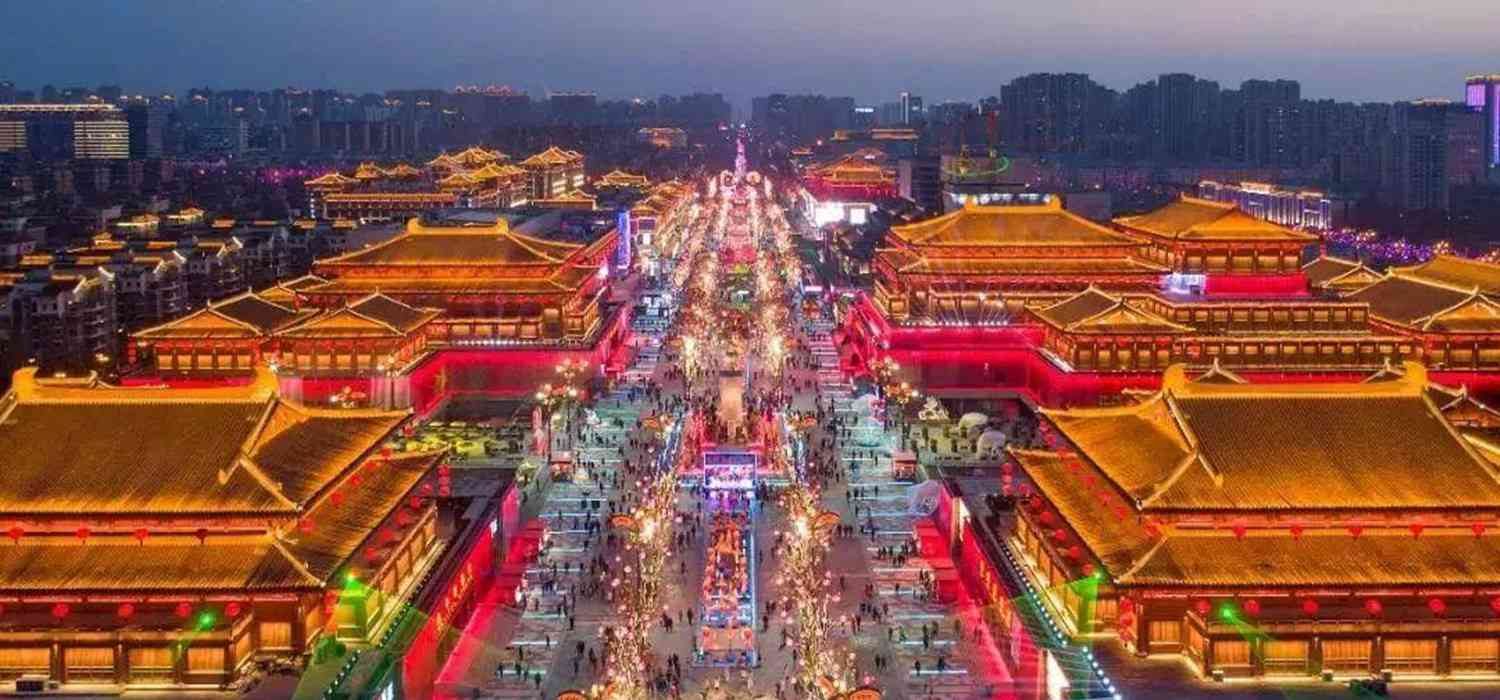
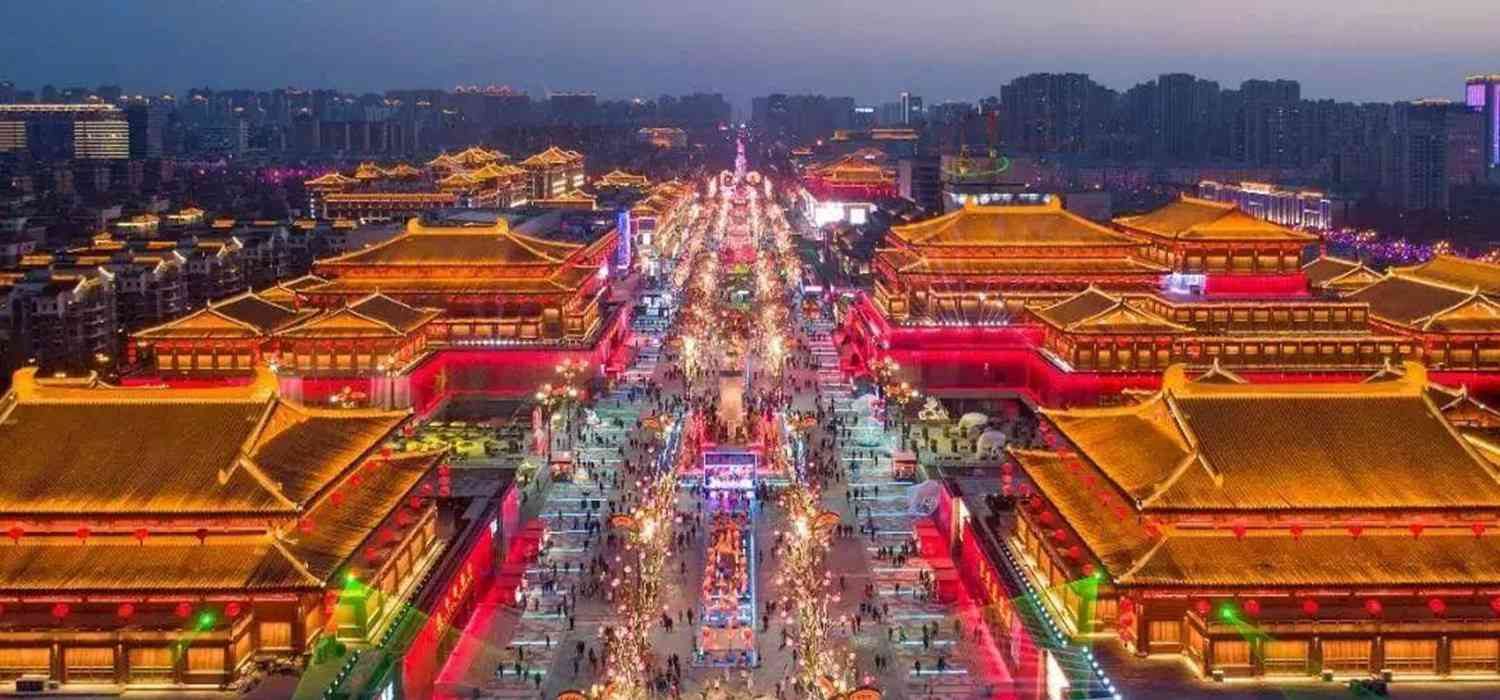
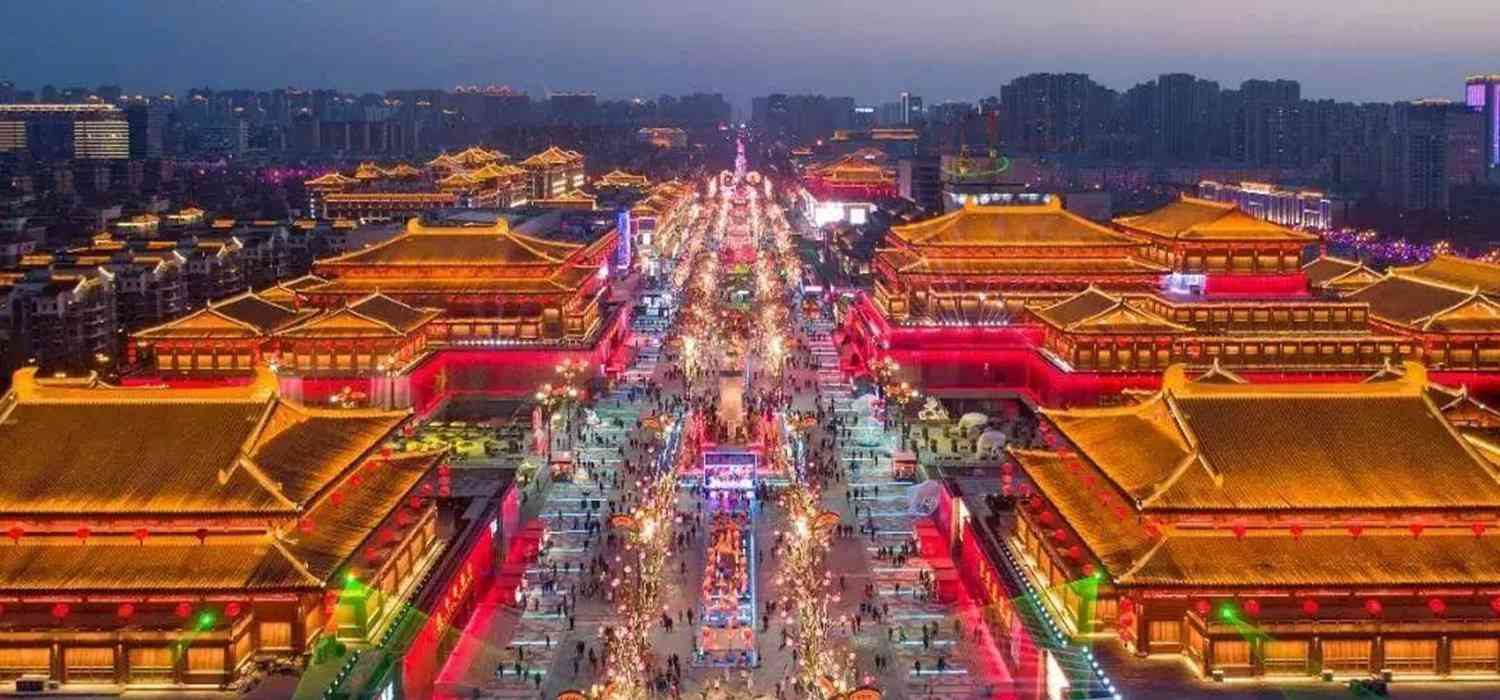
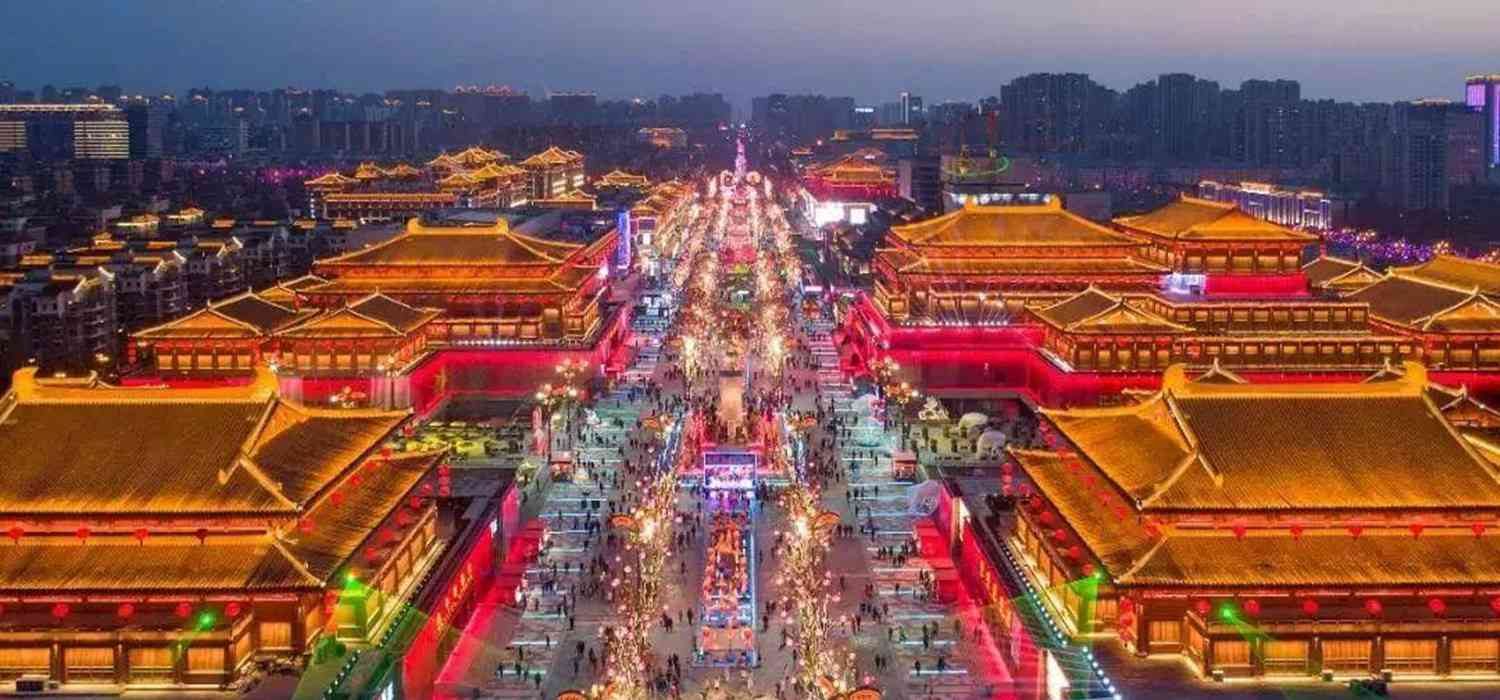
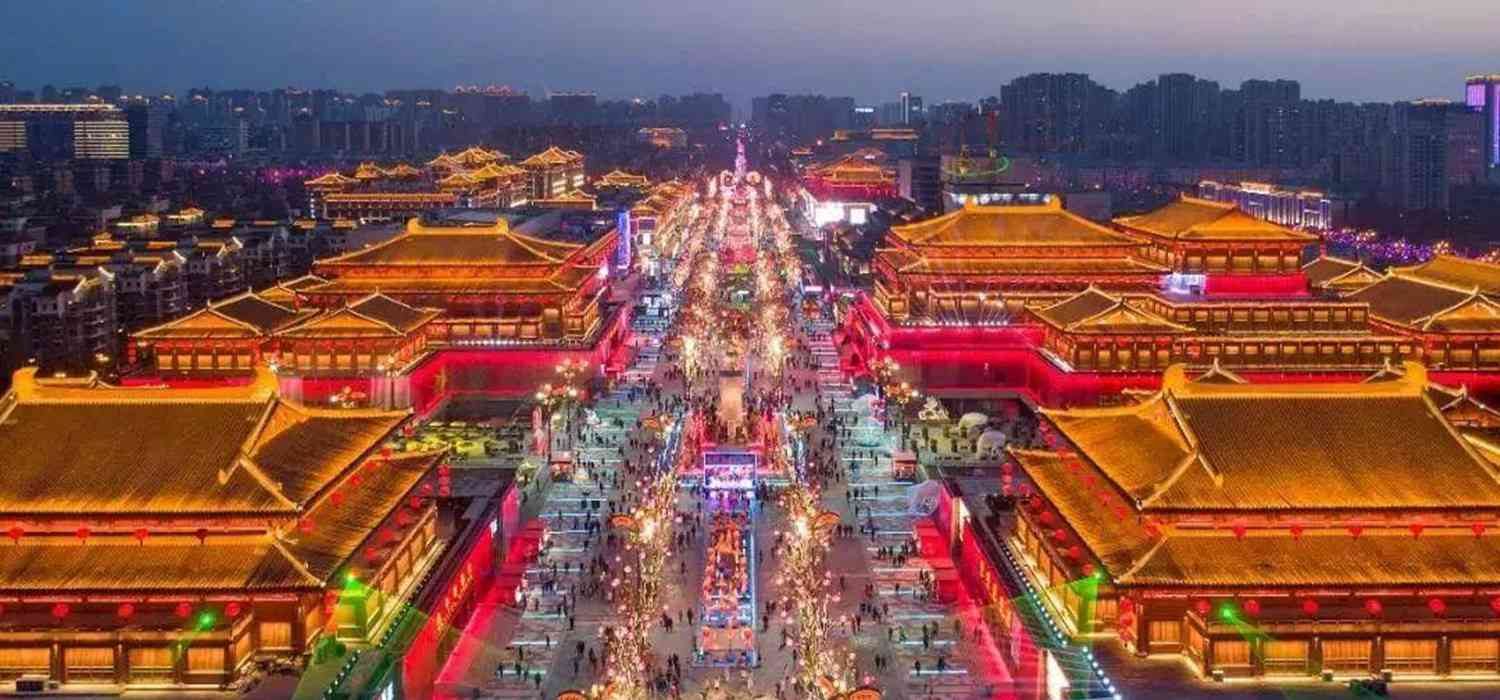
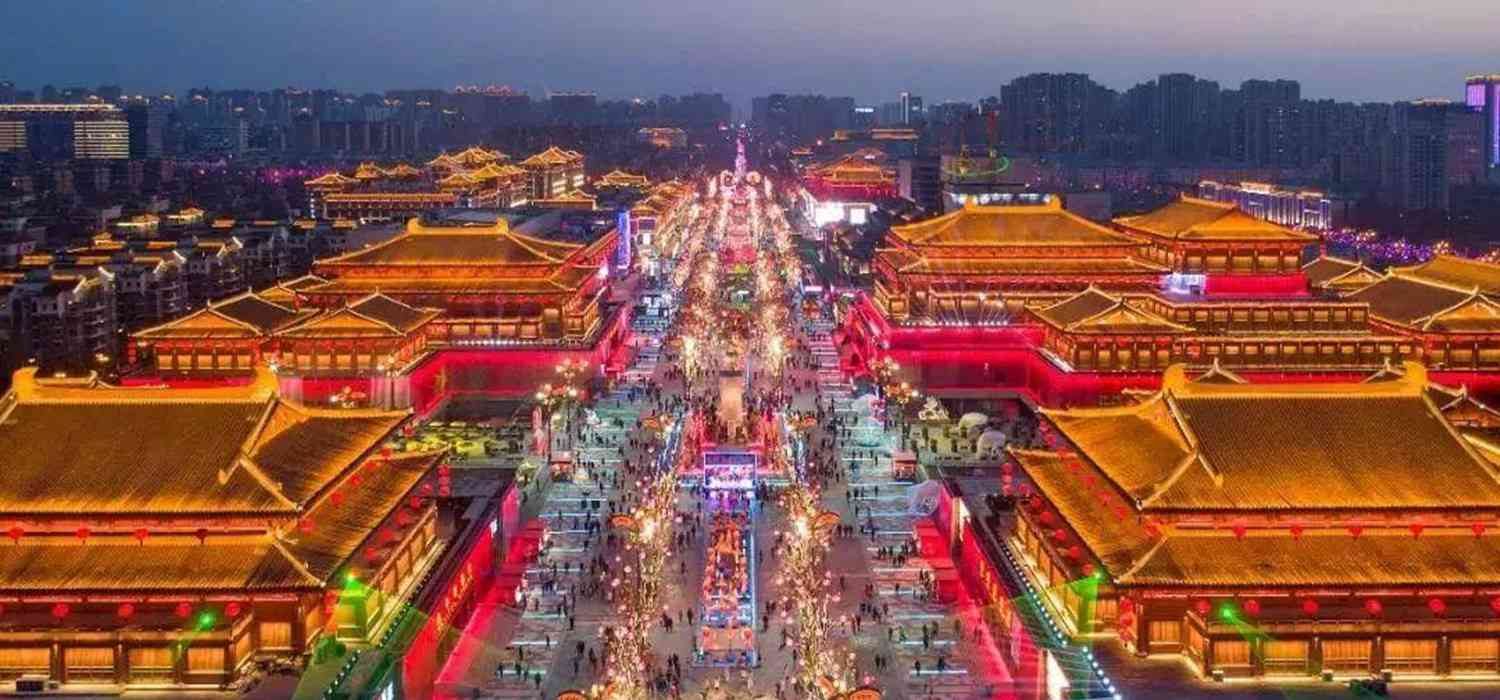
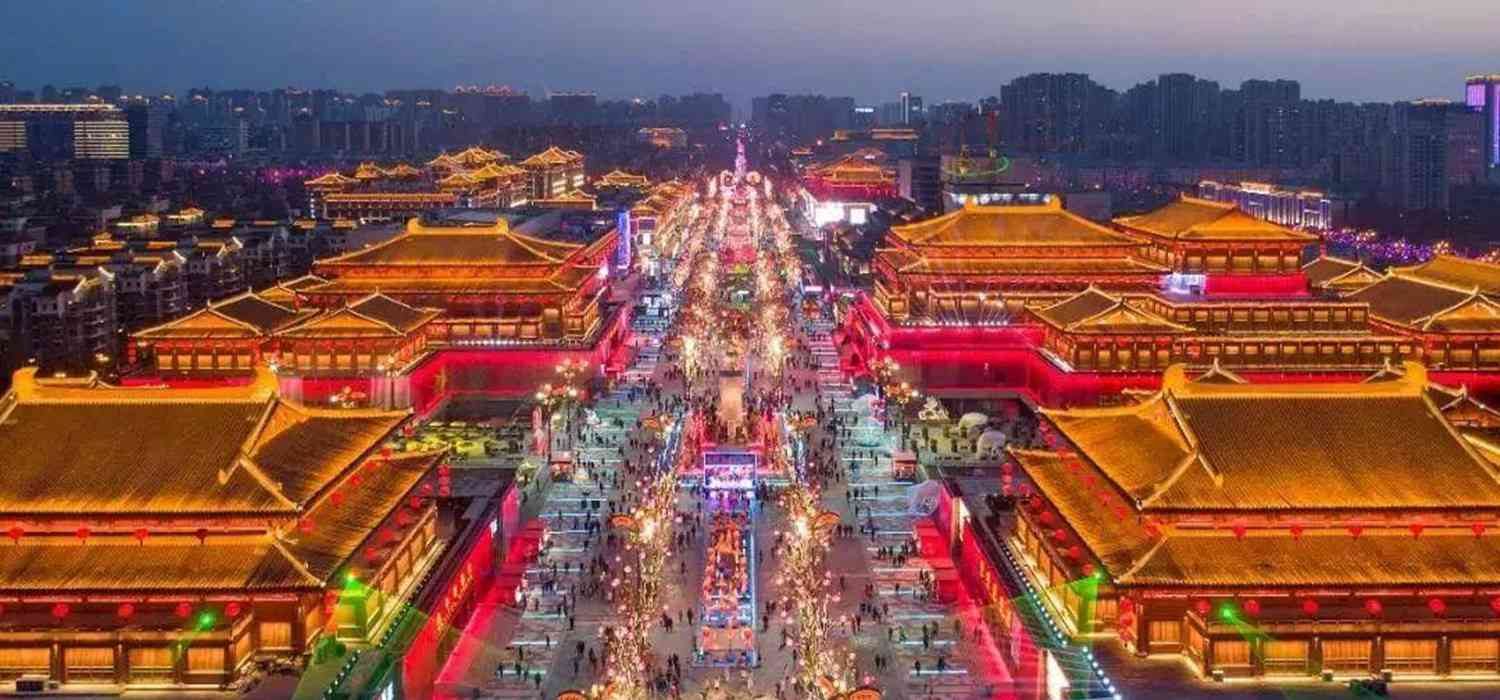
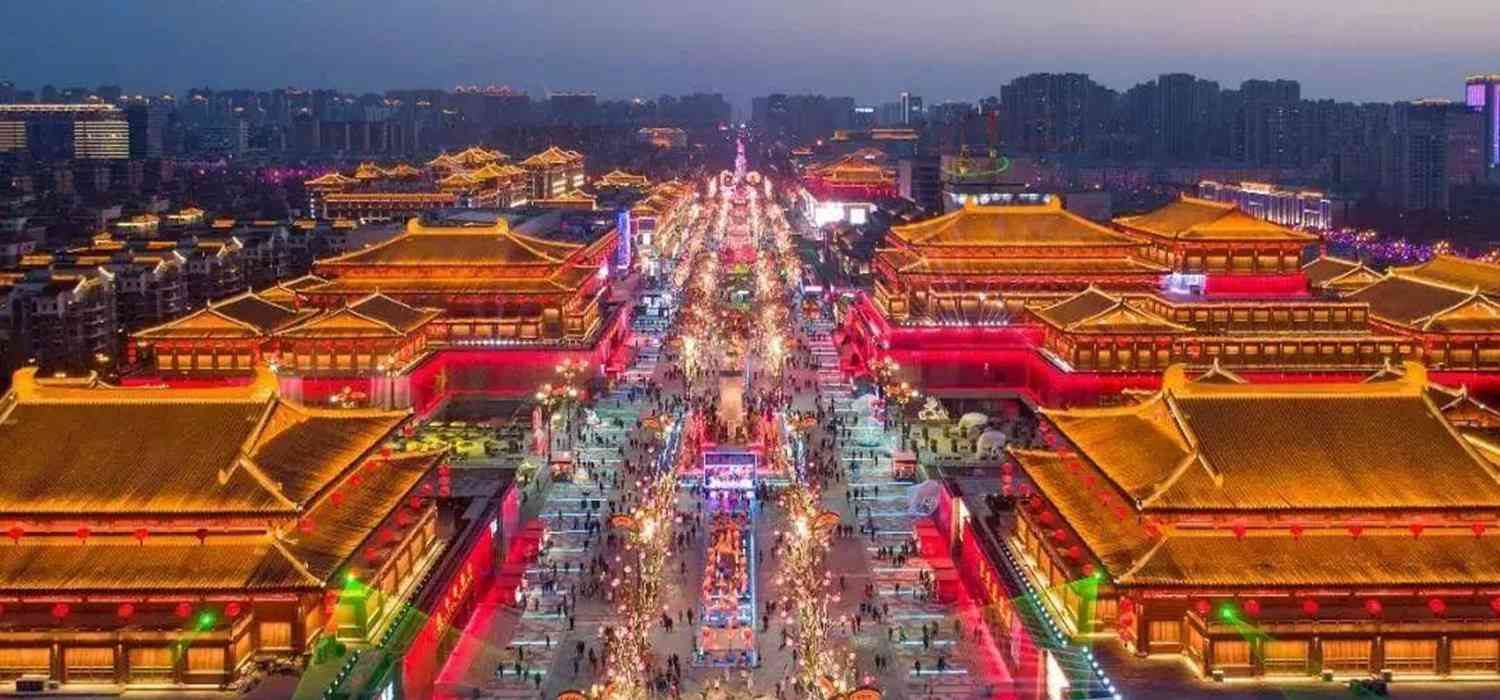
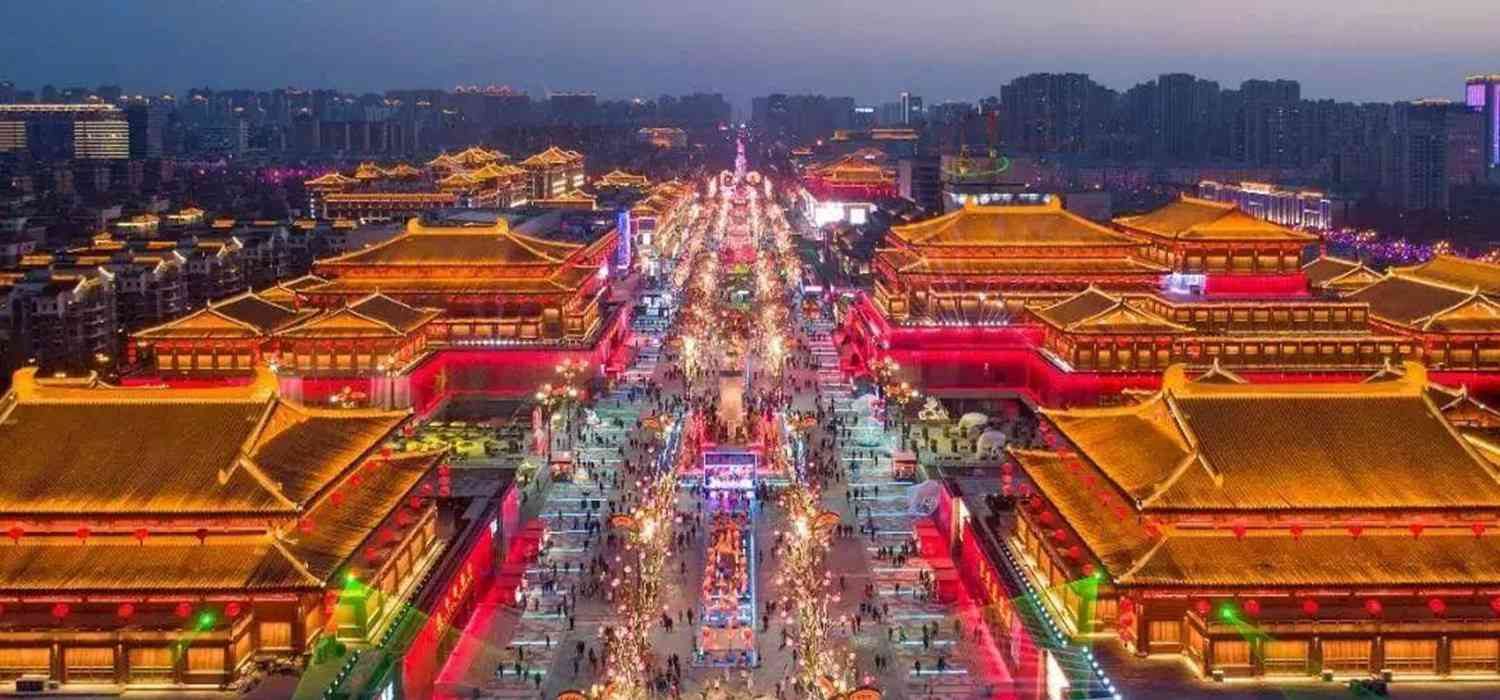
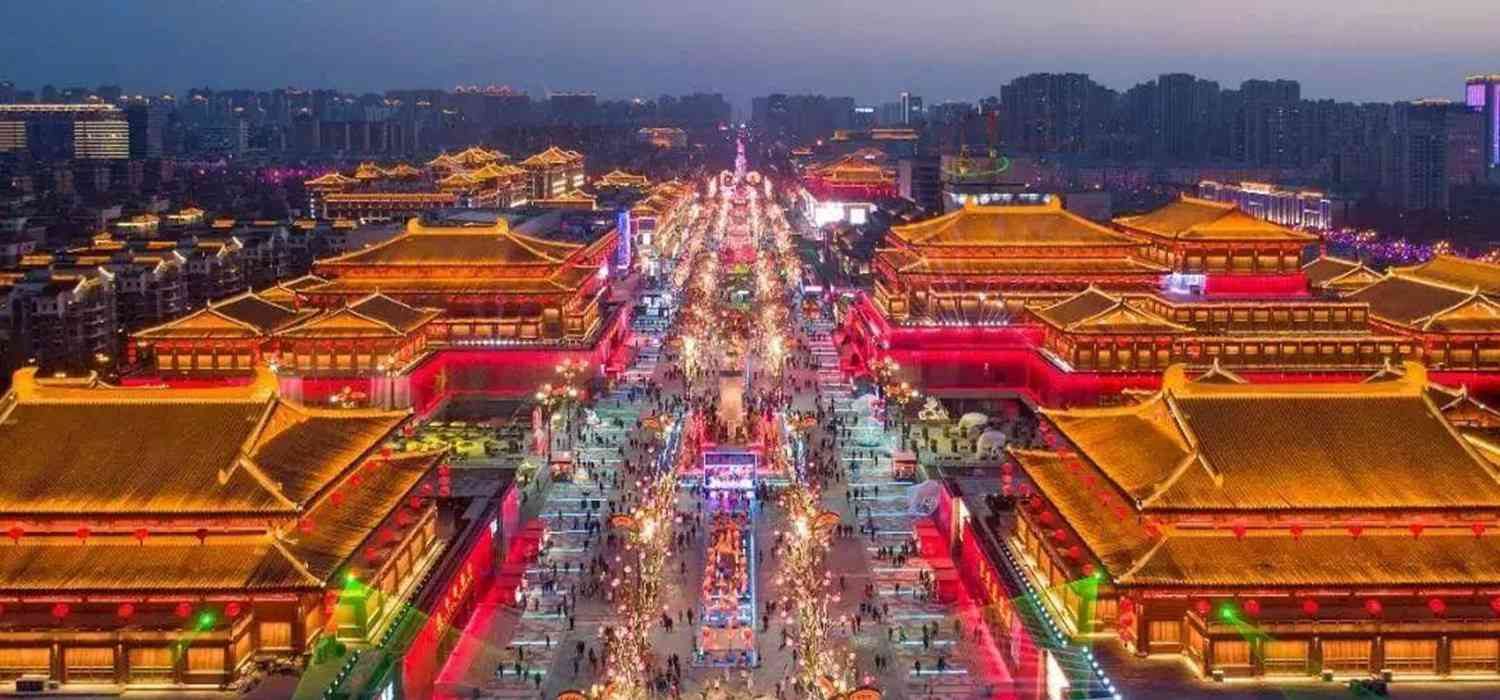
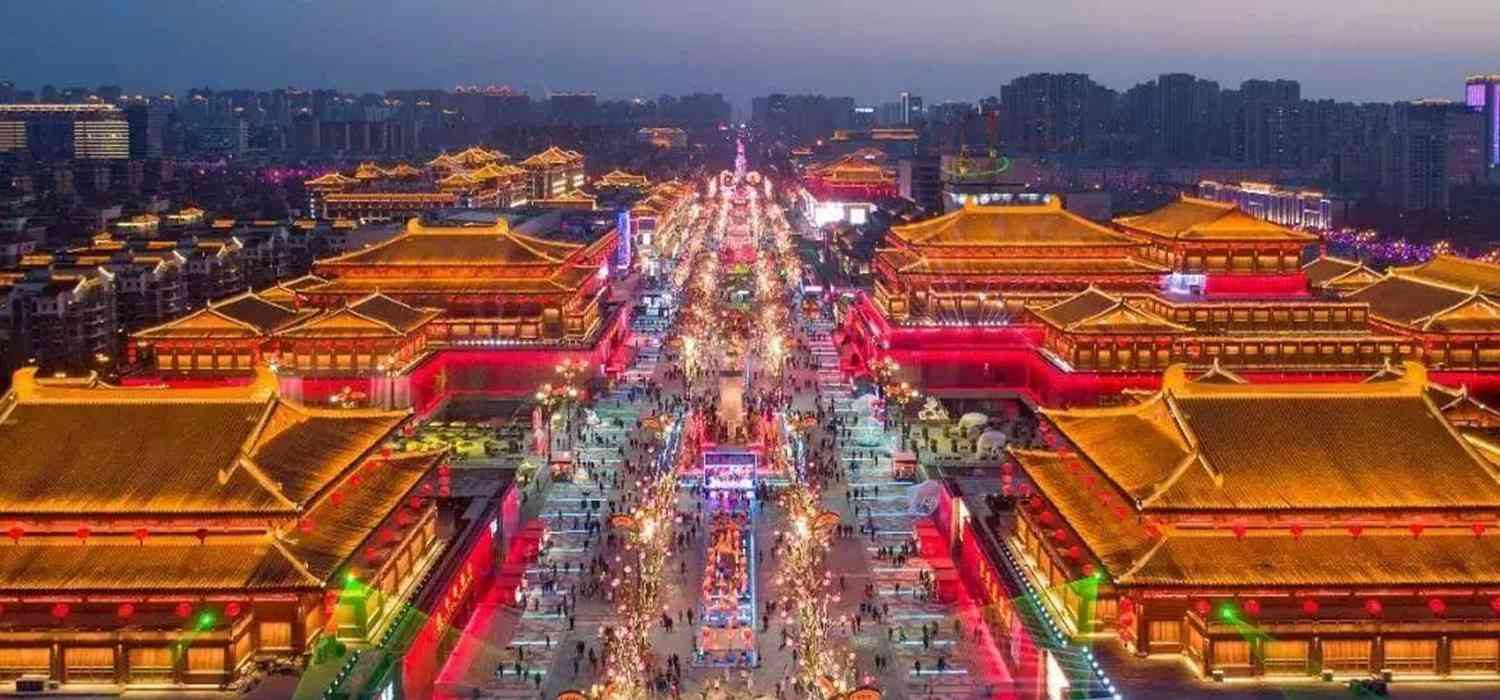
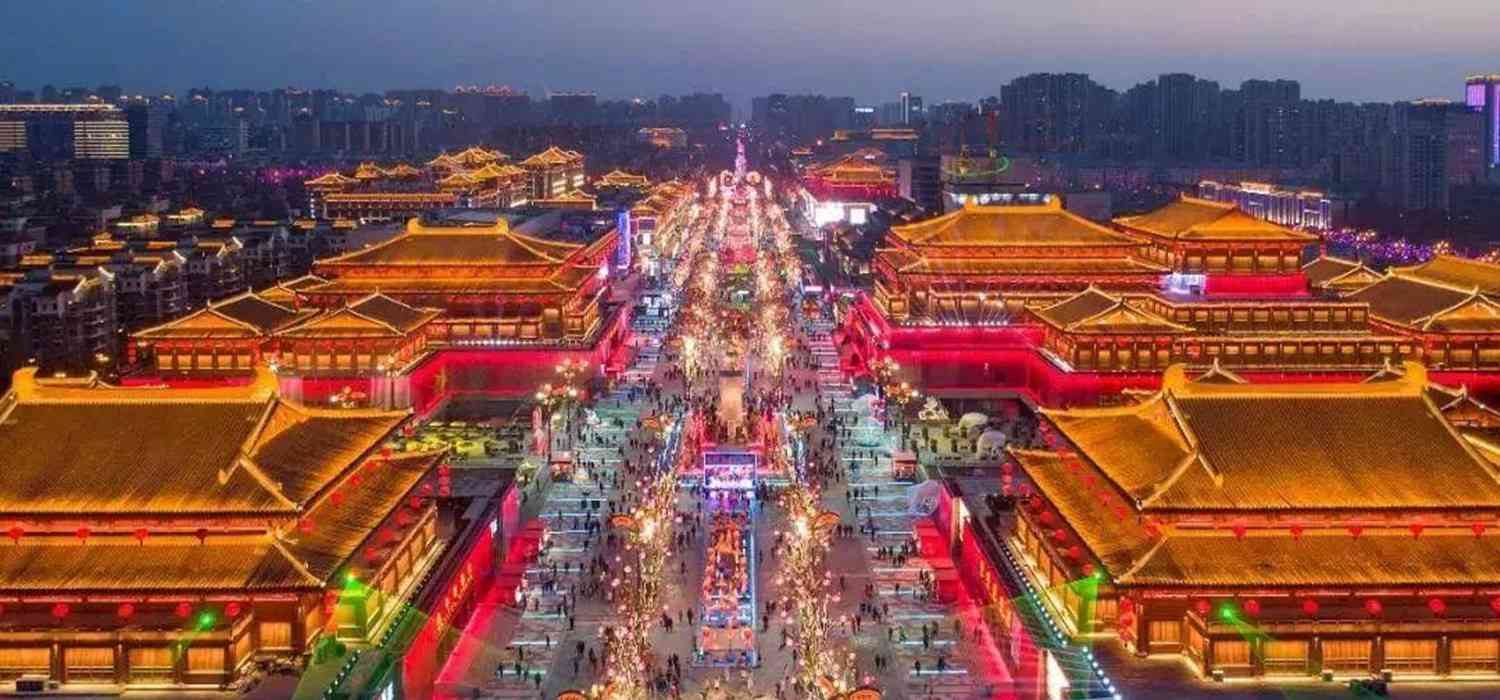
Datang Everbright City
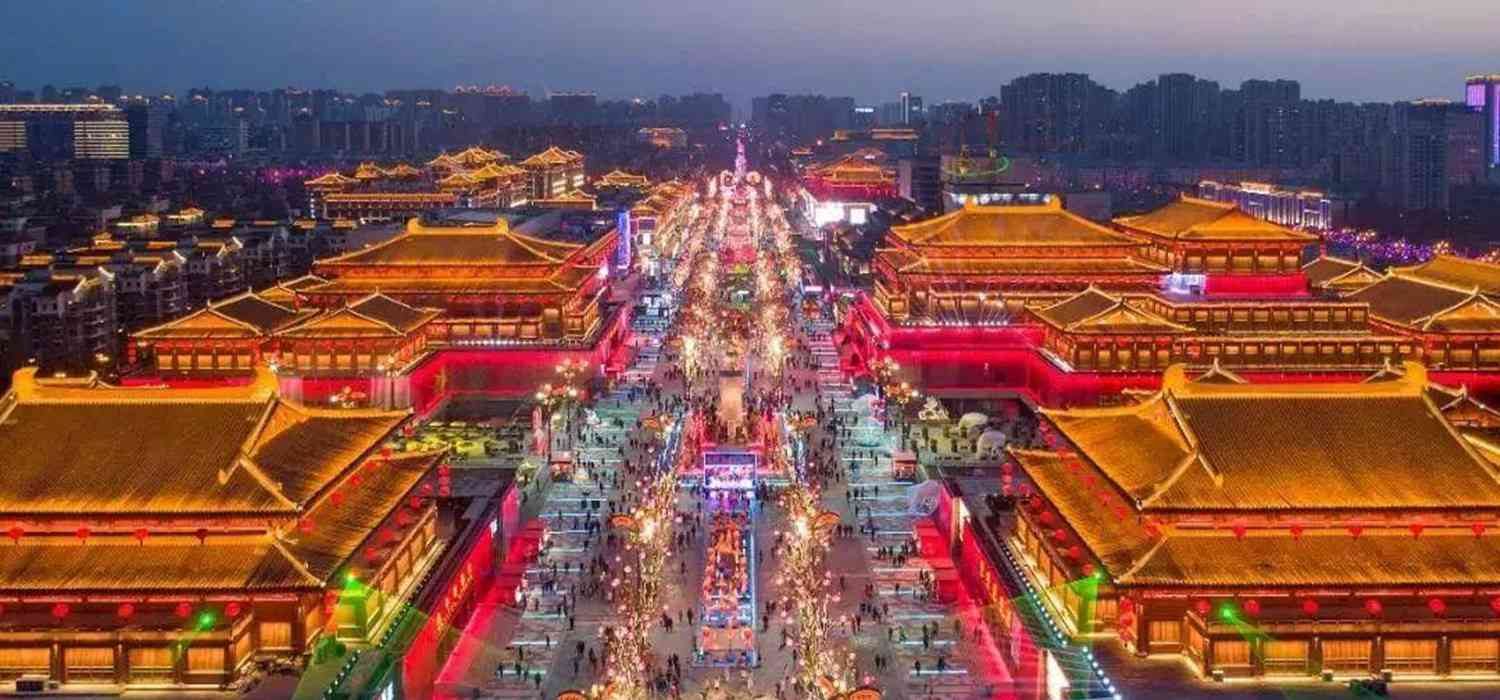
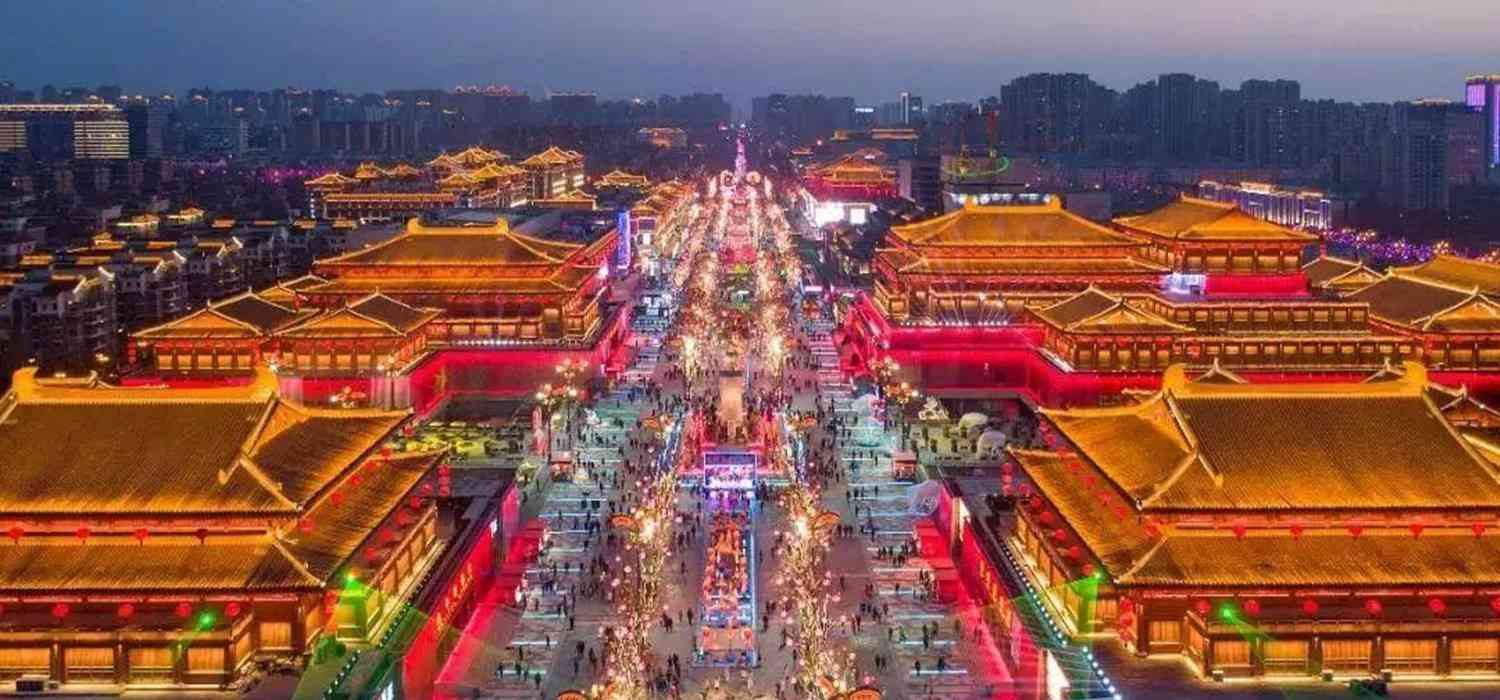
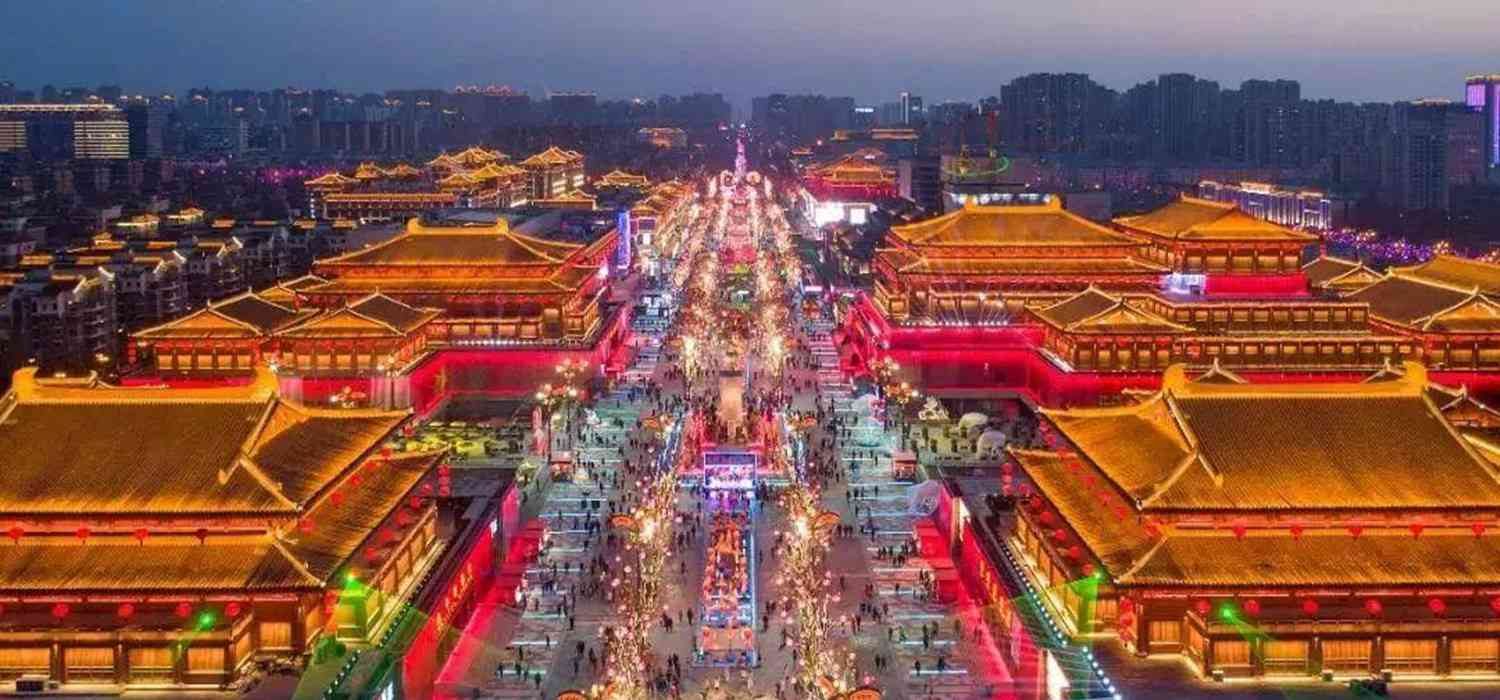
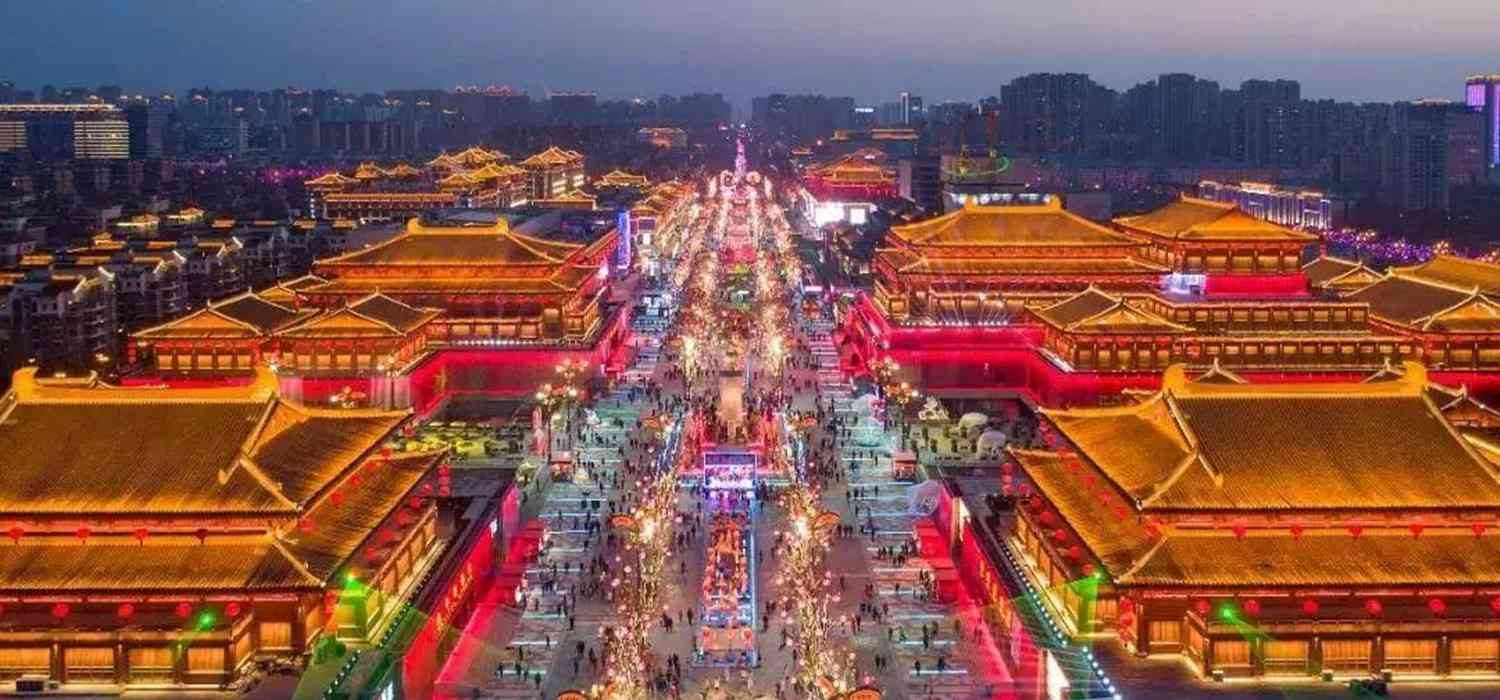
AttractionA Tang-culture pedestrian street 1,500 m south of the Giant Wild Goose Pagoda: Tang-style towers and lighting merge into a High Tang night-banquet scene; the 'Tumbler Girl' (performer 'Pika Chen') went viral nationwide here, alongside clusters of internet-famous acts such as 'Brother Stone' and 'Grand Tang Mystery Box' (an interactive Q&A with 'Fang Xuanling' and 'Du Ruhui')...
 25
Tang Paradise
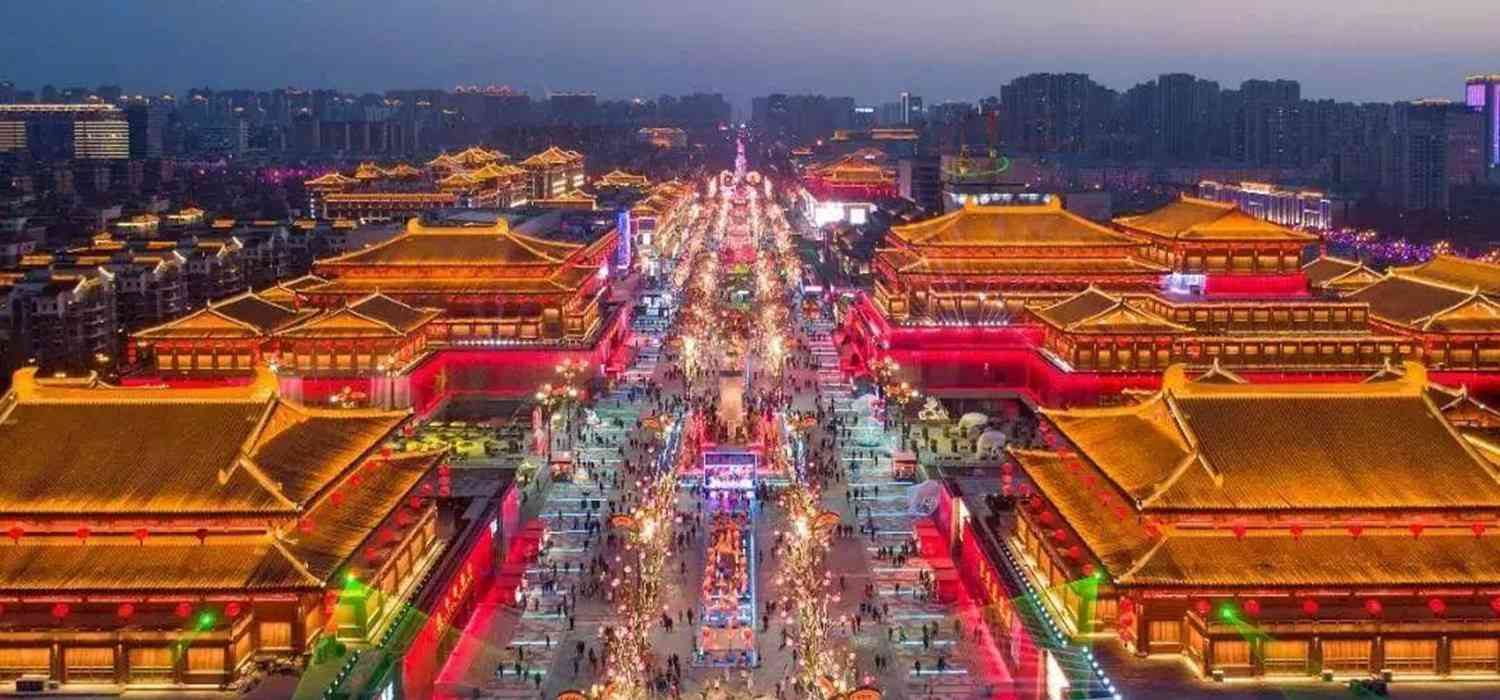
AttractionOpened in 2005 just north of the site of the original Tang-dynasty Lotus Garden: Ziyun Tower (Purple Cloud Tower) is the largest Tang-style imperial architectural complex in China; night illuminations recreate the splendor of a High Tang imperial garden, with the water-screen movie and the 'Datang Zhuimeng' (Dream of the Great Tang) show as signature programs
 26
Qujiang Pool Relics Park
AttractionRebuilt on the site of the Tang Qujiang Pool (the water system of the Lotus Garden), opened in 2008: the 'winding-water floating cups' (qushui liuyin) relics and the Huangqu Canal inlet retain an ancient charm; the 8 km lakeside greenway is a haven for Xi'an runners, with views of the Qinling Mountains and the southern city skyline around the lake
 27
Hanyao Heritage Park (Cold Kiln Relics Park)
AttractionLegendary site where Wang Baochuan endured eighteen years in a cold kiln dwelling awaiting Xue Pinggui (on the banks of the Honggou ravine in Qujiang): the ruins and sculpture groups recreate scenes from the opera Wudianpo, making it China's first love-themed heritage park, adjacent to the southeast side of Qujiang Pool
 28
Shaanxi History Museum
Attraction"Pearl of the ancient capital, treasure house of China" (construction proposed by Zhou Enlai in 1973): over 370,000 artifacts distill the Zhou, Qin, Han and Tang dynasties — the beast-head agate cup (a relic prohibited from exhibition abroad), the gilt silver flask with a dancing horse holding a cup, the Empress's Seal and the Du Tiger Tally are national-treasure star exhibits; the Tang Tomb Murals Gallery...
 29
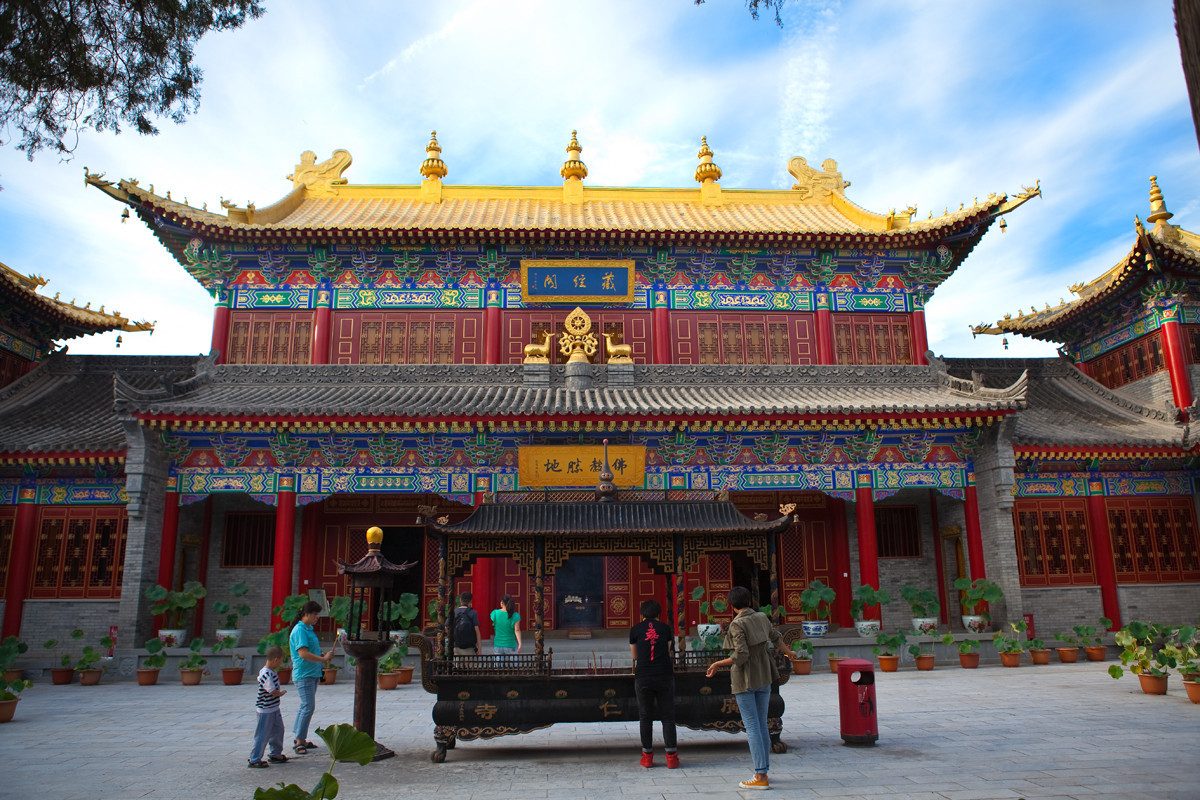
Guangren Temple
AttractionThe only Tibetan Buddhist temple in Shaanxi, built by imperial decree of Emperor Kangxi in 1705 (a Green Tara sanctuary): Kangxi's imperial stele and a white marble lotus vat are temple highlights, and the sutra library houses a complete set of the Tripitaka
 30
Baxian Palace (Eight Immortals Temple)
AttractionXi'an's largest Taoist temple complex, grown from the Song-era site of Baxian'an (Eight Immortals Nunnery): the Lüzu Hall (Patriarch Lü) and Doumu Hall rise through three successive courtyards, and its incense offerings are the busiest of any Taoist temple in the city
 31
City God Temple (Duchenghuang Temple)
AttractionBuilt during the Ming Hongwu reign and styled the "Chief City God" (with authority over city gods of several northwest provinces): the temple's drum music is an important branch of Xi'an Drum Music (a world intangible heritage), and the archway before the temple and its century-old temple-market layout continue to this day
 32
Wolong Temple
AttractionFounded in the late Han dynasty (originally named Lingying Temple), one of the ancestral temples of Chan (Zen) Buddhism: Master Xuyun (Hsu Yun) received his ordination here, and the temple houses numerous woodblock sutra plates and stone steles
 33
Kunming Pool · Qixi Park (Chinese Valentine's Park)
AttractionRebuilt (opened 2017) on the site of the Kunming Pool dug by Emperor Wu of Han in 120 BC to train his navy: the Cowherd and Weaver Girl legend stems from the remains of the Stone Lord and Stone Lady temples here; the Qixi Culture Park is themed 'the origin of Chinese love,' and its lake is the largest in Xi'an
 34
Meipi Lake (Huyi District)
Attraction'The finest lake-and-hill scenery in Guanzhong' (the original site of Du Fu's poem 'Song of Meipi'): Kongcui Hall was built in memory of Du Fu's visit to Meipi; the misty waves of Fuyang Lake and the silhouette of Zhongnan Mountain form a lake-and-mountain tableau rare in Guanzhong
 35
Louguantai Daoist Temple (Zhouzhi)
AttractionWhere Yin Xi, keeper of Hanguguan in the Western Zhou, built a thatched tower to observe the stars, and where Laozi taught the Dao De Jing—hailed as 'the foremost blessed land under heaven': the core sights are the Zongsheng Palace ruins (family temple of the Tang imperial house) and Shuojing Terrace (Laojun Hall); the Hundred Bamboo Garden is tranquil, and the adjacent Qinling National Botanical Garden can be combined into one route
 36
Cuihua Mountain
AttractionThe core zone of the Zhongnanshan Global Geopark: its landslide geological relics are rare nationwide—the barrier lake Tianchi (Heavenly Lake), wind cave and ice cave are geological wonders; climb the main peak for views over the Qinling ranges, and the ski resort opens in winter
 37
Nanwutai (Southern Five Terraces)
AttractionThe five terraces of Zhongnanshan (Guanyin Terrace and four other peaks): a Buddhist sacred site of the Sui and Tang dynasties; the Sui-dynasty pagoda of Shengshou Temple is a treasure among ancient pagodas, and the sea of clouds around Zizhulin (Purple Bamboo Grove) is a famed sight on the northern slopes of the Qinling
 38
Taiping National Forest Park
AttractionA Qinling valley in Taipingyu (Taiping Gully), Huyi: in April a 10,000-mu sea of Chinese redbud blossoms—'Taiping Spring Colors'—is the top spring scenery of the Qinling; in the park eight waterfalls fall in succession, with Rainbow Waterfall the most celebrated
 39
Zhuque National Forest Park
AttractionA primeval forest valley on the northern slope of the Qinling Mountains in Huyi: the Binghecui and Longtanzi scenic areas preserve intact forest ecology, with views of Bingjing Peak (3,015m), the main peak of the Qinling range
 40
White Deer Plain Film & TV City
AttractionA film and TV studio base on Lantian's Bailu Plain, built around Chen Zhongshi's novel 'White Deer Plain': ancestral halls and opera stages recreate Guanzhong residential scenes, and the live-action show 'Two Tigers Defend Chang'an' is its signature
 41
Tangyu Hot Springs (Lantian)
AttractionSite of the Tang dynasty 'Daxing Tangyuan' hot spring court: Tangyu in Lantian is a famous therapeutic hot spring of northwest China, with spring history tracing back to the Tang dynasty; today it is a hot spring resort combining lodging and bathing
 42
Lantian Shuilu'an Temple · Lantian Man Site
AttractionAn ancient temple of the Six Dynasties (Water-Land Hall of Wuzhen Temple): over 3,700 Ming dynasty painted clay wall sculptures blanket the hall walls, earning it the title 'the Second Dunhuang' — the pinnacle of Guanzhong painted sculpture art
 43
Mount Hua (Huashan)
AttractionWest Sacred Peak Mount Hua (2,154.9m), 'the most precipitous mountain under heaven' and the fourth grotto-heaven of Taoism: the East Peak's Yaozi Fanshen (Sparrowhawk Flip) descent leads to the Chess Pavilion; the West Peak (Lotus Peak) has the Cuiyun Palace; the South Peak's Plank Road in the Sky (safety harness CNY 30 required) is the ultimate thrill; the North Peak is tied to the Liberation War story 'Taking Mount Hua by Strategy'…
 44
Famen Temple
AttractionFounded in the Eastern Han dynasty as the 'forefather of pagoda temples in Guanzhong': in 1987 the Tang dynasty underground palace came to light again, and the Buddha's finger bone relic, secret-color porcelain, Tang imperial silk, and gilded wares — the 'four great shocks' — stunned the archaeological world; the Stupa of Folded Hands (148m, designed by Taiwanese architect C.Y. Lee) is a modern landmark
 45
Qianling Mausoleum
AttractionThe joint tomb of Emperor Gaozong (Li Zhi) and Empress Wu Zetian of the Tang dynasty — China's only "dual-emperor tomb": the mausoleum is built into Liangshan Mountain, the Wordless Stele leaves her merits and misdeeds for posterity to judge, and 61 statues of foreign envoys plus 124 stone carvings along the Spirit Way form a gallery of Tang dynasty stone sculpture
 46
Maoling Mausoleum
AttractionThe tomb of Emperor Wu of Han (Liu Che), whose grand burial mound is dubbed the "Pyramid of China": the Tomb of Huo Qubing lies beside it as a satellite tomb, the "Horse Trampling a Xiongnu" stone carving is a national treasure, and its 14 Western Han stone sculptures pioneered stone carving at Chinese imperial tombs
 47
Mausoleum of the Yellow Emperor
AttractionBurial site of the Yellow Emperor, Xuanyuan (on Qiaoshan Hill), a sacred site of worship hailed as "the First Tomb of China": the Qingming public ceremony honoring the Yellow Emperor is a national-level rite, and a cypress said to have been planted by the Yellow Emperor himself, some 5,000 years old, stands as a living witness to the ancestor of Chinese civilization
 48
Hukou Waterfall
AttractionThe Yellow River narrows from 400 m to 50 m wide — "a thousand li of river gathered in one pot": the world's largest yellow waterfall; Longdong (Dragon Cave) offers close-up views of the roaring falls, and in winter (December-February) the frozen falls are a spectacular sight
 49
The Song of Everlasting Sorrow
AttractionSee the Huaqing Palace entry
 50
Camel Bell Legend
AttractionA camel caravan show staged around a 360° rotating auditorium: the live-action performance of wolf packs, camel caravans and the snow-swept Silk Road tells the life-and-death journey of a caravan traveling west, with the rotating stage carrying the audience along with the plot
 51
Xi'an Romance Show
AttractionA millennium-spanning epic show brought to Xi'an by Songcheng Performing Arts: acts such as 'The Light of Banpo', 'Islet on the Ba River', 'Yu the Great Taming the Flood' and 'The Glorious Tang Dynasty' string together 3,000 years of Xi'an civilization, with sound, light and projection effects at the standard scale of the 'Romance' series
What to eat in Xi'an
Signature dishes, famous tables and street-food runs — spice levels marked honestly.
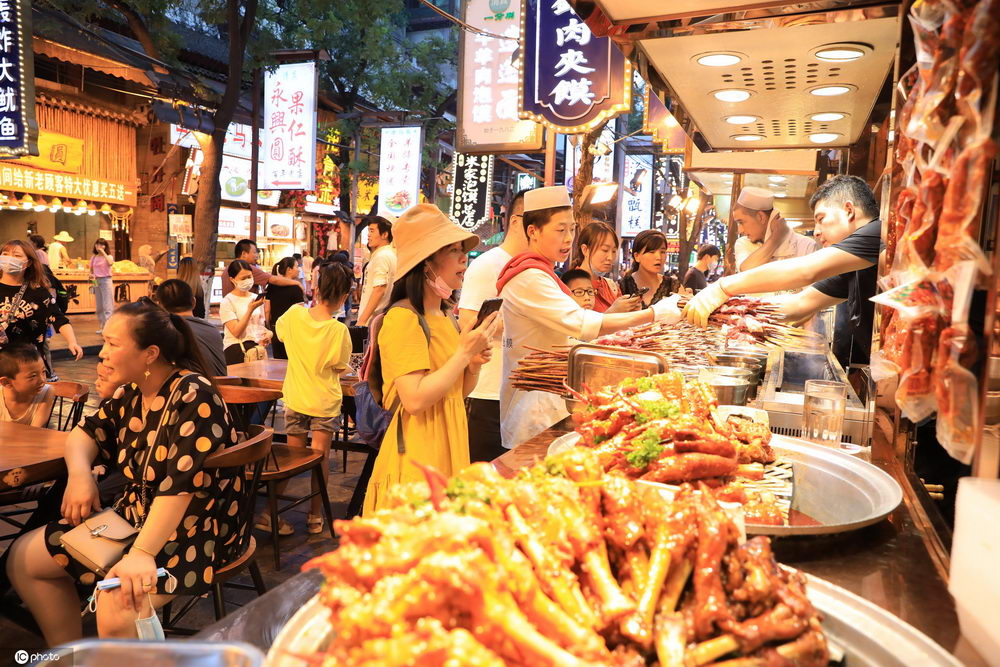
Muslim Quarter Food Walk
Street FoodLamb skewers, pao mo and persimmon cakes in lantern light.

Roujiamo (Chinese Burger)
DishShredded braised pork in crusty flatbread, 2,000 years old.
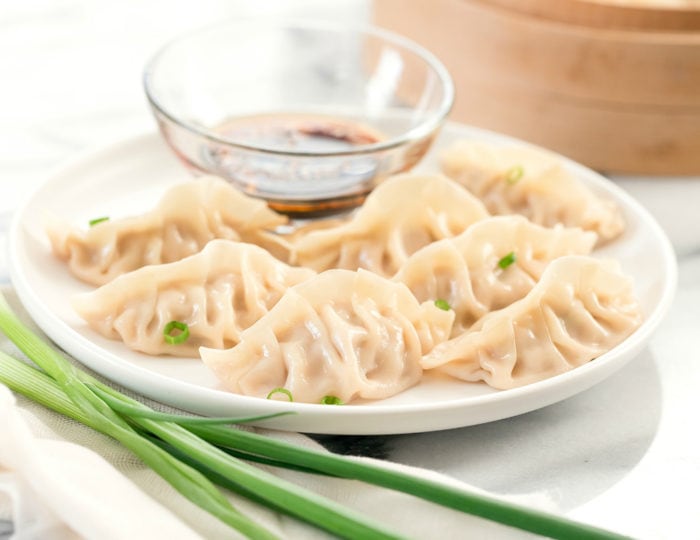
Defachang Dumpling House
RestaurantCentury-old house of 108 kinds of dumpling banquets.
Where to stay
- Where to Stay in Xi'an
The three areas worth sleeping in, with real price ranges.
🛏 CNY 250–900/night · 3 areas compared
Getting around
- Getting Around Xi'an
XIY airport 40 min by express; metro covers wall city; Didi cheapest for Terracotta Army day trip.
Want a custom Xi'an trip?
Tell us your dates — free draft plan within 24 hours.